

4 Essential Tools Homeowners Need For DIY Roof Repairs
We may receive a commission on purchases made from links.
Hiring a professional to do work around the house is convenient, but it can get expensive. Thus, the DIY option may seem enticing. Some jobs are more daunting than others, though, and one of the more challenging is likely fixing up the roof — not just because it requires you to climb. After all, the last thing you want is to damage the roof or make things worse, so stocking up on the correct tools for the job is the first big hurdle to conquer.
Smaller repairs generally won't require large or expensive tools. For the most part, you'll only need tools to remove worn or damaged parts and install their replacements. If you need to do anything more than that, it's probably better to leave the repairs to professionals. Structural repairs aren't for novices, and given how essential a functioning roof is, it's fair to say extensive roof repairs are among the DIY projects you should never try to do yourself.
With that said, there's no shame in learning something new and making some minor fixes to your roof. These are some essential tools you'll want for DIY roof repairs.
Extension ladder
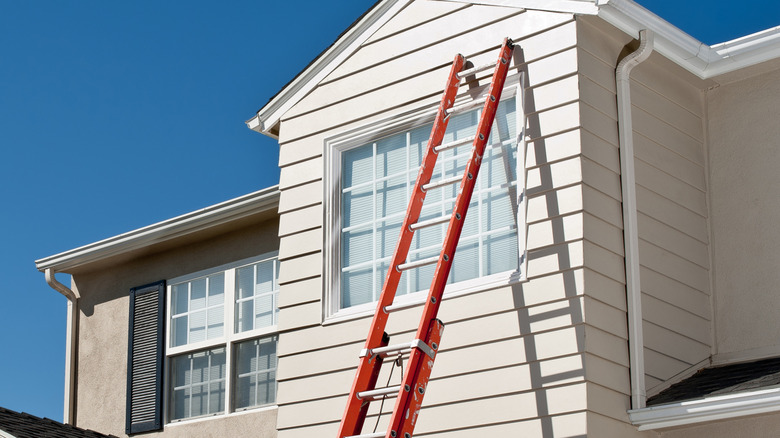
No matter what the task at hand is, if you need to get on the roof, you'll need a good ladder. An extension ladder is generally the way to go for roof repair, as it leans and stabilizes itself against the gutter. Step ladders, while must-own home improvement gadgets, are likely to wobble and tip, becoming a life-threatening hazard in short order. Besides, an extension ladder is a sound investment even if you don't plan to make a habit of repairing rooftops. The height and stability they offer can help with everything from repairing upstairs windows to trimming tree branches.
When shopping for an extension ladder, there are a few things to consider. You'll, of course, want one tall enough to reach your roof. The material is key, too; if you want to stay safe and avoid any potential issues with power lines, a ladder made from non-conductive fiberglass is the way to go. Unfortunately, sturdy fiberglass extension ladders do get expensive: A Werner 16-foot Fiberglass Extension Ladder costs $300, for example. But the combination of safety, functionality, and versatility they offer makes it a small price to pay.
Pry bar
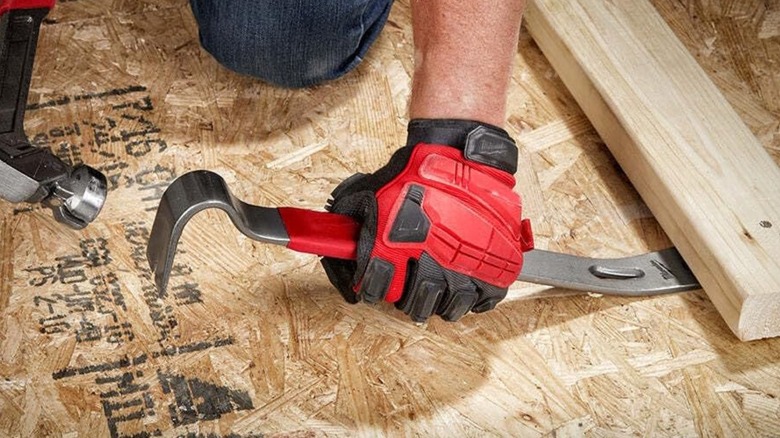
If you need to repair or patch a roof that's falling apart, you'll need to remove the damaged material first. You may be able to remove loose shingles by hand, but a quality pry bar will make the whole process much easier. A good one will also help tremendously when removing old roofing nails and be useful for a host of other DIY tasks as well, making it a versatile buy. Fortunately, this isn't a complicated tool, nor will it break the bank.
There's no shortage of pry bars on the market, and most quality ones aren't all that expensive. For example, the Stanley Wonder Bar II retails for just $4.99 at Home Depot, while the Milwaukee 15-inch Pry Bar is pricier but still affordable at $16.97. If you want to spend a bit more, though, there are designated shingle removal tools to consider. These operate similarly to traditional pry bars but are specifically designed to get below roof shingles and lift them. Examples of this include the $53.30 Guardian Fall Protection 54-inch shingle remover and the $24.98 24-inch Husky Mini shingle roof shovel.
Roofing hammer
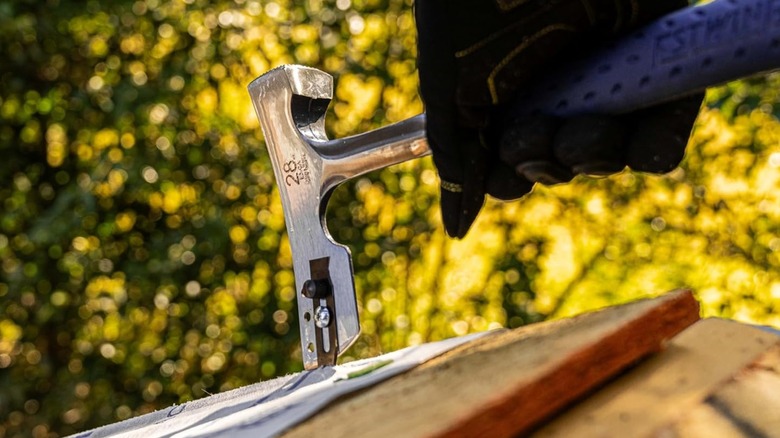
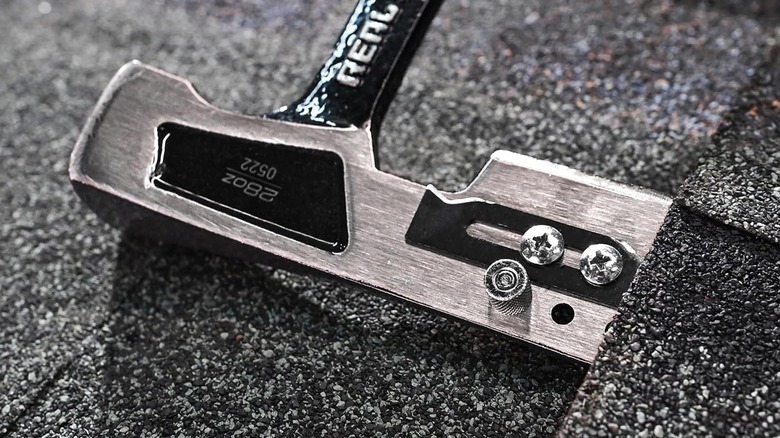
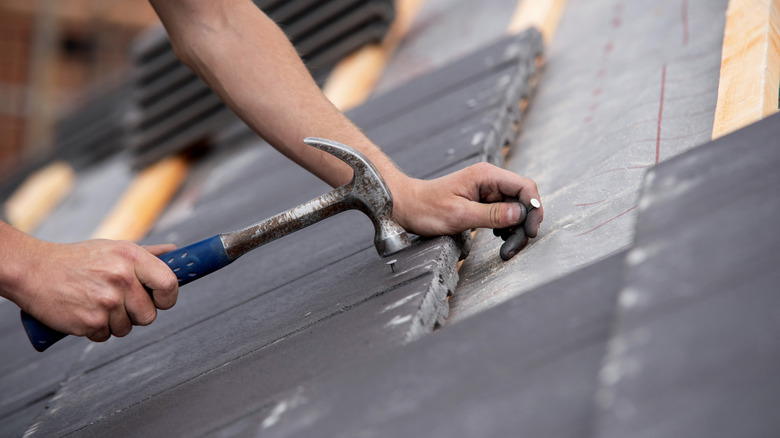
Once you've removed the old shingles and nails, it's time to install replacements. A good roofing nailer is an option, but you could also consider a roofing hammer instead, especially for small-scale work. Not only can you use them to drive in and remove roof nails, but they can also cut shingles and underlayment material down to size, eliminating the need for another tool.
Naturally, there's an argument that a roofing nailer is the superior tool. While these power tools are quicker and more effective at nailing material into rooftops, though, they have downsides for the DIYer that make them a potentially inferior choice. The main issue is that they're bulkier tools that may be hard to use, especially for the inexperienced. You'll also need supporting equipment, such as an air compressor or a battery and chargers, making them an even bigger investment and more cumbersome to set up. On top of all of this, they're more expensive on their own. Nailers rarely dip below $100, with most models costing multiple hundreds of dollars. Meanwhile, roofing hammers like the Crescent 28-ounce Steel Shingler Hammer can be had for under $40.
Caulk gun
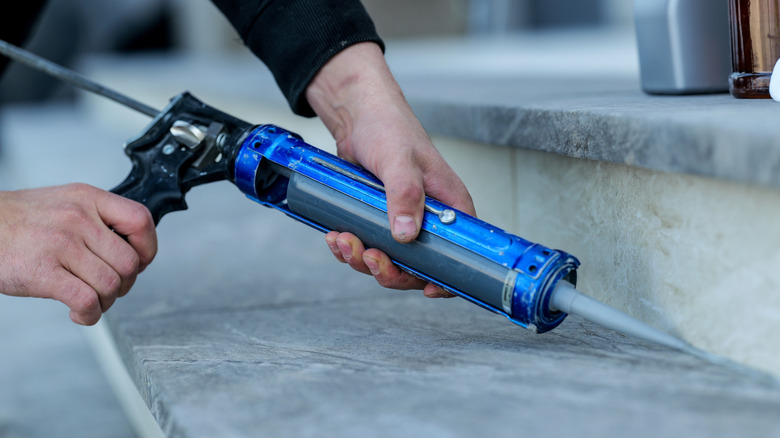
Shingles are great for keeping the weather out, but there are times when you'll need to use sealant as well, be it for waterproofing or filling cracks. That's where a caulk gun can come in handy. There are several major electric caulk gun brands out there, which are great choices if you've already bought into their battery systems and expect to use such a tool regularly. However, they might be overkill for those who only plan to use them occasionally — and, crucially, don't want to spend a ton of money. In that case, a manual caulk gun is a cheap yet effective alternative. There's an Anvil caulk gun for $5.98 at Home Depot or the $4.99 Project Source caulking gun at Harbor Freight, for example.
Caul guns can come in handy for other home DIY projects, too. These tools are excellent for sealing cracks around window frames, waterproofing bathtubs and showers, repairing concrete, and more. If you're going down this route, you may be able to justify the higher price of an electric model. These can start as low as the $40 20-volt Bauer caulk gun from Harbor Freight and go up to the Milwaukee M18 electric caulk gun, which retails for $299.00 at Home Depot.
How we selected these tools
The first step in selecting these tools was determining the scope of DIY roofing work itself. We defined the limits of such work as anything outside of full-on roof replacement and structural repair — both of which demand extensive roofing knowledge and a serious arsenal of high-end tools. All of this helped narrow the field, but this was only the start, and more filtering was needed to come up with the final list.
From here, we settled on a few key criteria that tools had to fit. We wanted to focus on tools that the average DIY-capable homeowner could use; thus, they had to be easy to use, safe, or both. We also decided to focus on reasonably affordable tools, since the goal was to have a selection of somewhat entry-level suggestions for roofing newcomers. Similarly, we made sure to choose tools that could be used for other DIY jobs beyond roofing. This way, a potential buyer can get more use from their tools.