

5 DIY Projects You Should Never Do Yourself (And Why)
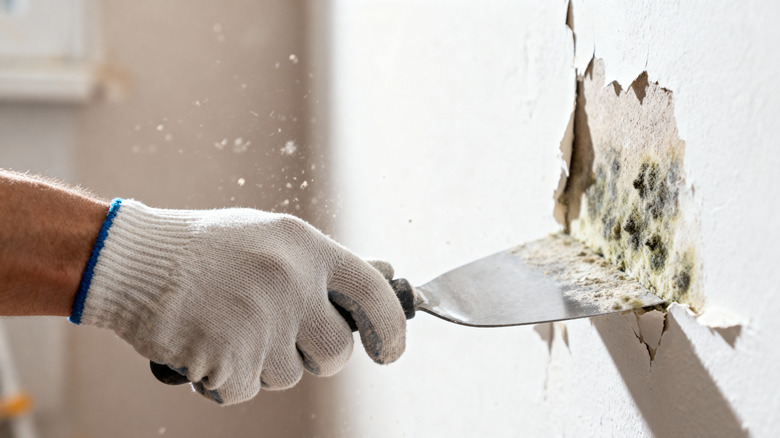
We get it, some of you have a go-get-'em attitude and an unwavering confidence when it comes to renovations, repairs, and DIY projects around your home. There's a certain satisfaction in seeing a problem and tackling it yourself without anyone's help, but sometimes it's better to swallow your pride and call in reinforcements.
Despite all appearances, our homes are complex and living things. Wires and pipes run through the interior like blood vessels and neurons, the walls and ceiling flex against the ground, wind, and weather. Moisture and microbes can enter through your doors and windows, or be carried in on your clothing, shoes, and skin. Like any living thing, the systems that keep your house healthy need regular maintenance or else they'll break down.
While there are plenty of DIY projects you can safely and confidently do on your own, without the help of professionals or even friends, there are other jobs that you probably never want to do solo. Some residential ailments respond well to DIY repairs, while a trained expert better handles others. If you're facing any of the following projects, take a minute to reconsider before you jump in all by yourself. You probably want to have a friend for reinforcements at the very least, and you might want to consider calling in the pros.
Remove old insulation
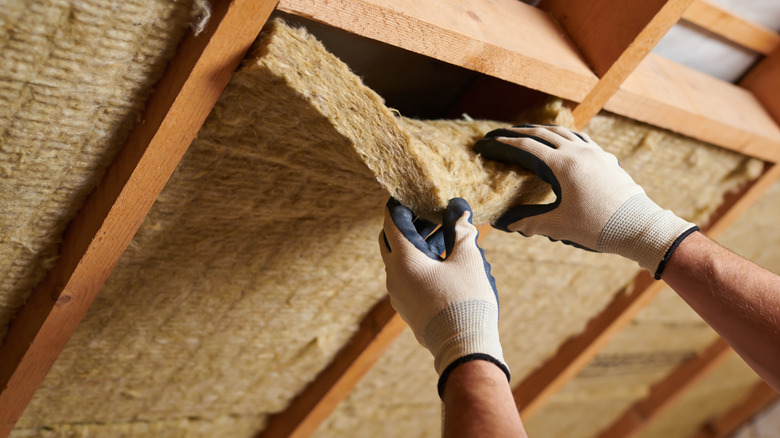
If your home was built before the 1980s, there's a decent chance asbestos insulation is somewhere inside of it. Asbestos is the common name given to the minerals amosite, chrysotile, crocidolite, tremolite, actinolite, and anthophyllite. These minerals occur naturally in rocks and soil; they contain strong fibers that can be spun or woven and are heat-resistant. Consequently, asbestos minerals have been used in a wide range of products.
In decades past, asbestos was commonly used in building insulation and as a flame retardant. It can also be found in vinyl floor tiles, shingles, hot water pipes, furnaces, and more. You can also find it outside the home in friction-based items like brake pads. At home demolition work and renovations are common sources of asbestos exposure. When those materials are disturbed, microscopic asbestos fibers get into the air. Anyone who breathes in those fibers is at risk of lung cancer, mesothelioma (cancer of the lining around the lungs and other organs), asbestosis, a progressive lung disease, and other respiratory diseases.
If you suspect there are asbestos-bearing materials in your home, it's best to let a professional handle the removal, especially in an enclosed space where exposure to hazardous materials can be greater.
Removing interior walls
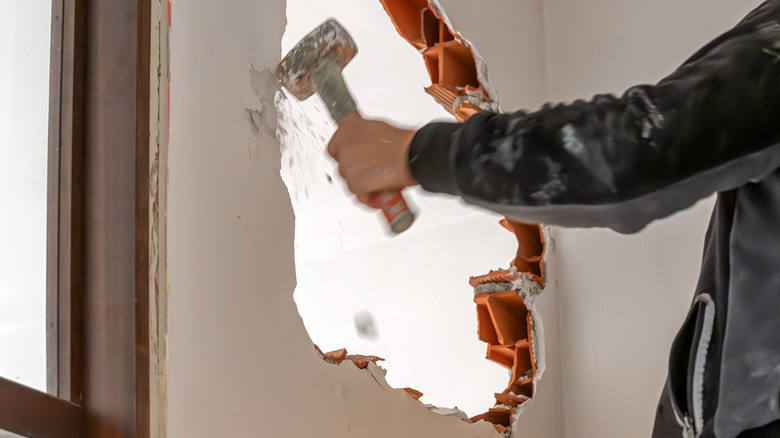
These days, it's not uncommon to think about knocking down an interior wall or two to give yourself a more open floor plan, but you should probably think twice before you break out the sledgehammer. The Occupational Safety and Health Administration (OSHA) outlines safety requirements for tearing down walls, which can serve as guidelines for at-home DIY projects.
Among those recommendations, OSHA requires that no load-supporting wall be cut or removed unless there's nothing above it, or every floor above it has already been demolished. Additionally, retaining walls can't be removed unless the earth they're retaining has been braced in advance. Unless you're certain that a wall isn't structurally important, you should probably think twice before knocking it down.
On top of the structural risks of interior demolition, knocking down walls can also expose you to some yucky things like mold and asbestos. Not so long ago, asbestos was used in things like insulation, soundproofing, joint and patching compounds, textured paint, and more. Knocking down an old wall could unintentionally turn your air into a microscopic minefield. As fun as it can be to turn a wall into smithereens, it's risky enough to leave to the pros.
Removing mold
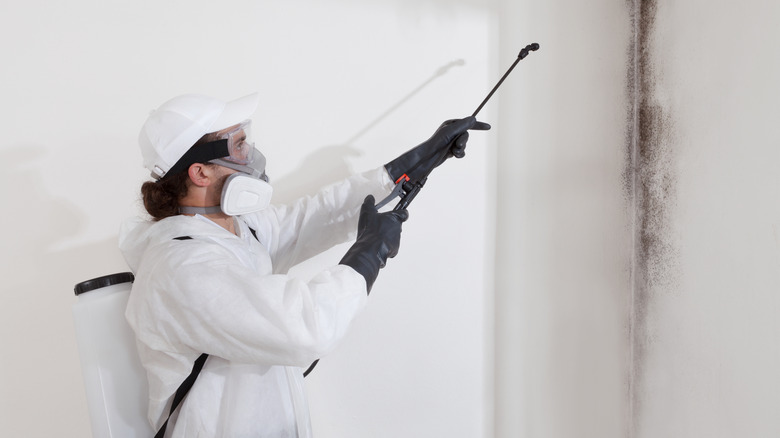
Mold and mildew are common problems inside homes, especially in more humid areas. It's also common when your home experiences leaky pipes or flooding. Mold is part of nature's cleanup crew, breaking down dead plants and other materials. Microscopic spores floating in the air can set up shop if they find a moist spot. It's pretty much impossible to keep mold out of your house completely, but you can manage it by keeping things dry and clean.
A major factor in whether you should deal with a mold problem yourself or call in the pros is the scale of the problem. If mold covers less than 10 square feet of your home, it's probably safe for you to clean it yourself with bleach or detergent. When cleaning up mold, it's important to protect your lungs with an N95 respirator, protect your skin with gloves, and protect your eyes with goggles or a face shield. Disturbing mold can kick spores into the air, so you'll want to protect your body on as many fronts as possible.
If your home becomes infested with mold, it could be hazardous to your health, especially for people with allergies, a suppressed immune system, or pre-existing respiratory conditions like asthma or COPD. Possible health impacts include sneezing, a runny nose, eye irritation, skin irritation, and more. If there's more than a small spot of mold in your home, removal might be best handled by professionals.
Major plumbing jobs
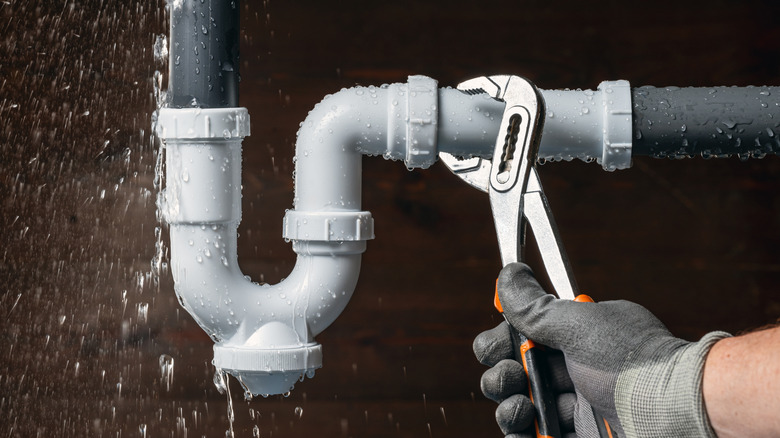
The invention of indoor plumbing is, perhaps, one of humanity's greatest achievements. Consistent access to clean water and reliable wastewater removal are crucial to health and safety, but they can be easy to take for granted. If your pipes suddenly stop working the way they're supposed to, it can throw your life into turmoil.
With a little education and patience, you can probably handle DIY plumbing jobs like a leaky faucet, but the larger the job, the more likely you are to encounter complications and benefit from a professional's assistance. If a plumbing problem isn't resolved quickly and correctly, even small problems can lead to a host of larger problems down the line, including, but not limited to, sewage coming up your drains, mold, structural damage, and more.
If you're dealing with outside pipes, like the water intake or your backyard hose/sprinkler system, a broken pipe might not be a huge deal, but inside your home it can be a nightmare. The Better Business Bureau recommends calling an accredited professional anytime a problem threatens your health and safety (some leaky pipes carry contaminated waste water), comfort and sense of security, or your home's value.
Roof repairs
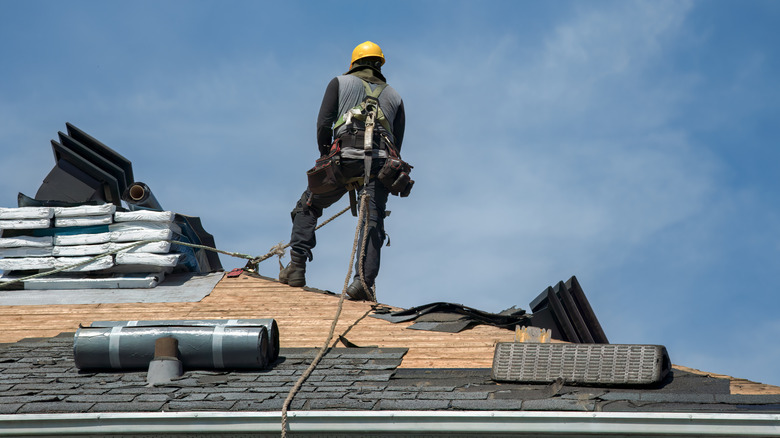
A typical roof isn't necessarily a complicated object. Usually, it's little more than a wooden frame, some insulation, protection layers like an ice and water shield and underlayment, and shingles to cover everything. If you have a leak you might be tempted to find and fix it yourself.
You'll want to understand the anatomy of your roof before jumping in, which can vary based on the type of home you have, your location and climate, and even your roof's slope. Once you know what you're up against, you'll also need to choose your repair materials, some of which are toxic and potentially dangerous. Just because a roof is simple doesn't mean fixing one is. And, of course, there's always the risk of fall injuries. Climbing onto your roof is inherently dangerous without the right safety equipment.
If you have a small leak, it could be simple enough to fix on your own, in theory, but you probably shouldn't risk it. While a DIY roof repair can save you some money in theory, it could quickly become more complicated than you expect. And if you don't get it right, it could lead to worsening leaks, mold growth, water damage, and more.