

15 Cars Middle Class Families Drove In The '70s
Cars can be a great many things. They can symbolize freedom and independence as well as power and nigh-invincibility. However, if you have a family, you're probably more interested in things like trunk space, room for passengers of all ages, and comfortable seats for cross-country road trips.
The 70s was a tricky time for cars, since the energy crisis loomed large over nearly the entire decade. There was a genuine fear that gasoline-powered cars could become a premium luxury product, reserved only for the wealthiest elites. Thankfully, things didn't quite turn out that way, but the anxiety informed the way cars were designed and sold in the 70s.
Let's take a look at cars from the 1970s that were popular among middle-class families. We're not talking about luxury vehicles or slick muscle cars for single guys looking to cruise the local bars. These cars were for mama, papa, and a gaggle of kids. Here are 15 cars that the decade's middle class families were likely to drive.
Ford Country Squire
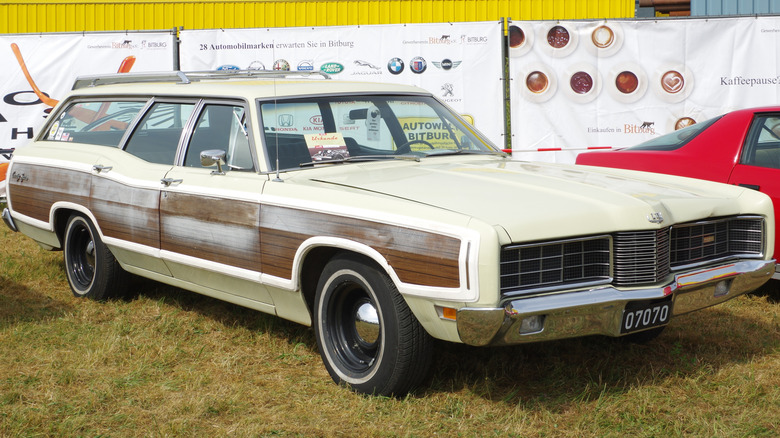
Picture in your mind a station wagon. Odds are the car that just flashed in your brain was a Ford Country Squire. If you've ever seen "National Lampoon's Vacation," then you've seen the Ford Country Squire, which was modified with ridiculous accessories and comical "enhancements" to become the infamous Wagon Queen Family Truckster featured in the film.
Of course, the movie's over-the-top take on the classic station wagon wouldn't resonate so strongly if the original vehicle wasn't so iconic, and the Ford Country Squire certainly lives up to it. Just look at that wood paneling — it's glorious in a gaudy-but-earthy 1970s kind of way.
The Ford Country Squire looked big, but it was somehow even more spacious on the inside. It was just short of being an RV. Okay, maybe that's a bit of an exaggeration, but the point is, the whole family could be cozy inside of a Ford Country Squire on a road trip to the beach, to an amusement park, or even just to the grocery store.
Chevrolet Impala
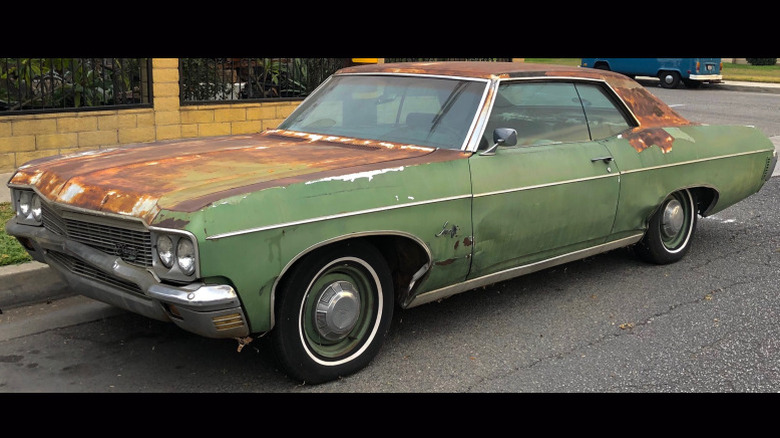
For those who couldn't quite let go of the muscle-powered 1960s, Chevy had you covered with the Impala. While the 1970 version didn't have the same old-school hot rod energy as earlier generations, it still felt distinctly like a 1960s type of car, complete with a thick, muscular frame and a surprisingly spacious interior.
The 1970 Impala had a streamlined design that reduced the curvaceous lines of earlier models. It straddled 1960s style and 1970s efficiency, and while the Impala still had a distinct profile, it lacked the extra touches that defined 1960s versions of the car.
The 1970 Impala was the final entry in the generation that started with the 1965 model. As such, it felt like the culmination of what the Impala had been building to for the half-decade prior. The tires were bigger, the drum brakes were replaced by disc brakes, and the V8 engine grew larger and more powerful every year up to this point. The 1971 version marked the start of a new generation for the Impala, but with a new, and even larger body. While still excellent, we prefer the older, 60s-remnant version of the Impala that ended an era but started the 70s in style.
Oldsmobile Vista Cruiser
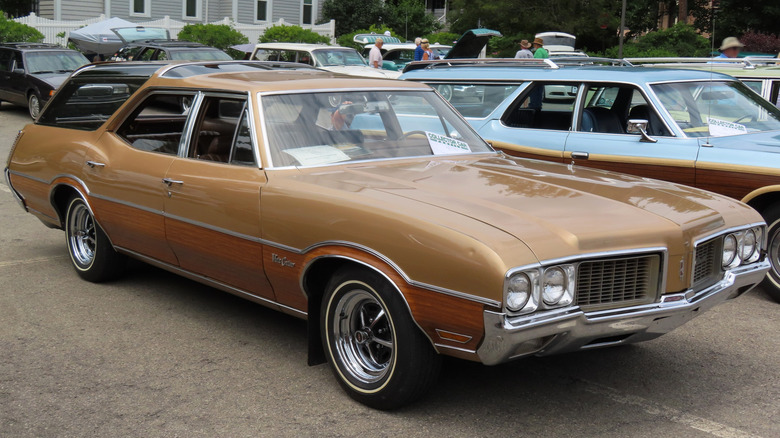
The Ford Country Squire wasn't the only station wagon of the 1970s. One of its contemporaries was the Oldsmobile Vista Cruiser, which began its life in 1964 before being discontinued in 1977.
It was as massive as you'd expect a station wagon to be. However, by the end of its run, the Vista Cruiser was powered by relatively meager V8 engines that couldn't push out 200 horsepower. Compare that to the earlier models from the 1960s that could fire up more than 300 horsepower, and you can see the impact of the energy crisis and government emissions regulations on the automobile industry. By the late 1970s, muscle cars and their beefy engines were less attractive to buyers.
Of course, if you were just a kid in the 70s, you probably didn't care about the size of your mom's station wagon's engine. Back then, all that mattered was baseball cards, 45 RPM vinyl singles, and having a good view from the back seat of the family car. There, the Oldsmobile Vista Cruiser was unbeatable thanks to its roof-mounted windows and spacious interior that allowed backseat passengers a panoramic view of their surroundings during family road trips.
Dodge Polara
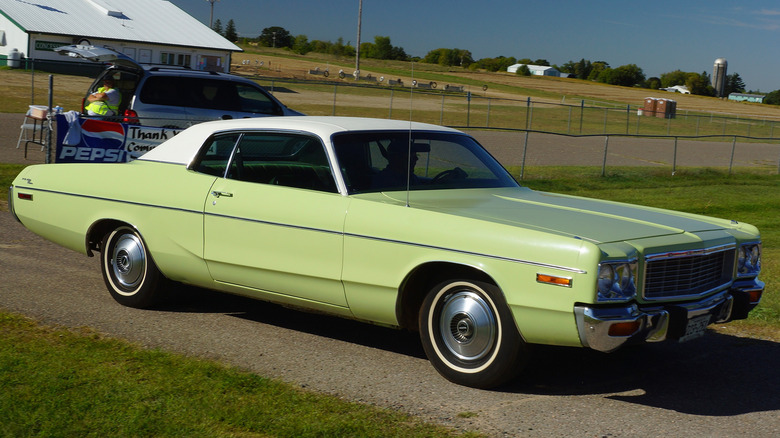
In times of economic uncertainty, a good deal can be hard to come by. But that's exactly what the 1973 Dodge Polara was. It retailed for under $4,000, which was quite the bargain in the early 1970s. This model year had some engine cutbacks compared to earlier versions, delivering just 150hp, but that was to be expected as the muscle car quietly went extinct.
The four-door sedan version of the Dodge Polara was a whole lot of car, especially for the price. It's not quite a station wagon, but it's still pretty roomy in the backseat. Even so, it's a stylish car that won't trigger a mid-life crisis in mom or dad; just because it's a family car doesn't mean it can't also be a sweet ride, after all.
On one hand, it looks like a muscle car, but the engine isn't terribly muscular. On the other hand, it's a family vehicle that still has a reasonably slick and chic silhouette. It might not specialize in any particular field, but it's a reliable car any way you cut it, and who can argue with that?
AMC Gremlin
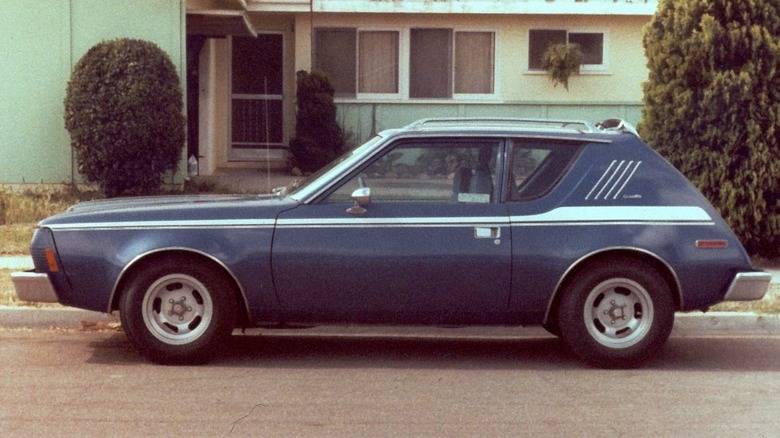
The cars in this article were, indeed, driven by middle-class families in the 1970s. But not all cars are created equal, especially if we're talking about the AMC Gremlin, a curious and quirky car that was cheap, reliable, and featured an inexplicable denim interior.
The car launched in 1970 and went relatively unchanged until it was discontinued after the 1978 model. Perhaps that was the problem. What was seen as innovative in 1970 had been surpassed by other small cars as the decade went on. The Gremlin was a pioneer but, by 1978, it was already old-fashioned and outdated. The Gremlin may have looked like a hatchback, but it actually wasn't. The four-seater Gremlin (the family model) had rear access via the back window which could open up like a hatchback.
At the time, the Gremlin was designed to compete with cheap, small, Japanese imports. For a while, it did, with over 671,000 units sold across the 1970s. But there was one problem, and you already know what it is: The Gremlin was an ugly car. Maybe even the ugliest of all time. It accomplished its goal of being "small" by looking like a station wagon that was karate-chopped in half. It simply was not an attractive vehicle, which makes it a nostalgic relic of the 1970s. In this way, its infamy has made it arguably more popular nowadays than in any period since its early 70s heyday.
AMC Pacer
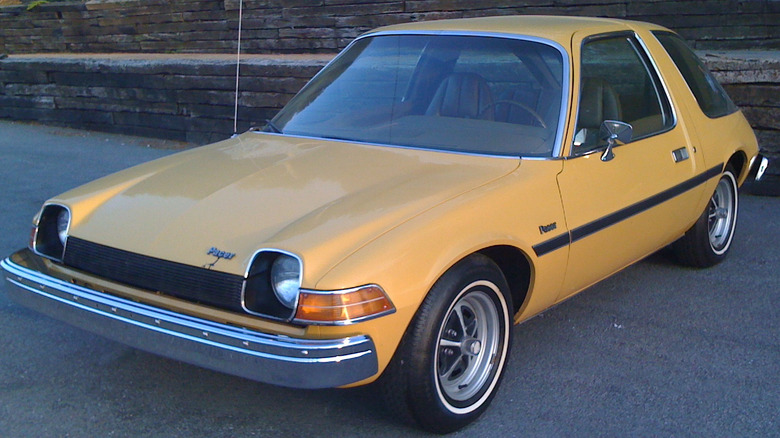
If there's one problem with small cars, it's big people. Big people and small cars rarely mix well, but the AMC Pacer was a rare exception. It had a surprisingly wide body with a spacious interior that paired quite well with the American physique.
As a family car, it also had plenty of room in the backseat, but its wrap-around windows were something of a double-edged sword. On one hand, kids in the back had a panoramic view of their surroundings during long car rides. If you remember what it was like being a kid on a road trip, then you remember being able to look around and have a good view of the outside world. On the other hand, the windows turned the car into a glass oven during hot summer days. Did you ever try to burn ants using the sun and a magnifying glass? In a Pacer, you're the ant.
The Pacer was also lacking in performance, with Car and Driver reporting in 1975 that it took the car over 20 seconds to cross a quarter-mile. Add in its considerable weight (over 3400 pounds), high center of gravity, and damped, sluggish steering, and the Pacer will get you where you want to go, but with neither style nor grace.
Ford Pinto
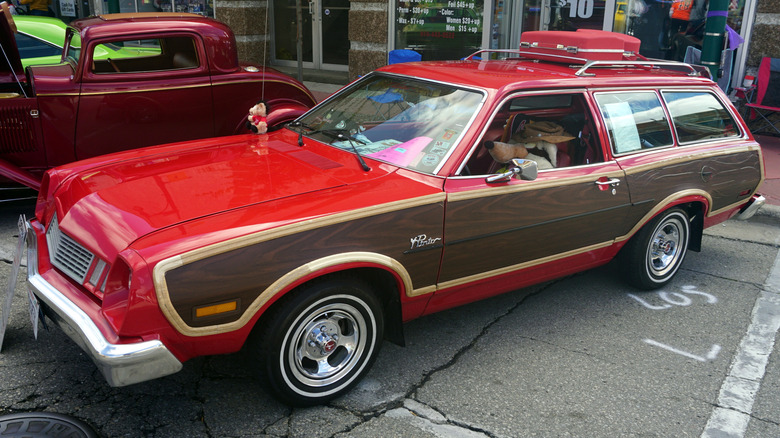
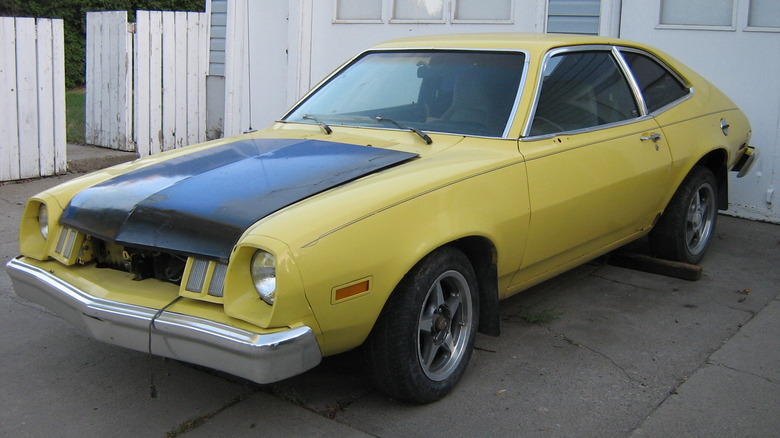
Even if you're not a car enthusiast, you surely know the unfortunate stereotype about the Ford Pinto: It will explode in a ball of fire if you so much as look at it the wrong way. Now, that's obviously not entirely true, but the Pinto certainly earned its reputation.
The legend goes that Ford boss Lee Iacocca demanded a car that weighed in at under 2,000 pounds and retailed for under $2,000 in time for the 1971 model year, which was just two years away. This resulted in some cut corners that would come back to bite Ford on the fanny. But initially, the Pinto was successful, moving over 350,000 units in its first year alone. In 1972, a family-friendly station wagon version was released.
Unfortunately, the Pinto had a major design weakness, which was the fact that its fuel tank was located in the back of the vehicle, behind the rear axle. This meant that even minor accidents could trigger a fuel leak. From there, all it takes is a single spark to turn the Pinto into a fireball. Thus, the Pinto earned a bad reputation as a dangerous deathtrap.
Pontiac Grand Safari
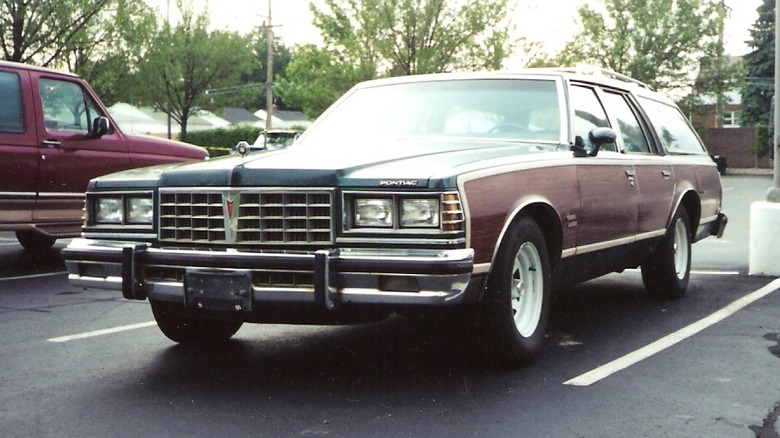
By the mid-1970s, cars were often being sized-down to aid with fuel efficiency. This was the era of the energy crisis and government regulations cracking down on gas-guzzlers of the past. However, there's always room for counter-programming. When the majority of cars went small, Pontiac decided to make one of the biggest station wagons of all time, the Grand Safari.
The 1976 Grand Safari clocked in at 231 inches long, which is longer than many modern luxury SUVs. Perfect for families or nomadic drifters, you can probably fit a whole rock band (plus their instruments) in this car with room to spare. At its core, it's still a station wagon, so there's a ceiling to just how cool it can look. Still, with its imposing size and luxury sensibilities, one could call the '76 Grand Safari the Cadillac of station wagons.
For the 1977 model year, Pontiac finally bit the bullet and shrunk down the Grand Safari. It was still huge, but it wasn't quite as ostentatious as the previous version.
Dodge Diplomat
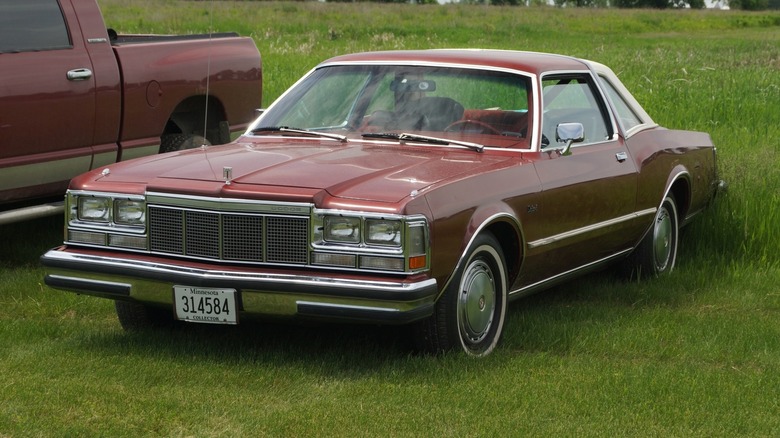
They say every can has personality. If you've ever seen a Dodge Diplomat, you know that's not true. In going over the specs of the DD, combing the internet for photos, and looking for anecdotal stories about it, our conclusion is this: The Dodge Diplomat was a car. No more, no less.
Maybe that's unfair, but that's not inherently bad. Sometimes a car need be nothing more than a way to get you and your family from Point A to Point B. The Dodge Diplomat, running on a stock slant-six engine, won't get you there quickly or stylishly, but it'll get you there. It took 21 seconds for the car to hit 60 MPH, and its top speed was under 100 MPH, bless its heart.
Sure, there was a version of the car with a 318 V8 engine, but that was mostly reserved for Diplomats adopted as cop cars across the United States. In 1978, a station wagon version of the Diplomat was introduced, but only 11,000 units were produced in its debut year, making it rare compared to its smaller counterparts.
Honda Accord sedan
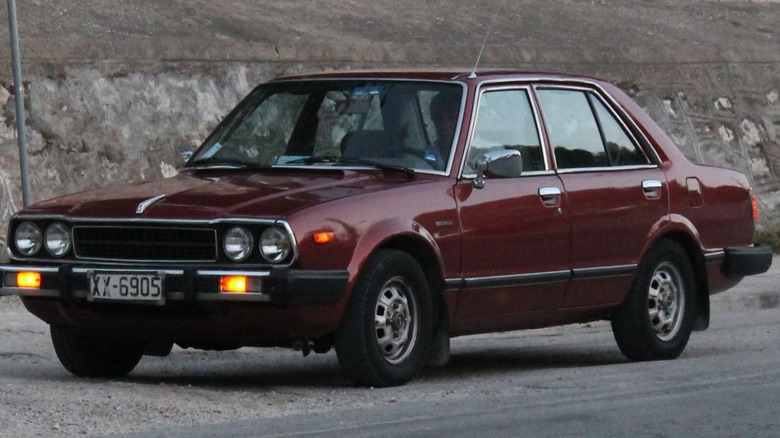
The original Honda Accord, released in 1976, was a two-door hatchback. You could fit a whole family in there, but two-door cars aren't the immediate go-to family vehicle. Thus, for the 1979 version, Honda added a four-door sedan version, with a little bit of extra space for the kids to play around in the back seat.
The Honda Accord was a car that became increasingly popular as the years went by. In its first year, the Accord sold around 18,000 units, but that number went up annually. By 1982, annual sales topped 195,000.
Why did families love the Accord? Part of it was the fact that it was a family car that didn't feel like a massive station wagon. It was also fuel-efficient, courtesy of a four-cylinder engine outputting a tinny 68 horsepower, and that was essential in the late 1970s. You won't be winning any drag races in a classic Accord, but it'll keep the wife and kids happy, and that's all that really matters.
Ford LTD
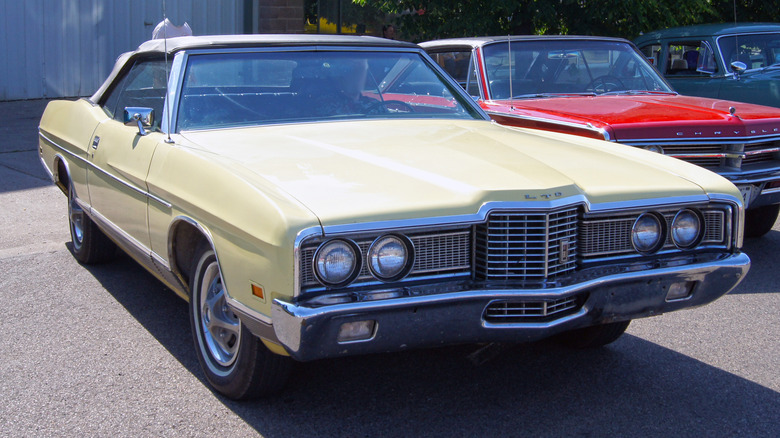
U.S. car manufacturers were reluctant to shrink in the 1970s. As the era demanded smaller, more fuel-efficient vehicles, some American companies were slow to adapt, or perhaps unwilling to acquiesce. In the end, this hesitancy is what allowed foreign automakers to enter the American market successfully, a foothold that remains to this day.
In hindsight, one can look back at Ford and other companies who stood their ground and fell like the defenders of The Alamo: Sure, they failed, but it was one heck of a last stand. And that brings us to the Ford LTD, a full-size, four-door behemoth with an imposing frame and distinct silhouette. It was like a family limousine.
The LTD was shrunk down in the late 70s, but it felt like a half-measure that didn't satisfy old-school purists or newer consumers. It was too small for the former, but still too big for the latter. In the 80s, the LTD became a mid-size car while also being succeeded by the Crown Victoria, arguably the most iconic cop car body of all time.
Ford Granada
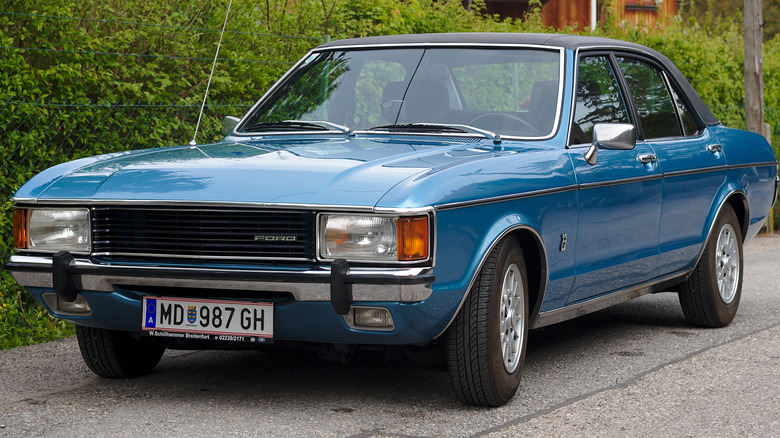
If the Ford LTD was too big and bulky for your family, Ford had a car ostensibly designed with 70s sensibilities in mind. Introduced in 1975, the Ford Granada was an attempt to imitate the Mercedes -Benz, but cheaper and, well, worse.
You could pack the whole family into one of these, but don't expect a smooth ride. The Granada's 250 cubic-inch straight six engine could only output 70hp, a truly feeble number. We know times were tough for motorists in the 70s, but this engine can barely beat out a hamster wheel. Throw in the weight of a whole family of four, and we wouldn't bet on a '75 Granada (with its weight well in excess of 3,000 pounds) making it up a steep hill, much less a cross-country road trip.
All told, the Granada was a car for 70s families, as long as they didn't plan on making any family trips. Sure, you could ride to the grocery store or to local events in town, but anything beyond that, your family probably sprung for a rental.
Ford Fairmont
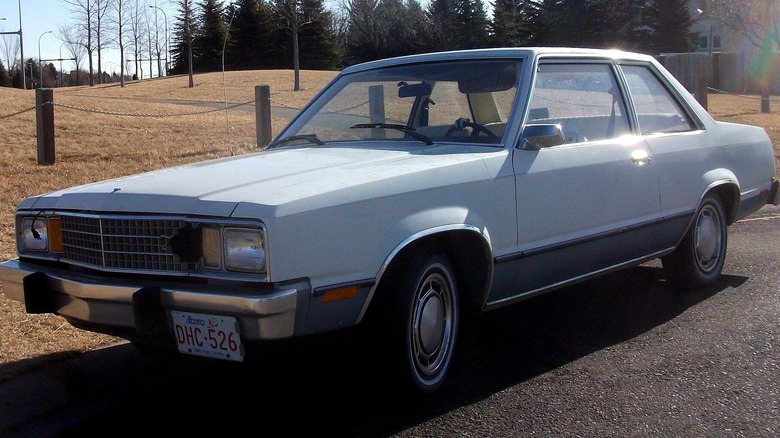
Closing out this mini-trilogy of 70s Fords, we have the Ford Fairmont, introduced in 1978 as the successor to the Ford Maverick. The Fairmont was available in a variety of options, from four-door station wagons to two-door sedans, and even a fancy luxury version, the Fairmont Futura. By chance, a 1978 Futura was the 100 millionth car assembled by Ford in the United States.
Anyway, the Fairmont was a reliable family car with a spacious interior across all versions, just what you'd expect from Ford. It also had an underpowered engine, with a four-cylinder able to output 88hp. That's not great, but at least it beats out the Ford Granada.
Ultimately, the Ford Fairmont, with its variety of options and ho-hum performance, was the quintessential '70s car. Whichever version you got, you had a roomy interior, and if you were a kid in the 1970s, that mattered more than anything else. After all, Mom and Dad can worry about driving using the milquetoast engine.
Pontiac Sunbird
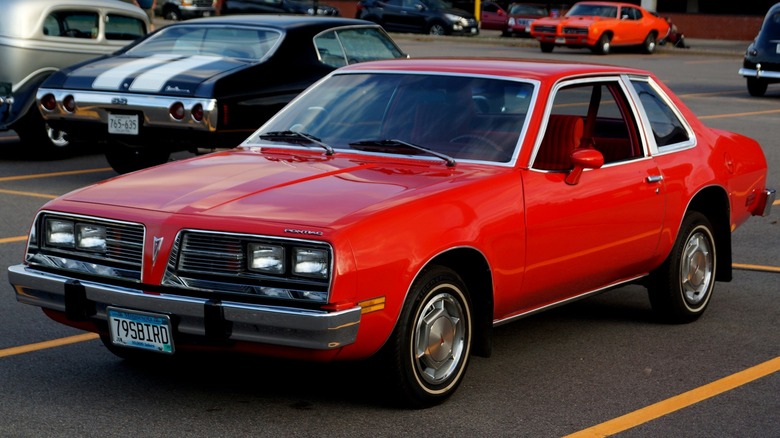
The 1976 Pontiac Sunbird was introduced as a successor to Pontiac's Astre, itself a knock-off of the Chevy Vega. In hindsight, the Vega is not fondly remembered, and its literally melting engine often considered to be the worst engine Chevy ever made.
At a glance, the Sunbird is a pretty gorgeous vehicle. It shouldn't be mistaken for the similarly-named Pontiac Firebird, which is a completely different vehicle for muscle car enthusiasts. The Sunbird could output 105hp thanks to its V-6 engine. No, Vin Diesel probably won't be driving one in the next "Fast & Furious" movie, but it'll do for a family of four going on a trip to Six Flags or wherever.
The original Sunbird was just a two-door coupe, but hatchback and even station wagon versions would follow in subsequent years. The Sunbird wouldn't be big enough for a massive family and it might get a bit uncomfortable on a cross-country road trip, but it'll get you where you want to go and, unlike its inspiration, the Chevy Vega, the engine won't spontaneously combust into melted steel along the way.
Plymouth Fury
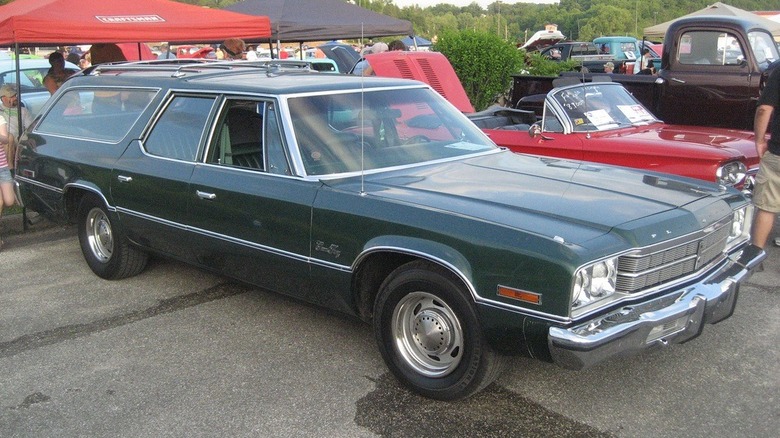
The Plymouth Fury started out as a 1950s muscle car, with the most example of all time being the '58 Fury featured in the John Carpenter film "Christine." For better or for worse, by 1975, the model had evolved into a mid-sized family sedan. A family car called the "Fury" seems a bit incongruous, but we don't make the rules.
The seventh generation of the Fury debuted in 1975, and the design was streamlined considerably. The rugged bulk and hunky lines of the 1950s muscle era were all but completely stripped away, replaced by a distinctly 1970s profile that, like most 1970s cars, was comparatively lacking in personality.
Nevertheless, the 1975 Fury was available in two-door and four-door variants as a station wagon, convertible, sedan, and more, so you had plenty of options to find one that fit your family and lifestyle. The "Suburban" station wagon variant was particularly spacious and great for cross-country trips if you couldn't afford or didn't want to deal with getting an RV.