

12 Car Parts You Should Check Or Replace At 75,000 Miles
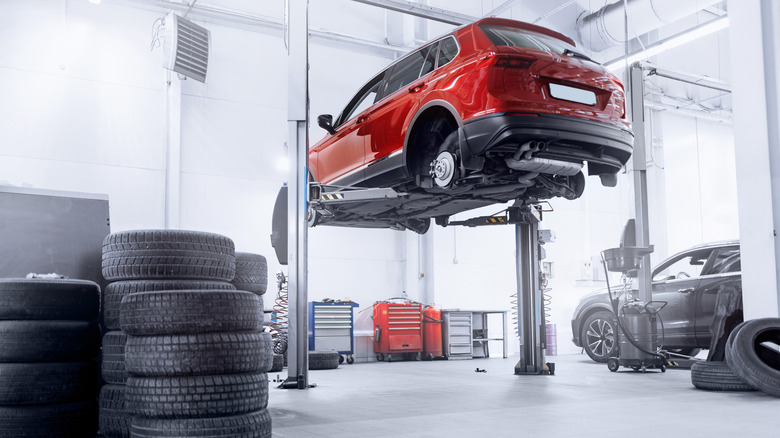
Keeping track of every little component in your car can be tedious, but it is a necessary step in making sure everything works and that you don't wake up to a broken-down car in your driveway. Regular maintenance is important for every vehicle, though some components don't have to be replaced for quite some time. We have lists of parts that you have to replace or check at 50,000 miles and 200,000 miles.
Here, we'll be covering 12 parts that you should expect to replace or need to have a mechanic look at around 75,000 miles. Every vehicle is different, though, and it also comes down to how you treat it. If you're rougher on the car, chances are you'll have to replace these parts far more frequently.
Spark plugs
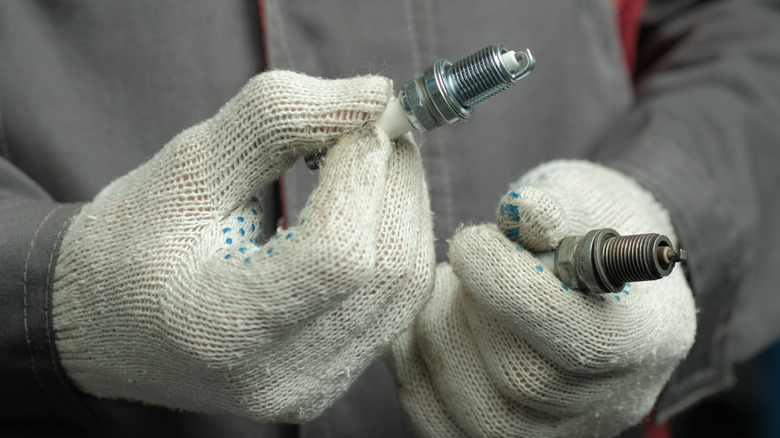
Your car's spark plugs are crucial, tiny instruments that send an electrical current from the ignition system to a combustion chamber, igniting the air-fuel mixture inside. Whenever you're turning on your engine, that slow buildup is your engine getting started, and when your car turns on, your spark plugs are bringing everything to life so you can drive. If your spark plugs are not working properly, an engine can stutter, or you might feel that your vehicle has a jerky reaction when you press down on the pedal, as the fuel is not properly igniting inside.
Most spark plugs last around 80,000 miles, although this can vary depending on the type of spark plug, car manufacturer, and what's in your vehicle manual. However, checking your vehicle's spark plugs is a routine step whenever you go in for maintenance, especially if you regularly use your vehicle in stop-and-go traffic, tow heavy loads, or use low-quality fuel. It's good to have them looked at every 30,000 miles, just to be sure, but it depends on the spark plugs, and there are various kinds.
Still, expect to hit around 80,000 miles before you have to go about getting a new set for your car. You'll want to look for other signs from your vehicle of faulty spark plugs, such as the check engine light, difficulty starting your vehicle, or refueling more often than usual.
Timing belt
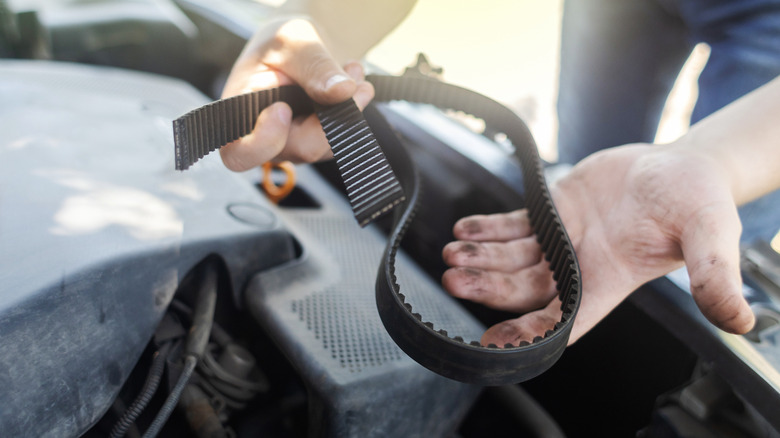
Your car's timing belt is essentially a large rubber band inside your engine, connecting the crankshaft and the camshaft. The crankshaft moves with the pistons of your engine, while the camshaft is in charge of the movement of the intake and exhaust valves. The timing belt allows these two components to work together and power your engine, allowing you to drive your vehicle.
Without a timing belt, everything here falls apart, and your expensive vehicle becomes nothing more than a large chunk of metal that you won't be able to drive anywhere. You can expect to swap out a car's timing belt between 70,000 and 90,000 miles, although it varies by manufacturer.
Because of how critical your timing belt is, having your belt looked at during routine service is always a good idea. A mechanic will be able to tell when a timing belt is starting to wear, as the sides begin to fray, there's belt debris, or there's noticeable stretching. Any of these serve as early warning signs that you should look into swapping out a timing belt for another one. Many of the notable warnings are internal and not something you'll see outside of the car until it's too late. There is a surefire way to tell if your timing belt is bad, though.
Drive belts (Serpentine belt)
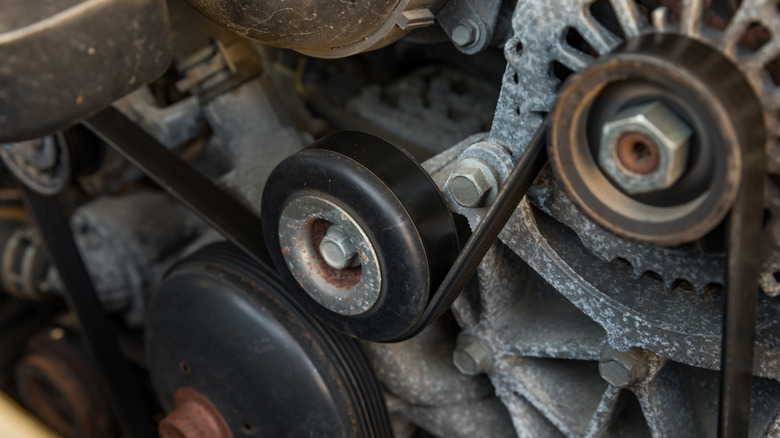
A vehicle's drive belt, also known as the serpentine belt, is a smooth rubber piece that powers accessories within your engine, like the alternator, power steering, or your water pump. It runs off the engine's crankshaft pulley, looping around many other accessories. Should the belt break or have an issue, these components will begin to shut down, but your engine may continue to run. However, a broken belt can cause severe and quick damage to your engine, especially if it's connected to a water pump that's meant to cool it down while you drive.
There's a wide range for when you should replace your drive belt, but the range settles between 60,000 and 100,000 miles. It varies greatly by manufacturer, but having a belt checked at least once a year as your car ages is a good idea, as you want to catch it before it breaks or has issues.
You might be able to notice it needs to be changed if you start to hear squealing noises from the front of your car when the engine starts, the A/C begins to have issues, or the engine begins overheating. A mechanic will have a better idea when they see it, as they can pick up on the cracks and visual wear when they look at it under the hood.
Brake pads
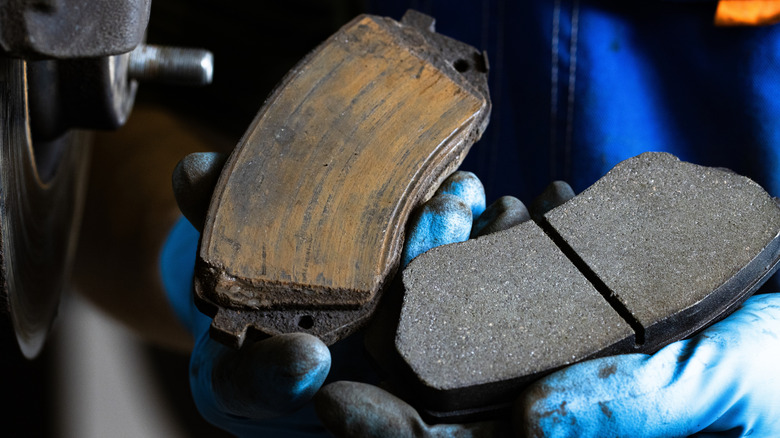
Healthy brake pads in your vehicle provide not only smooth stops but also optimal safety whenever you need to slow down. Your brake pads are meant to press against a disc behind your tires, pushing these two together to bring them to a halt while they're moving, turning that physical speed into heat and decelerating everything. As you can imagine, you press down on the brake pedal often to bring your vehicle to a halt.
Brake pads are frequently used, and they have a rough time of it, as they have to deal with a lot of stress, especially for drivers who frequently have to stop. How often you need to replace your brake pads comes down to stop frequency and brake pad model, but expect to go anywhere from 30,000 to 70,000 miles before you need to swap them out.
Still, getting them regularly checked on when you visit a mechanic is a good idea. There are also several notable warning signs that they're starting to lose their quality, such as your car taking longer to come to a halt, a burning smell when you brake, grinding noises, or a dashboard light indicating that there are issues. These early warning signs are a good indication that they need to be replaced sooner rather than later.
Muffler
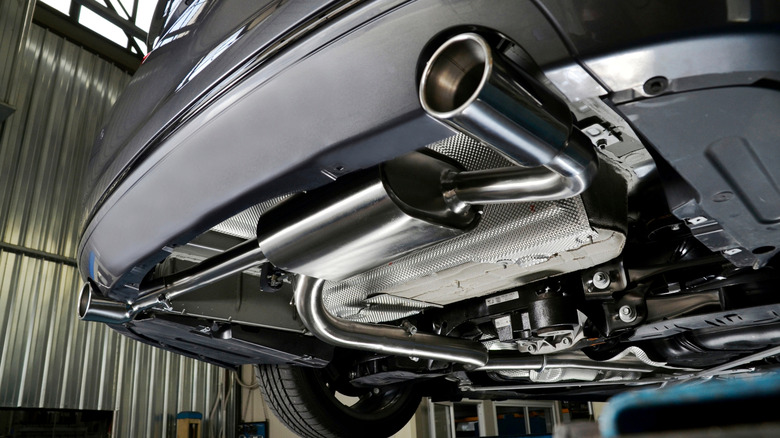
A large component keeping it going is the exhaust system, and your muffler plays a crucial role in it. All of the exhaust that your car gives off from your engine goes through the muffler, which quiets the loud sounds that the engine makes when everything is working properly. The primary role of a muffler is to reduce engine noise, and it also helps regulate the amount of exhaust that comes out, impacting your engine's power output and efficiency, while also making sure harmful gases don't leak out. If this isn't working properly, you'll hear the engine more, and the overall performance of your vehicle goes down.
You can expect to change your muffler out after five years or more, but it's good to get it checked every six months during routine checkups.
There are other signs that you want to look out for, such as your car sounding louder than normal, a rattling sound underneath your car, refueling more often, or growing rust on your muffler. You might also notice that the engine runs hotter. Jumping on it quickly is always a good idea, as a bad muffler can cause damage to your engine.
Water pump
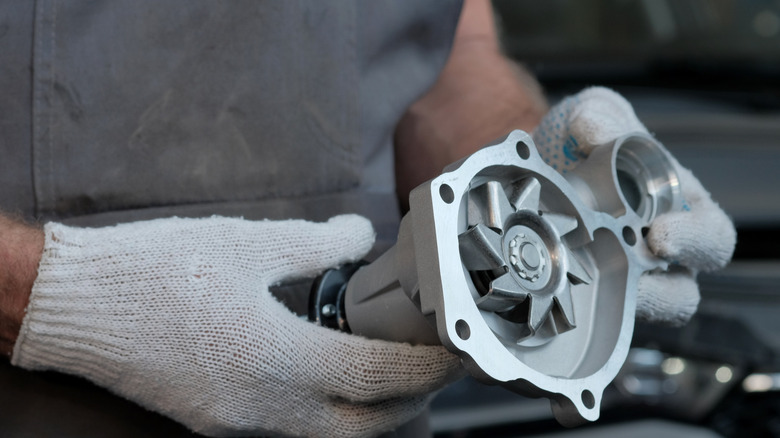
The water pump can be an easy component to overlook. It's the part at the front of your engine that helps regulate the coolant flow from your vehicle's engine to the radiator, preventing the engine from overheating. Not only is there water inside this system, but there's also antifreeze that you have in your radiator that goes through the engine before returning to the radiator to repeat the process. Even though you don't need to think about the water pump too much, it's a critical component that requires your attention, and it's something you should keep an eye on if you're noticing problems.
Some notable signs that it's time to get your water pump looked at include antifreeze pooling up in your garage, your water temperature gauge showing high temperatures, or water leaking at the front of your engine. It's also possible that while you're using your car, the engine begins to overheat, which is the biggest red flag.
More modern vehicles have improved water pumps, and they're expected to be replaced after 100,000 miles. However, older models need a replacement a bit sooner, closer to 60,000 to 100,000 miles, depending on your vehicle.
Car tires
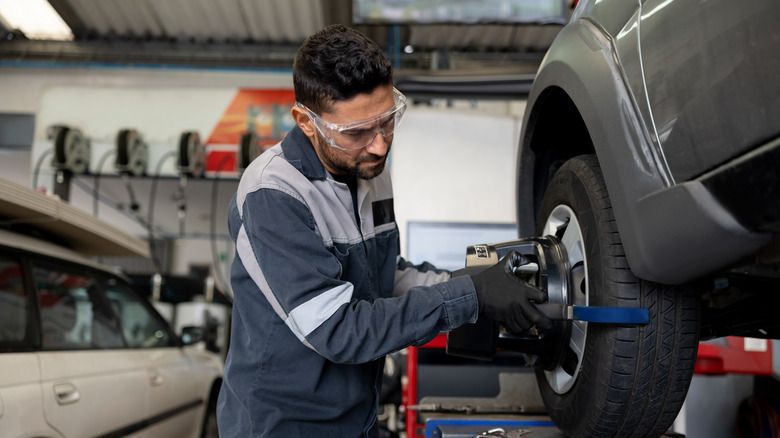
Your tires are the backbone of your entire vehicle, and without them, you can't go anywhere. You use them all the time, and they allow you to have a smooth trip between locations. You should never feel that you want to go with a cheap set of tires, or you're going to notice that you need a new set sooner rather than later.
The overall quality and how much you spend on your tires give you the best idea of when you need to replace them. You want to inspect them after you've had them for six years, but if everything is good, they could last you as long as 10 years. In terms of mileage, most tires last around 50,000 to 60,000 miles. However, if you buy a cheaper set, it could be sooner than that. Tires are made from rubber, and they're going to wear down over time as you use them. If you purchase higher-quality rubber, although it is more expensive in the short term, it could save you more money in the long run.
Warning signs that you need to replace your tires include wear from over- and underinflation and any noticeable edge wear, indicating that your wheels may be out of alignment.
Transmission fluid
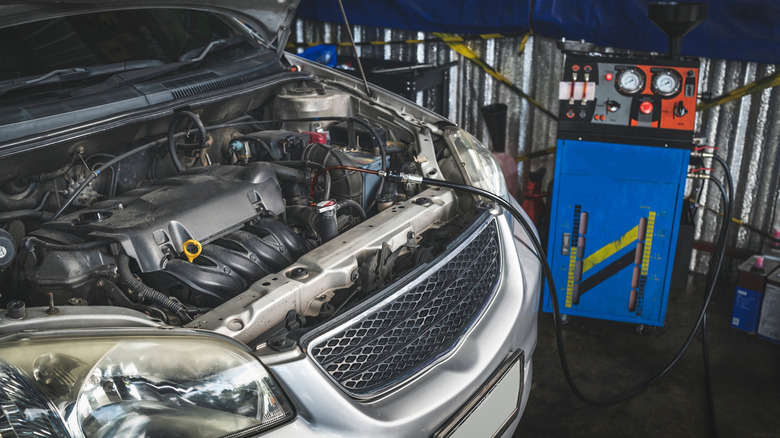
An unsung hero keeping your car going and the gears lubricated is the transmission fluid. It's the lubricant that moves between the gears and synchros in a manual transmission, and the clutch packs inside an automatic transmission. Regardless of what type of car you have, there's some transmission fluid inside your vehicle, keeping everything smooth. Eventually, this liquid does need to be swapped out for something new, and the timing that you want to do this depends on the type of transmission you're driving.
For those using a manual transmission, it's going to happen sooner, closer to 30,000 to 60,000 miles. However, if you're driving an automatic, as these have become much more common in modern car models, the range is much higher, closer to 30,000 to 100,000 miles. The exact timing of when this happens varies widely, and it comes down to your manufacturer's recommended interval and how hard you drive, since heat from stop-and-go traffic, hauling, and towing breaks the fluid down faster.
The signs that you need to switch out your transmission fluid are that you notice problems when shifting gears, the gears are slipping, or there's a delay when the transmission engages a gear.
Radiator cooling hoses
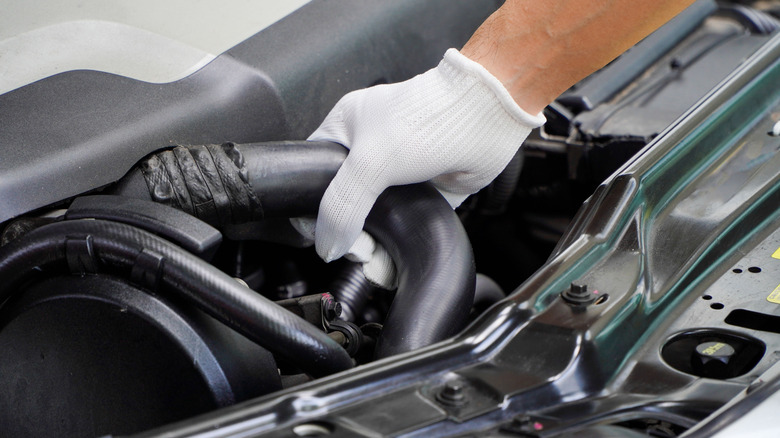
Just as important as your water pump, the radiator cooling hoses are the bridge that connects your vehicle's engine with your radiator. This is where the coolant travels between your radiator and your engine. You want these tubes to be in great condition, as they have to deal with the high temperature and pressure of the liquid going between these two locations, and they contain dangerous chemicals, so it's important that they don't leak onto your engine or elsewhere in your vehicle. These are made of rubber, which means it's only a matter of time before they degrade in quality.
The range for a radiator hose varies for each vehicle, but getting it checked and looked at by around 60,000 miles or four years is a good idea. It's also possible it can be well north of that, with some radiator hoses lasting closer to 100,000 miles. Still, it's better to have it checked than to pay for the thousands of dollars in damage it can cause if you don't look at it.
The signs that you need to get it looked at sooner include seeing any fluid leaking from underneath your car. You can also examine it yourself to see if there are noticeable bulges in the hose and if you can find cracks in it.
Differential fluid
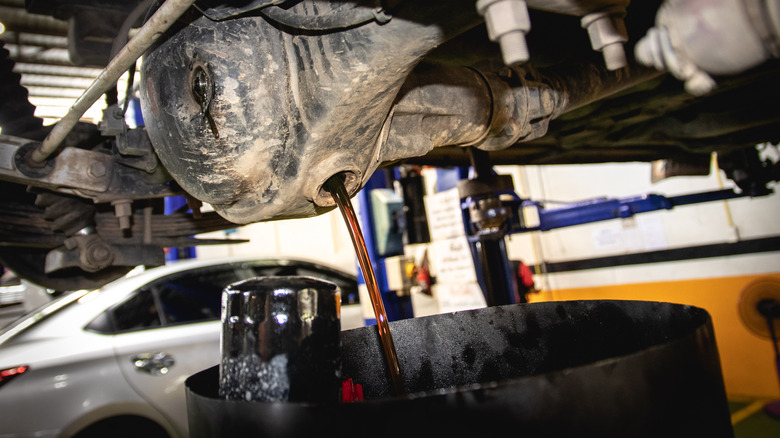
Another moving liquid and lubricating substance you have in your car is called differential fluid. It's not the same as transmission fluid, as differential fluid is thicker and operates on heavy-duty gears, primarily found in rear-wheel-drive and all-wheel-drive cars. The differential makes sure there's an even amount of power between the wheels, compensating for differences in speed between the inner and outer wheels while you're turning. The fluid works between these areas to keep the gears and bearings working smoothly, but these metals do grind and press against each other, meaning the fluid does pick up small particles over time. Eventually, you need to get that fluid replaced.
The mileage range for replacing differential fluid is between 50,000 and 100,000 miles for most vehicles, and sooner for vehicles that tow frequently or drive through sand or deep water. Most drivers won't have to worry about it for years, though.
You can hear when your car may need its differential fluid changed. You might hear a whining or howling sound as you drive faster, a grinding noise from the rear or front, or feel a vibration when you accelerate. Noting these before you check your car in with a professional mechanic is a good idea, as they're worth mentioning.
Shocks and struts
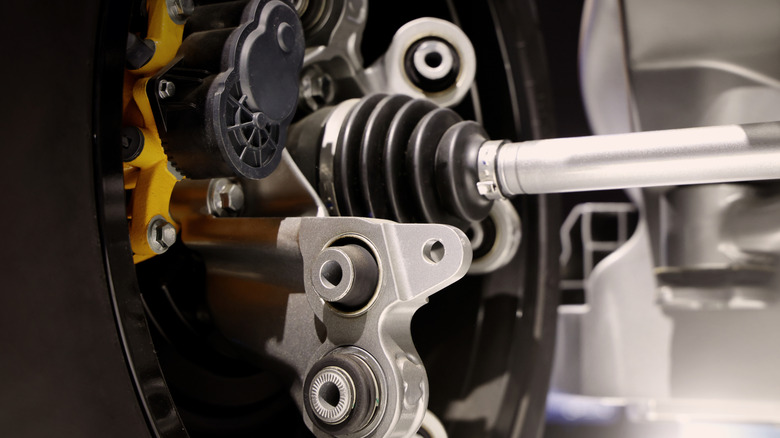
Your car's shocks help keep your vehicle in place as they dampen the rebound from your springs as you're driving. Because of how crucial they are, you'll be able to tell if your shocks are not working or if there's a problem with them. The same is true for the struts, but these are already woven into your vehicle's suspension system. Together, they provide traction for your car while you're driving and keep everything stable. When they're not working, you'll feel bumps in the road and rough spots that your tires go over, making it feel like you're strapped into a roller coaster with multiple turns.
Your shocks and struts should have a lifespan of 50,000 to 100,000 miles. However, much of this is dependent on the quality of the roads you're driving on and how fast you're going over those potholes. You should expect to replace them closer to the 50,000-mile side if you're regularly driving quickly over speed bumps, causing your vehicle to rock violently.
You should have your car's suspension system looked at if your tires are bouncing more often, it takes longer to brake, or your steering feels less precise than before.
Car battery
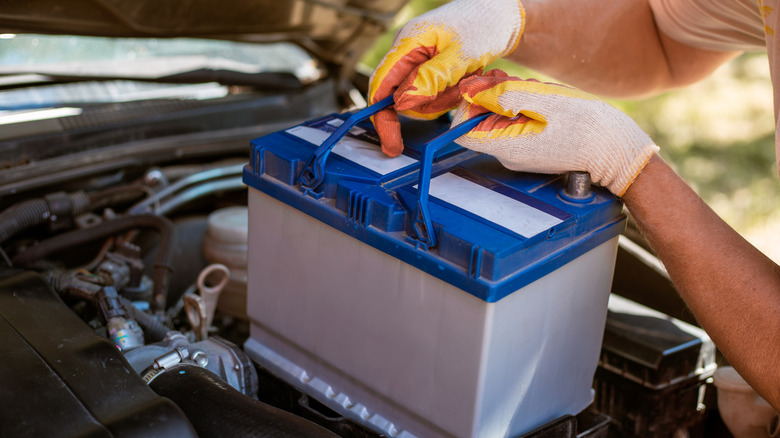
When you turn the key in your ignition to start your vehicle, if the battery is not working, nothing operates, and you're left trying to find out if you need a jump or not. A car's battery lets it start and keeps it going until you reach your destination. Without it working, nothing works, but you can jump-start a dead battery with another vehicle using jumper cables. The battery's power goes to the car's spark plugs, allowing them to ignite the fuel within the engine, and everything starts up. We have a thorough breakdown on how to jump a car battery if you ever need it.
There will be a time when you have to replace a battery, and you can expect to do this around four to five years or 50,000 miles. A car battery could last longer if you don't leave it idle for too long, and don't leave headlights or other electronic devices on for too long if you're not driving.
A good way for your battery to die too early is for you to leave your car in a single location without driving it around. This might happen for those who live in a city and are within walking distance of everything. Leaving a car without turning it on for weeks can easily kill the battery.