

5 Drawbacks Of Built-In Refrigerators
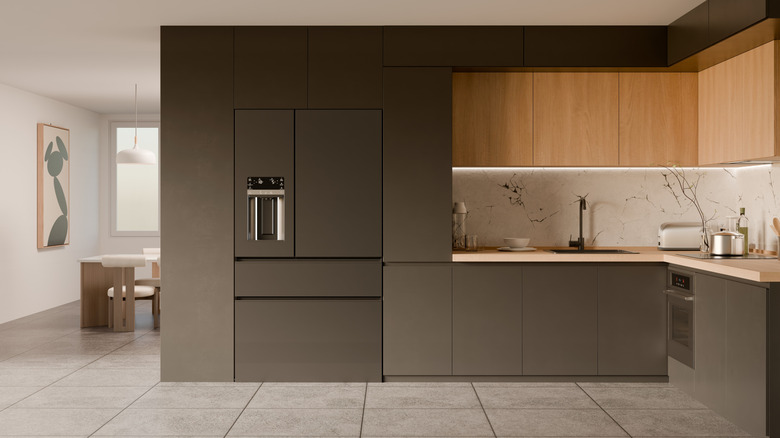
Generally speaking, a refrigerator is one of the more distinctive parts of the typical kitchen. It's a big, cold, rectangular box taking up a dedicated corner of the room. This isn't necessarily a problem, but from an aesthetic standpoint, a standing fridge can't really deviate from that particular design. This is why built-in fridges have emerged as an alternative, specially-designed fridges that are built directly into the cabinetry of your kitchen for a more unified look.
There are definitely some upsides to built-in fridges, such as their space-saving nature and how they can be customized to fit the theme of your kitchen. However, such a major deviation from the norm of cool storage is naturally going to come with some drawbacks, including the modifications necessary to fit a built-in fridge, their generally reduced capacity, and most of all, their potentially exorbitant upfront cost. Even if you have the space and cash for a built-in refrigerator from one of the major brands, you may want to consider these pain points before investing in one.
They can be expensive
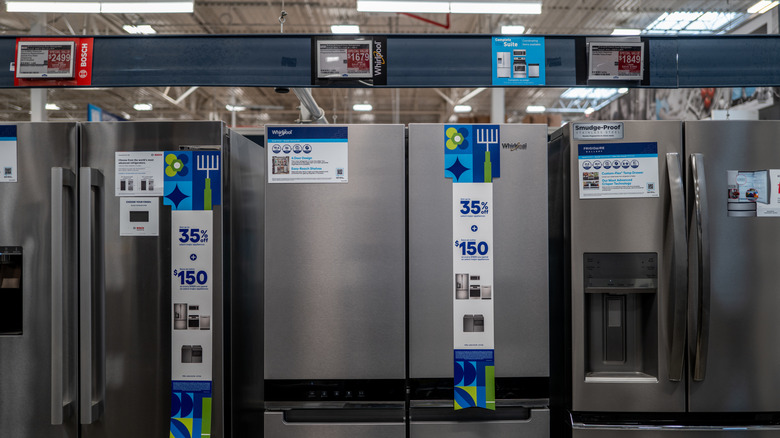
The first and foremost problem with built-in fridges is that, compared to free-standing models, they can be notably more expensive. The precise cost depends on the model and manufacturer of course, but generally, you're going to be dropping at least $2,000, with price ceilings potentially reaching as high as $14,000. Refrigerators may not be the cheapest appliances in the kitchen, with typical prices around $1,000, but that's still a lot less than you could expect to pay for a high-end built-in model, and you could certainly get something comparable in quality for less than that.
Part of what jacks up the price on built-in models is their particular features. Since they're supposed to be sleek and seamless, built-in models also tend to have extra features like voice control, air and water filters, and more durable components. They can be excellent refrigerators, to be sure, but good appliances often means pretty high prices, which won't be suitable for everyone.
They require specific modifications to your home
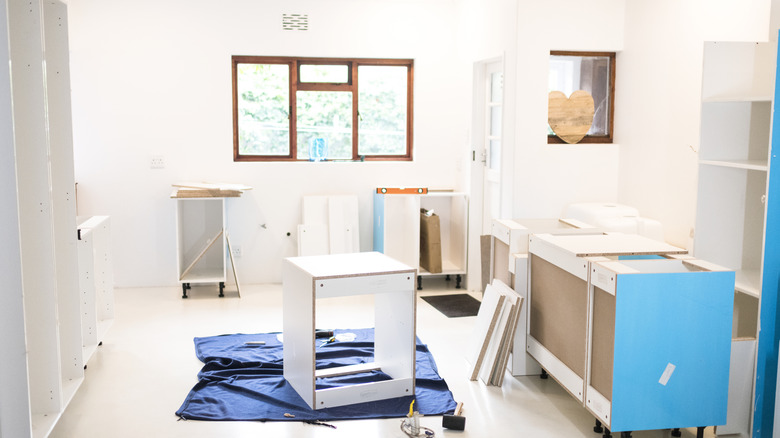
A free-standing refrigerator, by its nature, can be placed pretty much anywhere in your kitchen, so long as there's room for it. It doesn't exactly mesh with the decor, but it's definitely convenient that you can just put it wherever you want. A built-in fridge, on the other hand, needs to be built into your kitchen's walls or cabinetry, and there's a good chance that there isn't already going to be a perfectly fridge-sized divot in your walls or cabinetry to fit it into. Therefore, if you want a built-in fridge, you're more than likely going to need to have some modification work done.
To have a built-in fridge fitted for your kitchen, you'll need to hire contractors to move and modify the space so it can be slotted in cleanly. This process can be invasive, potentially lengthy, and above all else, very expensive, and that's on top of whatever you're already paying just to get the fridge. This also comes with an unspoken requirement that you need to own your home in order to have the modifications done. If you're renting your home, modifications probably aren't up to you, which means this entire notion is a complete non-starter.
They effectively can't be moved

Let's say you purchase a fridge for your kitchen, but it ends up being a less-than-satisfactory model for one reason or another. If it's a free-standing fridge, you can just take everything out of it and try moving it elsewhere in the kitchen, or just have it removed and replaced from your home with minimal fuss. On the other hand, if you have a built-in fridge and don't like where it is or how it's functioning, dealing with that is a comparatively much bigger headache.
By nature, built-in fridges can't really be moved from their designated spots, at least not without a lot of labor. Both it and its alcove are designed for each other; if you try to take the fridge out and move it elsewhere in your kitchen, you're going to have a big, wall-shaped fridge just sort of sitting in the middle of nowhere, as well as a big, empty alcove in the middle of your cabinetry or wall. The only real way to remedy this would be to install an entirely new alcove for the fridge's new spot, and remove or replace the old one with something else, but as we've established, this kind of work can be costly and invasive. This is all putting aside the physical effort it would take to gradually shimmy the fridge out of its original spot.
The capacity may not be as large as traditional fridges
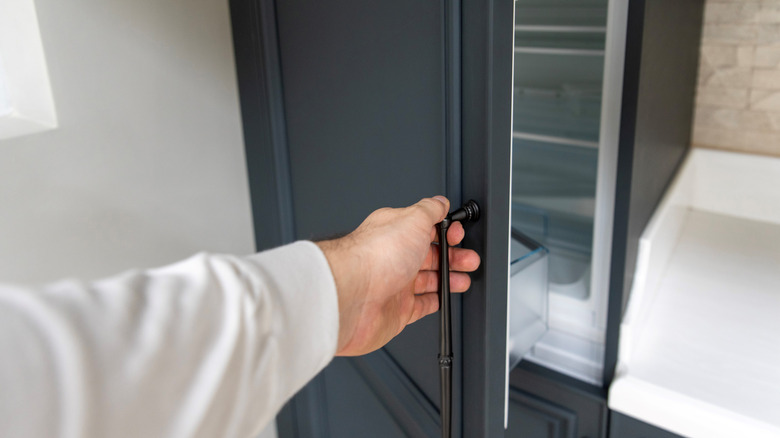
The majority of a free-standing fridge's internal space is readily available for storage, and depending on how large the appliance is, you could store a lot of assorted food and drinks in there. This is because, as mentioned, it's just a standing rectangular box, so there's plenty of space ready to use. A built-in refrigerator has a more complicated shape and design, which is what allows it to slot and blend in with surrounding counters and cabinets. This makes it look nice, but it doesn't do its storage capacity any favors.
In order to help them better blend in, as well as sit flush against the wall, built-in refrigerators generally have a smaller internal capacity than free-standing units. You can't really have a built-in fridge with the same capacity as a free-stander, as it would protrude from the wall, defeating the purpose, but you also can't make a full fridge-sized hole in your wall to make up the difference. The middle ground here is simply having a smaller internal space, which may be divided up between a traditional compartment and several cabinets, the latter of which may not be able to hold larger items like a gallon of milk. Built-in refrigerators aren't as small as European refrigerators, but they're smaller than conventional ones in any case.
Taller fridges can be harder to access
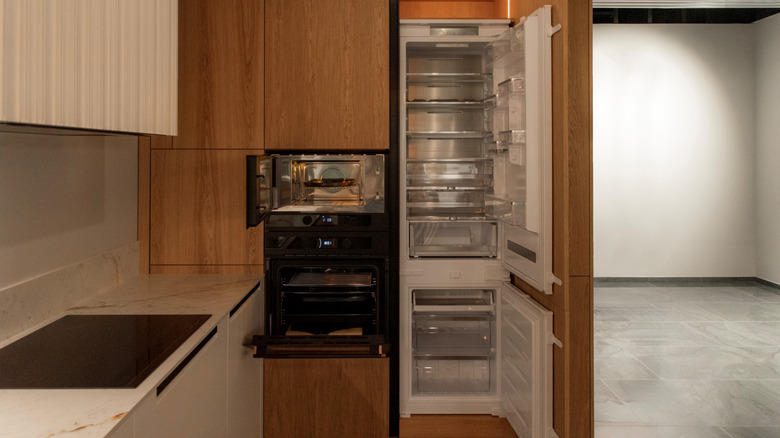
In an effort to assuage the aforementioned capacity concerns, some built-in fridge models may try to make up the difference by going higher instead of wider or deeper. In theory, this is a perfect fix; you still get to have it flush against the wall, and it has more space to store stuff in. However, whether or not this actually works for you personally is heavily contingent on how tall you are.
Depending on where the compressor is placed on a particular built-in fridge model, they can reach heights of around 6 feet, 7 inches up from the ground. Unless you're of a particularly tall stature, you're not going to be able to reach the top shelf in the main compartment, at least not without having to drag a stool over every time you open the fridge. This can also be frustrating if you have kids, as they'll likely be too short to reach anything above the first couple of shelves, if that.