

3 Refrigerator Models You Should Steer Clear Of
We may receive a commission on purchases made from links.
Choosing a good refrigerator isn't easy. Energy-efficient appliances save money in the long run, but all the most efficient refrigerators are very expensive upfront. Sometimes, the extra price is worth it, and sometimes you're better off with the cheaper option. Compared to that, finding a bad refrigerator isn't very difficult. Poor energy ratings (or the lack of an Energy Star label) and terrible user ratings are usually enough to scare you off a poor choice. But what about the really terrible stuff?
There's a difference between a bad deal and a fridge you should run away from. The first wastes more energy than it should; the second is over $4,000 and less efficient than a $1,000 alternative. One has some hot spots in the fridge; the other thaws your freezer whenever the temperature increases in the kitchen. This list covers only a handful of refrigerators, but they're all models you should absolutely steer clear of.
Frigidaire EFR786
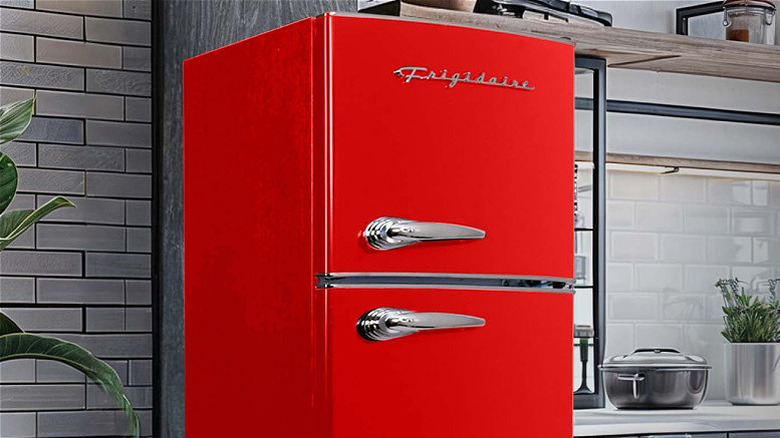
What's better than a retro red-finish fridge with chrome accents and a freezer on top? A retro fridge that performs well and is comfortable to use. The Frigidaire EFR786 is quite stunning if you like the old-school style, but it comes with quite a few drawbacks. It's loud, has very poor energy efficiency, and while it reaches and holds the right temperature thanks to a decent thermostat, it offers no special control over the freezer. Only one temperature level can be set for the entire machine, though of course the freezer will be colder than the fridge.
Some issues are inherent in the retro design, like the slightly larger size when compared to other 7.5 cubic feet fridges, but others seem to be the fault of this specific model. The freezer on top, fridge on the bottom is one of the most striking features of 1950s-style fridges, and according to the Department of Energy (pdf), top-freezer models tend to be more efficient. That did not help the Frigidaire achieve good (or even average) levels of energy consumption, according to Consumer Reports testing, all the while making the fridge a bit of a pain to operate. Unless you use your freezer as much as your fridge, having to get down on your knees every time you use the (not very good) crisper drawer is a major downside of this top-freezer model.
Smeg FAB38RCR
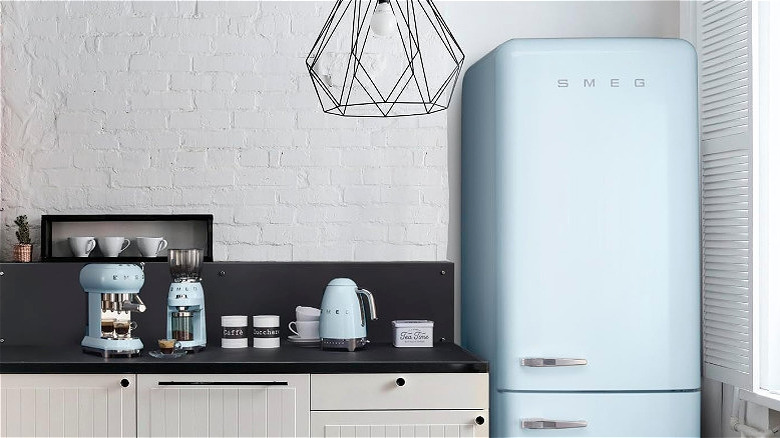
Retro fridges seem to be some of the worst on the market, and even major brands aren't immune to their shortcomings. If anything, a 1950s-style fridge like the Smeg FAB38RCR comes with a slew of issues on top of being really expensive. Style or no style, $4,800 for a fridge is a lot of money, and it would be even if it performed perfectly well. At the time of writing, it's about $1,000 cheaper on Amazon, but stock is pretty low.
The Smeg fridge's real problem is that it doesn't exactly perform well. The most important issue that plagues the appliance is the poor temperature stability, which means temperature fluctuations based on the outside temperature or on nothing at all. The first can be annoying because it means changing the fridge's thermostat with the seasons, but the second can be legitimately dangerous. Testers and reviewers at Choice.com.au found that freezer temperatures fluctuate up and down by as much as 50 degrees Fahrenheit, which is enough to make food go bad sooner.
There are other issues with the fridge, but they're not as important as food safety, and they aren't exactly unexpected, coming from an appliance that looks like it was designed and built 60 years ago. The big Smeg FAB38RCR is really quite big, at 75.5 x 31.5 x 30.5 inches, but it can only hold 18 cubic feet of groceries (fridge and freezer combined). Even an affordable 18-cubic-foot refrigerator with no 1950s styling, like the $750 Frigidaire FFTR1814W, is nearly 10 inches shorter.
10 and 15 liter Cooluli compact refrigerators
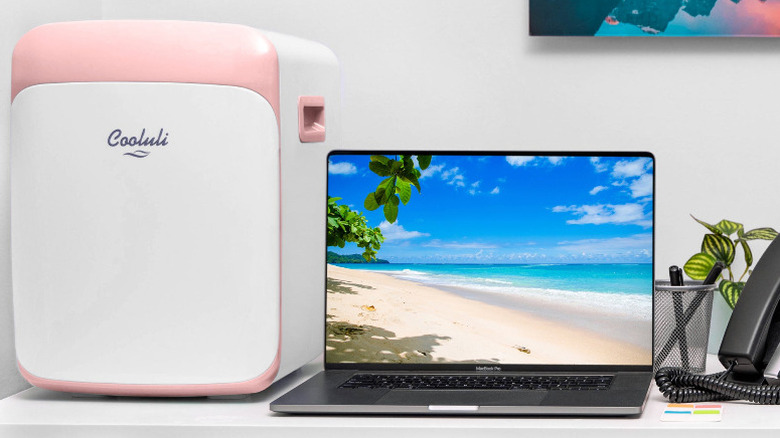
Some fridges are best left alone because they consume too much energy and can't keep a stable temperature, while others are too expensive for what they offer. It's not every day that you find a fridge that could spontaneously combust. Cooluli was at the center of a massive recall of compact refrigerators, with 250,000 units affected as of August 13. The fix is simple — a replacement DC power cord — but the risk is quite high. According to the CPSC, there have been 19 reported incidents of melting, fire, and smoke produced by the company's 10- and 15- liter mini fridges, reportedly causing one smoke inhalation injury and over $80,000 in damage.
Mini fridges aren't strangers to controversy, but that's because they're inefficient and break easily, not because they cause tens of thousands of dollars in damage. While it's unlikely an affected mini fridge would still be sold on Cooluli's website or on the brand's Amazon page, you could probably find a recalled model on the used market, from a reseller, or at a local store. Unless you have a way to verify the batch number and whether the power cable fix was applied, you're better off avoiding these Cooluli mini fridges. There are plenty of other mini fridge models on sale, anyway.
Methodology
This list exclusively covers models that were either highlighted by professional reviews and testers as extremely subpar for their category or price range, or refrigerators that have gone through large recalls for safety reasons. The latter only includes relatively recent models that you could realistically still find for sale from resellers and in local stores.