

6.0 Vs. 7.3 Powerstroke: How Do The Diesel Engines Compare?
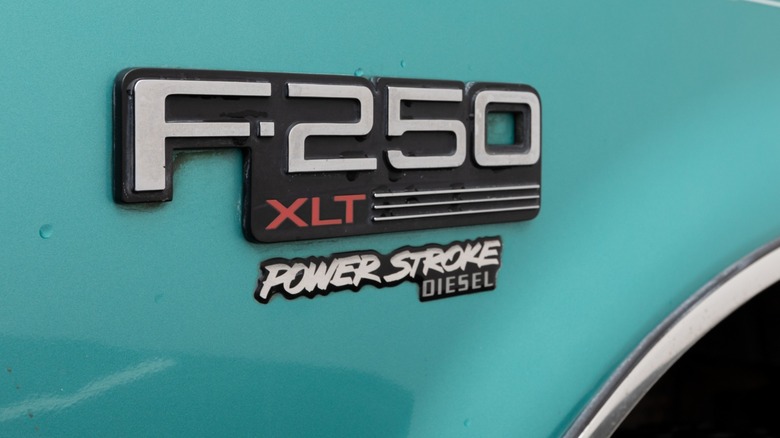
Comparing the 6.0 and 7.3 Ford Power Stroke diesel engines is a little like comparing apples and oranges, except both fruits are actually good. Still, the two Power Strokes have some similarities and differences that are noteworthy.
The 7.3 Power Stroke, the first Ford turbodiesel to wear the Power Stroke badge is widely regarded as one of the best American diesel engines ever made. It debuted in 1994 as the continuation of a partnership with International Truck and Engine Corporation, which later became Navistar. The 6.0-liter turbodiesel is the second Power Stroke to come out of the collaboration with Navistar, but its inherent and plentiful problems keep it off the list of most reliable Ford Power Stroke diesels.
The 6.0 Power Stroke may have some legitimately concerning issues, but it created considerably more horsepower and torque than the 7.3 it replaced in 2003. In addition to providing the Ford Super Duty family with more power, the 6.0 Power Stroke was the first of the Ford/Navistar turbodiesels to step into the fray of increasingly tighter emissions regulations.
The 6.0 may be Ford's worst Power Stroke engine
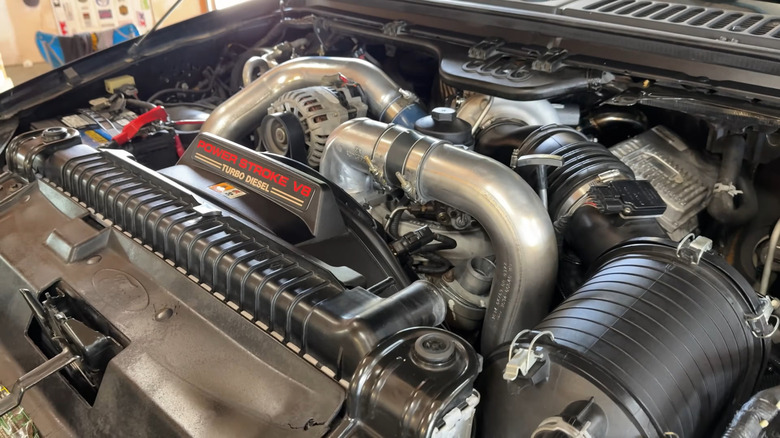
Ford's second Power Stroke engine, the 6.0-liter turbodiesel, had big shoes to fill (so to speak) when it replaced the original 7.3-liter unit in 2003. While its 365 cubic-inch displacement was considerably smaller than the 444 cubes of the 7.3, it made more power, pushing out 325 horsepower and up to 570 lb-ft of torque by the end of its relatively short production run.
Some of the key features that allowed the smaller engine to make more power centered around its air and fuel delivery systems. Increased air flow came from an improved Garrett GT3782VA turbocharger with variable-geometry vanes. Ford also doubled the number of valves in each cylinder providing better flow into and out of the engine. The 6.0 used a direct fuel injection system delivering up to 3,600 psi, which was designed to boost fuel atomization and a more complete fuel burn in the cylinder.
While these improvements looked good on paper, they were the source of a number of the 6.0-liter Power Stroke's common problems. Carbon build-up on the variable-geometry turbo vanes caused them to stick, and you have to make sure the oil is squeaky clean – various contaminants can cause the spool valve in the new high-pressure injectors to fail. However, it was the lackluster design and placement of the head bolts that earned the newer Power Stroke its notorious Six Point Blow nickname, due to the frequency of blown head gaskets.
The 7.3 Power Stroke is more reliable than the 6.0
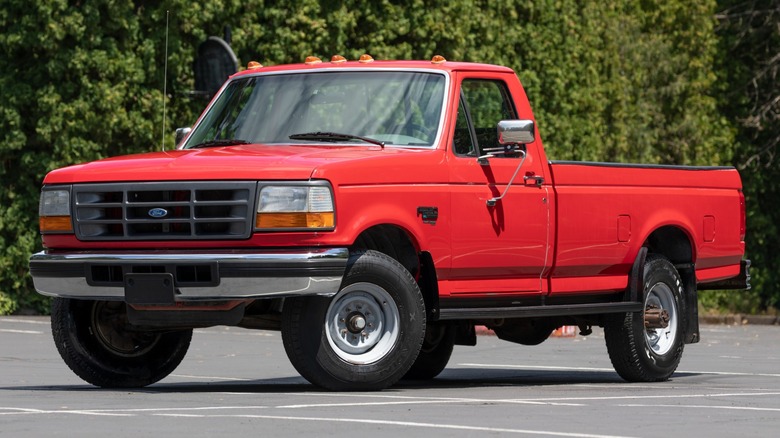
While there's no question that the 7.3-liter Power Stroke is more reliable than the 6.0-liter diesel engine that replaced it, we should note that the 7.3 wasn't without its problems. Some say that 1998 to 2000 were the best years for the 7.3-liter Power Stoke, with its worst years coming in 2001 to 2003.
Problems such as excessive engine noise, camshaft position sensor failure, leaking fuel filter housings, turbocharger issues, and engine overheating plagued the 7.3 during its final production years. Engines built before 1998 suffered from misfires due to a faulty wire harness connection. Still, at least those issues didn't require pulling the cylinder heads, like a blown head gasket in a 6.0 would.
Among the 7.3 Power Stroke's most significant advantages over the 6.0 is its relative lack of emissions controls. The engine does not require diesel exhaust fluid (DEF, also called AdBlue) to operate, and there's no high-temperature regeneration cycle required to clear the diesel particulate filter (DPF). Another positive is that the turbocharger's fixed vanes don't get stuck. Lastly, although the 7.3's injectors don't atomize fuel as well, it's a more reliable system.
In 1994, the 7.3 Power Stroke produced 210 horsepower and 425 lb-ft of torque. Changes to the turbo, injectors, and tuning in mid-1999 and 2001 resulted in incremental power increases. In its final years, the 7.3 maxed out at 275 horsepower and 525 lb-ft of torque when paired with a manual transmission.