

How The Ford 6.0 PowerStroke Engine Earned Its Notorious 'Six Point Blow' Nickname
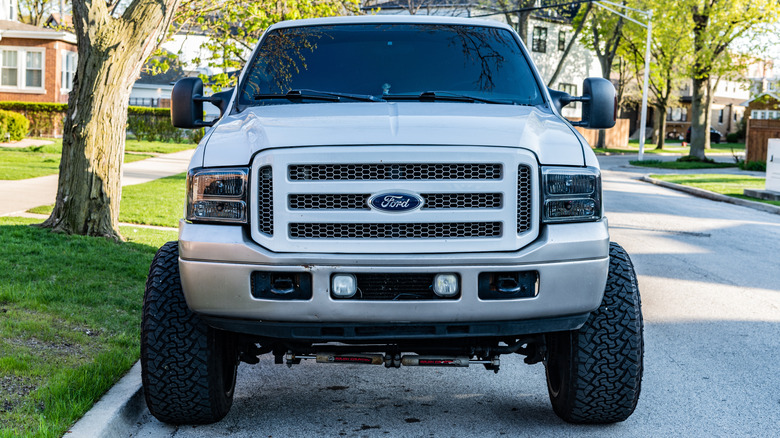
The Ford 6.0-liter Power Stroke diesel engine was born from the need to meet more stringent emission control regulations beginning in 2003. Ford used this engine in the F-250 up through the F-750, some Ford Excursions, and its E-Series vans, from 2003 through 2007. The 6.0-liter Power Stroke diesel was also the answer to Ford's need for a competitive diesel engine in terms of power output, when the GM Duramax LB7 and the Cummins 6BT in the Ram were both producing more than 300 horsepower. The Ford 6.0-liter Power Stroke diesel produced as much as 325 horsepower, which kept it in the horsepower race among heavy-duty pickups. Unfortunately, the 6.0 Power Stroke became known as the worst Ford diesel engine, also identified as the "Six Point Blow."
Some of the 6.0-liter Power Stroke's problems were unrelated to the way it came from the factory — but were instead the result of owners attempting to hot-rod it. The "Six Point Blow" nickname came about because these owners upped the engine's normal power output using aftermarket tuning practices or equipment upgrades that produced more boost than the standard engine.
This would overstress the engine and cause the head gaskets to blow, hence the name. Failure of the head gasket is one of the most common problems with Ford's 6.0l Power Stroke diesel engine. The solution for the blown head gaskets, which use four torque-to-yield bolts to keep the head clamped on tight but can stretch and fail, is to use upgraded aftermarket studs made by a company like ARP.
What other problems did the 'Six Point Blow' engine suffer from?
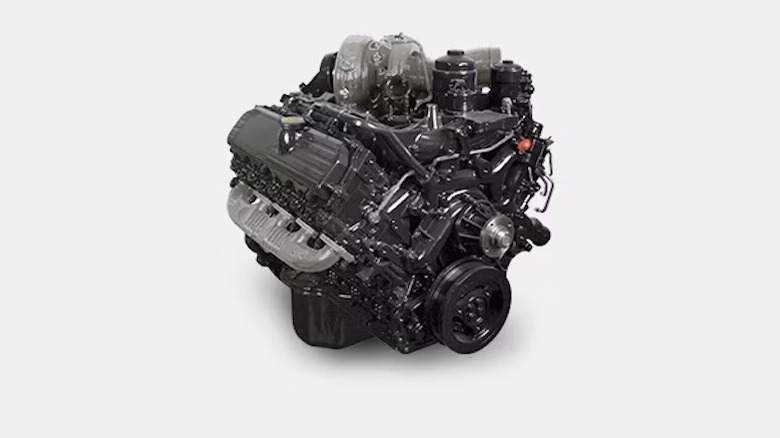
The Ford 6.0-liter Power Stroke engine used a variable geometry turbocharger sourced from Garrett. While this gave the Power Stroke a distinctively loud whistle, it served to provide plenty of boost at both low and high RPMs. Unfortunately, it had problems with carbon cementing and rust buildup, which could cause it to stick in one position. Depending on where the turbo got stuck, this condition could produce anything from no boost to too much boost, which could be catastrophic. An aftermarket turbocharger can resolve this problem.
The problem that is most reported on this engine is issues with the oil cooler. Silicon sand from the engine casting process can be left behind and block the filter after everything is assembled. High oil temperatures can then lead to failure of O-rings and gaskets. This can be addressed with rigorous maintenance at the proper intervals. Other reported issues include exhaust manifold leaks due to warping and cracks, problems with the exhaust gas recirculation system, fuel injector failure, and power losses due to a faulty high-pressure oil pump.
If you own a truck that has the Ford 6.0-liter Power Stroke diesel engine under its hood, you are probably extremely aware of what it takes to keep it running smoothly. It's a combination of diligent maintenance and dealing with the engine's shortcomings proactively. That means changing the oil every 5,000 miles using a quality filter, changing the fuel filter every 10,000, upgrading weak components, and addressing any issues when they first appear. That's how you 'bulletproof' a Ford 6.0 engine.