

2026 Jeep Grand Wagoneer Review: A Lot To Like, And A Lot Less To Confuse
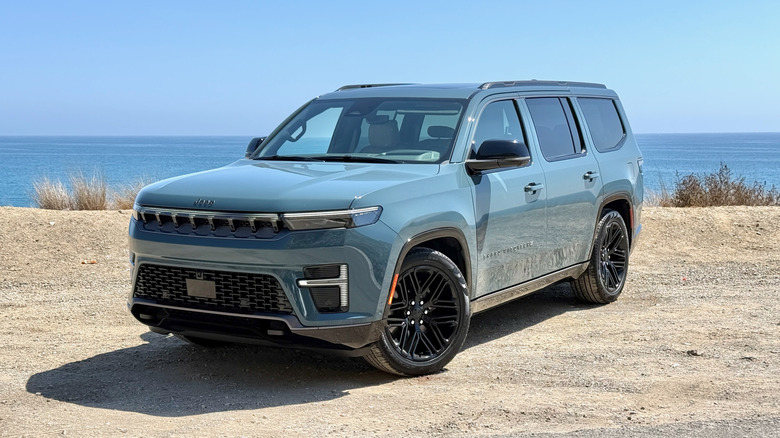
For a few years, things were confusing if you wanted a three-row SUV from Jeep. They had several options to choose from, many of which shared the same name. There was a standard Wagoneer, in both standard and L length, as well as a Grand Wagoneer in both those sizes. So that's four models with the same name, not including the all-electric Jeep Wagoneer S, making it five.
The EV Wagoneer is now on a sabbatical (with the Wrangler-eque Recon EV holding a bit of space for it), and the standard Wagoneer has been pulled from the lineup, so for the time being, the Grand Wagoneer is the one that's stuck around.
 Travis Langness/SlashGear
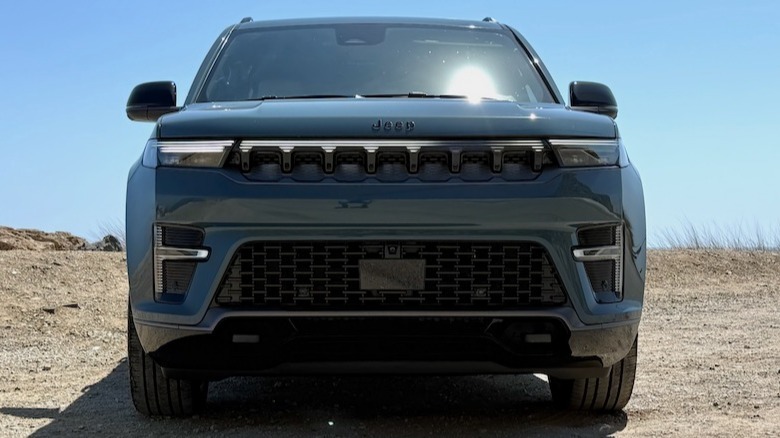
Offering an upscale vibe, the Grand Wagoneer was — and remains — the luxurious family hauler of the Wagoneer bunch. It gets a new front fascia, some new exterior colors, and simplified trim levels. Its pricing reflects that it's on a mission to provide a premium driving experience, but it's still strong enough to tow a big trailer and large enough on the inside to transport even the biggest families. Jeep offered me the opportunity to test the newest Grand Wagoneer for a week, and having recently driven a few other full-size three-row family haulers, I thought it would be a great chance to see how these hefty rivals stack up next to each other. Plus, it's way less confusing now that there's just one Wagoneer in the mix.
A single solitary engine choice
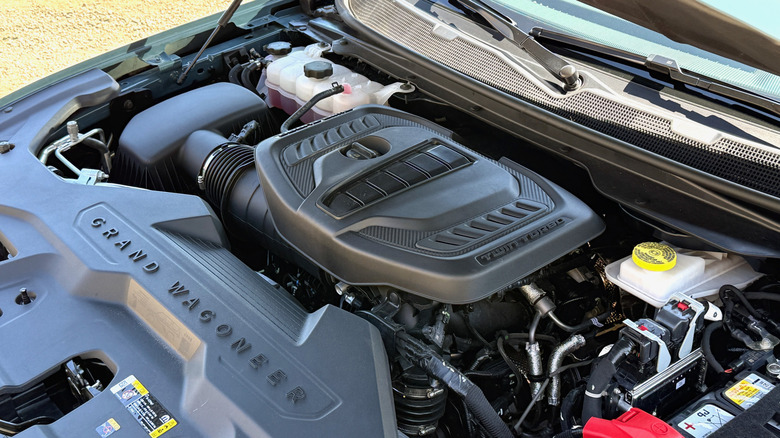
Right now, there's just one engine for the Grand Wagoneer: it seems like simplicity really is the theme at the moment. While we wait for the Grand Wagoneer's REEV powertrain, which may or may not arrive in 2026, the only engine currently available for the big SUV is the Hurricane motor. The twin-turbo 3.0-liter inline six puts out 420 horsepower and 468 pound-feet of torque, the same output it provides in vehicles like the latest Dodge Charger. Shifts are made with an eight-speed automatic transmission, and there's a choice of either two- or four-wheel drive with the Grand Wagoneer.
 Travis Langness/SlashGear
The Hurricane engine doesn't whip the Grand Wagoneer's tires into a frenzy, but it does move the hearty SUV forward at a pretty quick pace. The 540-horsepower version of the six-cylinder engine that could be had in years past is no longer available in the Grand Wagoneer, but buyers likely won't miss it much. The standard version provides gutsy forward thrust when you mash the throttle, and more than sufficient merging and passing power if you need to get around slow-moving objects on the highway. Shifts are smooth under full acceleration, and when you're on an uphill grade, the eight-speed auto doesn't seem to hunt around for gears much.
Towing leads the class, even without a V8
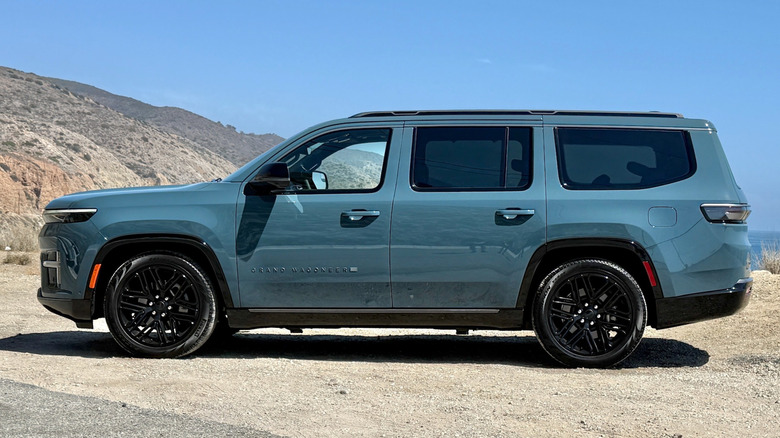
The battle for pickup truck dominance gets a lot of automotive headlines, and rightfully so, considering how many sales the various 1500-series workhorses generate, but the three-row SUVs that are based on the same platforms benefit from all the hard work of those trucks. The Suburban from the Silverado, the Expedition from the F-150, and in this case, the Jeep Grand Wagoneer from the Ram 1500.
 Travis Langness/SlashGear
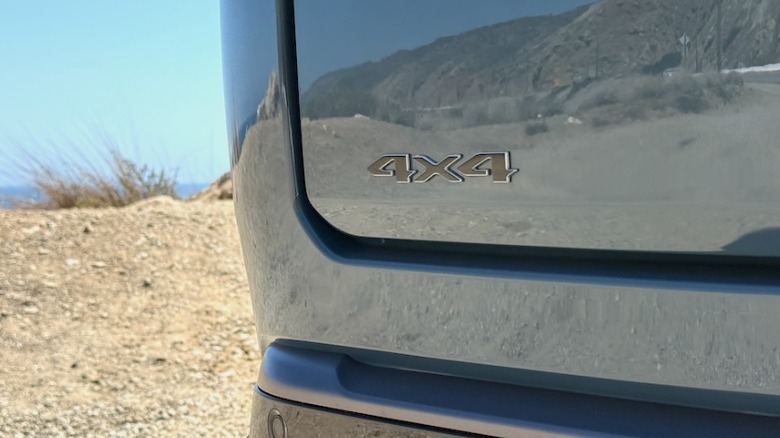
Using much of the same underpinnings as the Ram 1500, the Grand Wagoneer is capable of towing up to 10,000 pounds. Forget tiny boats on single-axle trailers: that's enough to drag your race car to the track and have some pulling power left to spare. I didn't have a chance to tow with the Grand Wagoneer during my test, but it would be at the top of my list of family haulers if I were regularly pulling a trailer. The Expedition gets close to the Jeep's pulling power, with 9,600 lbs of towing capability, but the Chevy Suburban maxes out at just 8,200 lbs, leaving the Jeep in the lead, even if it is without its higher-horsepower engine option.
The ride could use a bit of work
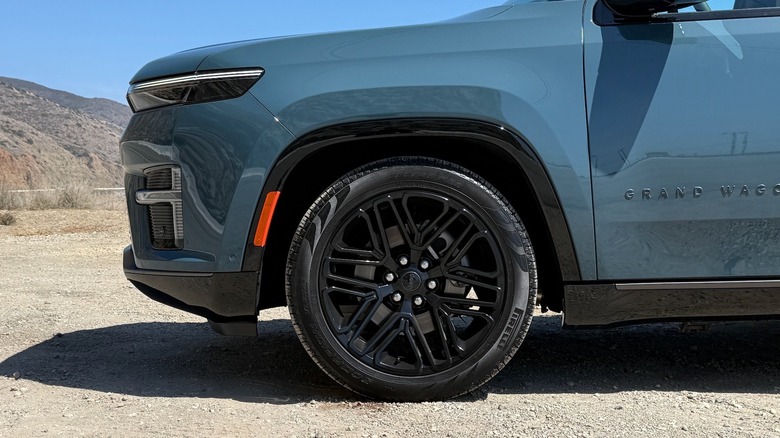
It can certainly tow a big trailer, but it's tough to hide the Grand Wagoneer's truck-based underpinnings over rough roads. The Jeep's ride feels a lot like you're piloting a pickup truck, with small bumps making their way into the cabin, and a bit of road noise coming from the large Pirelli Scorpion tires. The optional 22-inch wheels don't do it many favors over small road imperfections, which there are a lot of in Los Angeles.
 Travis Langness/SlashGear
The Grand Wagoneer I tested, however, felt comfortable enough for road trips, and the Quadra-Lift air suspension was able to absorb a lot of impact from larger road imperfections. The air suspension is part of a pretty expensive options package, though (more on that in a bit), so not every Grand Wagoneer will be as forgiving on the highway. The expense of the air suspension aside, once I was away from the pockmarked asphalt of the city, it felt much nicer to go for a drive in the big Jeep. And thankfully, the well-appointed interior makes up for lost serenity.
Enough comfort to overcome a stiff ride
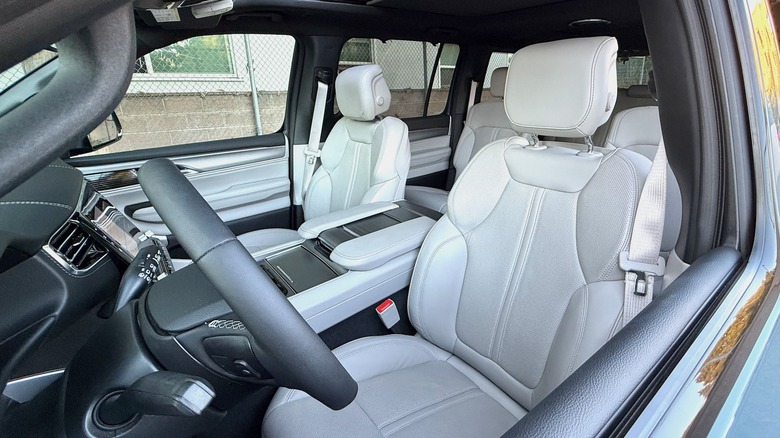
So, it's not the most calm and peaceful SUV on the road, but the Grand Wagoneer does provide a pretty impressive cabin, especially when it comes to space and materials. There's padding in all the right places, with soft spots for your elbows, and well-cushioned seats in all three rows. The seats are supportive, well-bolstered, and padded with just the right firmness for the long haul.
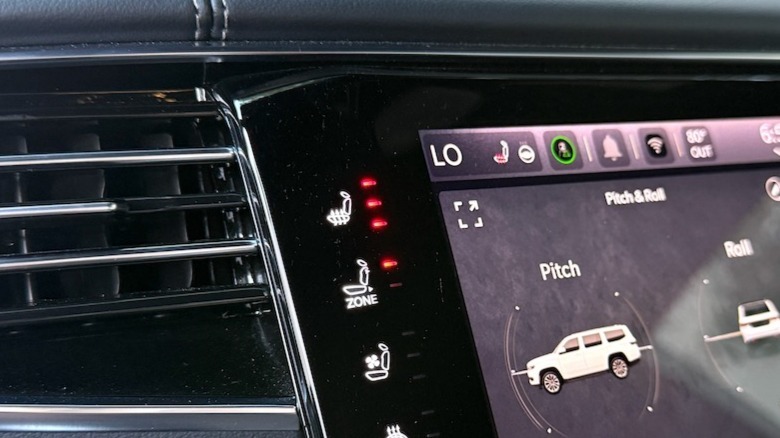
What's more, the front row of seats employs a tech I've only seen on a few cars before: split-heated seats. You can heat the back or the butt of the seat, independent of each other, or heat both at the same time. As someone who's had a few injuries and enjoys a good bit of heat on my back without the unnecessary heating of my butt, this is the perfect luxury feature.
 Travis Langness/SlashGear
The climate control is just as laudable. It works quickly to heat or cool the Grand Wagoneer's massive cabin, and it's easy to adjust. I didn't have small basketball teams to transport around while I was testing the Grand Wagoneer, so I did a lot of climbing around on the inside solo, but it was easy to load into the second and third row — both of which will accommodate even tall adults. Getting into the back to load a child's seat shouldn't be too hard, either. It's also a quick-and-easy enterprise to fold the seats down in a hurry if you're making some sort of impromptu hardware-store lumber run.
You won't be asking for more screens
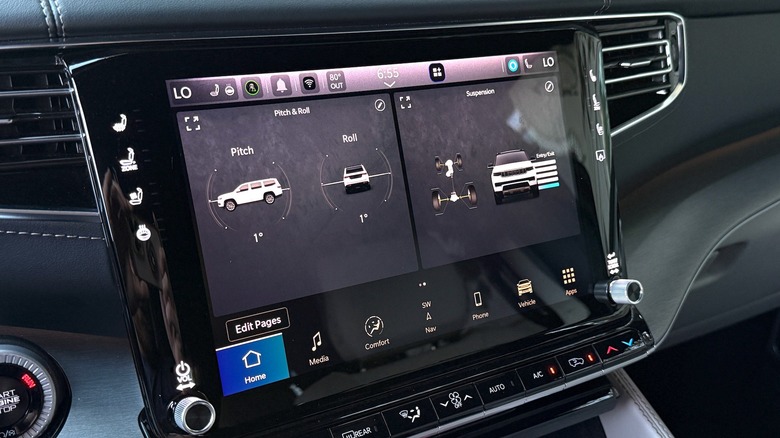
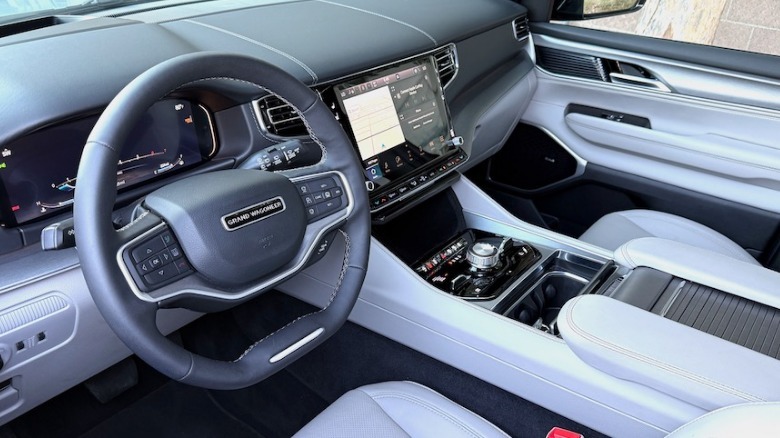
Controlling all the gadgets in the spacious and premium cabin, the Grand Wagoneer has a ton of modern tech, most of which was easy to use and pleasant to look at. The steering wheel and dashboard, for instance, are laid out in an intuitive way, with high-quality buttons and an appealing style. It was easy to just hop in and know where all the controls are — even if it had been a while since I drove a Grand Wagoneer. There's a bit of piano black here and there, but not enough to be a distraction.
 Travis Langness/SlashGear
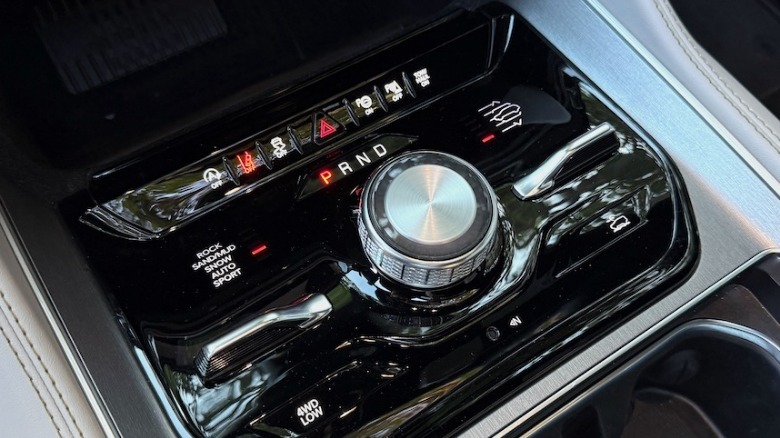
The 10.25-inch digital instrument cluster and the 12-inch center touchscreen were easy to read at a glance, with high resolution displays and lots of cool information to show off. The off-road screens seemed a bit unnecessary on this road-going version of the Grand Wagoneer (especially so with its 22-inch wheels and all-season tires), but I imagine that would be a great tool to have if you were exploring the outdoors on a regular basis.
A big stereo and adaptive cruise control that leaves a big gap
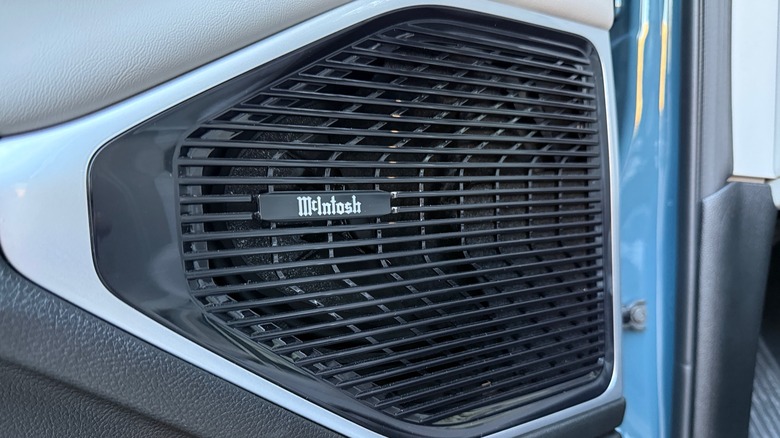
Appealing to audiophiles, a big 19-speaker McIntosh stereo was a part of this Grand Wagoneer's option sheet, replacing a standard 9-speaker stereo and providing plenty of volume for most concert-acclimated ears. USB ports were seemingly everywhere, as were storage areas for smartphones and water bottles. Apple CarPlay connected immediately every time I started the Grand Wagoneer up, and there were never any glitches or drop outs during my test.
 Travis Langness/SlashGear
The one small issue I did have with the Jeep's tech was the laziness of the adaptive cruise control. It kept a very conservative (read: long) distance from traffic in front, and it took a long time to recognize that traffic had moved on. That meant plenty of people dove in front of me looking for a gap during heavy traffic, or went to weave around me when the big SUV didn't move fast enough. I suppose this sort of operation is better than the other extreme (following too closely or taking off from a stop too quickly), but it was still frustrating enough to make me turn the system off most of the time.
2026 Jeep Grand Wagoneer Review verdict
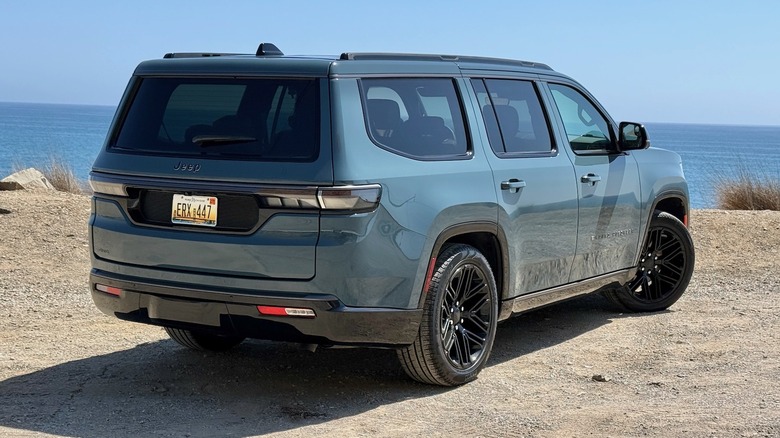
There's a lot to like about the Grand Wagoneer, but for one to make sense, it needs to be priced properly. The last time the standard Wagoneer was on sale in 2025, it had a starting price of $61,945 (including a $2,000 destination fee). The base-trim Grand Wagoneer cost over $20,000 more at the time, and between the two variations of the SUV there were over a dozen trim levels to choose from. A lot has changed since then. Now, the standard Grand Wagoneer starts at $67,485 (including a $2,795 destination fee).
That's significantly more than the old standard model, but an even bigger distance from the previous year's luxurious Grand Wagoneer. My test SUV, further up the spectrum in the Limited Reserve trim, with a few options, had an MSRP of $83,955. That's still way shy of the topped-out price of Jeep's most-expensive model, the Summit Reserve with its long wheelbase, briskly riding past a $105k starting price. It's not exactly a goldilocks model, but the mid-level Grand Wagoneer has pretty strong appeal.
Those top models do battle with the likes of the Cadillac Escalade and Lincoln Navigator, both of which are a bit better trimmed and more luxurious, especially when it comes to ride quality. So, where the Grand Wagoneer does best is in the middle of the lineup. It still has a massive interior, premium materials, and all the modern tech you'd expect in a luxury SUV, but without going into six-figure territory. That's the sweet spot for this big, three-row Jeep.