

10 Signs You Should Replace Or Upgrade Your Air Conditioner Or HVAC System
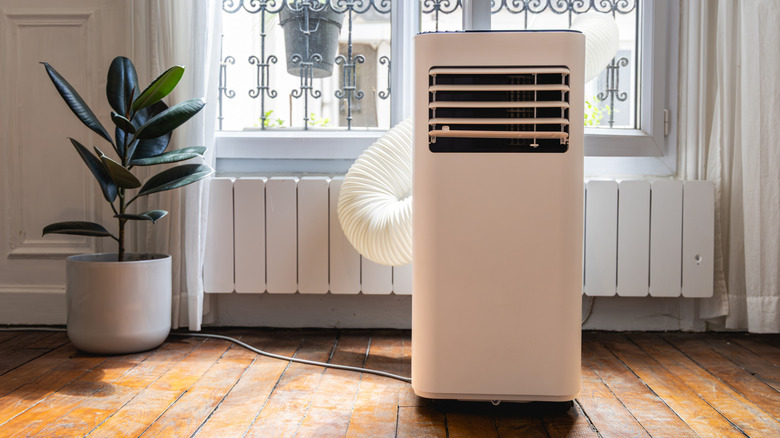
The role air conditioning and temperature regulation play in keeping you comfortable across seasons can't be overstated. In the summer, when temperatures can soar into three-digit territory on the Fahrenheit scale, it's the primary defense against profuse sweating in offices, cars, and homes. When it gets colder, though, a basic air conditioner might not do you much good since it only cools spaces. That's where the heating in a full-blown HVAC system comes in to keep you warm.
Air conditioners and HVAC systems aren't particularly high-maintenance appliances (the rule of thumb is once annually), so while they're doing their job, you may not pay them much mind. That may be great for your peace of mind as an owner, but that low-maintenance status makes it easy to miss obvious signs that your unit is in distress and needs attention. Sometimes, a simple repair can get things up and running properly again. At other times, though, you might need to upgrade your current setup or replace it outright.
Choosing between these three routes isn't easy, especially given how expensive they can all be. However, applying the $5,000 rule makes things easier; multiply the age of your appliance by the estimated repair bill. If the product lands north of $5,000, you should replace the unit. Upgrades are a bit of a gray area here — they are cheaper than a full replacement but address the problem with efficiency rather than repair. Not sure of the signs that tell you which way to go before your unit gives out? Here are 10 of them.
The unit is older than 10-15 years
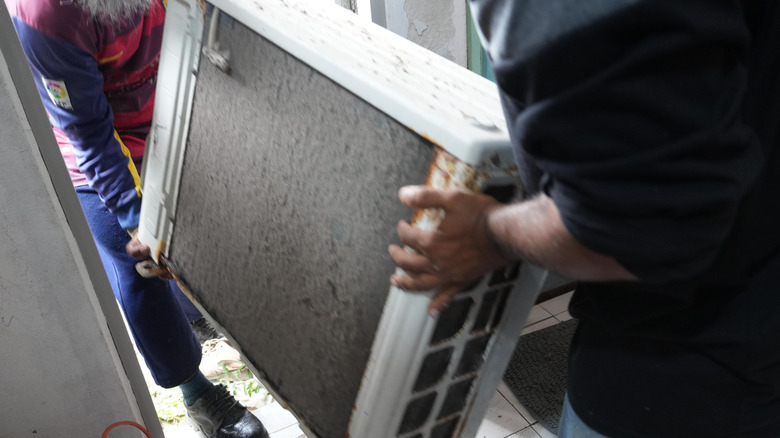
You might be wondering how long the average AC unit lasts. The exact number depends on the type you have installed and how well you take care of it. However, as a baseline, you should usually get about 10 years of service from a cooling system under regular usage conditions. Wall-mounted units can run for about 15 years, and HVAC systems can even hit 20+.
That's not to say you can't stretch your air conditioner or HVAC system's useful life beyond two decades or more, but when your unit starts to approach retirement age, it's your first sign to start looking for a replacement. Parts that were previously durable can start to break down, and replacing them at that age can get pricey. The older your unit gets, the harder it usually is to find a matching replacement part for a high-quality repair. That scarcity drives up the price of a spare, if you find one at all.
Finding the right part is no guarantee your unit will be as good as new, either. From a labor perspective, a unit older than 15 years can be unpredictable business; technicians might not come across that type of setup often. If that's the case, the specific know-how to manipulate the wiring under the hood is pretty much up in the air. It's not quite guesswork, but there'll be enough unknown variables to make perfect repairs questionable.
The unit uses an R-22 refrigerant system
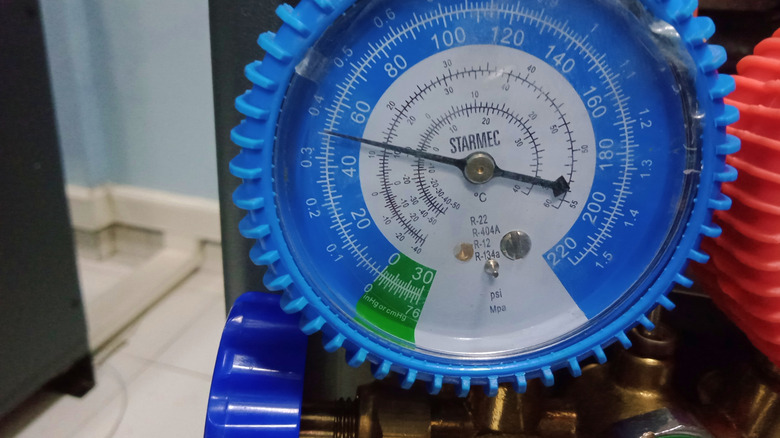
The refrigeration system in a cooling unit is sealed in such a way that, if done properly, a leak shouldn't happen. Reality can be very different from ideal design, though. Age takes a toll on everything, so refrigerant leaks are more common in AC units and HVAC systems as they get older and their tubes weaken. Although the fallout can be uncomfortable, a leaking refrigerant is not necessarily a sign that you should upgrade or replace your unit by itself. In the best-case scenario, it's a single faulty cog in an otherwise functional wheel.
However, if your unit uses an R-22 refrigerant system, you might want to replace it outright instead of fixing it. As a hydrofluorocarbon refrigerant, R-22 is a colorless gas that is heavier than air. More importantly, some of its primary components include propane and butane, both of which are highly flammable. The Environmental Protection Agency (EPA) identifies R-22 and other hydrofluorocarbons as ozone-depleting substances, which is why the import and production of R-22 is now banned in the United States.
That doesn't make owning a unit with an R-22 refrigerant illegal. But, the ban means there's a stifled supply of replacement parts if yours ever develops a problem. You'd likely only find recycled ones for sale these days since the Clean Air Act ban on their import and production has been in place for almost seven years. Hence, repairing it might be unreasonably expensive, and in that case you should get a new unit.
Frequent repairs
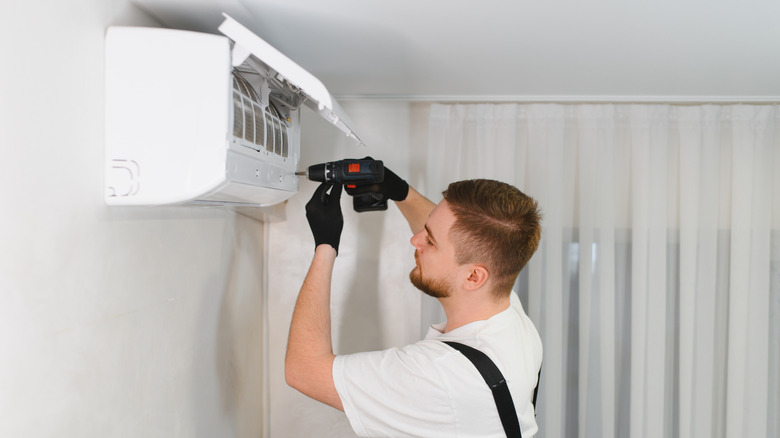
This is probably the most obvious signal on this list. Functional appliances don't break down often, and when they do, fixing them is usually a one-time thing. When an appliance starts to break down frequently within a short timeframe, fixing the symptoms is just papering over the cracks.
With air conditioning and HVAC systems, repair procedures like changing air filters and cleaning vents may be comparatively trivial at first. However, if those don't fix the underlying issue, you might start getting billed for refrigerant leaks, then capacitors and thermostats, and before you know it, you're always fixing something. At this juncture, there are two possibilities: your technician isn't particularly good at their job, or the system is giving out.
In the first scenario, it's a good idea to get a second opinion before going forward with any repairs that may further damage the unit. The second possibility is far more likely, and in that case, piecemeal repairs may be cheaper than a full overhaul at first glance. Unfortunately, these costs add up over time. The $5,000 rule provides a guardrail against this, and another industry heuristic (the 50% rule) can catch your maintenance spending before you even reach the magic number. Simply put, if your repair costs about half the price of a new system, get a new one instead. In the long run, it'll save you more money.
Rising energy bills with no change in usage
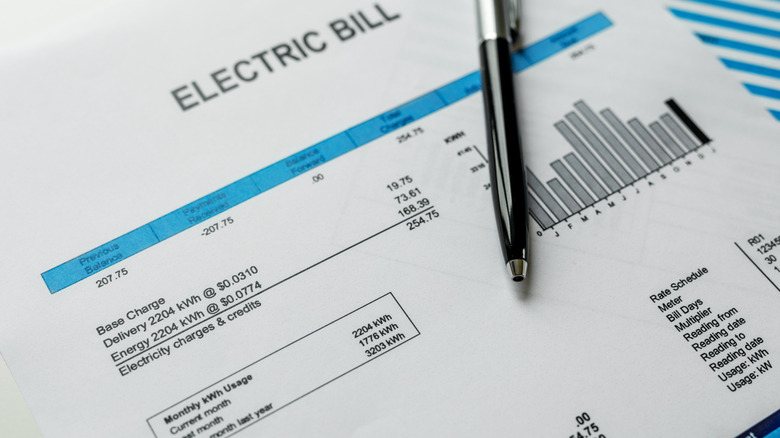
Ever noticed your energy bills steadily climbing even when you haven't added any new appliances to your home or increased your usage? Chances are you'll take steps to cut your bill, including turning off the power supply to gadgets you're not using. If that control mechanism fails, though, you'll have to pinpoint the source of the power draw.
Your cooling unit may be responsible for the inflation, and that's a sign to replace it (or upgrade it, at the very least). That advice might make you skeptical if the system appears to be working perfectly, so run some diagnostics before you conclude. One way to do it is to turn the AC unit on and look for a sudden jump in unit consumption using a plug-in power meter. If the cooling unit is indeed responsible, the culprit might be the compressor. Refrigerant leaks and dirty or frozen coils could make the compressor work harder to achieve the same output, resulting in a higher power draw.
Changing the compressor could cost between $700 and $2,600 depending on the size of your unit. At that price point, the $5,000 rule we've talked about can realistically apply — and that's if merely fixing it will solve the problem. If the cost is too steep, you could theoretically upgrade the compressor, but that's an unconventional procedure with delicate factors such as pressure levels, part size, and oil types. So, if your air conditioner's compressor is raising your energy bills, consider getting an entirely new system.
Uneven cooling
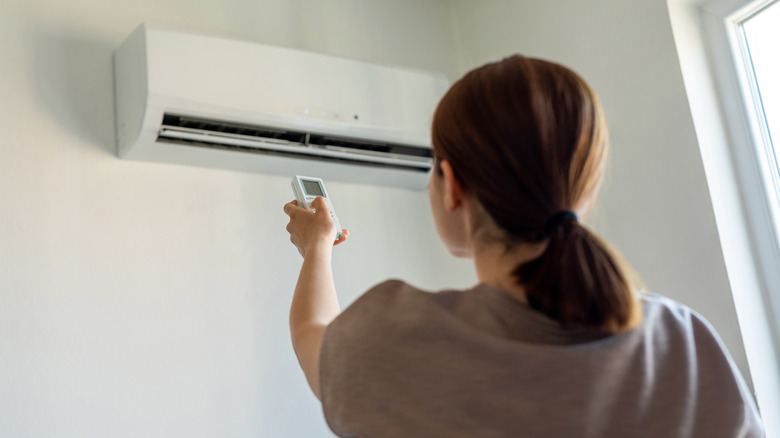
The whole idea behind using an air conditioning unit or HVAC system (beyond cooling or heating, as the case may be) is to make every corner of a room operate at a uniform temperature. Uneven cooling is an obvious sign that a unit isn't performing as it should, and you'll need to address the problem via repairs or a replacement.
An AC makes it easier to pinpoint what's wrong if you're not getting that level of performance. An HVAC system, on the other hand, has design elements that make prognosis more difficult. A central HVAC system, for instance, makes it almost impossible for one cooling setting to persist across rooms. Some rooms are further from the source than others. Furthermore, the vents might not all be the same size, and some filters may be in better shape than their counterparts.
In any case, if your AC or HVAC system isn't cooling right, you're likely spending more than you should on energy bills. A study referenced by the U.S. Department of Energy found that units oversized by 50% or more were 9% more expensive in terms of electricity usage. Over time, that bill compounds. If you use an HVAC system, upgrading it via heat pumps or smart thermostats (if your system is already configured to support them) could be cheaper. Otherwise, depending on the cost of repair or upgrade, it might be time to replace your cooling unit entirely.
Poor humidity control
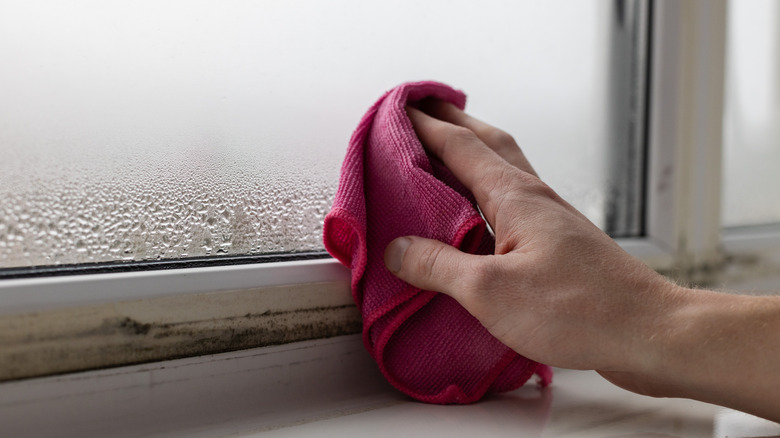
Beyond maintaining a building's temperature, air conditioning systems also handle dehumidification. It's arguably the most important function for your health — it's imperative to control moisture in your living environment. According to EPA guidelines, indoor humidity levels should ideally be between 30% and 50%. The idea is to stay below the 60% threshold, because at this level, humidity can provide enough moisture to support mold growth. Beyond mold, it can also trigger asthma symptoms.
If your humidity levels are above the EPA guideline, your cooling unit is probably not doing its job well, and this can happen for several reasons. First, improper sizing: A system that is either too big or too small will struggle to dehumidify the air. If it's on the larger side, it'll cool the room too quickly and shut off before it gets a chance to remove the excess humidity. Conversely, it won't cool properly if it's too small. Refrigerant leaks, leaky ductwork, clogged filters, dirty coils, and even incorrect thermostat settings can also lead to poor humidity control.
Fixing a refrigerant leak, for example, costs around $1,200 on average, although it could exceed $3,000 in severe cases. If installing a new system is too large of a project for your budget, you could invest in supplemental dehumidifiers to upgrade your existing setup instead; they typically cost between $100 and $300. Dehumidifiers could spark a fire, so take precautions to keep your home safe.
Strange noises
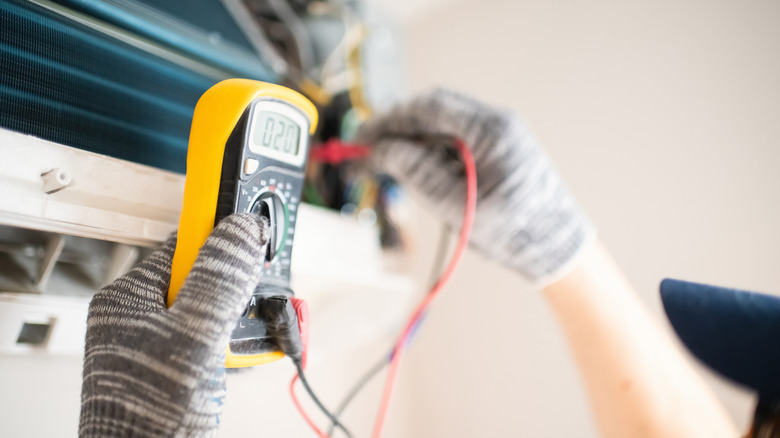
Given the importance of compressors in an AC's operation, the last thing you want to hear is noises other than the steady hum you'd expect when it's cooling your rooms. Whether that's clicking, buzzing, hissing, banging, or any other sound, they call for investigation as quickly as possible.
Sounds coming from your unit aren't necessarily a death sentence for the unit by itself. A banging noise, for instance, is likely indicating a loose part, so a technician could tighten the fit and have it running properly again — provided it hasn't caused any damage to the system. Hissing can point to escaping air or a refrigerant leak, and buzzing can happen naturally once in a while. Those are much cheaper fixes. When that buzz becomes constant, though, and the compressor starts overheating or giving off a burning smell (or the system doesn't even cool at all), that's a sign to replace your compressor if the economics make sense.
As we've discussed, compressors can be expensive components to replace. What you'll spend depends on the size of your cooling unit, HVAC type, and the type of compressor it uses. For example, a central HVAC system has a projected price tag between $800 and $3,000 — in which case the economics might favor getting an entirely new system. A regular window unit is far cheaper at $200-$700 since it's much smaller and less intricate by design, so it may be prudent to repair instead of overhauling your current setup.
Musty odors from the vents
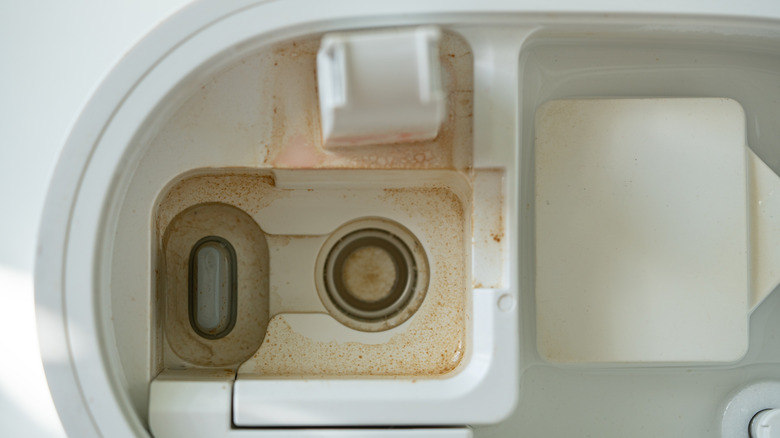
Faults in an air conditioning system show up in multiple ways. We've discussed how HVAC systems control moisture and what can happen when they aren't operating optimally. You can use a digital hygrometer to measure your humidity levels, but you should still watch out for telltale signs like condensation on windows and peeling wallpaper. However, if neither of those diagnostics is available, a musty smell coming from your vents is another sign that your air conditioner has a problem.
You probably know the odor we're talking about: a stale smell that reminds you of old books and damp basements. It can be easy to misclassify the source since it spreads, so your first instinct might be to order an air freshener. However, that smell is a symptom of high humidity (or a water leak, at the very least), and if that's the case in a room with an active air conditioning system, you should get the unit evaluated before deciding the next step.
The odor doesn't always have to be musty either. If you think you smell gas coming from your vents, the unit's refrigerant could be leaking, but the culprit could also be accumulated dust or moisture. Have a technician take a look at your setup; a leak can be fixed for an average of $850. Vent ducts can be cleaned for around $400, too. However, if the problem is from the unit itself (improper sizing, for instance), replacing the entire thing is the best decision for your health.
Burning smell from the vents
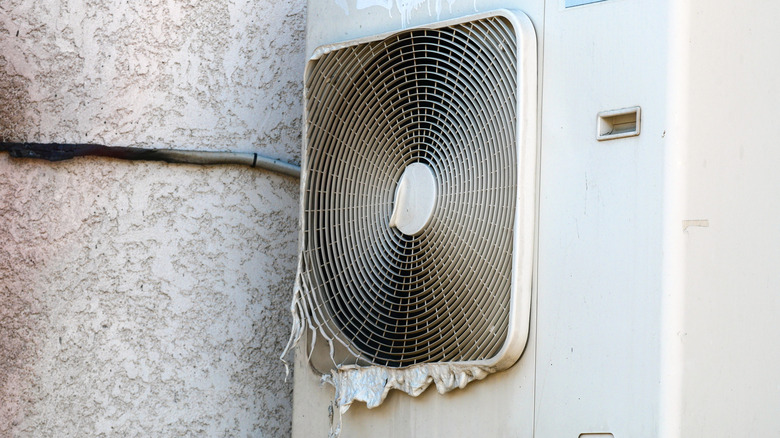
As a rule of thumb, you should never ignore a burning smell. With electrical appliances, that's doubly true because electrical fires can be difficult to put out without a Class C fire extinguisher. So, if there's a burning smell coming from your vents, the first thing to do is to investigate the source — that will determine whether you need to follow smaller maintenance procedures or take more drastic steps.
Like moldy odors, burning smells can originate from a buildup of dust particles on your unit's air filter. That buildup blocks the smooth flow of air through the filter, so your system is forced to work harder to keep your room at the desired temperature. With that increased work rate, two things can happen: the dust particles can burn off, or the system can overheat because of all the pressure on the blower motor. If the smell comes from burning dust particles, it's usually temporary; it should fade in a few minutes. Even if it does, though, remove the air filters and clean them, or schedule a thorough duct clean if you use an HVAC system.
If there's no dust buildup or other junk clogging the filters, then it's time to ring the alarm bells. Turn the unit off right away and call a technician; the electric wiring, blower motor, or the compressor could be failing. If the blower motor is faulty, the average repair cost of $450 may be worth investing. Otherwise, invest in a new system.
Visible corrosion on coils, refrigerant lines, or outdoor units
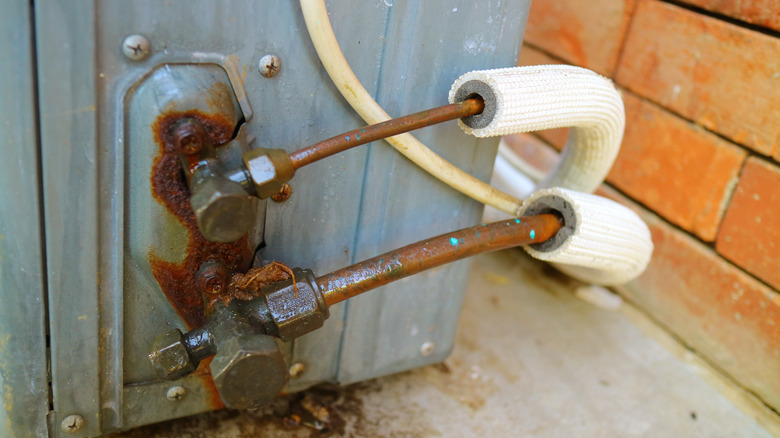
We're all familiar with rust — that annoying brownish coat that smothers metal that has been exposed to moisture. The first place you'd likely expect to find it is on the condenser unit outside the building. That's hardly reason to panic; you could take care of it before it eats away at your metal with some degreasing solution, a nylon brush, and sandpaper. If you prefer professionals, you could call your technician.
However, the greatest threat to your AC unit from rust actually lives indoors. The tubed walls that make up the refrigerant lines and evaporator coils, both vital to cooling, are vulnerable to formicary corrosion. It's a chemical reaction triggered by exposure to organic acids that slowly eats at the tubes' copper material and causes refrigerant leaks. If corrosion compromises your refrigerant lines before it's detected, you'll notice some symptoms like the vents pumping warm air, uneven cooling, and other performance issues.
A damaged evaporator coil is one of the more expensive repairs your cooling unit can demand, and given the financial implications, it may be prudent to invest in a new unit. A replacement part costs anywhere between $1,500 and $3,000 depending on your unit's specs, and you could need to change multiple parts if the corrosion has eaten deeply into other components.