

What Is The $5,000 Rule For Your HVAC System?
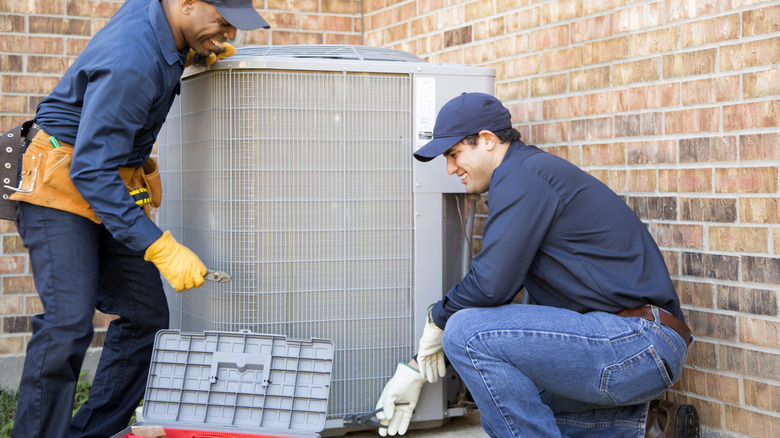
It's the age-old question: repair or replace? It's something you see drivers wrestle with all the time, but what about homeowners? When your home's heating and cooling system runs into trouble, it's worth asking yourself whether paying for another repair or investing in a full replacement is the more affordable option. That's where the $5,000 rule comes into play. If your HVAC's not passing the seasonal routine maintenance check, you can use this basic calculation to weigh the short-term cost of repair against long-term value of replacement.
It's this simple: multiply the age of your HVAC system by the estimated repair cost. If the total exceeds $5,000, the consensus among technicians is that replacement would actually be the more cost-effective option. For example, a 12-year-old unit in need of a $500 repair would give you a total of $6,000. In that case, replacement may be the smarter financial move. (Alternatively, if the unit was installed nine years ago or less, the math suggests it'd make more sense to just repair.) It's not an exact science, of course, but it's just meant to help you make your mind up.
Why the rule might not be as reliable anymore
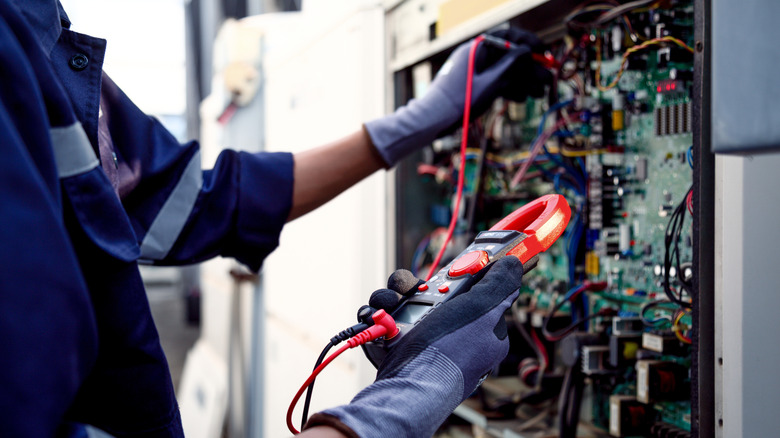
The $5,000 rule is based on the idea that most HVAC systems only operate effectively for about 10 to 15 years — 20 if you're lucky. That's true of all major air conditioner brands. After that, you can reasonably expect performance to decline and efficiency to drop, not to mention needing more frequent repairs. With the $5,000 rule, homeowners have a reasonable threshold to help them know when repairs might not make sense financially anymore.
That said, the $5,000 rule might not be as reliable as it once was. HVAC replacement costs have gone up by a lot, and newer systems could end up with bills in the range of $10,000 or more. And while HVAC units are getting more efficient, they're also getting more advanced. That means the cost of repair goes up, too. If you're not sure which direction to go, you can always ask a trusted HVAC technician to make it make sense for you. Have them break down the cost of replacement vs. repair and weigh your options from there.