

9 Brands Owned By WD-40
We may receive a commission on purchases made from links.
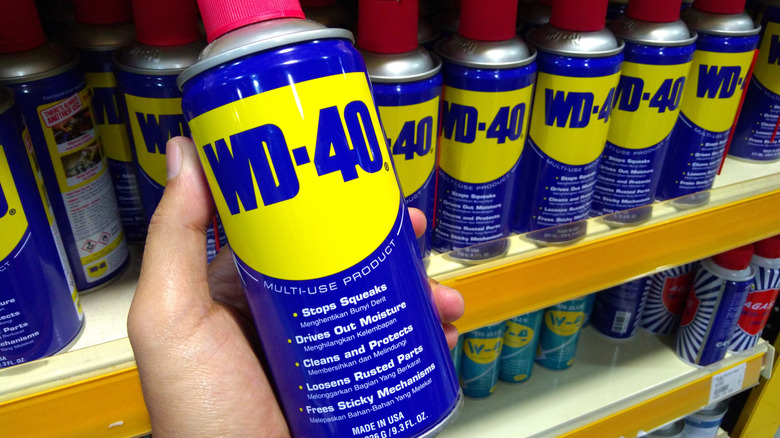
When we talk about WD-40, we imagine a blue-and-yellow can that can solve most of our indoor and outdoor problems, particularly involving lubrication and rust prevention. But this water displacer (hence the "WD") that the company has sold since 1953 is the face of a much bigger operation. If you've ever wondered who owns WD-40 and where it is made, the short version is that the San Diego-based WD-40 Company runs a whole portfolio of household names, many of which you have probably used.
Some products came under the company's umbrella after their own companies were acquired. Others were older products that simply changed hands over the decades and ended up under the same roof. A few aren't lubricants or sprays at all. Many built their own loyal followings long before WD-40 ever bought them. There is a reason people are still surprised by how many WD-40 products exist beyond the classic blue-and-yellow spray can.
Before we get into the list, here is one fascinating fact about WD-40 — The formula is a trade secret, so much so that the company never filed a patent for it, and only a single person is aware of its ingredients. With that said, here are nine companies owned by WD-40.
WD-40
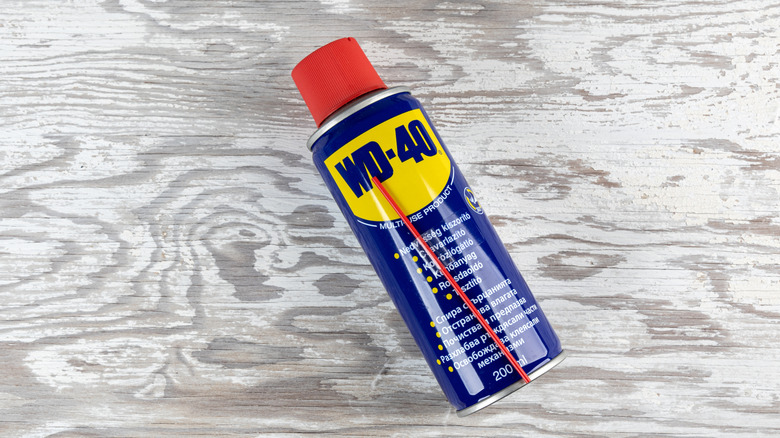
WD-40 company's flagship product is the one that everybody recognizes. However, the story behind its name is not that well known. WD-40 was introduced in 1953 as an anticorrosion formula developed by the Rocket Chemical Company, a small San Diego outfit working on protecting missile parts for the aerospace industry. The formula wasn't perfected in one attempt — it took 40. This is the reason why the product is named WD-40, where WD stands for water displacement.
There's a myth that NASA was involved with naming the brand, but it was actually aerospace contractor Convair that first used WD-40 to prevent rust and corrosion on its Atlas Missile. Employees were so impressed by the effectiveness of the product that they started smuggling it back to their homes in their lunchboxes. This is the very reason the founder started packaging WD-40 in an aerosol can for home use. Over the years, the popularity of WD-40 spread, and currently it is sold in over 176 countries.
WD-40 isn't just for rust and corrosion prevention. You might be amazed to know that it has over 2,000 documented uses, even once being used to remove a python from underneath a bus. WD-40 says that it mixes its super concentrate at three separate sites — San Diego, the U.K., and Australia — before its packaged inside finished cans.
3-In-One
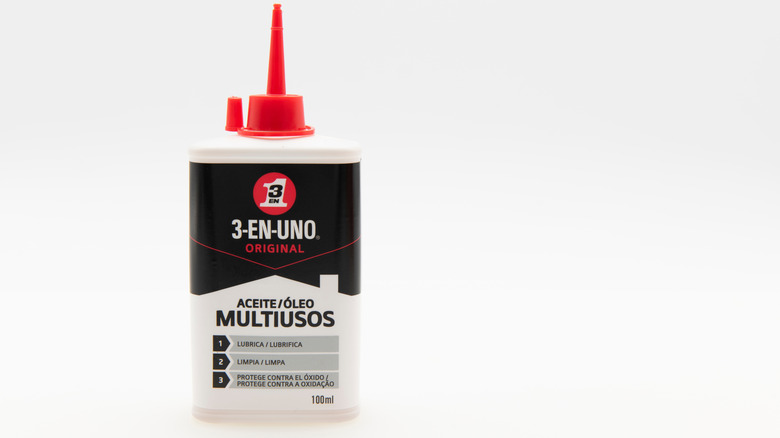
3-In-One is actually older than WD-40. Developed in 1894 by George W. Cole of New Jersey, it was meant to allow people to take care of and maintain their bicycles. People could use this oil as a lubricant, a rust preventive, and a cleaner, reducing the need to take their bicycle to a service shop. Since it was a formula that could do three jobs, it got the name 3-In-One. For decades, it passed through different owners before landing with the British conglomerate Reckitt & Coleman. It came under WD-40's product portfolio in 1995, and in 2003, the company introduced the 3-In-One Professional Line.
That deal ended more than 40 years of WD-40 selling nothing but its original spray. Additionally, it gave the company an oil brand with its own century-old international distribution network to build on. In 2012, WD-40 introduced a new ergonomically shaped bottle with a Marksman Spout that had a product fill indicator.
Today, 3-In-One leans on its old identity as a precision oil, sold with a drip spout for door hinges, sewing machines, and other spots where a wide aerosol blast just goes all over the place. Not every WD-40 brand tries to be a do-everything spray. Some are built for one job, which lines up with how WD-40 keeps expanding its specialist product lineup instead of relying on one formula.
GT85
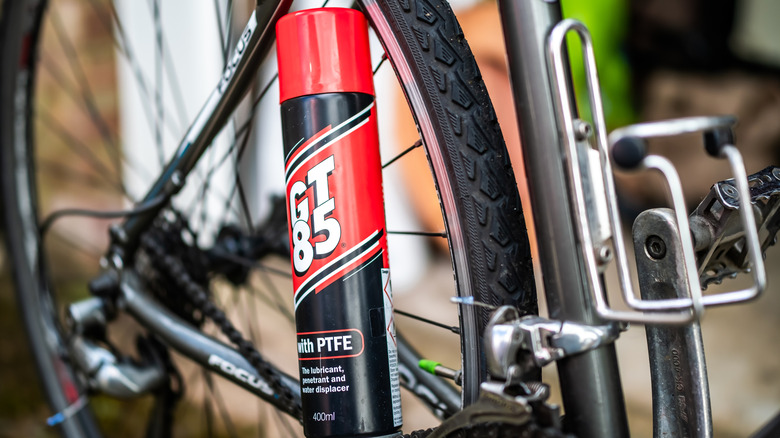
GT85 was the brainchild of U.K. businessman John Chapman, who wanted a better penetrating spray and long-term lubricant for his transport company in the 1980s. Unfortunately he couldn't find one. So, he took the matter into his own hands and, with the help of an ex-RAF chemist, came up with a PTFE- based formula (basically Teflon) after multiple trials and errors and formed GT85.
Fast forward to now, you will find a black and red can in almost every garage, workshop, and toolbox throughout the U.K., suggesting how popular this product is. GT85, along with the SG85 brand, was bought by WD-40 in 2014. However, after coming under WD-40's product portfolio, the company describes GT85 as being sold only in the U.K., with additional sales in Spain, the U.S., Australia, and other European markets.
GT85 can be used by cyclists, DIYers, and mechanics, and it also works on hammers, chisels, drills, saws, and other tools. One should not confuse GT85 with WD-40 because WD-40 is great for removing stuck products but doesn't lubricate them. GT85 does lubricate, cleans dirt and grease, and forms a protective layer against water, rust, and dirt.
2000 Flushes
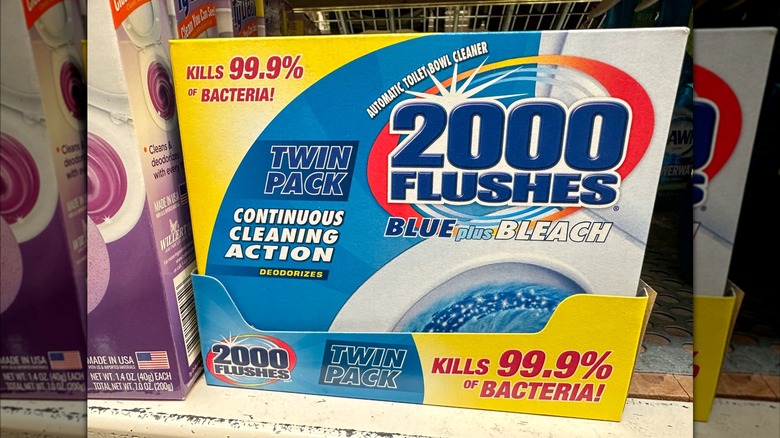
2000 Flushes joined WD-40 as part of a larger deal. In April 2001, WD-40 acquired HPD Holdings Corp., which was doing business as Global Household Brands. The acquisition cost WD-40 around $72 million in stock and cash. You'll have likely already guessed from its name, but 2000 Flushes is a toilet cleaning product. It offers a bunch of in-tank and in-bowl automatic toilet cleaners that also deodorize the toilet and keeps them clean for up to four months, as claimed by the company.
The company was formed in the early 1980s by AI Eisen in New Jersey. Notably, WD-40 kept the same manufacturing process running at the Memphis facility, which Global Household Brands already owned. This formed a joint venture called VML with Valley Products Company to operate it, with WD-40 holding a 30% equity stake rather than running the plant itself.
The product's entire pitch strategy is longevity. You drop a single tablet inside the tank, which cleans the bowl with every flush for months, without any scrubbing required. It is an odd fit for the product portfolio of WD-40, which is into penetrating oils, but the company wanted grocery and drug-store shelf space, so it bought this already established brand.
Spot Shot
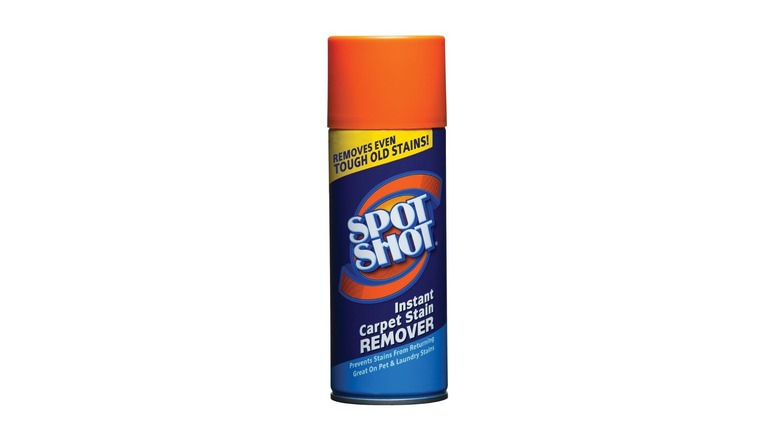
A year after WD-40 brought Global Household Brands under its wing, Spot Shot came into the portfolio through a separate 2002 acquisition. WD-40 acquired Heartland Corporation, a company based in Kansas rather than California or Tennessee, like some of WD-40's other buys. According to WD-40's own SEC prospectus filing, Heartland had audited sales of roughly $33 million in the year before the deal closed, and the aerosol carpet stain remover was its flagship product.
What makes Spot Shot interesting is how narrow its job actually is compared to other brands in WD-40's list. The product is specifically meant to treat individual stains before they permanently set into carpet fibers — hardly a multi-purpose spray for wide ranging problems. However, this is the exact reason why WD-40 decided to buy an existing, well-known category leader rather than trying to formulate something from scratch.
The history of Spot Shot goes back to 1983, and within just 4 years of being on the market, it was recognized as one of the "Best 10 products in America" by Family Circle in 1987. The distinction of WD-40 and other products matters because WD-40 cannot be sprayed on fabric or carpet. It is actually good to know where you should not use WD-40 before you ruin your stuff.
Carpet Fresh
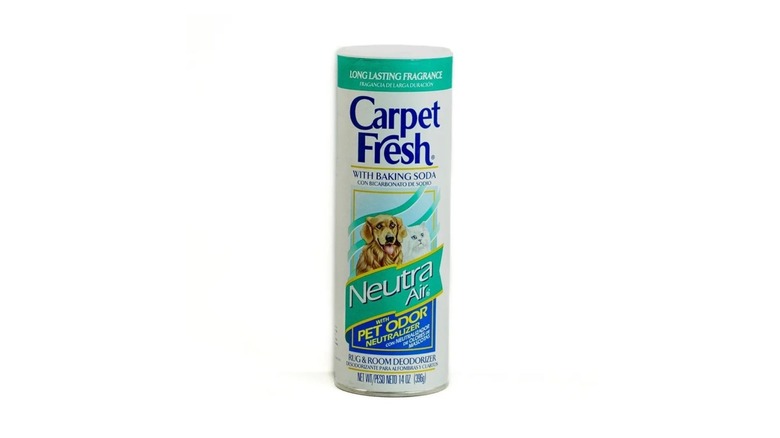
Another product WD-40 picked up in that Global Household Brands deal, Carpet Fresh is pretty far from the lubricant products it already owns. It was introduced as a sprinkle-on carpet deodorizer back in 1978.
Manufacturing did not actually move to WD-40 at all after the acquisition was completed. Malco Products, the outside manufacturer that made Carpet Fresh long before the deal with WD-40 happened, has continued producing the powder version ever since, and it still does today. The product is currently listed on Malco's own official product page for the brand.
The powdered version required letting it settle for 5 minutes and vacuuming it afterwards. However, WD-40 later added an aerosol foam version that skips the vacuuming step entirely. This indicates that the company wasn't just collecting a familiar name for its portfolio; it has continued actively developing the line since then. Carpet Fresh carries no lubricant angle and is a plain home-freshening product.
Lava
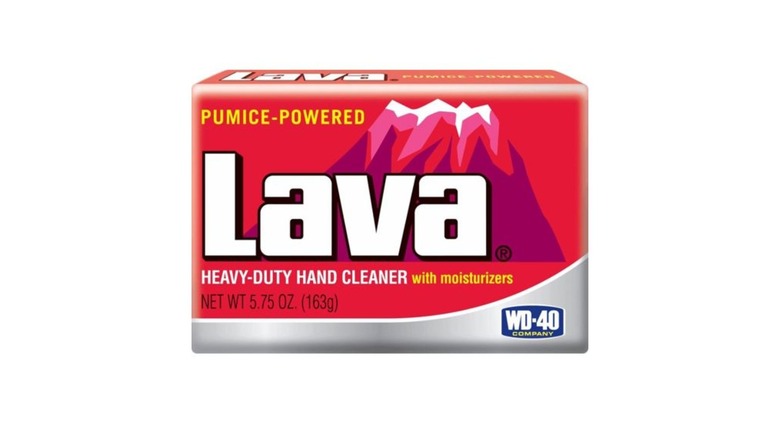
This company predates WD-40 by over 60 years. Lava makes what it calls "the hardest working hand soap," and it was founded in 1893 in St. Louis, Missouri. The name "Lava" was chosen for this product to remind people of the pumice it contains. While the earlier versions were fragrance-less, in 1967 the company decided to reformulate it with a better scent and gave Lava its signature green color.
WD-40 acquired Lava from Block Drug Company in 1999. And similar to its other acquisitions, the company has since made several enhancements to the product, including display boxes and other shipping configurations for better storage in stores and advertising. Even before WD-40 came into the picture, Lava had already created a loyal following. Unlike WD-40's own spray, Lava never really went global after the acquisition.
Current packaging for the Lava bar is explicitly marked "Made in USA," and the brand is sold almost entirely through American hardware stores, home centers, and auto parts retailers, rather than through any international distribution network the way WD-40 itself operates. The purchase logic of Lava for WD-40 is pretty straightforward — when someone leaves the garage with grease-stained hands after using WD-40, they can clean their hands using Lava soap bar.
Solvol
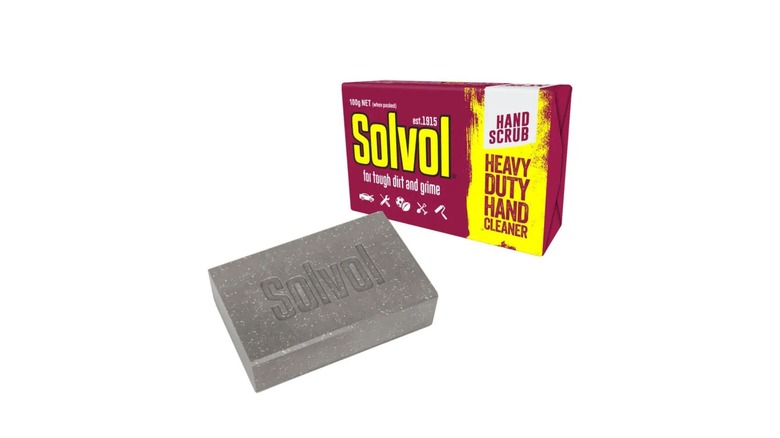
Solvol is best understood as Lava soap bar's Australian counterpart, right down to the pumice-based formula and the grease-cutting angle. This heavy-duty hand cleaner launched in Australia in 1915 and had already been a known name in the country for over 85 years before WD-40 owned it. WD-40 acquired Solvol in 2000 and introduced in its portfolio in 2001, the same year it closed the Global Household Brands deal.
Unlike other brands in this list, Solvol has never expanded past its home region. It is formulated specifically for the Australian and New Zealand markets and is sold mainly through Australian retailers like Bunnings rather than through WD-40's much larger international distribution network.
Solvol is the cleanest example on this list of WD-40 buying a trusted brand instead of building it from the ground up, a strategy we have seen with a lot of WD-40's acquisitions. The company currently sells its soap and a liquid hand cleaner, which comes in different shapes and sizes and is effective in removing dirt, grease, oil, paint, ink, and solvents from hands..
X-14
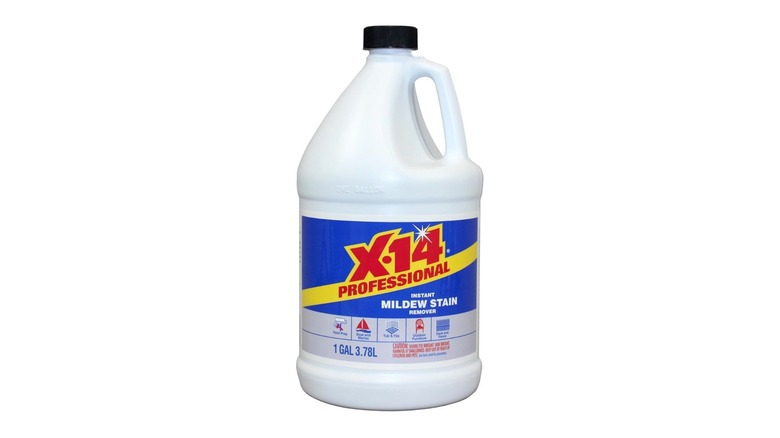
X-14 is arguably the most flexible acquisition on WD-40's entire list. Its roots trace back to Orlando, Florida in the 1980s, where it launched specifically as a bathroom stain remover. Today, the company specializes in the formulation of bathroom cleaning products capable of both serious deep cleaning and quick touch-ups. X-14 currently sells four products, including X-14 Foaming Bathroom Cleaner, X-14 Bathroom Cleaner, X-14 Daily Shower Cleaner, and X-14 Automatic Toilet Bowl Cleaners.
WD-40 picked it up as part of the same Global Household Brands acquisition that brought in Carpet Fresh and 2000 Flushes in 2001. Like 2000 Flushes, X-14's manufacturing ran through the Memphis facility, which WD-40 gained in that deal, with production handled through the VML joint venture rather than through a plant WD-40 owned and operated entirely on its own.
The brand grew well beyond its original one-job mildew formula over the years that followed. The four products of X-14 are available in liquid, aerosol, and tablet formats depending on the specific job. Nine brands later, a company that started with a single aerosol can built for missile parts now owns products for bikes, bathrooms, carpets, and grease-covered hands alike.