

3 Key Features Your Chainsaw Needs To Have
We may receive a commission on purchases made from links.
My earliest recollections of chainsaws involve dragging brush while my step-dad used one to cut the firewood needed to feed our woodstove all winter. As I got older I learned to use them myself, limbing felled trees and bucking wood to usable lengths, and eventually being allowed to cut down trees on my own. Chainsaws are useful tools for cutting firewood, trimming tree branches, cleaning up storm debris, or even cutting lumber in a pinch, but they demand the same level of respect as any other powerful machine.
The best chainsaws you can buy will have some key features in common. Foremost are the essential safety mechanisms designed to reduce the likelihood of accidents. They'll also have systems in place to limit the amount of vibration transmitted to the user.
Of course, it's up to you to choose the correct chainsaw for the job at hand, and whether you prefer gasoline, battery, or plug-in electric power. We'll break down some of these essential features over the next few sections.
Safety is a priority
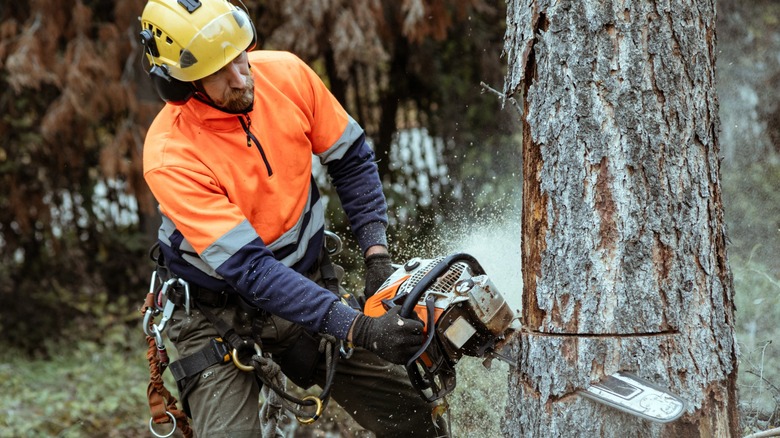
It probably won't surprise you that chainsaws rank highly among tools with the worst track record for injuries. To help reduce the risk of injuries, chainsaw manufacturers today equip their saws with a few key safety features. A mechanism that locks the throttle from accidental application is one safety feature every chainsaw should have. If your chainsaw throttle lockout is broken, Amazon sells replacement levers, like the Husqvarna throttle lockout for $13.40, for several chainsaw models. The throttle lockout makes it harder to accidentally rev the saw's engine, which engages the saw chain nearly instantly, should you snag it on brush or squeeze it during a slip or fall.
A chain brake is another key safety feature your chainsaw needs. Chain brakes are often activated manually by pushing the hand guard forward to keep the saw chain from engaging while walking with or starting the saw. During operation, if the saw kicks back its rotation brings the hand guard into contact with the operator's arm to engage the brake on some models. Chainsaws with more advanced features can engage the chain brake based on rotational inertia even before the hand guard makes contact with the operator.
Your chainsaw needs to be sized correctly to do the job
Chainsaw guide bar length is a common way to group saws into different size categories. If you're using the right size chainsaw, its guide bar should be long enough to span the widest part of the tree you need to cut. It's important that the tip of the bar, the rounded portion at the end, extends beyond the tree on the offside to reduce the chance of kickback.
A common feature of many chainsaws is the ability to install shorter or longer guide bars to achieve a more optimal setup. While a longer guide bar is required when cutting larger trees, a shorter bar is easier to maneuver and has fewer cutting links in the saw chain, making them easier to sharpen in the field.
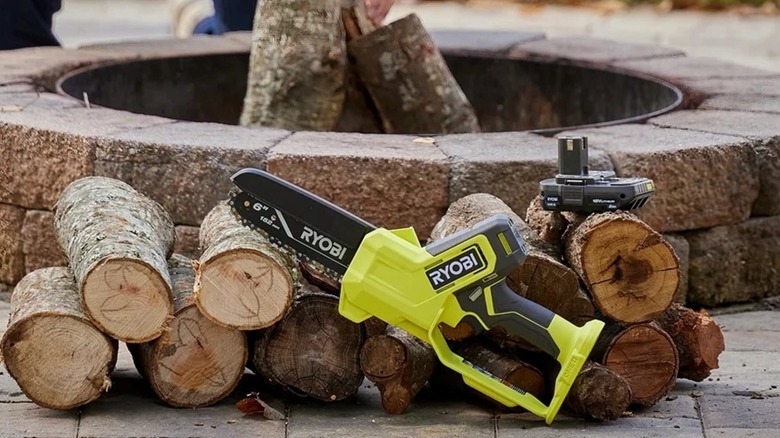
While gas and electric powered chainsaws with 14 to 16 inch guide bars are common and capable of doing many of the jobs required by sawyers, there are other options as well. I currently have an Echo Timberwolf chainsaw with a 16-inch guide bar in storage that sees occasional use trimming larger tree limbs and a limited amount of firewood. However, while traveling in the RV I carry a Ryobi One+ 18V 6-inch mini chainsaw. The little saw comes in handy in areas where we can trim tree limbs overhanging the road or cutting fallen wood into manageable chunks for a campfire.
It also needs to have the right amount, and type, of power
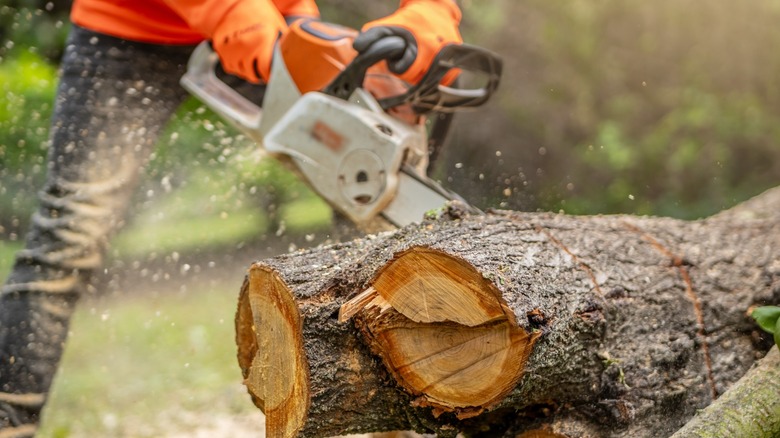
It's possible to use a large, powerful chainsaw with a 20-inch bar for limbing and bucking felled trees or trimming bushes around your home. However, you'll soon tire of lifting the heavy saw into awkward positions where its weight works against you, and that's when the likelihood of accidents increases.
There are a number of affordable chainsaw options available whether you're interested in gas, battery, or corded electric versions. Any of those power options should provide enough power for most tree-cutting needs. Corded electric saws tend to be lighter weight, but if you need to use it more than a hundred feet from an outlet, or generator, the cord becomes a problem. Battery-powered chainsaws are convenient but can deplete batteries quickly under continuous usage requiring multiple batteries for a day of sawing. Gasoline chainsaws typically use a gasoline and two-stroke oil blend that you can mix yourself or buy ready-to-use premixed in a can from Amazon or other retailers selling chainsaw gear. If you buy the premix just make sure the ratio is compatible with your chainsaw's recommended fuel mixture.
While large chainsaws are best for felling mature trees, mini-chainsaws come in handy for camping, overlanding, and yard work. You may be tempted to buy one mid-size chainsaw with multiple bar and saw chain lengths to use for a variety of needs. That might work to some degree as long as you stay within the chainsaw manufacturer's guidelines. However, putting an excessively long bar on a smaller saw, or a short bar on a large chainsaw isn't going to provide the best results. This is why I own two chainsaws, and often wish I had another.