

Skip Samsung? One Of These 5 TVs May Be The Better 4K QLED Pick
We may receive a commission on purchases made from links.
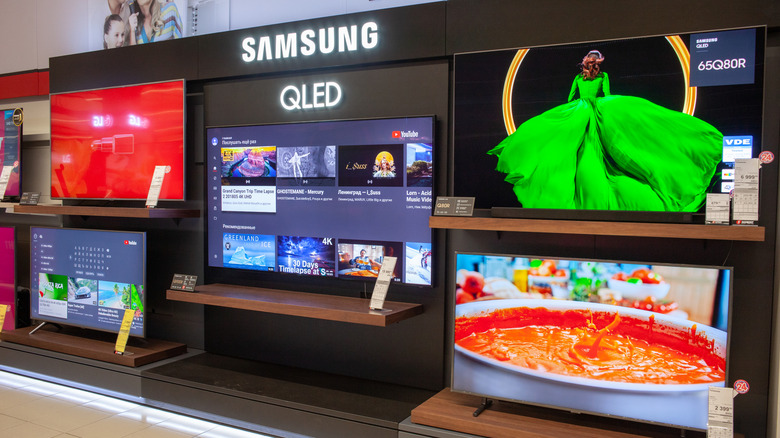
Samsung is one of the major smart TV brands on the market and sells a variety of models. Its 2026 TV lineup includes models powered by Micro RGB, OLED, Neo QLED, and Mini LED technology. QLED TVs are excellent picks if you plan to watch in a room with plenty of ambient light because of their high peak brightness, and they can also deliver great picture quality.
If you are specifically set on a QLED set and you don't want to buy from Samsung because it uses its proprietary operating system, or maybe because of the lack of Dolby Vision HDR format, there are several alternative options you can consider.
In fact, some brands are better than Samsung on price and quality, so skipping the South Korean tech giant's models doesn't mean you'll get an inferior product. But, as you'd expect, not every QLED TV that you'll come across is worth buying. We've done extensive research, drawing on our expertise and that of other experts, to find the five best QLED TVs you can buy that aren't made by Samsung. We have a more in-depth explanation of our TV selection criteria at the end of the article.
Sony Bravia 9
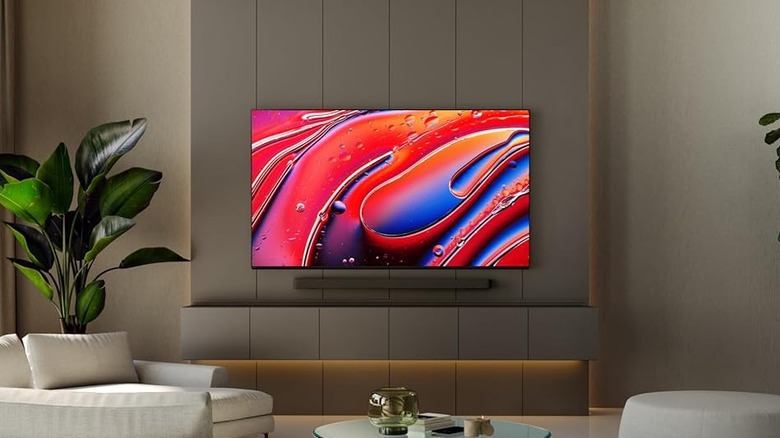
The Sony Bravia 9 is the company's flagship TV of 2024 and comes with a 4K QLED display. Roughly two years after release, it stands out as one of the best QLED TVs overall that you can buy. Independent tech review site RTings was thrilled by this set, and they've even gone ahead to name it the best QLED TV that they've reviewed. That speaks a lot about the model's capability despite being about two years old as of this writing.
RTings says its peak brightness "easily overcomes glare from the brightest indirect light sources," and the set also performs well in picture quality with good contrast and accurate colors. It also impressed reviewers at Digital Trends with deep blacks, minimal blooming, solid contrast, excellent HDR brightness, and good motion handling. The Sony Bravia 9 runs Google TV, which gives you access to thousands of apps, and in case you can't get an app on the Play Store, it supports both Google Cast and AirPlay 2 to mirror content from your phone.
The Bravia 9 has a great port selection, including Ethernet, optical, four HDMI ports, and two USB ports. For video games, it has two HDMI 2.1 ports capable of 4K gaming at 120 Hz. Additionally, this set has a variable refresh rate (VRR) for reduced screen tearing and ALLM — Auto Low Latency Mode — so it can take full advantage of current-gen consoles like the PS5 and Xbox Series X. The Sony Bravia 9 launched at a starting MSRP of $3,000 for a 65-inch variant.
TCL QM6K
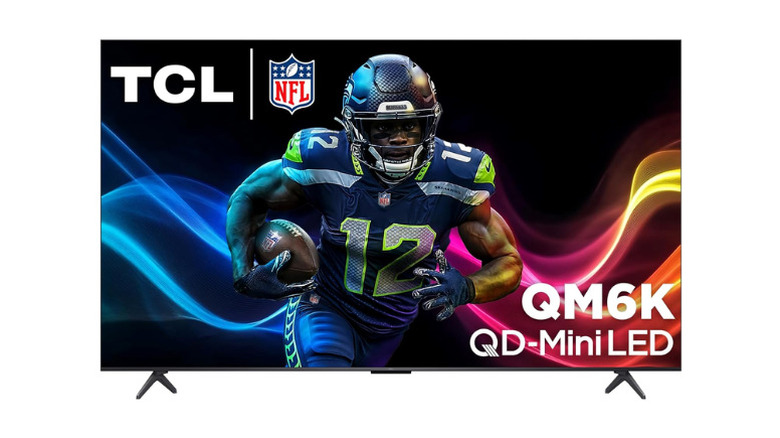
If you have a tight budget, the TCL QM6K is worth considering, as it starts at $800. As an entry level TV in TCL's 2025 lineup, the QM6K doesn't stand out in any particular area. Instead, it offers an attractive overall package, according to RTings. It features a 4K QLED panel with support for up to a 144 Hz native refresh rate for smooth motion in fast-paced content like sports and gaming. Gamers will also appreciate the QM6K because it comes with several features you should look for in a gaming TV.
First, there are two HDMI 2.1 ports, both of which support 4K gaming at 144 Hz. Second, it supports VRR and has low input lag, making it very responsive. Besides its gaming chops, it delivers good black levels and has enough SDR brightness to counter glare. This set supports several HDR formats, including Dolby Vision, HDR10+, and HLG for enhanced brightness, color, and contrast. Although you only get two HDMI 2.1 ports, there are actually a total of four HDMI ports.
For wired connectivity, it also offers an Ethernet port, two USB ports, and an optical port. The QM6K supports several surround sound formats, such as DTS:X, Dolby Atmos, Dolby Digital, and IMAX Enhanced for an immersive audio experience. It runs Google TV and supports AirPlay 2 and Google Cast screen mirroring. Digital Trends praises the QM6K for its color accuracy, black levels, and rich selection of features, while CNET says it offers some of the best picture quality for the money.
Hisense U8QG
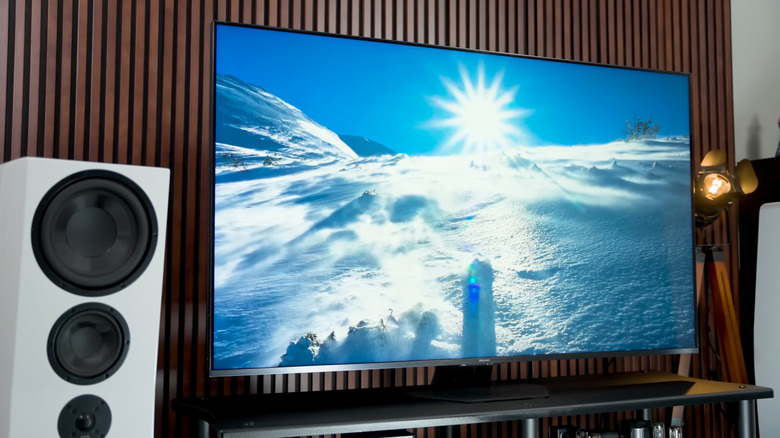
Hisense makes some of the best TVs at very competitive prices. In fact, some of the cheapest QLED TV models are from the Chinese tech company. The U8QG is a Google TV-powered QLED TV with 4K resolution that supports some of the most common HDR formats, including Dolby Vision, HDR10+, HDR10, and HLG for better brightness, color, and contrast. It can get really bright with a peak brightness of 5,000 nits, and also includes an anti-glare coat to help fight reflections while watching during the day in a brightly lit room.
Its QLED panel has 6,000 local dimming zones to improve picture quality. This set supports a native refresh rate of 165 Hz and includes features such as VRR, ALLM, and a gaming dashboard, all of which come in handy for video games. You can connect the U8QG to the internet via Wi-Fi 6E, which taps into the 6 GHz band for less interference and faster connections, or use Ethernet if you need lower latency and better stability.
To connect other devices to the set, you can use USB, Bluetooth, or HDMI, depending on your needs. You can also mirror your phone's screen to the set using AirPlay or Google Cast. PC Mag says it's very bright, delivers deep blacks with accurate colors, and has amazing performance with plenty of features. You can buy the Hisense U8QG starting at $999.99 for a 55-inch model.
Sony Bravia 7
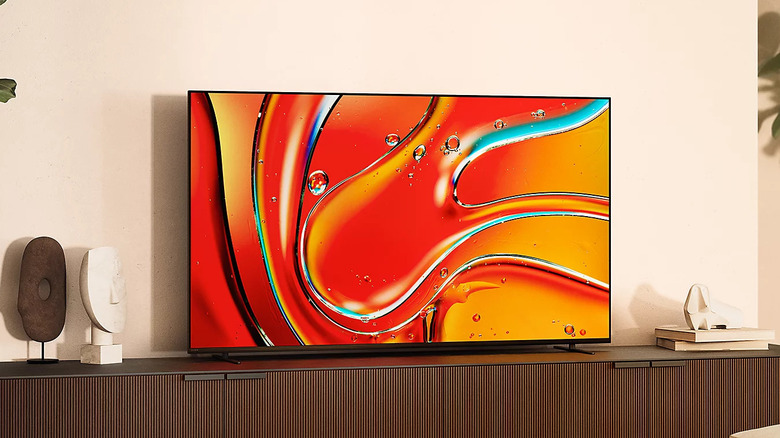
The Sony Bravia 7 sits below the Bravia 9 and 8, making it a slightly cheaper alternative for anyone who wants a Sony QLED TV for less. The Bravia 7 comes in at $1,398 for a 55-inch model on Amazon as of this writing. You get Google TV built in, and it comes with both AirPlay 2 and Google Cast to mirror content from your phone to the TV and Google Assistant for voice-assisted control. The display is a 4K panel with a 120 Hz native refresh rate and support for several HDR formats (Dolby Vision, HDR10, and HLG) for better picture quality while watching content from various sources.
In addition to HDR, this TV supports DTS Virtual:X, Dolby Atmos, and Dolby TrueHD surround sound formats and gives you a variety of ways to hook up external sound systems, such as wirelessly via Bluetooth or over cable through HDMI eARC. There are four HDMI ports, but two are based on the HDMI 2.0 standard. The other two are based on HDMI 2.1 with 4K 120 Hz gaming support, VRR, and ALLM for full compatibility with current-gen consoles.
RTings has reviewed this model and says it's a great pick for mixed usage because it performs well in watching movies and sports content as well as playing video games. Per the team's review, the Sony Bravia 7 delivers excellent brightness in both SDR and HDR, offers vibrant colors, and is a more pocket-friendly option if you can't stretch your budget to get the Bravia 9.
Hisense U7SG
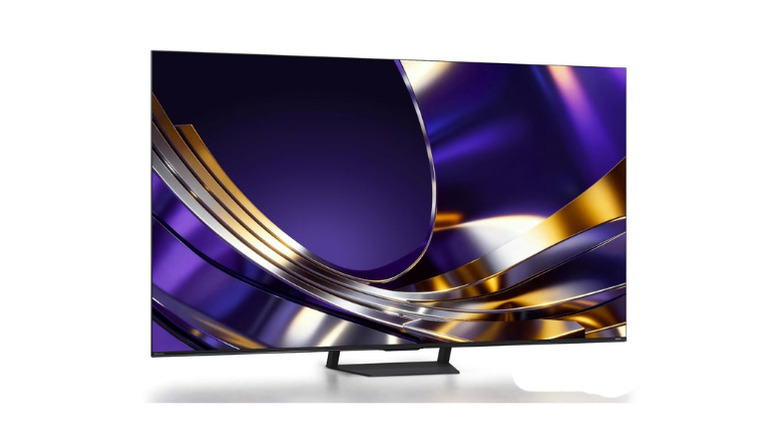
Some of the major selling points of the Hisense U7SG are an anti-glare layer to reduce reflections in bright environments and 3,000 nits peak brightness for improved visibility in a well-lit room. The screen also offers 3,000 local dimming zones, which should help the set deliver better contrast, and it supports several HDR formats (Dolby Vision, Dolby Vision IQ, HDR 10+, HDR10, HDR10+ Adaptive). For audio, Hisense included a 2.1.2 channel audio system, and on top of that, you also get DTS Virtual:X and Dolby Atmos surround sound formats for a cinematic sound experience.
This model's QLED panel has a 165 Hz native refresh rate, so it can be used as your PC's monitor for high-refresh-rate gaming. There are four HDMI ports, and all of them support HDMI 2.1 bandwidth and can transmit 4K signals at 165 Hz. Three of the four HDMI ports also have VRR and ALLM support for reduced screen tearing and full compatibility with modern consoles, and one port has eARC, simplifying setup with an external audio system.
Speaking of audio, there's also a digital audio output port in case your system doesn't have HDMI ARC/eARC. The Hisense U7SG is described as "great overall" by RTings for its bright, vibrant colors, excellent contrast, deep blacks, and high peak SDR brightness. Wired also speaks highly of the TV's deep black levels, vibrant colors, brightness, gaming support, and sound quality. The Hisense U7SG has a starting list price of $1,298 for the 55-inch model.
How we selected these TVs
To put together this list of TVs, we first searched for models that use QLED display technology. Different manufacturers use QLED display technology in their TVs and use different names to market sets that use the tech. Since there are various models on the market that use QLED panels, not every option is worth your money. To pick the best models available on the market, we further narrowed down our selection using our expertise in reviewing these sets and the opinions of other independent reviewers from reputable sites such as Wired, RTings, Digital Trends, and PC Mag.
For each model we've recommended, we searched for its review on at least one of these sites to determine whether it's truly worth your hard-earned cash. We also checked for availability because recommending a model that can't be bought because it has been discontinued defeats the purpose of the article.