

Wi-Fi Vs. Ethernet: Which Works Best For Your Smart TV?
If you've ever been in the middle of your favorite TV show and suddenly everything begins to lag, then you know how frustrating it can be. But while there are ways to speed up your Wi-Fi for faster internet, the lag might be happening because you're not connected via Ethernet. In fact, if you're wanting the most reliable viewing experience, Ethernet is the way to go.
The reason an Ethernet connection works best is because you're not impacted by exterior factors the way you are when connected wirelessly. The strength of a Wi-Fi signal is often affected by walls, interference, or other devices fighting for bandwidth in your home. Even though many streamers don't necessarily need extremely high speeds in order to perform, even for 4K video, unstable Wi-Fi can still lead to issues. While an Ethernet connection doesn't guarantee a seamless viewing experience every time, it is a more dependable solution.
However, Wi-Fi can be a more convenient solution depending on the situation, which is why many people use it. This is especially true when you can't physically connect the router to the LAN port on your TV, or because running a cable doesn't work for your space. Plus, if you only stream occasionally, or just have a few devices connected, then using Wi-Fi might not be a problem most of the time. It all depends on your setup and how you're able to connect.
Other options for connecting your smart TV
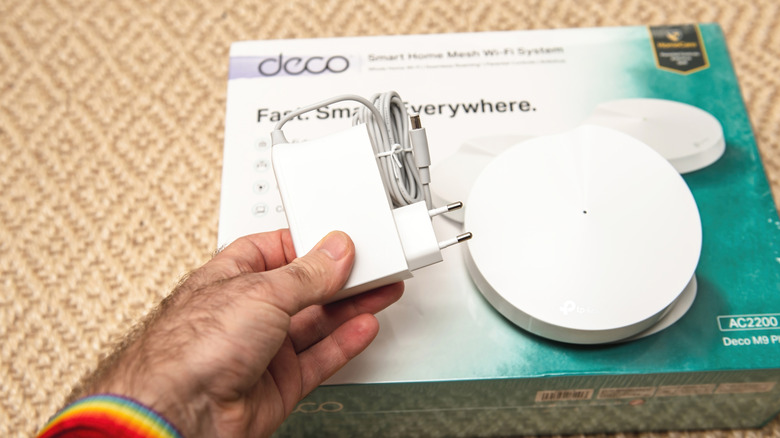
Using your smart TV without Wi-Fi isn't impossible, and you do have some options for wired connectivity other than running Ethernet cables. MoCA adapters use coaxial cables like the ones for cable TV. These adapters send internet signals between rooms, giving your TV a wired connection without having to run a physical Ethernet cable. Powerline adapters, another viable alternative, plug into a wall outlet and use your home's existing electrical wiring to create a network connection. However, these devices are vulnerable to electrical interference.
When it comes to wireless options, the mesh Wi-Fi system can help eliminate weak internet signals, giving you a more stable connection. This system operates through the use of multiple routers that work together to extend wireless coverage in your home. This allows devices to connect to the strongest available signal. Mesh systems can be especially useful in bigger homes or in areas where a combination of walls and distance create frustrating dead zones.
A Wi-Fi extender is a solution that plugs into an outlet and rebroadcasts your Wi-Fi signal. This can be a good way to improve overall connectivity, though extenders are typically better for a single dead zone. They can potentially reduce internet speeds as well, because the signal has to pass through an additional device. So if you're trying to stream 4K video wirelessly, the mesh system may actually be the better choice as it can provide a more consistent connection throughout your home.