

6 Of The Best Screenless Fitness Trackers You Can Buy In 2026
We may receive a commission on purchases made from links.
There was, or maybe still is, a time when smartwatches were the tech accessory to get. After all, a tiny, smartphone-like device strapped to your wrist that lets you stay connected and track workouts sounds insanely cool. The market has since been dominated by the likes of Samsung's Galaxy Watches and the Apple Watch. The latter is the best-selling wearable on planet Earth. Recently, however, things have changed. With algorithms designed to keep us scrolling for hours, people are growing tired of the constant bombardment of notifications. Not to mention the fact that nobody likes someone disturbing their workout session.
This has given way to a new type of wearable: the screenless fitness tracker. They retain all the workout features of a smartwatch, sometimes even more, and remove the annoying parts like the screen. You can get one as a wristband, or if you'd rather wear something subtler, a ring should work. Choosing the right one, however, is not easy. Different devices cater to different people. Some are for professional athletes, while others are more useful for casual fitness enthusiasts. This is why we've sifted through almost every screenless tracker on the market and found six you should consider taking on your fitness journey.
Whoop 5.0
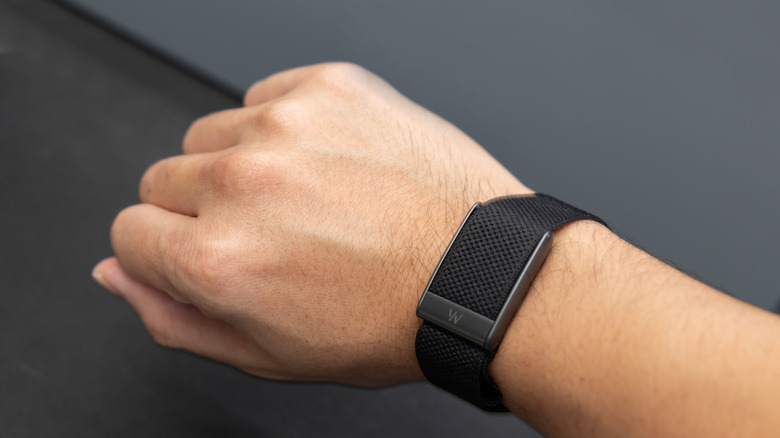
Professional athletes, in many sports, aren't allowed to wear smartwatches during competition because they can be used to communicate with the outside world. So when Whoop first popularized the screenless-tracker genre, many athletes jumped in. Whoop 5.0, which is the current generation, is worn by stars like Cristiano Ronaldo. And the reasons are simple. Compared to the latest Apple Watch, the Whoop 5.0 offers more accurate workout tracking, including calorie burn estimates and heart rate measurements. You don't have to charge the band every day and can wear it around your arm or even inside your underwear.
Besides, its app is much more information-dense, with metrics such as Recovery and Strain. Each morning, the Recovery tab gives you a score based largely on your sleep and predicts the ideal range for how much stress you can put in. The band can also predict your aging rate, which can be either very uplifting or a bit scary. You can also log things like coffee intake, and different menstrual cycle phases do sync with other data, which is a nice touch. If that's not enough, the Whoop 5.0 band works well at detecting illnesses early by monitoring elevated heart and respiratory rates, as per YouTuber Oliur.
Where things take a big downturn, though, is the subscription. Yes, you do need it for the band to work, and it's divided into three tiers: Whoop One ($199/year), Whoop Peak ($239/year), and Whoop Life ($359/year). The most expensive tier gets you medical-grade features like ECG and blood pressure. On the flip side, the basic tier skips the stress monitoring and aging features. So, is Whoop 5.0 worth buying? Well, if you're a professional, then yes.
Google Fitbit Air
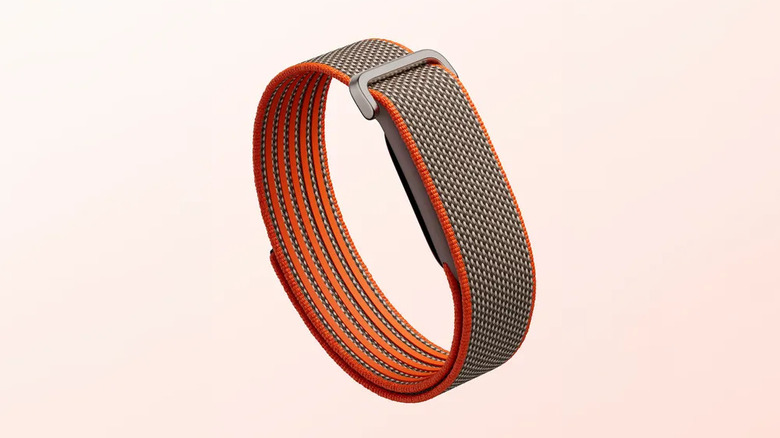
Nobody likes paying for a subscription, especially when, without it, you'd be barred from accessing your own health data. The Fitbit Air is Google's answer to Whoop, and for many, it's the smarter choice. It costs half as much at $99, and there's no subscription. Well, Google does have one for Gemini-powered AI coaching ($9.99/month), but it's completely optional and doesn't hide any of your health data. The Fitbit Air is also slimmer, so it's easier to forget you're even wearing it, and Google offers several quirky band options.
Health tracking is handled via the Google Health app, and that's a problem. Its recent redesign hasn't landed well with users. Our Fitbit Air review found important workout data was hidden behind elements like Gemini summaries. Workouts also take a while to sync with the app. There's a silver lining here: the tracking performance. Compared to the Apple Watch Ultra 3, the Fitbit Air remained consistently within a 5% margin for metrics such as heart rate, steps, and calories burned, as per TechRadar. While there are no cadence and stride measurements for runners, the band tracks sleep exceptionally well, even counting the bathroom breaks and naps.
It can monitor for irregular heart rhythms and alert you to potential signs worth discussing with a healthcare professional. Like Whoop, you get a Daily Readiness score to decide whether today's the day for a new bench personal record (PR). With the subscription, you can log foods and their respective calories by taking a picture and ask the AI Coach for workout plans tailored to your goals.
Garmin Cirqa
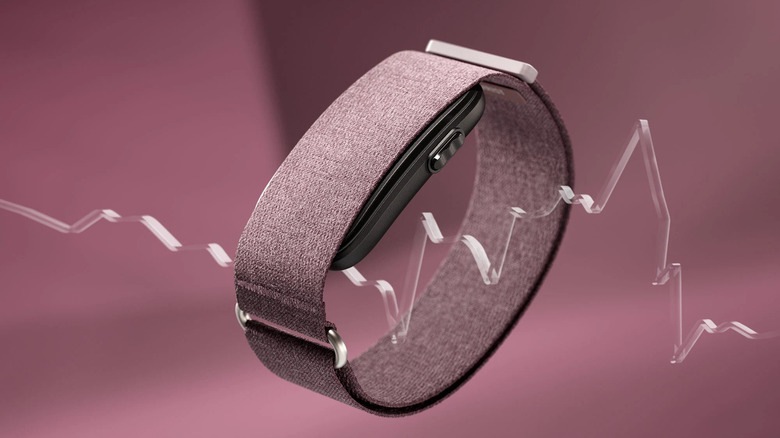
Maybe you don't want Whoop's subscription, but you'd also like a clutter-free app experience unlike the Fitbit Air. The Garmin Cirqa fits right between the two and costs $199. The best part? It doesn't require a subscription. Its app is also much better, with cleaner menus and no hidden information behind AI paragraphs. The Cirqa tracks your sleep and its different stages, heart rate variability (HRV), blood oxygen levels, skin temperature, and much more. Like the other two, Garmin's app summarizes your data into Training Readiness and Body Battery scores, and also estimates your Fitness Age.
Unlike the other two, though, the Cirqa is the only tracker with a physical button. You press it once to start a workout, and again to stop. This is much easier than fiddling with the app. It automatically records a workout after 15 minutes of activity, and the included vibration motor doubles as a haptic alarm in the morning.
According to YouTuber Mike O'Brien, the Cirqa deviated by only 5%-10% when measuring light and REM sleep compared to the control Muse EEG headband. In the same test, both the Fitbit Air and the Oura Ring performed slightly worse, except for measuring deep sleep. As for workouts, the Cirqa was once again on par with the Polar H10's heart rate measurements. The band doesn't have built-in GPS, though, so you'll probably need to take your phone on a run.
Oura Ring 5
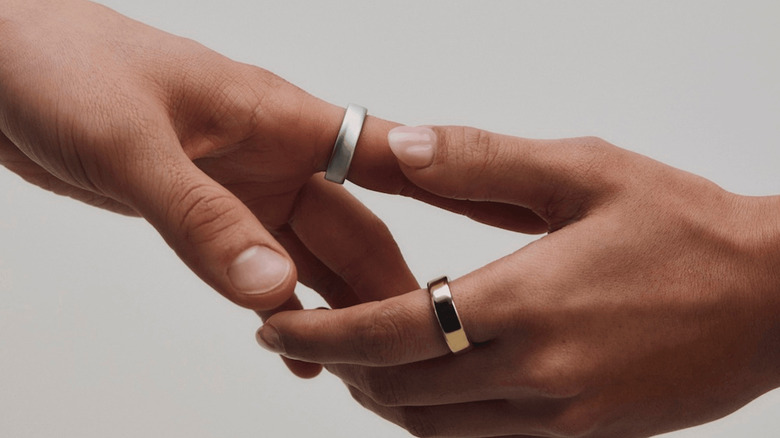
Smart rings that quietly track from your finger have always sounded great on paper. In reality, however, most smart rings have looked big and very out of place compared to regular jewelry. That's exactly the problem the Oura Ring 5 solves. The biggest upgrade is that it's 40% less bulky than its predecessor. At just 2.28mm thick, the Ring 5 looks like any other ring and is light enough not to cause any strain on your fingers. Yes, Oura reduced the sensor count from 18 to 12, but did accuracy suffer? According to Trusted Reviews, not really. The Ring 5 differentiates between various sleep stages pretty accurately, taking into account whether you were lying in bed or actually dozing off.
The Ring 5 then combines this sleep data with other metrics to calculate a Readiness score, which you can then use to plan activities. While there's no GPS or cadence tracking for runners, its heart rate tracking was in line with industry standards like the Polar H10. There's a Symptom Radar feature that uses skin temperature and respiratory changes to detect early signs of illness. You can also track blood oxygen saturation and blood pressure. The latter is not medical-grade, though.
This data is presented by the Oura app, which has a clean yet modern feel. The homepage has all the information, and you can navigate to different sections for more detail. There is just one problem with the Oura Ring 5: the price. It starts at $399, and you'll also need a monthly $5.99 subscription to access your data.
Ultrahuman Ring Pro
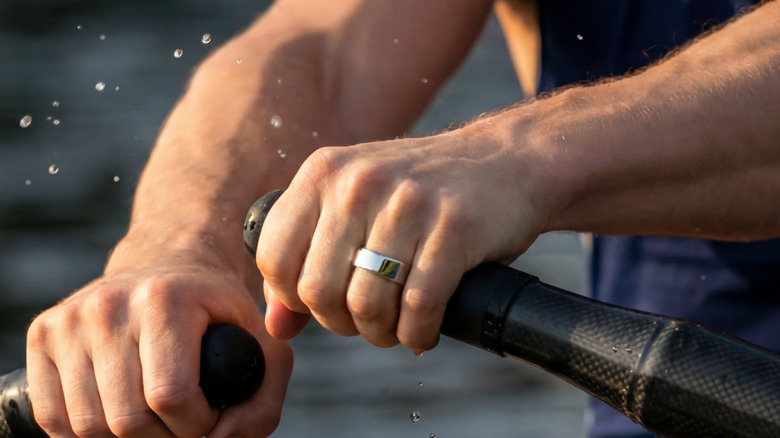
The Oura Ring vs. Ultrahuman debate has been going on for a long time. And if the Ring 5 is for background tracking without bothering you much, the Ultrahuman Ring Pro is for people who want to optimize every aspect of their fitness. Part of that appeal comes from its app, which has recently been redesigned. Up top, you get a snapshot of your core vitals, including resting heart rate, heart rate variability, skin temperature deviation, and steps. Beyond that, the Ring Pro gives you a Dynamic Recovery score and also estimates your Ultra Age, which is how old Ultrahuman thinks you are based on your daily activity. Its estimates are often higher than your actual age, even if you're very active, so keep that in mind.
Ultrahuman also offers a series of Powerplugs — add-ons you can use for specialized tracking. These include an ideal caffeine window, a Circadian Dead Zone, a migraine management tool, and more. There's also a parent add-on that accounts for the fact that you might not get the full eight hours of sleep. Most of these are free, but some do cost extra.
As for tracking, TechAdvisor found the Ring Pro to be accurate when measuring resting heart rate and heart rate variability compared to the Oura Ring. The step count, however, was quite off. While the battery lasts up to 15 days on a single charge, the Ring Pro is much thicker, which could make it look out of place on smaller fingers. We also found complaints about shipping delays on pre-orders and a lack of customer service on Reddit. This shouldn't be the case, especially when you're spending $479.
Amazfit Helio Ring
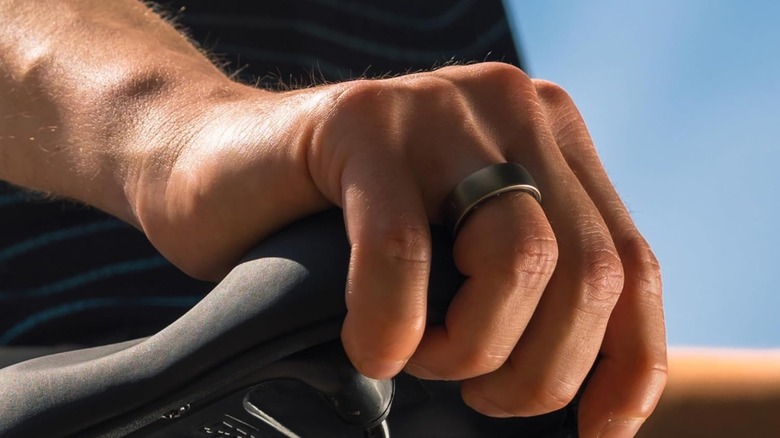
Despite the features, dropping over $400, sometimes even with an added monthly subscription, on a smart ring isn't everyone's cup of tea. That's exactly where the Amazfit Helio Ring fits in. It costs $149, which is less than half of the other two, yet still has many of the same features. According to our Helio Ring review, that includes excellent sleep tracking, with the ring accurately recording different sleep stages and overall sleep duration. It combines that with overnight skin temperature, heart rate variability, breathing rate, and resting heart rate to generate a Readiness Score.
You access the data via the Zepp app. It's mostly clean and intuitive, though it's harder to dig into detailed metrics than it is on Oura. Some information, such as specific body temperature variability, isn't accessible at all, even though the ring records it. Workout modes are limited to just four, which is fine if your routine mostly revolves around running or walking. However, you can also pair your Helio Ring with an Amazfit watch, like the Active 2, to track complex workouts. As per YouTuber Chase the Summit, the ring's heart rate measurements were comparable to those of an ECG heart rate sensor on most runs. Sometimes, however, the ring shifts on the finger, resulting in inaccurate readings. This happens because Amazfit only offers the Helio Ring in three ring sizes: 8, 10, and 12. Unless one of those fits you properly, the ring may sit loose and affect the results.
Methodology
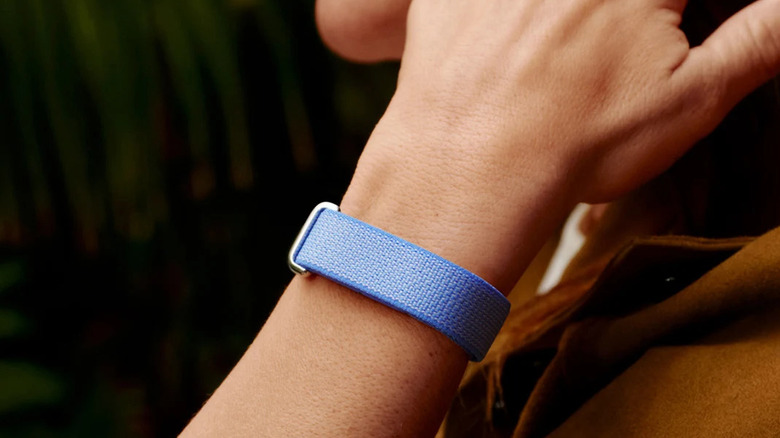
It's no secret that screenless fitness trackers are super popular in 2026, with multiple brands jumping on the bandwagon. Given the number of choices and the fact that each tracker is aimed at a different person, picking the best one isn't easy. For this list, we first combined our testing of several trackers based on overall tracking accuracy, sleep and recovery analysis, comfort for all-day wear, and battery life. We then confirmed our findings through expert reviews from reputable media outlets such as TechAdvisor, TechRadar, and TrustedReviews. Other factors, such as value for money and subscription costs to access your data, were also considered.