

5 Modifications You Can Make To Your Harbor Freight Trailer
We may receive a commission on purchases made from links.
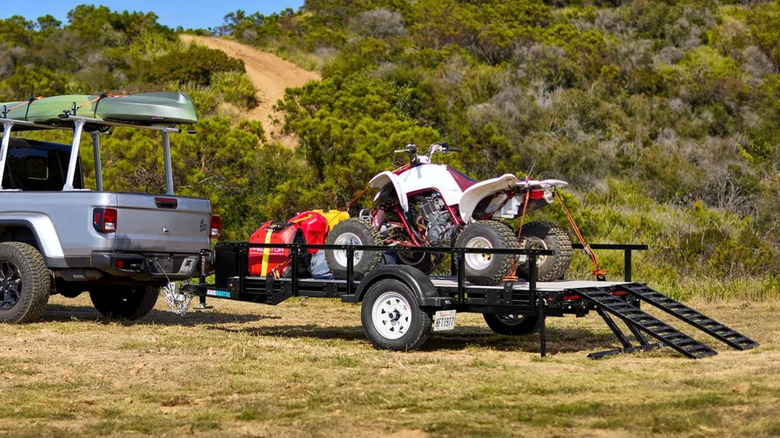
When Eric Smidt first founded Harbor Freight back in 1977, it was a mail-order business that shipped tools to buyers looking for cheaper alternatives to big-name brands. It remains a highly recommended place for DIYers to stock up on products today, but over the decades, its range has also expanded to include a lot more than just DIY essentials. Among many other things, it now sells various trailers.
A popular product in its trailer range was its now-discontinued folding trailer, which has been the subject of numerous custom-build videos from industrious owners. At the time of writing, the largest trailer that Harbor Freight sells is the Haul-Master 2000 lb 5-by-10-foot utility trailer.
Regardless of the model of trailer you own, there are plenty of modifications you can make to boost its usefulness. Some are simple tweaks aimed at solving a particular drawback of Harbor Freight's trailer range, while other modifications can completely transform its utility.
Trailer owners have already tested these five ideas and proven their worth on the road. Before you reach for your tools, keep in mind that laws for road legality vary across the country, and so it's always best to check regulations in your area before carrying out any significant modifications.
Turn it into a budget-friendly walled cargo hauler
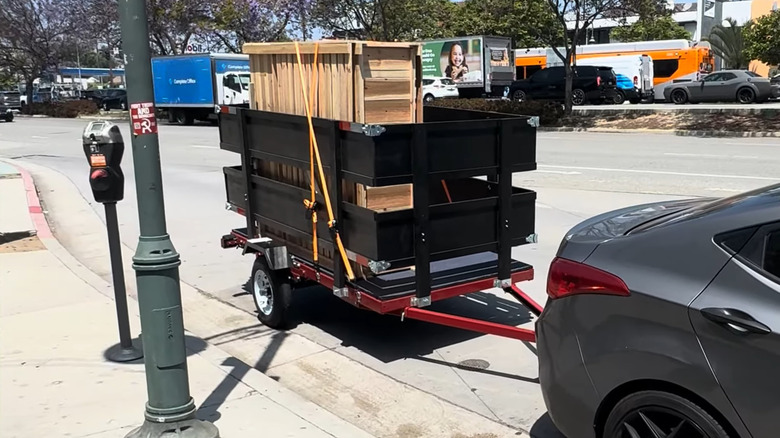
Most trailer buyers are going to be making their purchase in order to carry some kind of cargo, but the stock trailer will need some basic modifications before it's ready to tackle that task. Fitting a trailer floor will be the first step to carry most types of cargo, and the next step is potentially adding walls to the trailer to keep cargo secure on the road.
Building a walled cargo hauler doesn't have to be expensive. In a video detailing his custom build, WoodWorkzLA said that his build cost him around $1,000 in total, including the trailer itself and a trailer hitch. For the trailer walls, he used ½-inch plywood, although he noted that he was carrying around planters and so didn't need a particularly heavy duty build. It also helped keep the weight of the trailer to a minimum.
Hai Tran used a similar approach to lightweight construction in his cargo-hauling trailer build. Both builds featured removable walls that were attached together using trailer corner brackets, allowing the trailers to be deconstructed and folded away when they weren't needed.
Fit a spare tire holder
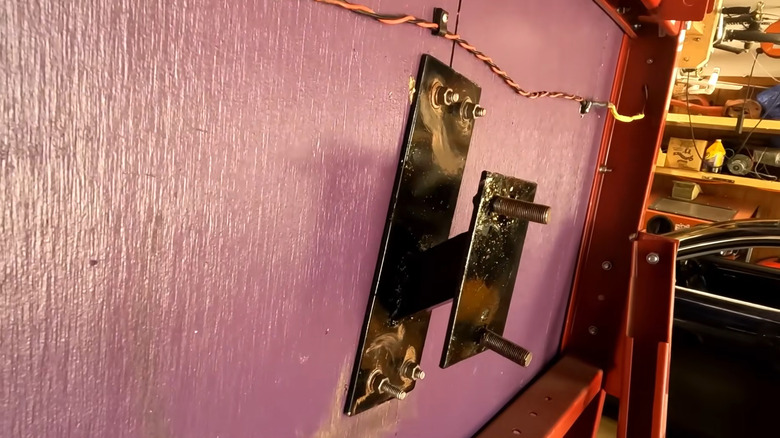
Even if you've followed every tip and trick to safely haul a trailer, you can still end up stranded at the side of the road if one of the trailer's tires blows. Keeping a spare handy is the easiest way to ensure you can get back on the road again, but you'll need to work out where to fit it on the trailer.
Harbor Freight sells a Haul-Master trailer spare tire carrier for $29.99 and says it's designed to fit on the trailer tongue. However, some trailer owners prefer to mount it underneath the trailer instead. A video by Armed and Dangerous DIY breaks down the process, with the YouTuber saying he cut down the Haul-Master carrier to reduce how far it stuck out, welded it to a metal plate, and then attached it underneath the front of the trailer floor to increase tongue weight.
Some owners might also want to swap the stock tires of their trailer, although it's best not to swap the factory trailer tires for car tires. The two different types of tires are not interchangeable, since they're built for different purposes and thus have different constructions. Trailer tires have stiffer sidewalls and higher internal pressures than car tires, and so using car tires on a trailer can potentially pose a safety risk.
Add U-bolts to attach straps
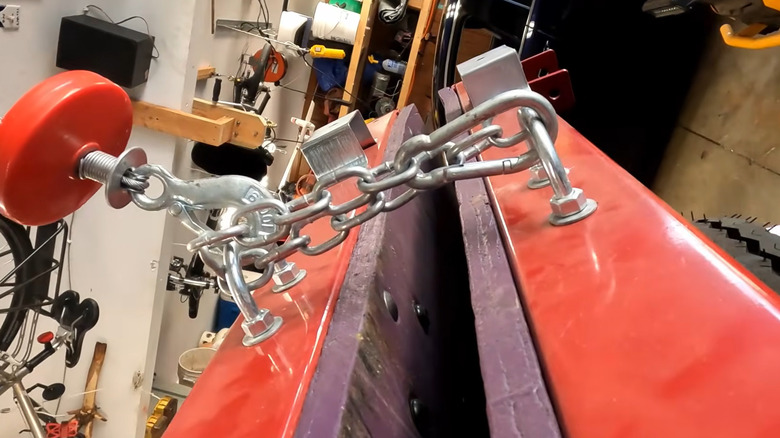
Even if you're not looking to build walls to secure cargo, you'll still need some way of ensuring it stays on the trailer while you're hauling. Installing U-bolts so that you can attach straps is one of the easiest and cheapest ways to do that. If you have a folding trailer, fitting U-bolts and a chain or strap can also help keep the trailer from unfolding when it's in storage, since Harbor Freight does not include a clip to keep the two halves of the folded deck together from the factory.
If you're new to the world of towing, it's also a good idea to brush up on how to properly load a trailer for balanced towing before strapping down your cargo using your freshly installed U-bolts. Too much weight at the front or back of the trailer can affect its handling, and in a worst-case scenario, might even cause you to lose control of your vehicle. Be sure to factor in the added weight of any modifications you've made to your trailer when calculating how much cargo you can safely carry.
Fit a folding license plate holder
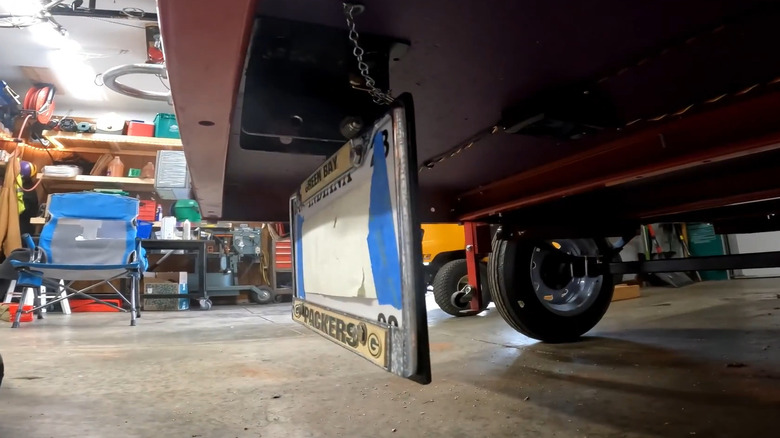
Owners with a folding Harbor Freight trailer might find fitting a license plate tricky. Once you've received a license plate — and therefore sorted any title and registration requirements for your trailer — you'll need to mount it to the trailer without risking it getting damaged. It took Armed and Dangerous DIY four attempts to find a suitable mounting solution.
His first attempt had him fit the plate under the taillight, but vibrations eventually caused it to come loose and fall off while he was driving. Bolting the plate directly to the rear of the trailer made it easy to damage the plate while sliding cargo on and off the trailer deck, and bolting it to the trailer's removable wall meant that the trailer couldn't be legally used without the walls attached.
The fourth, and best, option was to build a custom folding license plate holder that kept the plate visible below the deck while the trailer was in use. When it wasn't needed, it swung back to sit parallel to the deck, saving space and preventing it from catching on anything while in storage. While his was custom-built, some similar hinged license plate holders are also available on sites like Amazon.
Make a micro camper
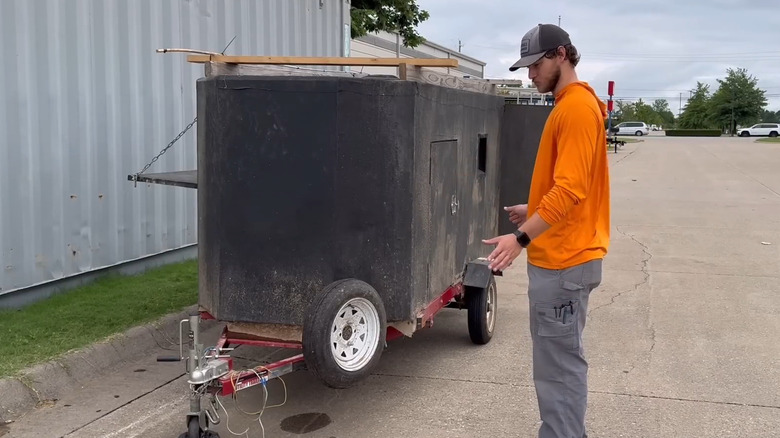
If you don't need your trailer to haul cargo, you could always convert it into something more unusual, like a miniature DIY camper. Several DIYers have already done exactly that and documented their build process on YouTube. When Marching Moto set out to make his mini camper, he said that keeping the cost down as much as possible was his main priority. Nonetheless, his camper features locking doors, a window, cabinets, and even a running water system.
While Marching Moto's trailer was built for functionality over aesthetics, Woodbrew's camper project aimed to mix both. The builders again used a Harbor Freight trailer as a base, but welded it to improve its rigidity before building a teardrop camper on top. Evidently, there's plenty of room for originality depending on your goals, time, and budget, although there will, of course, be some limitations. A Harbor Freight trailer is never going to be turned into a little luxury home on wheels, but it certainly has the potential to be a fun alternative to a tent.