

4 Tech Brands Owned By HP
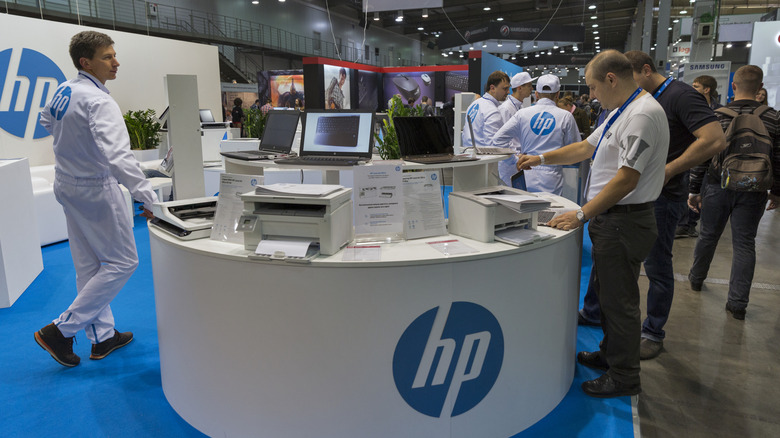
HP, which stands for Hewlett-Packard, was founded in 1939. At the time, neither personal computers nor the internet were a thing yet. Since its founding, HP has made a variety of products, from oscillators for testing sound equipment to calculators and frequency synthesizers used in space vehicles before finally entering the personal computer space in the late '60s. Fast forward several decades, and the company has grown to become worth billions of dollars.
HP is a well-known manufacturer of laptops, desktop computers, and printers, producing products across different price segments. The company has a strong reputation in the portable computer segment and is known to make some of the most reliable laptops. In addition to its main product lines, the company has expanded its reach through the acquisition of various tech brands. Currently, HP owns several tech brands, most of which it acquired outright from other companies. However, some of the tech brands that HP owns no longer exist after being integrated into its product line and having their names phased out.
Compaq
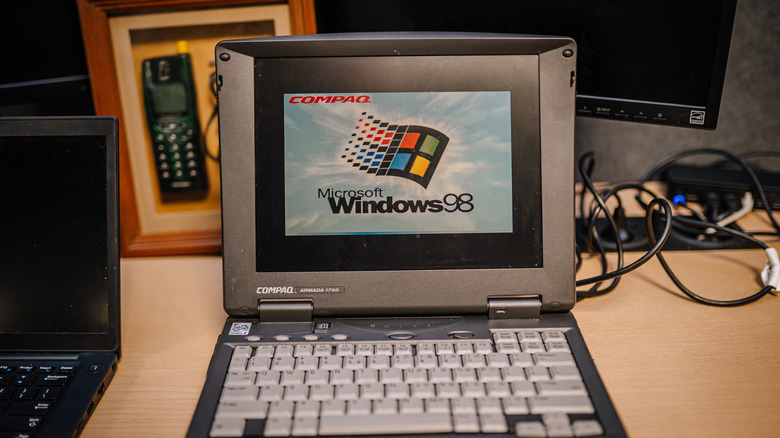
If you're familiar with the Compaq name from the '90s and early 2000s, you'll be surprised to learn that the company is now owned by HP. However, that wasn't always the case. Compaq started as an independent company, then in 2001 HP announced its intention to acquire it for $25 billion. For the uninitiated, Compaq was a U.S. computer manufacturer that was once a dominant player in the PC market. If you wanted to buy a PC back then, you probably considered one of the company's models.
Compaq was started in 1982 by three former Texas Instruments employees, Rod Canion, Jim Harris, and Bill Murto. The company got started in the PC market by manufacturing IBM-compatible personal computers. In fact, the Compaq name was made by blending two words: "compatibility and quality." Soon after entering the market, the company's products became a hit, and Compaq rose through the rankings to become a leading PC manufacturer from the mid-'90s to 2000.
However, you won't see the Compaq name around anymore. After it was acquired, HP began rebranding Compaq's products under its EliteBook and ProBook lines within a few years and eventually discontinued the company's branding in 2013.
Poly
Poly is another tech brand that HP owns. The American tech company acquired Poly, formerly known as Plantronics, in 2022for around $3.3 billion to expand its reach into the hybrid work and communications technology market. Poly sold video-conferencing equipment, specifically gadgets meant for hybrid work setups, such as headsets, webcams, office telephones, and more.
You might not have heard of Poly, but it's an old tech company dating back to 1961. It was founded by two airline pilots who joined forces to develop an upgraded headset design. The company was founded in Santa Cruz and was known at the time as Plantronics. Its first product, a headset known as the MS-50, was a game-changer that NASA astronauts requested the organization to include in their helmets. Sure enough, NASA adopted it, and it was even used during Apollo missions.
The company expanded into the wireless office headset space and gaming segments in the '90s and 2000s and merged with Polycom in 2018. After the merger, it rebranded to Poly. Since its acquisition in 2022, it has operated as a brand within HP, with its products branded HP Poly. HP currently sells headsets, webcams, earbuds, IP conference phones, and other gadgets for hybrid workers under the HP Poly brand.
HyperX
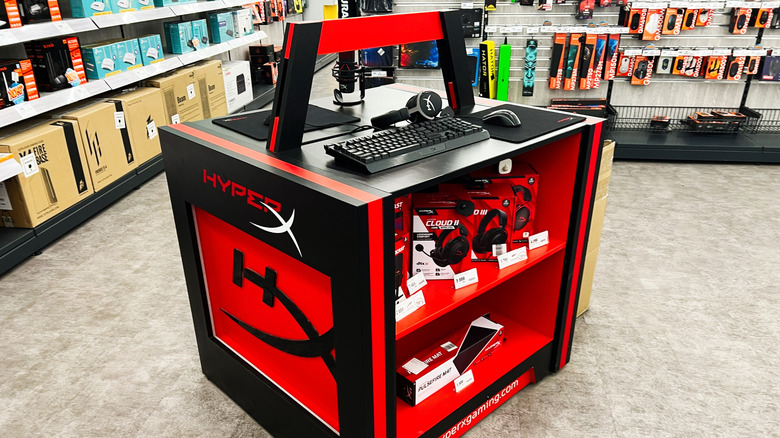
HyperX is yet another tech brand that HP currently owns. Like Compaq and Poly, HP acquired HyperX. However, this acquisition is more recent than Compaq's, as HP finalized the purchase of HyperX on June 1, 2021. It acquired HyperX for $425 million from its parent company, Kingston Technology, known for selling memory and storage products such as hard disks, SSDs, DRAM, USB flash drives, and memory cards.
HyperX is a gaming-focused brand that makes a variety of accessories meant for gamers. That includes products like keyboards, mice, mouse pads, and headphones that are optimized for console and PC gamers. HyperX has a solid reputation in the gaming accessory market, with its headsets (most of which are wired) being praised for their excellent audio quality and microphones. Since the acquisition, HyperX has continued pumping out gaming-related products.
As of this writing, its website lists gadgets that span categories and target platforms such as the Nintendo Switch, Xbox Series X/S, PS5, and PC. These include gaming headsets, keyboards, mice, microphones, and controllers, to name a few. HP is also expanding the brand's product lineup, with the company announcing HyperX's first pair of open-back headphones, the Cloud Alpha Air, priced at $149 and set to hit shelves in September 2026.
Teradici

Founded in 2004, Teradici built a business around PC-over-IP (PCoIP), a technology that enables users to access powerful workstations remotely while maintaining high graphics quality. Its products proved particularly useful for accessing graphics-intensive applications over the cloud, such as 3D modeling software, including 3D CAD. The Teradici brand was acquired by HP in 2021 as the company sought to expand its foothold in the hybrid work environment.
However, under HP's leadership, the Teradici brand has since faded into oblivion. Roughly nine months after the acquisition, the American tech company launched HP Anyware, a remote computing service that combines Teradici's Cloud Access Software platform and HP's own ZCentral Remote Boost technology. As of this writing, HP has even redirected the original Teradici website to HP Anyware. However, the existence of HP Anyware is living proof that Teradici's technology is still in use under the hood.
Teradici started by making dedicated hardware for PCoIP, offering products such as PCIe cards for workstations and servers. It later shifted its strategy to PCoIP software, first through the Workstation Access Software name and later through the Cloud Access Software branding. By the time HP acquired Teradici, the company's PCoIP protocol was being used by over 15 million endpoints.