

5 Things You Didn't Know About Starlink Satellites

Unless you live under a rock, you're probably at least tangentially aware of Starlink. A division of SpaceX, which was founded by CEO Elon Musk, Starlink is a satellite internet service provider. Your internet may be delivered to your home via cable or fiber-optic cables, but not everyone has access to these high-speed internet options, even here in the U.S. Designed to connect those in rural, remote parts of the world, Starlink also offers services to travelers who are on the go.
Because Starlink is part of SpaceX, the company can launch the satellites itself rather than relying on another company for this initial, vital step. The service is designed to be reliable during conditions that could disrupt other internet services, including wind and snow. Residential packages start at $55 per month, but there's more to learn about Starlink than connection speeds and monthly cost. Even if you have a basic understanding of how Starlink works, you might be surprised by what you don't know about the internet service provider. Read on to learn a few lesser-known facts about this trailblazing satellite pioneer.
They orbit at very low altitudes compared to traditional satellites
In real estate, the saying is "location, location, location," and surprisingly, this turn of phrase applies to space as well. There are all sorts of things in orbit around Earth, including debris from spent rockets, the International Space Station, and several different types of satellites. Traditional satellite internet systems often rely on communications satellites that orbit high above the planet. Called geostationary (GEO) satellites, these devices circle Earth at altitudes of more than 35,000 kilometers, or about 21,750 miles! The higher these satellites are, the greater coverage they provide, but they also take longer to transmit data back to Earth.
Starlink works differently. Its massive constellation, or group of multiple satellites that work together, is located much closer to Earth. Placed in what's called low-Earth orbit (LEO), these satellites have typically orbited only about 550 kilometers above the planet, or about 342 miles. Starlink places its satellites in LEO for several reasons. In early 2026, the company announced plans to lower the orbits of more than 4,000 of its satellites to about 298 miles above Earth to reduce the likelihood of a collision and allow dead satellites to deorbit much more quickly. Low-Earth orbit also means that data between the user and the satellite is transmitted much faster, about 25 milliseconds compared to more than 600 milliseconds. This allows Starlink to more easily support activities like video streaming, online gaming, video calls, and more.
They use space lasers

Yes, you read that right: real space lasers. It sounds like something straight out of Star Wars, but we are talking about SpaceX, which has managed many other feats that sound fictional, such as landing rocket boosters vertically or launching a Tesla into space. In 2021, when headlines were dominated by the COVID-19 pandemic and that huge container ship that blocked the Suez Canal for days, SpaceX began launching upgraded Starlink satellites that included laser links. If you've seen too many sci-fi movies, you may be worried about laser-enabled space fights, but this tech has nothing to do with defense. The lasers are actually used for communication.
Current Starlink satellites boast three lasers, or Optical Intersatellite Links (ISLs). These lasers help each satellite talk to neighboring satellites. The laser links allow huge amounts of data to move directly between satellites, creating a high-speed communications network in space. When a neighbor moves out of range, the satellites automatically connect to the next one. These lasers may lack the flair of Marvin the Martian's space pistol, but they help Starlink provide a more seamless experience for customers here on Earth!
They're designed to last about five years
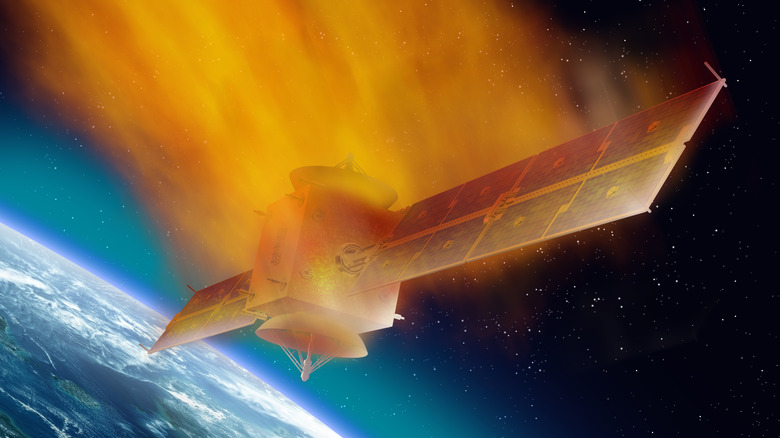
Albert Einstein proved that time is relative. If you've ever watched Interstellar (or sat through an excruciatingly boring meeting at work), you're likely familiar with this concept. While many of us are lucky enough to enjoy decades of this relative time, many things on Earth vanish quickly. Mosquitoes, for example, typically live for only two weeks, though few will shed a tear over that fact. Almost everything has a finite lifespan, and that includes Starlink satellites. Starlink has not released any official numbers on how much it costs to launch a satellite, but it's logical to say that shooting anything into space probably isn't cheap. So it may surprise you to learn that the company's satellites only have an expected lifespan of five years.
This short lifespan is intentional. While other satellites may last 15 to 25 years, Starlink operates more like Apple, frequently updating the technology. This five-year cycle lets the company upgrade the performance of the entire constellation without having to replace every piece of equipment all at once, so it's never locked into aging tech. This also allows it to retire the satellites at the end of their lifespan with minimal service disruptions. When a satellite is retired, FCC rules require it to be deorbited within five years of the end of its mission rather than left in space indefinitely. SpaceX has a disposal reliability rating of more than 99%, successfully bringing down its satellites in a controlled manner, typically over the open ocean.
Astronomers and environmentalists are concerned
It's fair to say that Elon Musk does not do things by halves, and Starlink follows the pattern. As of August 2026, the company has just over 11,000 satellites in orbit. Those numbers are staggering, but earlier in 2026, the company filed a proposal with the FCC for approval to launch up to 100,000 LEO satellites. This third-generation network would layer on top of the current constellation. This plan has not yet been approved.
If this would improve connectivity here on Earth, what's the hang-up? Astronomers are already worried about Starlink's satellites interfering with our view of the cosmos. When satellites pass through the view of observatories on Earth, they sometimes reflect sunlight that can obscure the telescope's view. Starlink's engineers have worked with astronomers from the very beginning to minimize this issue, with solutions such as dark paint and mirror films, but scientists are still concerned.
There are also environmental worries. It's unknown what effect the burning of so much metal in our atmosphere could have on our climate, and experts are concerned about pollution from both launching the satellites and when they fall back to Earth. Studies have already found that high-altitude air pollution from launches and re-entries has increased significantly since 2020, and scientists are concerned about the impact it could eventually have on our climate. Black carbon released by rockets can linger in the upper atmosphere for years. Experts have warned that increased regulation, along with increased funding for research, is absolutely necessary to fully understand the impact of satellite launches.
You can see Starlink satellites with the naked eye

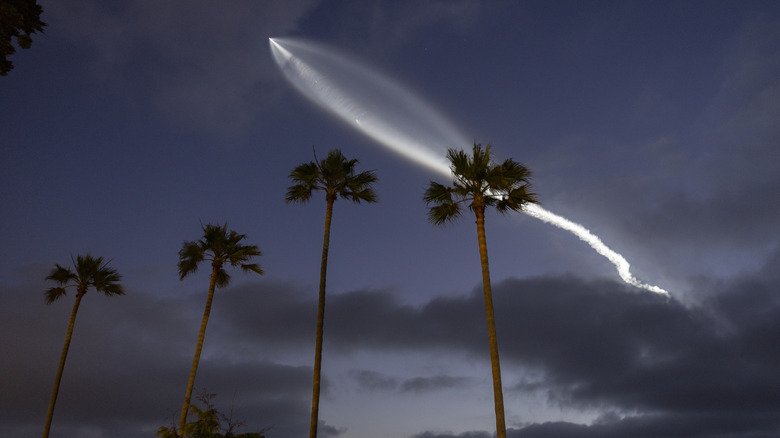
If you love to stare up at the night sky, you may have already spotted a satellite and not even known it. That streak in the dark while you were camping or backyard stargazing might not have been a shooting star, but instead could have belonged to Starlink. You don't even need a telescope or expensive equipment. Due to their low orbit, you can spot these satellites with your own eyes on a dark night.
These satellites don't produce their own light. We can see them only when sunlight reflects off their surfaces. If you see a line of lights in the sky, it's likely satellites that have recently been launched and are forming what's called a satellite train. In general, satellites are easiest to spot in the days right after launch before they reach their final orbit. They are close together, closer to Earth, and very reflective.
Starlink satellites that have reached their final orbit can still be visible, though they can be much harder to spot. If you want to take your kids out for some satellite spying, you should keep an eye on SpaceX's launch schedule or use a tracking resource to see where Starlink satellites are. Go outside about one to two hours after sunset or before sunrise, which is the best time to spot them, and keep an eye out for a line of lights — it's probably not aliens, just modern, fast-moving technology that is quickly changing the world.