

What Is The American Equivalent Of Toyota's Legendary 2JZ Engine?
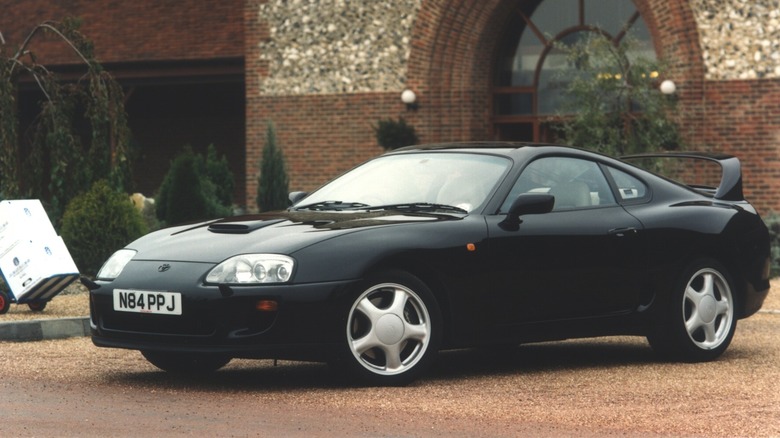
Comparing one engine to another isn't an exact science, especially when you consider legends like the 2JZ-GTE. First of all, the 2JZ is obviously a Japanese engine, generally paired in comparisons against other similar engines — most notably against Nissan's RB line.
That sort of comparison is pretty straightforward on paper, considering both engines in top trim are twin-turbo straight sixes powering legendary JDM monsters with a claimed 276 horsepower. The Supra and the 2JZ both became famous by its appearance in popular media, and equally so by ripping up the Japanese underground racing scene in the 1990s and 2000s. Indeed, even today, you'd be hard-pressed not to run into at least a few JZ-pattern cars, original or swapped, at the Daikoku Parking Area in Tokyo.
But all that's in Japan; what does America have to counter it? This is going to be somewhat controversial, so bear with us for a minute. If Japan is famous for its turbo inline tuner engines, what is America famous for? Its V8s. USDM cars have plenty of battles of their own as well, with the Big Three constantly fighting for who has the best V8 since the 1950s. What's the most recognizable, ubiquitous, tunable, and found in an iconic sports car? The LS.
Yes, really — it's not a straight six, nor is it a factory turbo. But let's be real here, if there was ever an American equivalent to something with the pedigree of a 2JZ, it's got to be the LS. From lazy truck blocks to supercharged 600-plus horsepower demon-slayers, nothing else compares. Here's why.
The LS and 2JZ are both powerful and highly versatile
Firstly, the 2JZ, as the name suggests, is the second-generation of the JZ engine family. It's further divided by its various configurations, namely the GE, GTE, and FSE; likewise, it's appeared in dozens of models including various Lexus and luxury Toyotas. The straight six is inherently perfectly balanced and an extremely smooth configuration, and, notably, the 2JZ-GTE readily accepts frankly ludicrous levels of power, with a highly-modified 2JZ-powered A80 Supra becoming the world's first five-second import. Forget your "ten-second car."
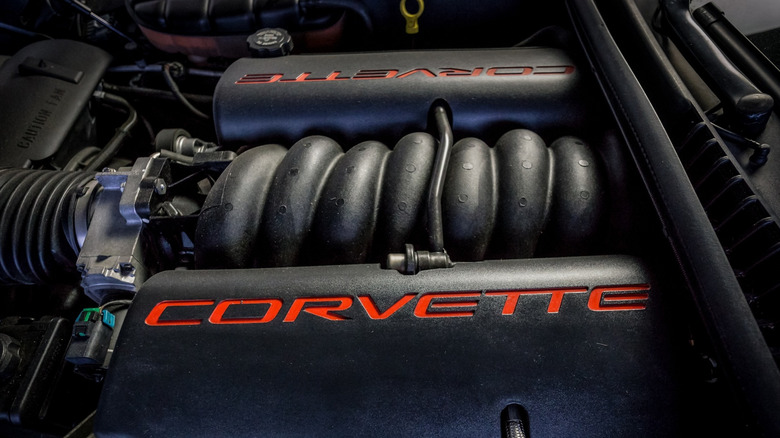
Meanwhile, if the LS is known for one thing, it's versatility. The LS swap is basically a meme in car culture because of how many hoods it finds itself under. Like 2JZs in Japan, you're basically guaranteed to run into LS swaps at virtually any car meet. It makes sense; like the 2JZ, the LS makes good, reliable power. It's relatively straightforward to squeeze a ton of power if you throw money at it. The tricky part is making that power without breaking in half. Both of these blocks excel here.
Basically, it's all about what these engines are capable of doing. Both are capable of four-digit horsepower figures (in addition to good stock power), both can be naturally-aspirated or forced-induction, and both power a plethora of cars, either swapped or factory-equipped. Obviously they both have differences — factory forced induction, the cylinder count, of course, but they nevertheless share that potential.
Both have a decades-long enduring legacy in the tuner subculture
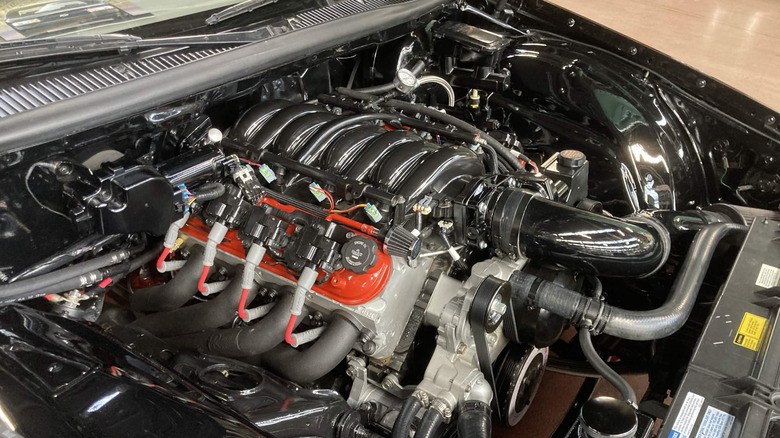
Perhaps the most important factor isn't the hard specs, but what each of these engines represent in the automotive world. Both of them are effectively household names in their own rights, with large-scale representation in media and literature. More to the point, they both play crucial roles because they're so readily moddable and accessible. Love or hate these common swaps, we as automotive enthusiasts will always respect them, because they allow us to enjoy classic cars without the burden of questionable reliability and parts-availability when modern levels of power is desired. No wonder LS swaps are so popular.
That said, that's why such a comparison isn't strictly a hardline definition, but rather a combination of facts and vibes. Enthusiasts often talk about the eternal battles between the Coyote versus the Hemi versus the LS, or the 2JZ versus the RB versus the 4G63, name your comparison. There's no objective "best" engine in any of these discussions, of course, but the point is that the continuous debate, upgrading, swapping, and showcasing of these blocks will keep them alive in the automotive consciousness for decades to come.
Ultimately then, the LS represents America's answer to the 2JZ both directly and indirectly. Both are performance-oriented yet versatile blocks with staggering power potential, both come from a storied lineage of tested and proven designs, both have racing pedigree, and both remain relevant even among more modern engines. Now if you really want to rustle feathers, try comparing a Hemi to an RB at a meet and see what happens.