

5 Aircraft Owned By Celebrity Pilot Harrison Ford
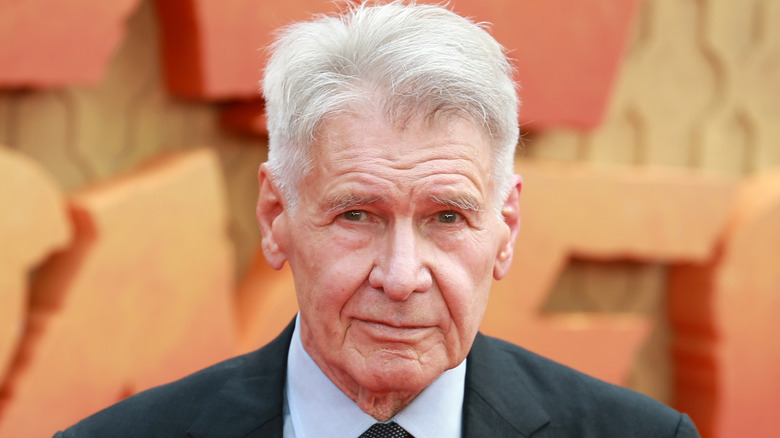
In "Return of the Jedi", Han Solo, at the controls of a stolen Imperial shuttle, famously tells his co-pilot Chewbacca to "Fly casual." In real life, actor, aviator and activist Harrison Ford is anything but casual in his approach to aviation or plane ownership, having been tied to a number of notable aircraft through his well known support for all things aviation.
Over the years there has been charitable work, rescue missions, and a few dangerous moments and mishaps that have put Ford's flying in the spotlight. Throughout his career Harrison Ford has garnered a reputation for valuing his privacy, but the world of aviation is one place where Ford had been more comfortably public with his passions and projects. He has often been spotted throughout the years socializing at gatherings of planes and pilots, often with one of his personal planes in tow.
Along the path of his aviation journey, a number of aircraft that Ford has owned appear to have risen higher than others in their owner's estimation. He not only uses these aircraft for transportation and recreation, but also to demonstrate an excited activism for aviation and support for the flying community. This includes using his various aircraft to support aviation initiatives such as the Eaa's Young Eagles program that give kids a close encounter with flying. Here are five of Harrison Ford's favorite aircraft from his personal collection.
Aviat AIircraft Inc A-1C-200 N89HU
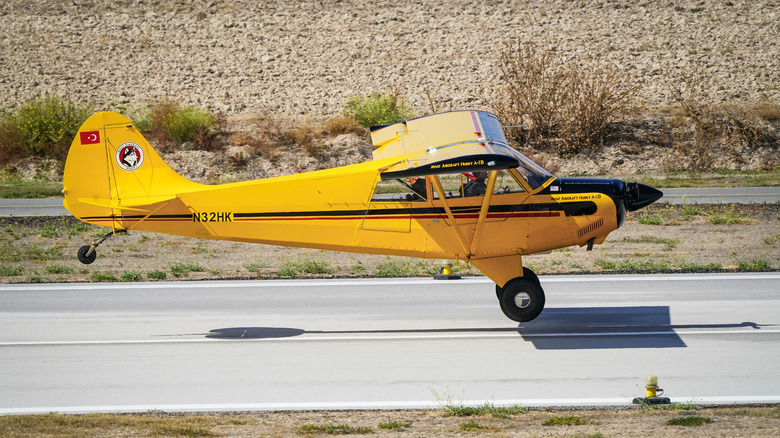
Many pilots find that the thrills of flying low and slow are equal to those found at higher altitudes and speeds. It is at these low altitudes that scenery can be appreciated in detail, and it is here that Ford's Aviat A-1C-200 Husky is designed to operate. Not only capable of cruising low and slow, the Aviat is designed to operate off-strip and to facilitate wilderness flying with oversize high flotation tundra tires to tame rocky beaches, sand, and grass landing sites.
It is these characteristics that have earned the A-1C-200, and other offerings from Aviat, the adoration of pilots who need to be able to access remote landing sights. The A-1C-200 is equipped with a potent Lycoming O-360 engine and large control surfaces that provide plenty of maneuvering authority at the low speeds required to access tight landing spots, such as unusually short runways, small valley fields, and short stretches of riverbank.
It was in his Aviat in 2017 that Ford was acting as pilot in command when a mishap occurred. Coming in for an approach to John Wayne Airport (SNA) for Runway 20L, Ford erroneously lined up on a parallel taxiway, flying directly over a passenger jet before setting down on the taxiway rather than the runway. The incident made the news, and Ford was ordered by the FAA to complete additional training.
De Havilland DHC-2 MK. I N28S
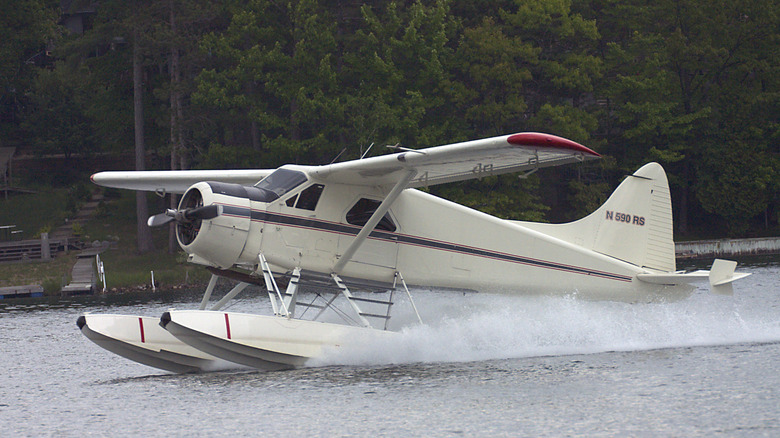
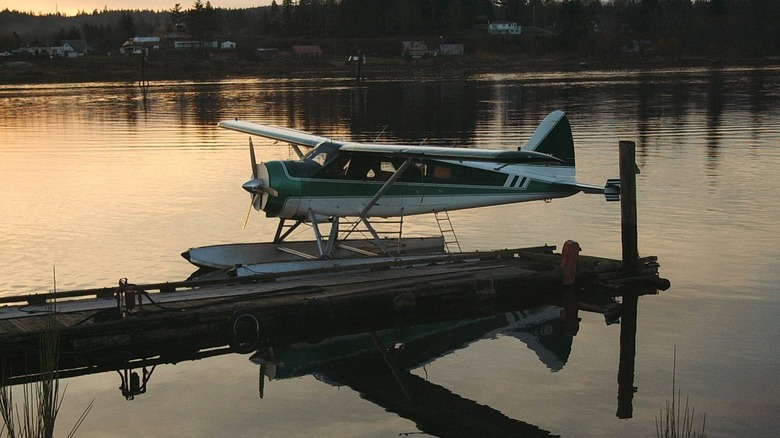
Ford's iconic Beaver is a tough-as-nails Canadian airplane that has earned high praise in aviation circles for its astonishing hardiness in austere conditions and challenging environments, and being able to land on water or runways. This toughness comes courtesy of an incredible build quality and reliable Pratt and Whitney radial engine, that usher the big seaplane into the sky with a signature roar.
The DHC-2 has been a fixture in Ford's fleet, and is reputed to be his pick of the litter. It is not hard to understand why. The De Havilland's design epitomizes the classic days of barnstorming seaplanes with its big R-985 Wasp Junior engine, its stable floats, sturdy lines, and a beautiful cabin that has been painstakingly maintained and cared for. While its handsome looks have earned it praise, it is its versatility as a STOL utility aircraft that made it a legend. The Beaver may be one of the top feats of Canadian engineering in the 20th century.
It was in the Beaver that Ford, in his role with the Young Eagles program, gave rides to many young aspiring pilots and aviation enthusiasts. This involvement in the flying lives of many has been a highlight in Ford's flying career, and no doubt equally valued by so many kids who have had the opportunity, thanks to Ford's generosity, to be Han Solo's co-pilot.
Cessna Citation Sovereign 680 N6GU
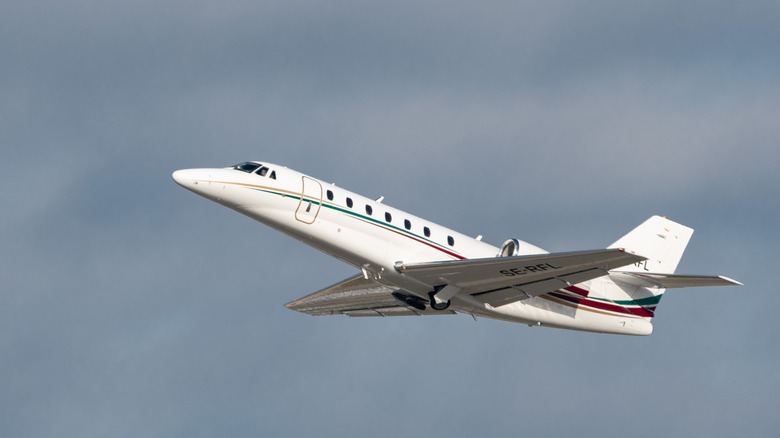
In order to operate at the highest levels of his profession, Harrison Ford has to keep up a schedule that can require extensive travel, between the demands of being on set and still maintaining a family life and time at his residences in California, Montana and elsewhere. In order to meet those demands Ford owns a Cessna Sovereign, an aircraft that is known for its world shrinking, time saving capabilities.
This mid size business jet, one of Cessna's largest, is a true performer. Powered by twin Pratt and Whitney turbofans that allow the nine-passenger jet to cruise at approximately 528 miles per hour, the Citation in Ford's Fleet has true transcontinental range, making coast to coast runs nothing more strenuous than an afternoon jaunt. The sleek Cessna business jet boasts a range in excess of 3000 miles, giving it serious legs.
However, the performance of a jet engine comes at the cost of complexity and pilot workload. This is not a hobbyist machine that can be pulled out, fired up, and taken for a spin on a lark. It requires a professional pilots commitment to ongoing training, as keeping current is key to being able to operate the aircraft safely and in compliance with FAA regulations, Ford is among the minority of owners of this class of aircraft who holds the correct ratings to be able to fly the plane himself, doing credit to his reputation as a true airman.
Bell Helicopter 407GX N96GU
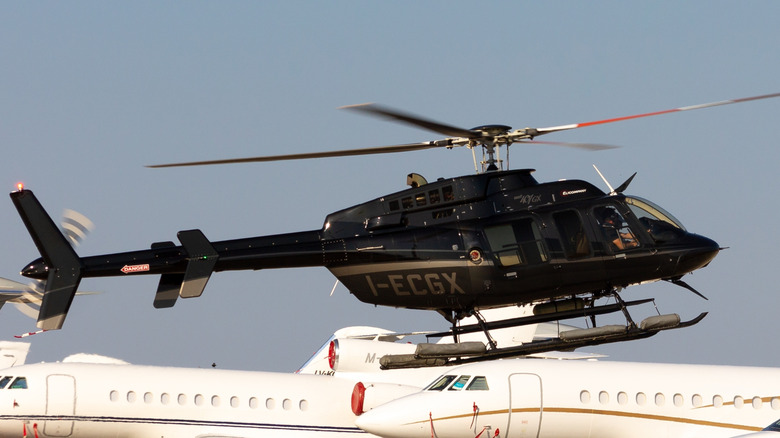
Not content to maintain fixed wing ratings with his pilots license, Harrison Ford has also attained rotor craft endorsements that qualify him to pilot helicopters. Accordingly, Ford has kept a helicopter as part of his fleet for years, and his beloved Bell 407 has become something of a fixture near his sprawling ranch near Jackson Wyoming.
The Bell 407 GX Is a fast and extremely capable bird, thanks in large part to its eager Allison/Rolls Royce 250-C47B turboshaft engine. Unlike more basic helicopters that rely on piston engines, the 407 GX's unit allows for strong performance at higher altitude, a necessity for mountain operations in proximity to Ford's Montana properties. Its four blade main rotor system has been praised for offering incredibly smooth flight dynamics, and a very pleasant flying experience. Often used by government and commercial operators, the Bell 407 GX can cruise at over 120 knots, while it is able to be configured to hold up to six passengers in comfort.
Not only does Ford like to fly for recreation in the area, but has actually been involved in search and resume operations in support of first responders and Teton County Search and Rescue operations. In the early 2000's Ford notably came to the rescue of a dehydrated hiker in trouble on Table mountain, as well as helping to locate a lost Boy Scout, demonstrating that his heroic qualities extend beyond the screen to real life aviation exploits.
Air Cam Amphibian Twin N66GU
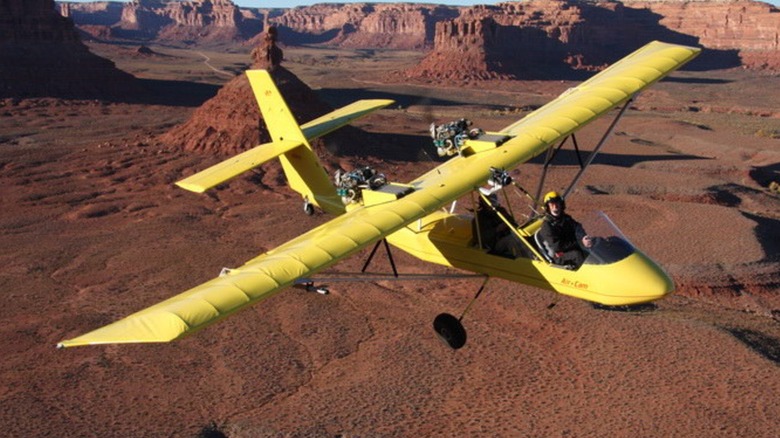
This experimental aircraft is one of the more unusual flying machines in Ford's Fleet, and it affords a unique set of flight characteristics and capabilities, along with distinct looks. The Aircam is a twin-seat open cockpit aircraft with twin Rotax engines that is optimized, like a number of the actor's other favorites, for low and slow flight operations, and like his Beaver, has amphibious capability. The Aircam's forward seating configuration, well ahead of the high mounted wing, affords nearly unobstructed views.
In addition to the panoramic views, the Aircam is noted for the reliability provided by not one, but two powerful Rotax piston engines. The Air Cam is something of a novelty in being a multi-person open cockpit aircraft that features the redundancy of two engines. This allows for an extra margin of safety not found in small single engine aircraft. In fact, its lightweight construction allows the Air cam to climb even when down to a single engine, providing a wide safety envelope.
This plane was built by the manufacturer for Ford in 2017, after which the actor went to Sebring, Florida to complete transition training and to learn the ins and outs of this unusual aircraft. After earning his type endorsement, Ford has been seen in it cruising low and slow, enjoying, as is his habit, the views from the top.
Methodology
In order to compile this list of aircraft owned by Harrison Ford, the Federal Aviation administration aircraft registry and other public records were consulted. N numbers of aircraft associated with Ford were checked in the FAA's registry database, confirming ownership by one of the corporate entities controlled by Ford as a vehicle for aircraft ownership, namely MG Aviation Inc, GBH Aviation, and LKM Inc, all out of Santa Monica, CA. Ford, like many aircraft owners, makes use of corporate holding companies like these to insulate himself from liability, scrutiny, and to streamline ownership. These entities are publicly tied to Ford, both through publicly available interviews in which Ford admits ownership of the aircraft registered with these entities, and through government records, such as paperwork completed during the formation of the LLCs which list Ford as having a controlling role.