

9 Affordable Sony Surround Sound Alternatives For Any Budget
Every A/V enthusiast wants a proper home theater surround sound setup. Alas, not every A/V enthusiast has room for a 7.1 setup complete with a massive subwoofer; some live in a studio apartment with neighbors who throw a tantrum whenever they feel the rumble of bass from above or below.
Thankfully, there are alternatives for people who don't have room or money for a top-tier multi-speaker system. Take, for instance, Sony. They're one of the top names in the realm of audio/video equipment (not to mention the PlayStation family of video game consoles) and have products that deliver high-quality performance without necessarily breaking the bank or taking up too much precious real estate in your living space.
Here are nine such products. These comprise a mix of soundbars, earbuds, headphones, and a few other unique audio solutions that make for suitable replacements for a traditional surround sound setup. Remember, just because you can't have the absolute best home theater audio system doesn't mean you can't have something that's still pretty darned good.
HT-S400 Soundbar
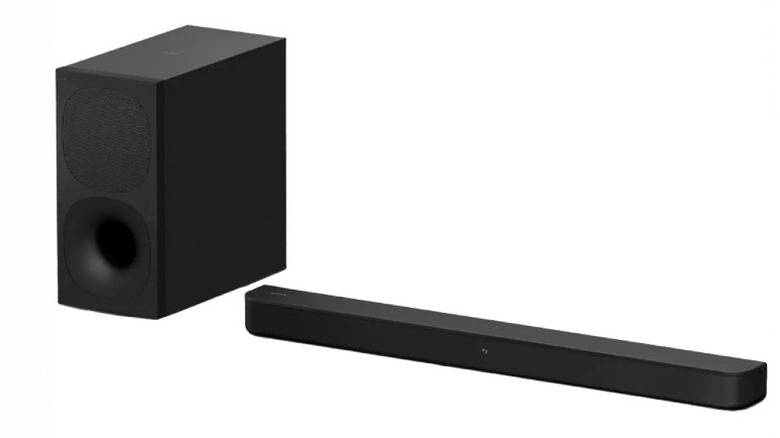
For users who want to have something of a home theater setup but don't have room or the budget for a 5.1 or better setup, their best option is to invest in a soundbar. Soundbars can offer simulated stereo or even a facsimile of surround sound with just a single speaker placed in front of the television, usually aided by a subwoofer that doubles as an A/V receiver.
Sony makes multiple soundbars, so we'll start with a look at their budget option, the HT-S400 . This is a 2.1 system that uses the soundbar and subwoofer to create a room-filling soundscape. Well, it tries. Unfortunately, the unit's built-in S-Force Pro Front Surround technology is no substitute for the real thing, so you might be better off sticking with its 2.1 options, since that's what any soundbar that retails for under $300 is built to accommodate.
Even if it's not the best soundbar in the world, it packs enough bang for its price and is certainly better than any default television speakers. Seriously, even high-end televisions have embarrassingly bad audio. They'd be better off saving a few bucks by not having any audio at all, but that's a topic for a different discussion. The point is, this soundbar is more than capable of filling a small room if you're seated directly in front of the television.
Sony BRAVIA Theater Bar 6
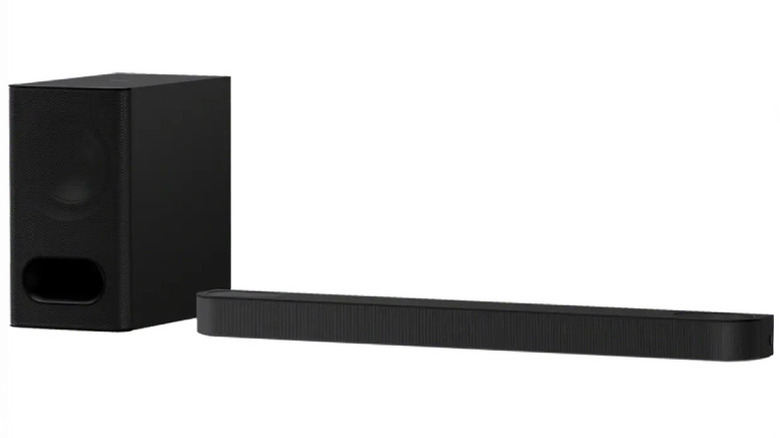
For a more high-end soundbar, you're going to need to shell out a lot more money. The Sony BRAVIA Theater Bar 6 costs $699, which is hefty, but still less than a high-end A/V receiver, let alone 7.1 speakers. The Bar 6 is still an entry-level device, but it delivers impressive punch for such a small package.
If you've got an extra $100 and a room that accommodates such a setup, you can upgrade to the Theater System 6, which turns the bar into a hybrid surround system. The soundbar handles the front and front-side stereo channels, while the two extra speakers are proper real channels for a real surround sound experience. Again, it's not studio reference quality, but budget soundbars, even ones that can facilitate a hybrid surround setup, are not designed for studio reference. They're designed to give big, accurate, satisfying sound to consumers who can't or won't bother with the highest-quality (and most egregiously expensive) surround sound setups.
There are certainly cut corners here and there, though. For example, the unit lacks an HDMI In port, which is bad news if you have an old TV that doesn't have many of its own HDMI ports. It also lacks Wi-Fi connectivity, but that's not a dealbreaker. You can still use Bluetooth to connect to your phone or other mobile device to listen to music or podcasts beyond just using the soundbar for devices directly connected to your TV.
MDR-EX155AP wired earbuds
Some people don't live in an environment where they can watch TV, listen to music, or play video games without bothering others. For those users, a more personal solution is required. High-end headphones are recommended for home use, but they have their shortcomings in terms of comfort, especially in the hot summer months.
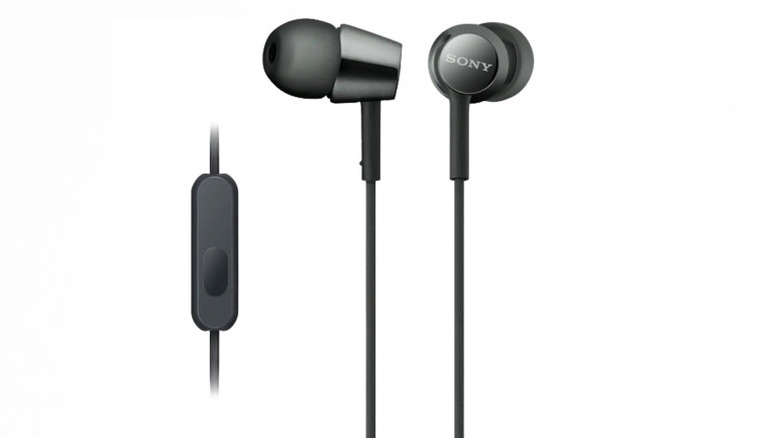
The most versatile audio technology out there is the humble ear bud. While A/V elitists may scoff at the prospect of a pair of ear buds delivering decent sound, there are some great options out there, such as Sony's MDR-EX155AP. When I'm taking a plane or riding the subway, these are my weapon of choice. I have sensitive skin, and many kinds of earbuds are terribly uncomfortable in my ears, but these are comfortable and lightweight. But despite their small size and small price (just $34.99 but they're currently $19.99 as of this writing), they pack a big sound.
There's a tiny bit more heft in these than in the cheaper MDREX15LP, but it's not enough to make them feel uncomfortable, even after many hours of use. In fact, the bass on these little buds is shockingly good. If you wear them just right, you even get some genuine rumble during video game explosions or John Entwistle bass lines. I suppose it's worth mentioning that the buds also have a microphone for phone calls or PC chat, but there are other, better solutions for those cases. Nevertheless, these little earbuds might be the most versatile and overall reliable audio solution. Indoors, outdoors, on the bus or in bed, these will do the trick in any situation.
WF-1000XM6 wireless earbuds
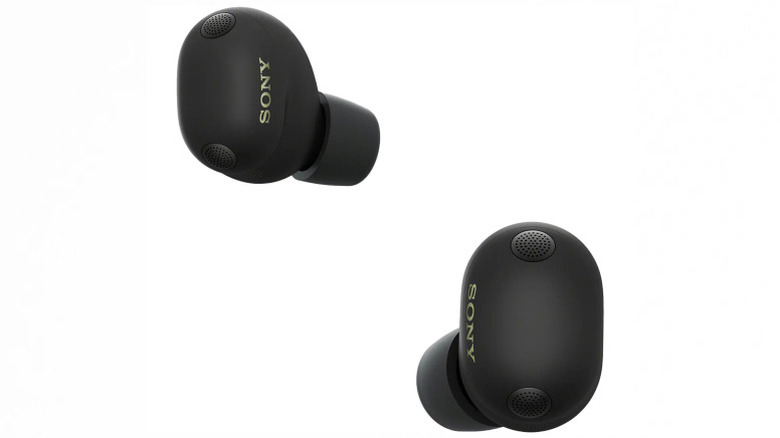
Maybe I'm a little too old-school for my own good, since I don't usually mess with wireless audio. But if the reviews are any indication, the WF-1000XM6 might just have what it takes to change my mind. They're a bit pricey for earbuds at $298, but they use custom drivers for pristine audio and noise cancelling technology to justify the price.
Unlike most wireless earbuds that I've tried, these have a compact shape that looks both stylish and ergonomic. They're not dopey-looking like Apple's AirPods, nor do they have a large external pack that makes them feel unbalanced and uncomfortable. By all accounts, these wireless buds deliver high-quality audio without sacrificing comfort.
Like the previous buds on this list, these Bluetooth units also have integrated microphones that allow for calling and chatting on the phone or computer via Zoom, Discord, or however you connect with your friends. While this feature obviously has nothing to do with home theater audio, it's good to have devices with more than one use. While some people prefer speakers, soundbars, or over-ear headphones, there's something special about a sound system that literally fits in your pants pocket.
MDR-ZX110 wired over-ear headphones
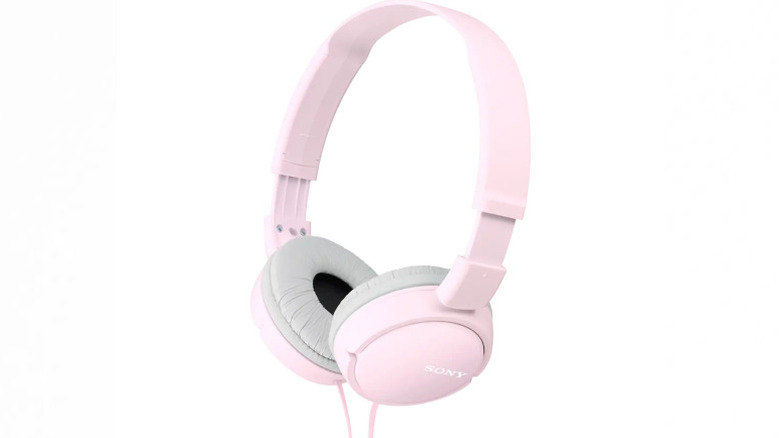
If in-ear buds aren't your style, but you still don't want to deal with speakers or soundbars, then your other mainstream option is a pair of over-ear headphones. The cheapest option, and, indeed, the cheapest item on this list, is the MDR-ZX110. They retail for just $9.99, and they have the build quality to match. Put simply, they look and feel like a stiff breeze could case them to disintegrate in your hands. They also lack any kind of noise cancelling; don't bother wearing these on the subway.
That being said, they deliver a surprisingly satisfying sound for $10. It's always good to keep a pair of these laying around in case you misplace or break or otherwise lose access to your regular audio equipment. They're wired, so you can just plug-and-play, which is always convenient.
Not in a million years would you mistake these for studio reference audio, but they get the job done. We've all been disappointed by $10 generic headphones or earbuds at our local bodega, to say nothing of the earbuds they sell on airplanes, which are so awful they should be illegal. These MDR-ZX110 headphones are comparable in price but absolutely blow those alternatives away. Sure, they might fall apart if your plane hits any turbulence or if you sneeze too hard. Even so, for $10, you could do far worse, but you probably can't do better.
WH-1000XM6 wireless over-the-ear headphones
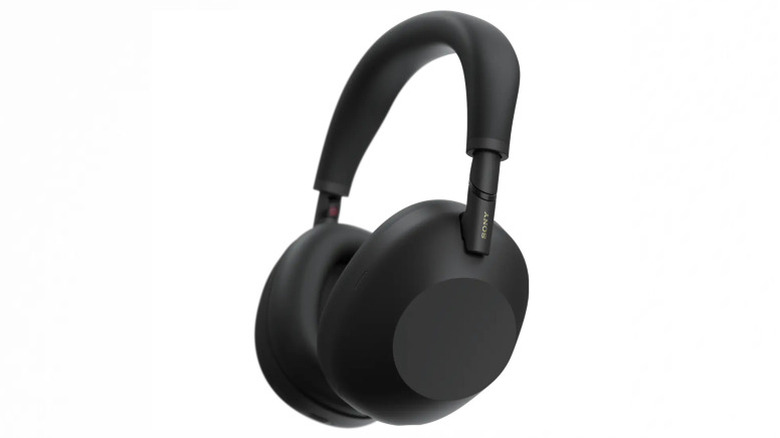
On the opposite end of the over-ear headphone spectrum, we have the WH-1000XM6. These retail for $398 and boast a sturdy build quality and high-end features to match. First and foremost, these are noise-cancelling headphones. They're wireless, of course, but unlike the Apple AirPods Max, they have an AUX port for a 3.5mm connection. It might seem a little old-fashioned to some, but being able to just plug in headphones and listen to music or watch TV without worrying about Bluetooth or battery charge is just so convenient.
Speaking of the Apple AirPods Max, these are basically Sony's answer to Apple's headphones, with many of the same features. They have multiple noise-cancelling modes, including one that allows outside noise to come in so you don't have to take them off in order to hear, for instance, airport announcements or have brief conversations with grocery store clerks or bank tellers.
They offer up to 30 hours of battery life on a single charge, and they promise three hours of playback after just three minutes of charging, which is great if you forget to charge it overnight. And if you have noisy neighbors or rowdy roommates but just want to watch a movie in peace or do some work without being distracted, the aggressively effective noise cancellation is nothing short of a godsend.
MDR-MV1 over-the-ear headphones
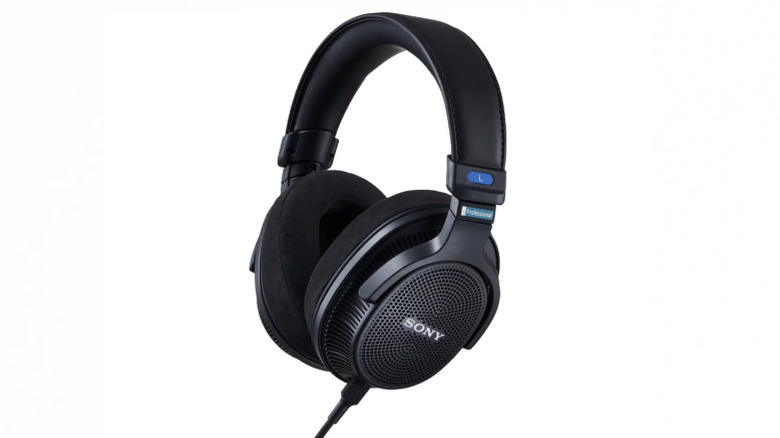
The previous earbuds and headphones are special because they are versatile. You can use them in any situation, from a home theater substitute to outdoor use. The MDR-MV1 is a different beast. These are open back reference monitor headphones designed exclusively for home use. They are not wireless, which is likely why they retail for "just" $339.
If you're not familiar with open back headphones, they allow for more airflow, which has advantages and disadvantages. On the downside, they let external sound in and have little in the way of noise-cancellation. That's why these wouldn't be ideal for the subway or urban walks, even if they were wireless. On the other hand, they generally have a lighter feel than closed-back headphones, which usually makes them more comfortable over long sessions. They also generally have a more spacious, dynamic sound profile, which does a better job of simulating surround sound around your head, rather than injecting stereo straight into your ears.
These are also studio reference headphones, which means they aim to be in a whole other league than other headphones on this list. And they should be, since they don't have wireless compatibility, integrated microphones, noise-cancelling, or any of the other bells and whistles of more versatile headsets. There are designed for audio, pure and simple, and in that respect, they deliver. Simply put, you can plug these into your TV and basically leave them there forever, content in the knowledge that you are getting premium home theater sound from top-quality headphones.
BRAVIA Theater U wearable speakers
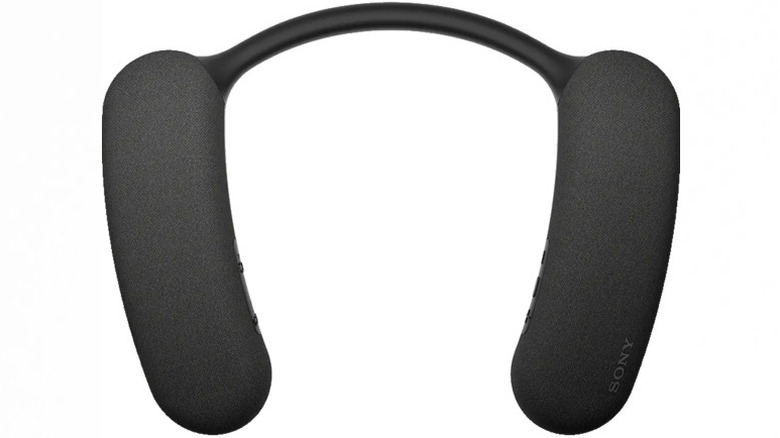
These are particularly intriguing. I can't say I have any experience with wearable speakers, but they seem like a clever workaround for people who don't like traditional earbuds or headphones but still want quality sound without waking up the neighbors. The $348 Sony BRAVIA Theater U is designed to be used wirelessly, but can still plug in via a 3.5mm cable, which makes it ideal for playing video games on the couch, since the cable can connect directly into the PlayStation 5's DualSense controller. You wear it around your neck like a wacky necklace or tiny shoulder pads.
It's hard to imagine just looking at it, but professional reviews all sing the praises of this unit's sound quality, though its faux surround sound simulation is lacking. I wouldn't hold that against the overall product, though, since simulated surround is tremendously difficult to get right, and can seldom hold a candle to the real thing. For what it is, the Theater U accomplishes what it sets out to do, and deserves praise for delivering high-quality audio in an atypical package.
As for additional features, the Theater U has a built-in microphone and can connect to devices via Bluetooth, so you're not just limited to television use. If you have company over, you can pair multiple units to the same source so you and your pal (or your sweetheart!) can get the full Theater U experience. I don't know if the audio will bleed from one person to the other if you're sitting too close together, but I suppose it's something to consider if you want to cuddle up with someone special while watching a movie.
ULT FIELD 5 Bluetooth party speaker
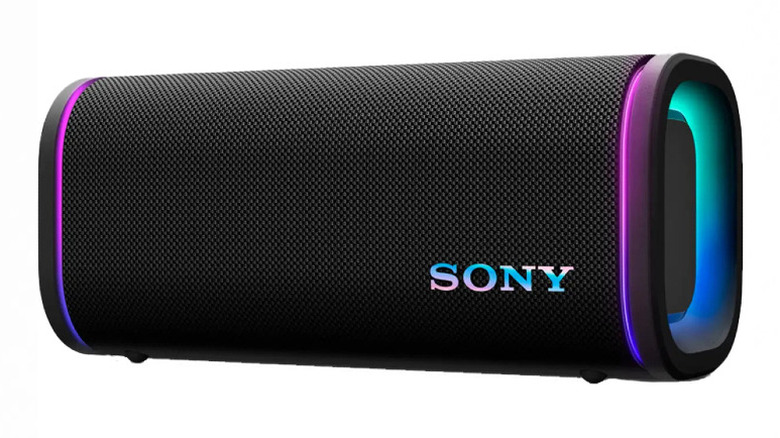
Finally, we come to the ULT FIELD 5, something of an "out-of-the-box" pick that will satisfy some but confuse others. This is basically a wireless Bluetooth speaker, though it also has a 3.5mm audio-in port, which means it's versatile across a variety of devices.
A Bluetooth speaker is basically just a portable soundbar meant for listening to music at parties more than a proper home theater replacement, but it still has utility in that field. I don't own this particular model, but I've certainly been known to plug my Nintendo Switch 2 or even my laptop into my party speaker using 3.5mm connection. Sometimes you simply don't want to wear earbuds or headphones, and a speaker like this is a great alternative. It's also useful if you're in the process of moving and need a quick-and-dirty solution before you assemble your proper audio setup.
As party speakers go, the ULT FIELD 5 is pretty good and has a particular feature that makes it a proper home theater substitute. If you have two units, you can link them with a feature called "Sony Stereo Pair." This turns the two speakers into real stereo speakers, with one outputting the right channel and the other the left. A little stereo goes a long way, and if you know a friend who has one (or you're willing to buy two of these at $188 apiece), turning them into an ad hoc stereo system is one heck of a party trick. This feature also works on the ULT FIELD 5's bigger (and more expensive) brother, the ULT Field 7.