

Bose QuietComfort Headphones Are Getting An Upgrade: 6 New Features Expected
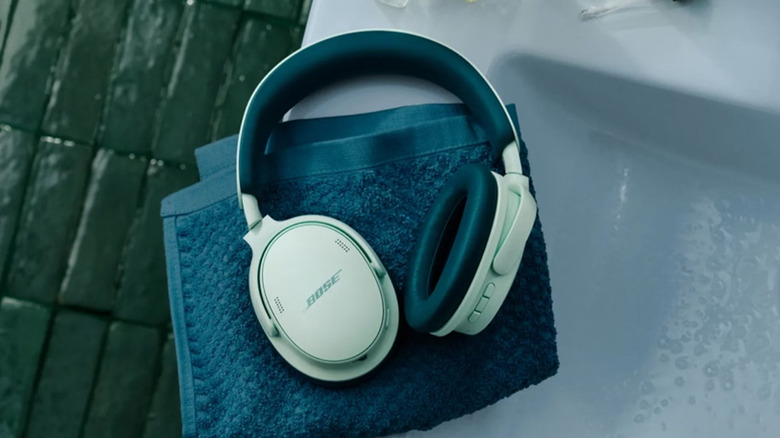
Bose is a major player when it comes to Bluetooth headphones, and it's not unusual to see the company's name once or twice when reading about the best Bluetooth headphones on the market. For years, the QuietComfort 45 was the hallmark for the brand until it released the QuietComfort Ultra in 2023. The QuietComfort 45 was rebranded to just the QuietComfort, and outside a minor refresh, stayed that way until August 2026 when the QuietComfort 2nd Gen headset was officially launched by Bose.
The announcement was quiet enough. Bose put out a press release, and the headphone went on sale on Bose's website. If you blinked, you may have missed it. It turns out that this generational release is actually pretty significant, as Bose has packed several new features into the latest generation while keeping most of the hallmarks that make the QuietComfort headphones good to begin with. This latest generation aren't the top of the mountain at Bose anymore, so they're not usually pitted against the likes of the Sony WH-1000XM6 or the AirPods Max, but they're still good enough to stack up against other big names on the market.
If you're a fan of Bose and you're in the market for a pair of headphones that cost less than Bose's QuietComfort Ultra, then the QuietComfort 2nd Gen should definitely be on your list, and you should be aware of the new features. They are plentiful and at least one of them came from the Ultra series, thus shortening that gap just a little bit.
A new design
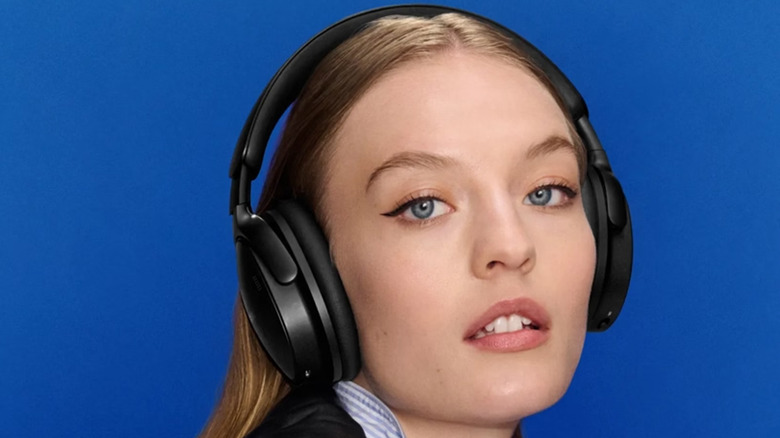
If you're looking at the first and second generation of the QuietComfort headphones from a distance, you may think they're very similar. It's only once you get a closer look that things start to pop out, and the second generation's design looks definitely different. Still, you can definitely tell that they are Bose QuietComfort headphones just by looking at them.
To start, the second generation now has a slightly different shape of the earcups, opting for more of a pill shape than the prior generation. The headband padding is thicker and covers more of the headband, which will no doubt add a small bump to the QuietComfort's legendary comfort levels. The earcups also have more padding in addition to their new shape. Bose says the adjustment sliders are also different, replacing the click-style adjustment from the first generation with a smoother, slider-style adjustment on the second generation.
Bose kept the physical controls from the prior generation, but they are a little different from before. The right earcup handles the playback, volume, and phone call controls while the left earcup has a dedicated assistant button and a listening mode button, the latter being new for the second generation QuietComfort. All told, the design tweaks give it a more modern, slightly sleeker overall appearance that separates it from the aging design philosophy of the first generation.
Three (maybe four) new colors
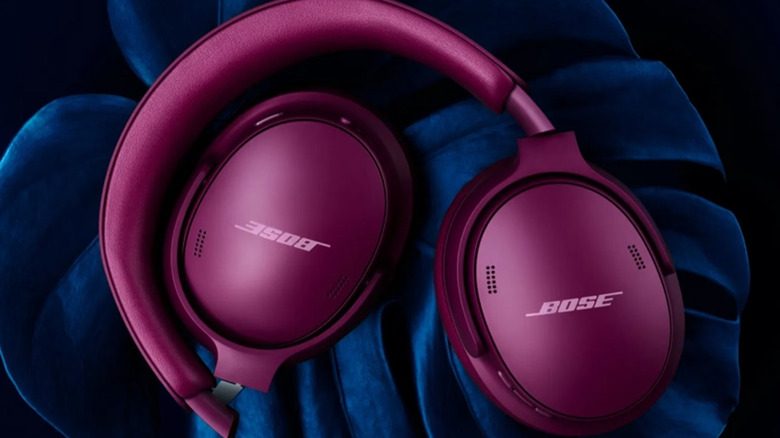
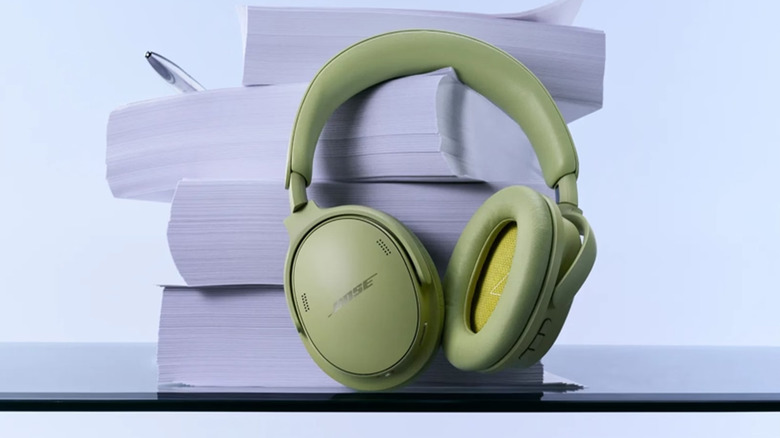
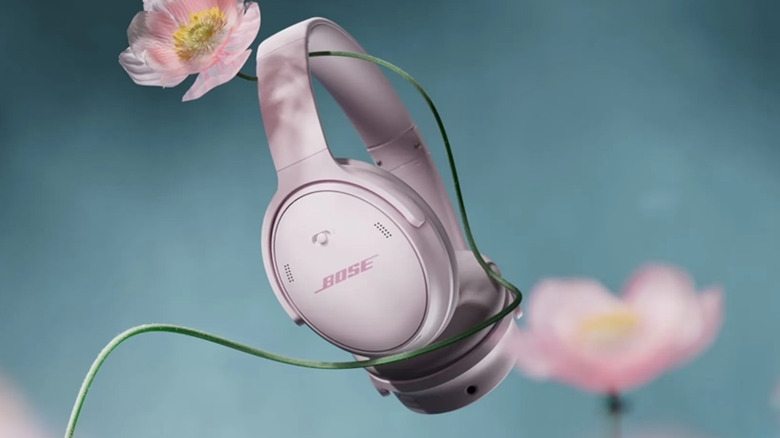
In addition to a new design, the second generation QuietComfort headphones also have some new colors. The first generation had a ton of colors, ranging from the usual suspects like black, white, and gray, to more fun stuff like light blue, green, and pink. The second generation comes with the typical white and black colorways, and adds three new colors with the Rosewood Mauve, Dewdrop Mint, and Eucalyptus Green colors. These are a vibrant purple, a sea foam teal, and a desaturated dark green, respectively.
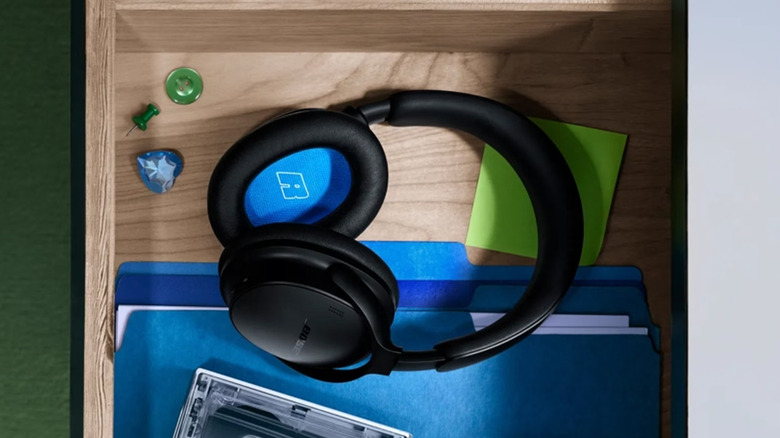
There are two things to talk about when it comes to colors on the new QuietComfort headphones. First, the design opens things up for a two-tone colorway. You can see this on the DewDrop Mint model, which is mostly light teal while the padding spaces are dark teal. This isn't present in the Mauve or Eucalyptus colors, sadly, but the white and black models do have green and blue colors inside the earcups to give them a bit of pop, unlike the monotone white and black of the prior generation.
The second thing to talk about is the prospect of more colors. A French blog that leaked the second generation QuietComfort headphones in July 2026 got everything right, from the new redesign to many features. The one thing they got wrong is a Hazelnut Taupe color, that wasn't present at the official launch. This may come in a later update along with more colors, to match the eight that the first generation had, even if the Bose already offers more colors than the Beats.
Bose Immersive Audio
Spatial audio is the trend that's been sweeping the Bluetooth headphone market in the last few years. This audio tech was popularized by Apple in 2020 and describes as headphones that can deliver 360-degrees of audio, similar to a surround sound speaker system. Bose introduced the feature with its QuietComfort Ultra headphones in 2023 and kept it there for the second-generation refresh. Thus, it was a bit of a surprise to learn that Bose had trickled the feature down to the second-generation QuietComfort headphones.
This is arguably the biggest improvement from the first generation since it is a feature from the more expensive Ultra headphones. Bose calls its implementation Immersive Audio with Bose TrueSpatial Technology, and based on the company's press release, it appears to be the same tech that goes into the Ultra headphones. Bose says that the Immersive Audio sound is like "listening to a 2.0 out-loud system" when it's enabled.
You get three listening modes on the QuietComfort (2nd Gen) model. They include Motion Mode, which changes the audio as the listener's head moves; Still Mode, which always keeps the audio in place; and Cinema Mode, to deliver what Bose calls a "theater-like experience." These can be toggled with a button on the left earcup or can be turned off entirely if you want the classic Bose listening experience.
Audio playback through USB-C
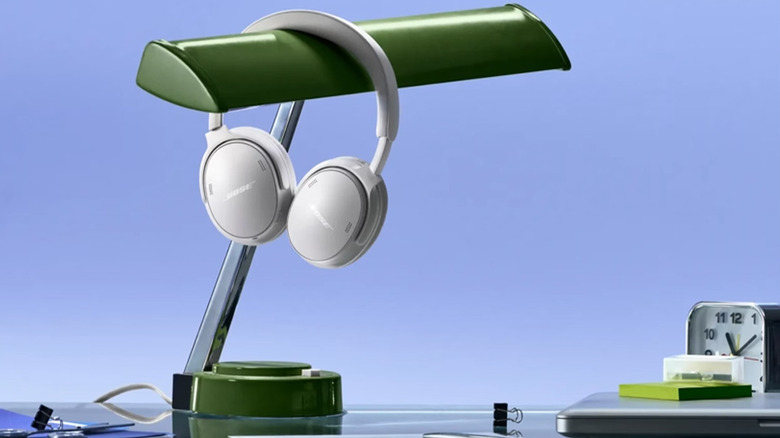
Wired audio is nothing new for the QuietComfort series. The first generation QuietComfort headphones had it in the form of a 2.5mm headphone jack that used to sit in the right earcup, and Bose provided a 2.5mm to 3.5mm jack so that you could connect the headphones to your laptop or desktop and keep listening. Much like smartphones, Bose killed the headphone jack on the QuietComfort 2nd Gen but replaced it a USB-C plug, so users aren't left in the dark.
New QuietComforts come with USB audio, and it might be better than the 2.5mm jack, depending on what you're looking for. The feature lets you connect your QuietComfort headphones to your smartphone or computer's USB-C port and listen to audio that way. Bose says it supports audio up to 24-bit and 48 kHz. The feature is also two-way, so you can conduct Zoom calls or phone calls with the wired connection. Bose also includes a USB-C to 3.5mm cable that you can use to hook up to analog sources if you prefer, thereby keeping that functionality from the first generation.
Virtually none of this was available on the first generation. It had the 2.5mm to 3.5mm connection, which worked fine, but the USB port was for charging only. Bose upgrading the port is a great move, and the ability to work with both modern and legacy sources give the second generation a leg up on the first.
Upgraded noise cancellation
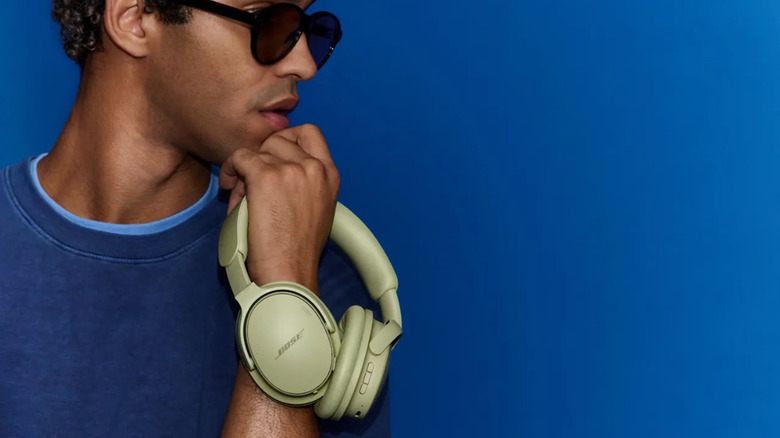
Bose has always had above average noise cancellation, and in the good old days, it was often fighting with Sony for top dog in that segment. Bose is still improving its noise cancellation, and while the Ultra models have the best that Bose has to offer, the QuietComfort 2nd Gen headphones also got some upgrades. Bose doesn't specify too much here, but promises that the algorithm was improved and that performance is better despite not increasing the number of noise-cancelling microphones on the second generation.
There are some things worth noting. Bose upgraded the active noise-cancelling for people with glasses. This scenario has always been problematic because glasses break the seal around the ear, which lets in more outside noise and makes ANC more difficult to achieve. Bose says that it's utilizing a "new adaptive feedforward controls" and that the microphone system "better compensates for gaps in the earcup seal," resulting in improved ANC performance for bespectacled users.
The other big ANC improvement is to Bose's Aware Mode, which lets some sounds through. According to the company, Aware Mode has been improved to better handle sudden spikes in noise, such as when a train passes through a train station, leading to smoother, more natural-sounding noise cancellation than the prior generation. Bose points out that you can still customize your ANC profile with the official app or turn it off entirely if you don't want to use it.
Bluetooth 5.4 adds some new features
The first-generation Bose QuietComfort headphones came with Bluetooth 5.1, and the upgraded model now comes with Bluetooth 5.4. To be perfectly honest, in day-to-day use, you're unlikely to notice too much of a difference in terms of connection, since your sound source, like your smartphone, is usually very close to the headphones. However, there have been plenty of updates from 5.1 to 5.4, including better connection stability, enhanced security, new Bluetooth codec support, and better home automation support.
A lot of the improvements, like better home automation support, don't really apply to the Bose, but some of them do, like the stability and security. Additionally, Bose added the ability to connect to multiple sources at once, letting you swap between the two for music, calls, and other uses. That is a great improvement over the first generation. Bose also added Google Fast Pair support for Android devices, which can be managed in the Bose app.
The one bad news is that the improvement in Bluetooth doesn't translate to improved codec support. Bose confirmed to SlashGear that the QuietComfort 2nd Gen still only has SBC and AAC codecs, so it didn't inherit the apt-X Adaptive codec or the Snapdragon Sound support from the QuietComfort Ultra series. That's a bit of a bummer in a market where LDAC, apt-X Adaptive, and other high-end codecs are swiftly becoming the norm.
Some things stay the same
If Bose had changed it up too much, then it wouldn't be a QuietComfort headphone anymore, so there are quite a few things that were left the same. We've already talked about a few of them, including the Bluetooth codecs, the continued support for physical buttons, and the ability to engage with wired audio, albeit through USB-C instead of a 2.5mm cable.
Arguably the most important thing that hasn't changed is the price. Bose packed all of the above features into the QuietComfort headphones but didn't make it more expensive. The first generation sells for $359, just like the second gen. The base colors are also nearly identical, sans the little extra splash of color on the second-generation models. Both models are approximately 230 grams, which means the second generation remains one of the lightest Bluetooth headphones on the market, adding to the comfort factor.
Both models also come with the same number of active noise-cancelling microphones, although the second generation seems to make better use of them. They both house 40mm drivers and use Bose's SoundDesign digital signal processing, so they'll almost certainly sound similar as well. Pair that with some similar design cues, like the microphone grills on the outside of the earcups, and there's definitely a resemblance.