

5 Naturally-Aspirated Engines That Are More Fun Than Their Turbocharged Rivals
Modern-day performance is built on forced induction, downsizing, hybridization, and pure electrons. The Yangwang U9 Xtreme, a 3,000-horsepower electric hypercar, is now the fastest production car in the world, having hit 308.4 mph at Germany's ATP Papenburg circuit. Meanwhile, EV hypercars like the 2025 Rimac Nevera R can accelerate from 0-60 mph in 1.74 seconds.
None of these numbers are achievable in a stock vehicle running just a naturally-aspirated engine. Still, for many people, it was never really about outright speed. Modern performance cars are so quick that you can't even explore that power without ending up behind bars. Put your foot down in a Rimac Nevera for more than two seconds, and you're not looking at a speeding ticket — you're looking at an "I'm going to jail" situation.
This is why people love older naturally-aspirated engines. They give you the feeling, the vibration, and the sound no EV or heavily turbocharged car can match today. And yet, you can still explore many of them relatively safely and enjoy the sound and feeling without going a gazillion miles per hour. In many ways, this is what made supercars a thing in the first place — the engine.
Enzo Ferrari is widely quoted as saying, "when you buy a Ferrari, you are paying for the engine. The rest you get for free." Whether or not he said it exactly that way, it captures Ferrari's founding philosophy: the engine came first, it defined the supercar, and it was a naturally aspirated one. Here are five naturally-aspirated engines that are more fun than their turbocharged rivals.
Ferrari's 6.5-liter V12
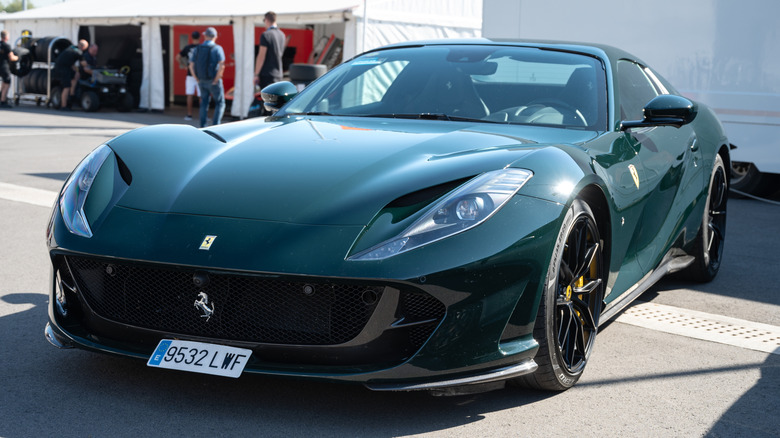
The Drive counted every V12 currently on sale and found that of the entire group, only the Ferrari 12Cilindri and the Ferrari Purosangue skip turbocharging and hybrid assistance. In the 12Cilindri, the engine (codenamed F140HD) makes 819 horsepower at 9,250 rpm and 500 lb-ft of torque at 7,250 rpm, revving to a 9,500-rpm redline.
This engine descends from the F140 unit first used in the Enzo more than two decades ago, an engine family that has also powered the 812 Superfast, the predecessor of the 12 Cilindri. None of that explains why it's fun to drive. What does is how it revs: no turbo lag, no torque converter hunting for boost, just a linear, climbing wail all the way to redline that sounds closer to an old V12 Formula 1 car than anything else you can buy today.
It is a uniquely visceral experience, one that a turbocharged engine has yet to match. Probably its closest rival is the 5.2-liter twin-turbocharged V12 in the Aston Martin Vanquish and the older DBS Superleggera. It's a tremendously capable engine in its own right, but lacks the sound, smoothness, and linear power delivery you get from a big N/A V12.
Fifth Gear put the Ferrari's V12 in the 812 directly against the Aston's in the DBS, and the verdict was blunt. On the Aston: "I have got a real disconnect with this car" and "it's not penetrating my soul." On the Ferrari's 6.5-liter NA V12: "It is truly mental and I am loving it so far" — concluding that "the sheer brutality of the Ferrari makes it the more desirable road car."
Porsche's 4.0-liter flat-six
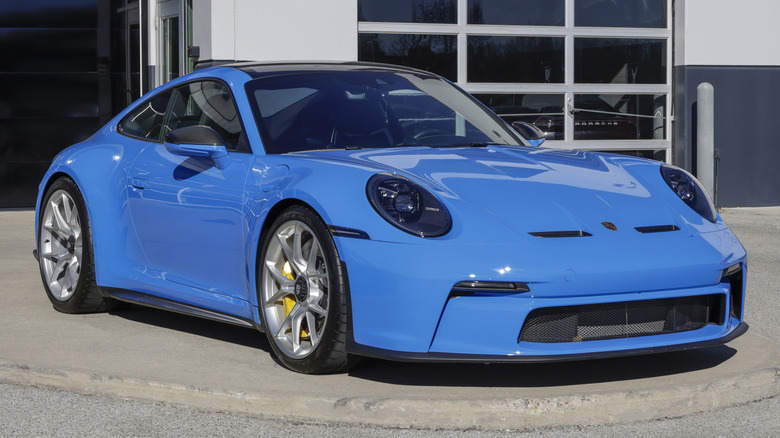
The Porsche 911 is the staple sports car for many people. The 911 platform was first introduced back in 1963 with a flat-six engine. It has been continuously improved over time, and today that platform splits into two very different philosophies: the turbocharged 911 Turbo S, and the naturally aspirated GT3/GT3 RS.
Between the two, the Turbo S is unquestionably quicker in a straight line. The most recent non-hybrid version made 641 horsepower and hit 60 mph in 2.6 seconds, a power advantage AutoTrader summed up bluntly when comparing the two: "Porsche have brought a nuclear weapon to a pillow fight." But the GT3 gives up roughly 140 of those horses for the sake of its engine — a 4.0-liter naturally aspirated flat-six that revs all the way to a 9,000-rpm redline.
On the same test, that engine got its own verdict from AutoTrader, calling the GT3 "absolutely phenomenal... It's all induction noise, too. It's beautiful." Numbers aside, that's the sell: A screaming NA flat-six over raw thrust of the 911 Turbo, and in this test, the screaming flat-six won. The purest expression of that engine is the 911 S/T. Porsche took the GT3 RS's 518-horsepower version of the flat-six and paired it with a six-speed manual gearbox.
This means no PDK dual clutch, no rear-axle steering, just 3,056 pounds and a 9,000-rpm engine with a stick shift. It's likely the high-water mark for this engine in its current form: multiple outlets now report that the next-generation GT3 and GT3 RS will move to turbocharging to meet incoming Euro 7 emissions rules, ending this naturally aspirated engine's run after more than two decades.
BMW's 4.0-liter V8
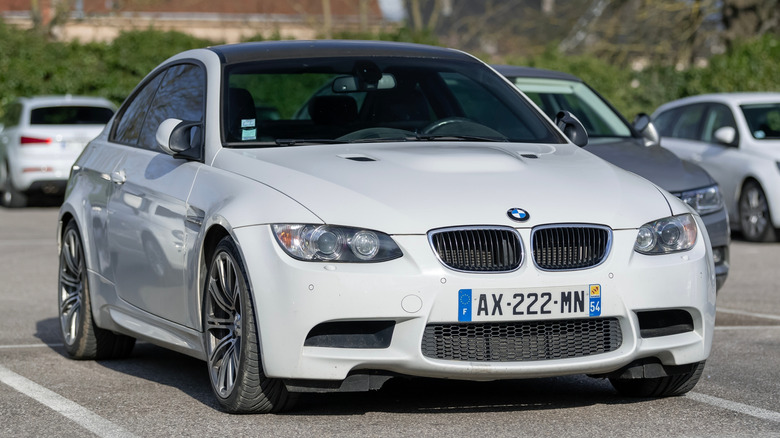
Many of BMW's best M cars are associated with inline-six engines. Think of the E46 M3 or the current G80 BMW M3. However, in the 2000s, BMW M's engine palette was at its peak, at least in terms of size. The E60 BMW M5 used a naturally aspirated V10, and the E92 M3 got rid of two of its cylinders and used a 4.0-liter naturally aspirated V8.
When the E92 M3 came out, Top Gear noted that "this is an engine that Ferrari would be proud of." The numbers back up the praise: the S65 made 414 horsepower at 8,300 rpm, revving to an 8,400-rpm redline. In its own piece on the decade's best engines, SlashGear sister site Jalopnik put it plainly: "the last good BMW M3 was the E90/E92/E93 M3." Then BMW moved on. The F80 M3 and F82 M4 that replaced it in 2014 swapped the V8 for the S55, a 3.0-liter twin-turbo inline-six making 425 to 444 horsepower depending on trim.
As you see it, the new G-Series M3 has more power, more torque, and it makes peak power way lower in the redline. Be that as it may, it's just not the same engine in terms of sound. What's even more impressive is that the V8 M3 isn't much slower compared to its successors. When MotorTrend tested it back in 2012, it reached 60 mph from a standstill in just 4.1 seconds.
When Car and Driver tested the 2026 BMW M3, it reached 60 in 3.9 seconds, while with a manual, it is closer to 4.1. Going through the revs in the V8 M3 felt like an occasion, while all later turbo inline-six BMW M3 engines, although quick and better in pretty much every way, never really hit the same sweet spot in terms of noise, vibration, and feel.
Lamborghini's 5.2-liter V10
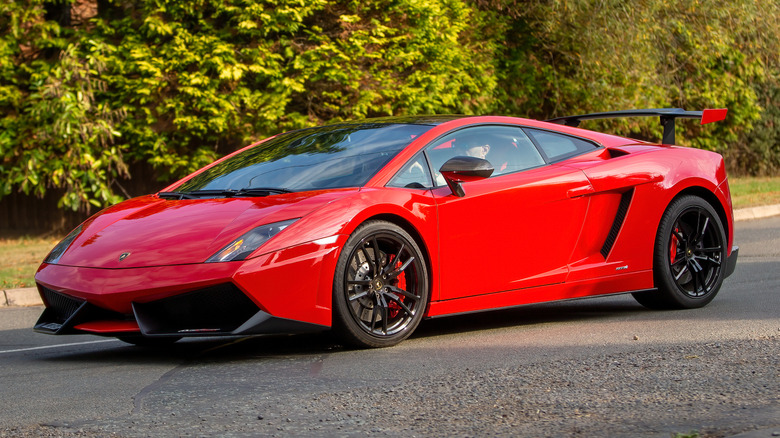
Lamborghini's "baby supercar" range consists of the Gallardo, the Huracán, and most recently, the Temerario. The first generation of the Gallardo used a 5-liter naturally aspirated V10. This engine was later enlarged to 5.2 liters, and it's the one used in the Huracán. The very latest baby Lambo is the Temerario, and it gets rid of the V10 in favor of a hybridized and turbocharged flat-plane-crank V8.
On paper, the V8 numbers sound amazing — a 10,000-rpm redline, upwards of 900 horsepower total, and 0-62 mph in 2.7 seconds. However, when you go through the reviews, there's a criticism the Temerario can't seem to shake, and that's the fact that people miss the V10. Speed and acceleration are important to every performance car, but they're not the only thing that makes one exciting.
Road & Track's Mike Duff was asked whether the new twin-turbo V8 could match "the visceral savagery of the 5.2-liter V-10," his answer was direct — "Spoiler alert: It can't." The Temerario, although a weapon on road and track, simply lacks the sound and drama of the V10. With a 10,000-rpm 900+ horsepower engine, it perfectly encapsulates a car you can't run though the gears on the road safely without ending up in jail.
Regardless of that, the Temerario is one of 2026's most powerful cars, and no one can deny just how impressively quick it is. Still, when Top Gear covered the very last V10 Lamborghini Huracán, the STJ, they said, "See, power isn't everything, and all that."
Corvette's 5.5-liter LT6
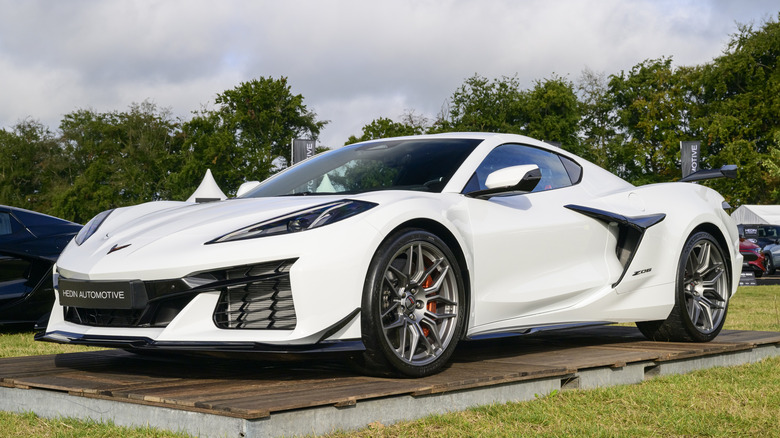
Chevrolet's C8 Corvette lineup splits into two extremes at the top: the naturally aspirated Z06 and the twin-turbo ZR1. Both share the same basic architecture — a 5.5-liter, flat-plane-crank V8 — but Chevrolet tuned them into two completely different animals. The Z06's engine, codenamed the LT6, makes 670 horsepower at 8,400 rpm and 460 lb-ft of torque, revving to an 8,600-rpm redline with no turbos or hybrid assistance of any kind. Chevrolet calls it the most powerful naturally aspirated V8 ever put in a production car.
The ZR1 takes that same block and bolts on two turbochargers, and the numbers get silly: 1,064 horsepower, 828 lb-ft of torque, and a claimed 0-60 in as little as 2.3 seconds. On paper, there's no contest — the ZR1 makes nearly 400 more horsepower than the Z06 off the same base engine. But when Chevrolet released a teaser of the ZR1's engine note ahead of launch, Road & Track's reaction wasn't excitement about the extra power — it was disappointment in the sound: "Unlike the unrestrained, naturally-aspirated Z06, this sounds a little bit more... muted." They put it plainly: "If the Z06 sounds like a Ferrari 458 Italia, the ZR1 sounds like the turbocharged 488 that followed it."
That's really the whole story with these two engines. The ZR1 will win every drag race, every top-speed run, every spec sheet comparison. The Z06 is the one you rev out just to hear it, and in today's day and age where naturally aspirated V8s are almost non-existent, it makes it fun in a totally different way.