

5 Modern Performance Cars That Prove A Turbocharger Isn't Always The Answer
Turbocharged engines have become increasingly popular with automakers. In essence, a turbine uses exhaust gas, which would otherwise be wasted, and compresses it, sending more air back into the engine. More air means more power, making turbochargers a great option when trying to squeeze out greater performance while still offering good fuel economy and meeting emissions standards. Even some holdouts like Lamborghini have added turbocharging to its first supercar, a $385,000 Temerario that buys you a whole lot of drama.
However, turbochargers have their downsides, such as increased complexity, lag (although advanced designs have made it nearly unnoticeable), and a high-pitched whining sound during acceleration. There's something to said of a large naturally aspirated engine providing a steady delivery of power without delay and a predictable driving feel. There are also not many that would argue they prefer the ol' turbo whistle,to a pure, full-range engine note. From the low rumble of a V8 to the exhilarating scream of a high-revving V12, non-boosted engines provide an unfiltered audio experience.
According to U.S. Department of Energy data, only 1 percent of cars came with factory equipped turbocharged engines in 2000. Meanwhile in the U.S. in 2025, turbocharged engines were included in nearly 50 percent of new cars being purchased, according to The New York Times. Fortunately, if you're in search of performance power without the turbo, there are still some great options from around the world in terms of robust, naturally aspirated sports cars.
The Subaru BRZ
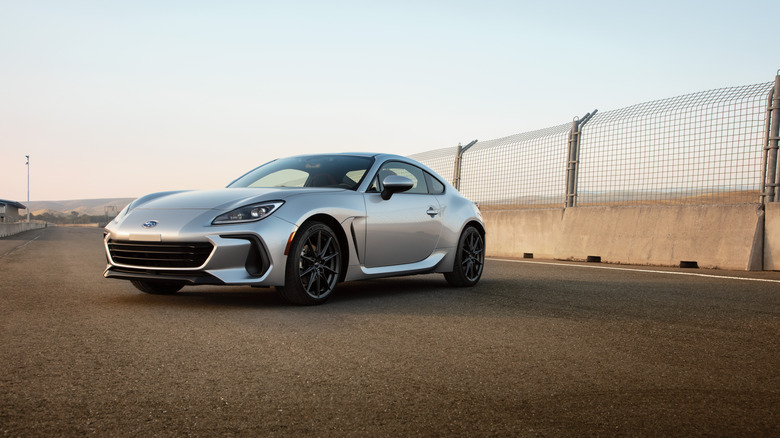
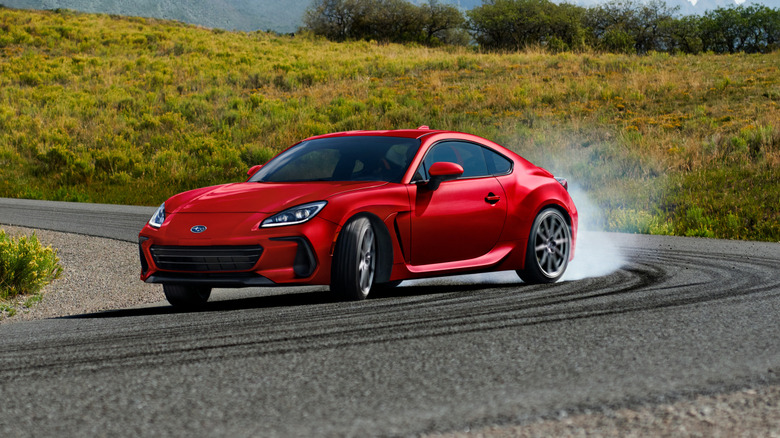
Japanese automaker Subaru is often associated with its celebrated Outback model and its off-road capability. However, for those looking for an affordable sports car that features a naturally-aspirated engine, the BRZ is worth a look starting at just $35,860.
Featuring the smallest engine on this list, a 2.4-liter Boxer 4-cylinder, you might be skeptical of its performance capabilities. However, this rear-wheel drive, 6-speed manual generates 228 horsepower while only weighing around 2,843 pounds. This means it can achieve a 0-to 60 mph time of just 5.5 seconds, and the car feels decidedly nimble. In fact, some review outlets admitted this budget sports car rekindles the fun of driving they lost somewhere along the way.
You also get a range of features that help enhance handling, such as a limited-slip rear differential that improves traction and stability around corners. For a few thousand dollars more you can opt for the tS model, which features an STI tuned four-wheel independent suspension and enhanced Brembo brake system.
The Ford Mustang
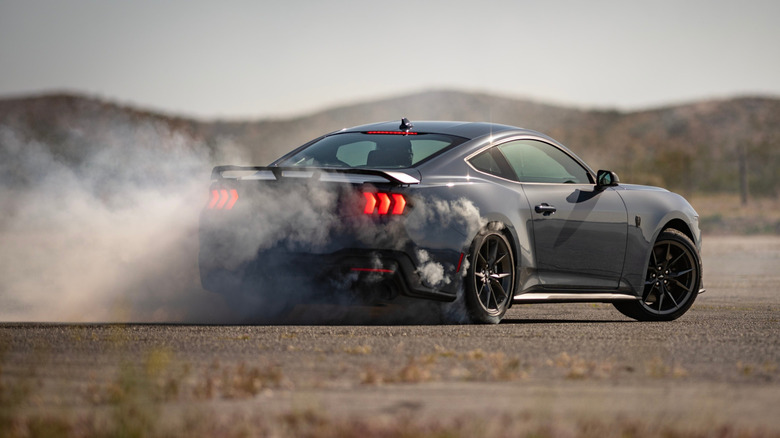
Believe it or not, Ford is now on its seventh generation of the Mustang, an ongoing fixture in the American automotive scene since its debut in 1964. Although, if you rank every Ford Mustang generation, there are clearly some more impressive years than others. However, if you're looking for something sporty today that doesn't include forced induction, there are a few options in the Mustang lineup.
The Mustang GT comes equipped with a 5.0-liter Ti-VCT V8 under the hood that provides an ample 480 horsepower and starts at around $46,800. You can also step up to the Mustang Dark Horse, which in addition to some cool styling differences also boasts a 5.0-liter Coyote V8 that produces 500 horsepower. According to some review outlets, the sound of this Mustang is so pleasing, it rivaled other cars at the track including Lamborghini, catching everyone's attention as it passed. The Dark Horse starts at $64,080, with the premium version being a bit more expensive.
However, you'll want to steer clear of the top-trim Mustang Dark Horse SC, as it's not naturally aspirated but instead comes with a supercharger. When comparing a supercharger versus a turbocharger, it's important to understand that both are a form of forced induction, but accomplish it in very different ways.
The Chevrolet Corvette
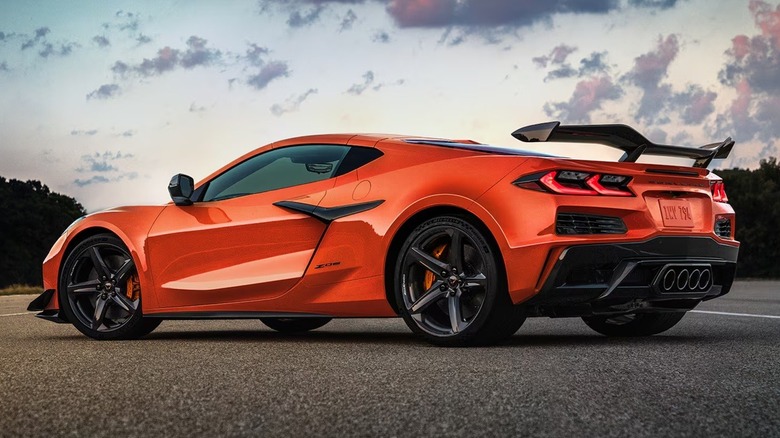
The iconic Chevy sports car has seen some changes over the years, particularly more recently when Corvette switched from a front-engine to a mid-engine design. Fortunately, the automaker hasn't completely abandoned the naturally-aspirated engine in its signature performance model lineup, at least not completely. If you select the Corvette ZR1 or ZR1X though, you'll run right into a twin turbocharged 5.5-liter V8.
Thankfully, the Stingray, Grand Sport, and Z06 don't include turbochargers, and still offer quite a punch in terms of raw power. Both the Stingray, which starts at $71,000, and the Grand Sport (from $86,000) come standard with a large 6.7-liter V8 with direct-injection that can output 535 horsepower and 520 pound-feet of torque.
However, if you step up to the Corvette Z06, you get a smaller but more potent 5.5-liter flat-plane crank V8 that manages to push out 670 horses. Topping out at 8600 rpm, this version of the Corvette sounds positively Italian, emitting similar screaming engine notes to notable European supercars. That said, it will cost you significantly more than a Stingray or Grand Sport at $121,500 to start.
The Porsche 911 GT3
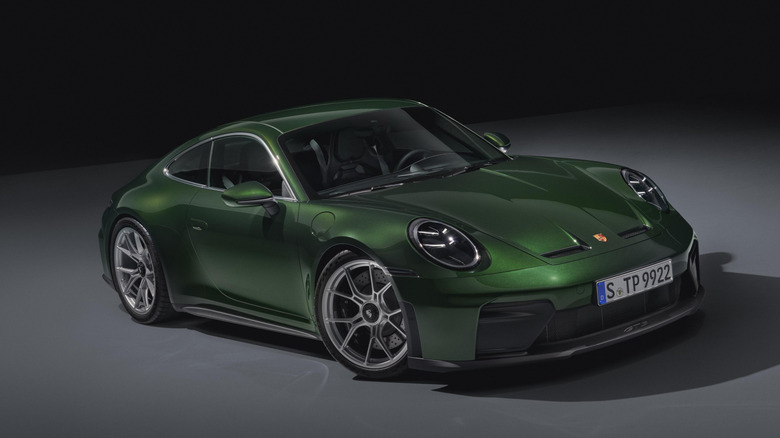
For those who have the impression that a naturally aspirated engine has to be much larger than a turbo variant in order to offer exceptional performance, look no further than Porsche. The 911 GT3 handily demonstrates it has ample power with its robust six-cylinder flat engine. With a 4-liter (3,996 cc) powerplant under the hood, this German powerhouse manages to make 502 horsepower and 331-pound feet of torque.
On the track, this translates to a top speed of 193 and a quick 3.2-second 0 to 60 mph time. The 911 GT3 can also rev up to 9,000 rpm, indicating you'll likely be equally satisfied with the performance and the undampened engine note.
Unfortunately, Porsche isn't exactly giving these cars away, at a starting price of just under $236,000. Although, in our 2022 Porsche 911 GT3 review, we couldn't help but feel dropping serious money on this car was something we couldn't blame anyone for doing, as it serves as a true benchmark.
The Ferrari 12Cilindri
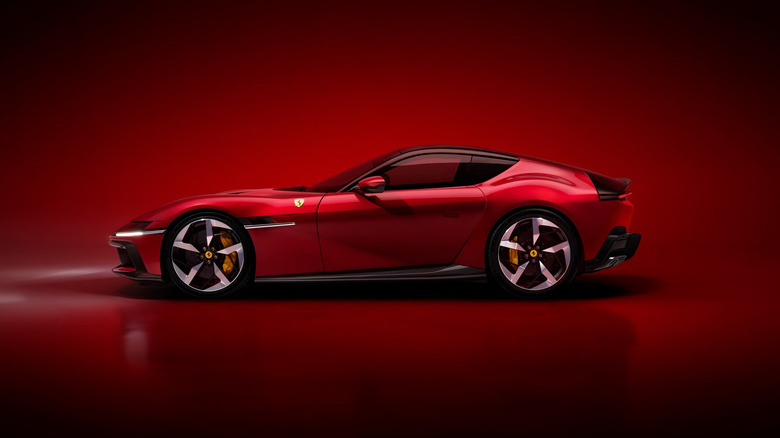
While Lamborghini has resisted turbocharging until recently, it has actually been present in Ferrari road cars for several decades, though it went on hiatus until being reintroduced in 2014. Despite this, there are still some glorious naturally aspirated engines available from the Italian automaker, like the one in the 12Cilindri model. This Ferrari comes with a 6.5-liter V12 under the hood that offers 819 horsepower and 500 pound-feet of torque. As you might expect, this engine is designed to rev high, reaching 9500 rpm. Without the audio muting effects of a turbocharger, this engine lets out a shiver-inducing shriek under throttle.
Ferrari estimates the 12Cilindri can go from a stop to 60 mph in just 2.9 seconds. However, outlets like Car and Driver think it might be closer to 2.7 seconds. This model can also reportedly hit 211 mph (340 km/h) in terms of top speed. Yet while the 12Cilindri offers the most potent performance figures of this list, it's also the most expensive, by a lot. You're looking at prices starting at $465,994, though you're unlikely to find anything else like it.