

Dell XPS 13 Vs MacBook Neo: How Do The Laptops Compare?

After Dell revived its iconic XPS branding at the 2026 Consumer Electronics Show, it promised to bring back the XPS 13. In March, Apple pulled off an unusual move, launching the MacBook Neo, the cheapest MacBook in the company's history. If you're looking for a light, relatively affordable laptop, these two should surely be on your radar. But before buying the MacBook Neo or Dell XPS 13, you'll want to know how the two stack up against each other.
Tthe XPS 13 features a 13.4-inch touchscreen IPS panel with 2,560x1,600 pixel resolution, a 30 to 120 Hz refresh rate, 500 nits of brightness, and 100 percent coverage of the DCI-P3 color space. The XPS 13 is only ½ inch thick, and the lightest variant weighs 2.2 pounds, with the company saying it's the thinnest and lightest XPS laptop. The MacBook Neo has a slightly smaller 13-inch IPS display with 2,408x1,506-pixel resolution, 500 nits of brightness, and a 60 Hz refresh rate. It weighs 2.7 pounds, so it's a bit heavier than the XPS. Nonetheless, that extra half a pound doesn't steal its glory of being a portable laptop.
The Neo has the same ½-inch thickness but is slightly bigger than the XPS 13 in width and depth. Both laptops have limited physical connectivity, offering just two USB-C ports for charging, data transfer, and connecting to external displays. In addition to that, the Neo adds a 3.5mm headphone jack. For anyone who regularly attends online meetings, both models include a 1080p webcam.
Performance, battery life, and configuration options
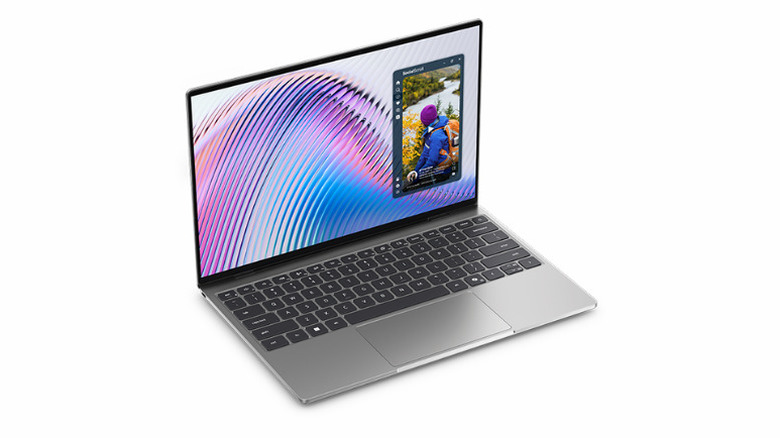
One of the main points to keep in mind before buying a MacBook Neo is its limited memory and storage options. The Neo uses Apple's A18 Pro chip, paired with 8GB RAM and either 256GB or 512GB of SSD storage. Dell's XPS 13 runs the Intel Core 5 320 chip with 8 or 16GB RAM and 512GB of storage. Furthermore, Dell plans to expand the configurations later with more powerful Core Ultra Series 3 chips, up to 32GB RAM, and 1TB of storage.
Performance benchmarks by Tom's Guide reveal the MacBook Neo has better overall CPU performance, scoring better in Handbrake and Geekbench 6. It also outperformed the XPS 13 in gaming. The XPS 13 only beat the Neo in the Blackmagic SSD test. In PC Mag's benchmarks, the Neo was faster in Geekbench and 3DMark, performing better than both the 8GB and 16GB XPS 13 variants. However, it was a bit slower than both variants in Handbrake, and it fell behind the 16GB model in Cinebench.
In the battery department, the Neo is powered by a 36.5-watt-hour cell and claims up to 16 hours of battery life. The XPS draws its power from a larger 52 watt-hour cell and promises up to 17 hours. In real life, both have been found to offer strong figures, with the XPS 13 lasting 14 hours and 26 minutes and the Neo 13 hours and 26 minutes in Tom's Guide Wi-Fi web-surfing battery test. In PC Mag's battery rundown tests, the XPS 13 lasted an impressive 21 hours and 51 minutes, while the Neo only managed 15 hours and 35 minutes.
Should you buy the MacBook Neo or the Dell XPS 13?

For someone in the market for a thin and light laptop, the choice will largely depend on your needs. Performance-wise, these laptops aren't the snappiest on the market. And, to be fair, they aren't meant to be performance beasts able to handle demanding tasks like gaming. The MacBook Neo runs the same chip that powers the iPhone 16 Pro from 2024, while the XPS 13 uses Intel's entry-level Core 5 320 processor. The Dell XPS 13 does standd out for offering a backlit keyboard, a better display with touch capability, more memory and storage configurations, and longer battery life.
Perhaps the most important thing you'll need to consider, however, is the operating system. Sure, Dell is expected to add more powerful Core Ultra Series 3 chips later, but the only currently available option is the Intel Core 5 320. As of this writing, the MacBook Neo stands out for offering better CPU performance overall, although it's a mixed bag in some tests done by PC Mag and Tom's Guide. Price-wise, both start at $699.99.