

5 Times When It's Better To Use 40V Ryobi Tools Rather Than 18V
We may receive a commission on purchases made from links.
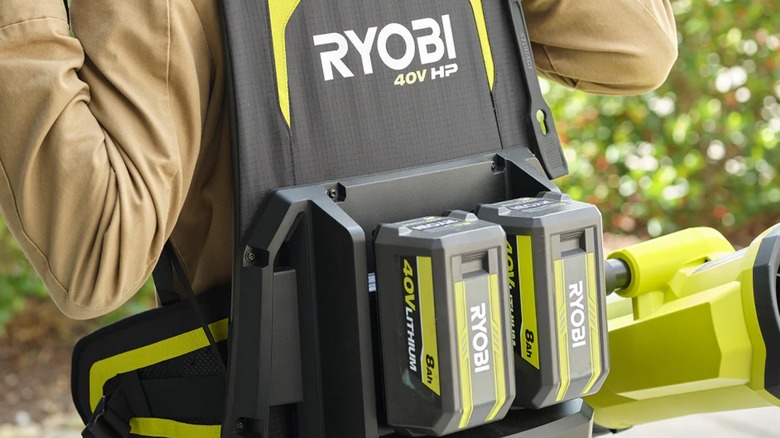
Ryobi has one of the largest catalogs of any major cordless power tool brand on the market today, with over 300 tools in its 18V One+ line alone. This makes it a compelling option for anyone looking to invest in a cordless tool system, as all it takes is a single 18V One+ battery to unlock the ability to use any of the company's 18V tools. It's important to note, however, that the company has four distinct battery systems: USB Lithium, 18V One+, 40V, and 80V. These tools are not interchangeable with different battery voltages. You can mix and match batteries of the same voltage, but you cannot use an 18V battery in a 40V tool and vice versa, so each product line requires a separate investment in a matching battery type and charger.
Voltage has a direct effect on the amount of power that the connected tool's electric motor is able to generate. Think of it like a water tank where the volume of the basin is the capacity of the battery, and the voltage is the pressure pushing that energy out to the tool. This is why 40V tools get significantly more power at any given time than 18V ones.
Naturally, there are certain kinds of tools that benefit from this more than others — particularly among outdoor power tools. Many of these have only recently started to become available in battery-powered options, and that extra juice can give them a serious boost toward matching the performance of gas-powered alternatives.
1. When you need a mower that won't stall as easily
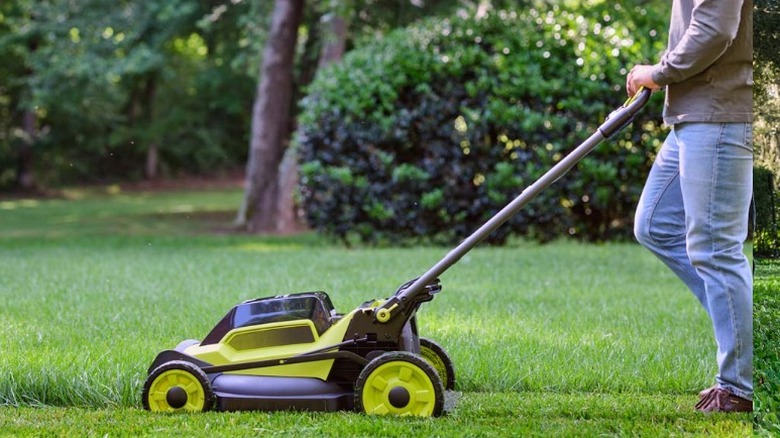
Lawn mowers are among the most power-hungry yard-care tools there are, and the voltage that battery-powered units receive has a direct impact on the amount of speed and torque that they're able to generate. Mowing grass that has gotten tall, wet, or thick can be a challenge if the mower doesn't have the power to cut through it. This can cause stalls, clogs, and batteries to drain rapidly.
Ryobi does offer the One+ 18V HP Brushless 16-inch Walk Behind Push Mower, which actually attempts to get around this problem by including two 18V batteries in the box. It's a solid choice for someone already heavily invested in large-capacity 18V batteries, but the tool only has a modest 4.0 out of 5 on the Home Depot site, and there are a fair few complaints stating that it stalls easily and eats through batteries quickly.
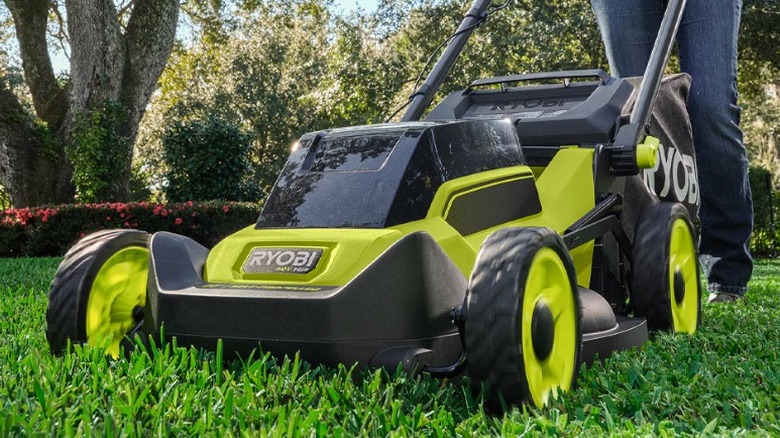
Compare that to the Ryobi 40V HP Brushless 20-inch Walk Behind Push Lawnmower. Not only does this have a larger blade (which means you can mow your lawn in fewer passes), it offers longer battery life on a single pack and promises 150cc gas-equivalent performance. This mower has a much more impressive 4.5 out of 5 score with over 900 reviews. There are several complaints about stalls and battery life, but there are significantly fewer, and there are also a whole host of reviews praising the mower for its power.
2. When you need a heavy-duty power washers for decks, pavement, and masonry
There are a handful of situations where you might want a power washer with a lower pressure and flow rate. If you're using it to clean your bike or car, for instance, you probably don't want to use something that's going to strip the paint. Ryobi makes three handheld 18V pressure washers that would be great for these situations: a 320 PSI 0.8 GPM model, a 600 PSI 0.7 GPM model, and a 700 PSI 0.8 GPM model. That said, most heavy-duty power washers are a lot more power-hungry and benefit from a higher-voltage battery.
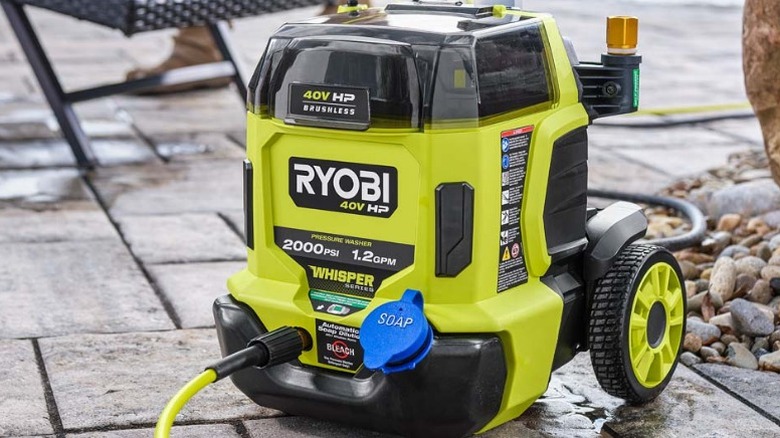
Those who are looking for something to clean a deck, or need something that can blast the dirt and grime out of their pavement and other hard, porous surfaces, will be significantly better off getting something from the 40V line. All it takes is a glance at the numbers to see that the 40V HP Whisper Series 2,000 PSI 1.2 GPM Pressure Washer offers a lot more of the power needed for high-pressure cleaning. The PSI (pounds per square inch) and GPM (gallons per minute) matter when buying a pressure washer because these metrics directly reflect the force and flow rate at which water is expelled. 2,000 PSI and 1.2 GPM mark a significant bump up in this regard, and that's reflected in the tool's 4.3 out of 5 score on Home Depot and a 90% recommendation rate, with power and portability cited frequently.
The company also offers a 40V 1,200 PSI 1.0 GPM Pressure Washer, but while this is much stronger than the 18V units, it's still on the weaker side when compared to the vast majority of corded electric and gas units.
3. When you need a larger chainsaw for cutting trees
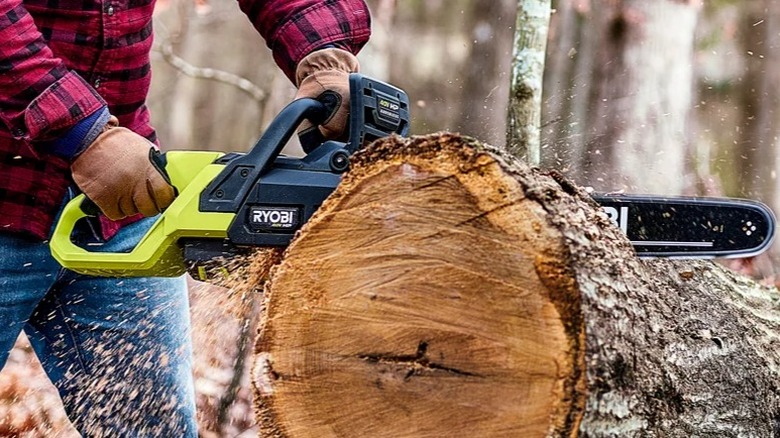
It probably won't come as much of a surprise for most people to learn that chainsaws require a lot of power. There are several highly rated 6-inch, 8-inch, 10-inch, and 12-inch chainsaws in Ryobi's 18V line. These might be able to fell a few smaller trees, but they're primarily designed for pruning, and their chain speed mostly hovers around the 5-12.5 MPS (meters per second) range.
The 40V Chainsaws come in 10-inch, 12-inch, 16-inch, and 20-inch sizes, and their saws primarily boast chain speeds in the 15-25 MPS range. This marks a pretty clear divide: those needing a larger chainsaw will only be able to select from the 40V options, and those seeking a smaller pruning saw will need to use an 18V one. The only overlap is in the 10- and 12-inch range, and here, the Ryobi 40V HP Brushless 12-inch Top Handle Chainsaw appears to be the best option available. It promises to deliver more power than a 31cc gas chainsaw and boasts a 20 MPS chain speed (compared to the 18V's 12.5 MPS). The two also cost the same amount, so the 18V really only appears to be the better option if you need ultra-quiet performance or you already have 18V One+ batteries you want to use.
The 40V 12-inch chainsaw has a 4.4 out of 5 score on the Home Depot site, averaged from over 400 reviews. Most claim that it's powerful, fairly quiet, and offers long battery life. There are a few complaints about start-up issues and confusing instructions, but very few about raw power output.
4. When you need a yard-waste blower that can handle sticks and wet leaves
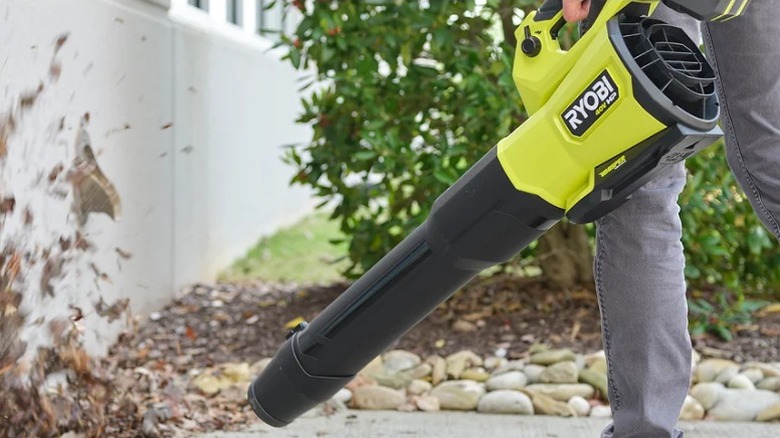
It's worth taking a moment to consider what kind of cleanup you'll be using a blower for before you go out and get one. Those who are just rounding up dry leaves or clearing dust from a workshop probably don't need a lot of power. If that's the case, then you can totally get away with one of the Ryobi 18V line blowers. The brand sells a 220 CFM 140 MPH model, a 250 CFM 90 MPH model, a 350 CFM 100 MPH model, and a 510 CFM 130 MPH model. As with the pressure washers, these key metrics will give us all the information we need about the effectiveness of these products. CFM represents the volume of air being moved per minute, while MPH represents the speed that air is moving on exit. CFM is better for determining the bulk that can be moved at any given time, while MPH helps determine the pressure applied.
There is a little bit of crossover here, but you'll typically find more power in Ryobi's 40V series. The 450 CFM 120 MPH model and 550 CFM 120 MPH model that reside on the line's low end slightly underperform the 18V series' top-end flagship, but above that is the HP 730 CFM 190 MPH Jet Fan Blower, the HP Whisper Series 800 CFM 180 MPH Blower, and the HP Whisper Series 850 CFM 180 MPH Backpack Blower. One glance at those metrics and it's plain to see that these 'blow' the 18V units out of the water.
All three score between 4.4 and 4.6 on the Home Depot ratings scale, with many remarking that the units are powerful, lightweight, and easy to use — claiming that they are easily able to move wet leaves and debris.
5. When you need an auger for making post holes
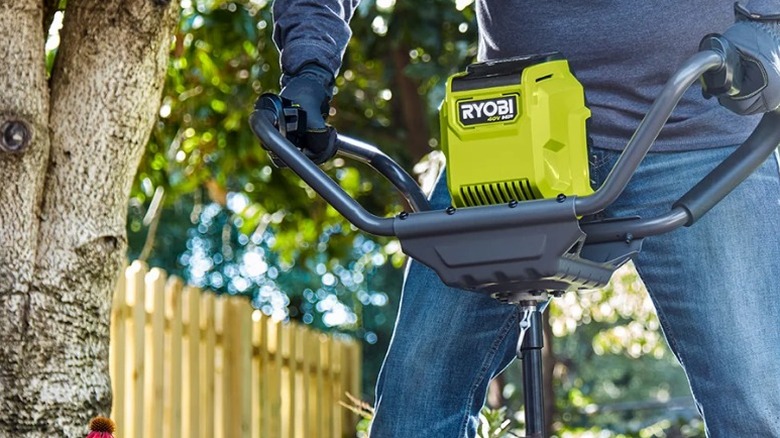
Another tool that requires a ton of power is an auger. These things need enough torque to rapidly burrow into compact dirt. It's honestly a little surprising that Ryobi even has any 18V models, but it actually has two: the standard One+ 18V Earth Auger with a 3-inch bit and the One+ 18V HP Brushless Earth Auger with a 6-inch bit. Both are reasonably specced for running the bits they come with in soft or sandy soil. Reviewers often comment that they're adequate for light gardening tasks, but they're less than ideal for one of the key tasks that many people want an auger for — digging post holes.
Post holes are supposed to be twice the width of the post that is being secured inside them. That means that anyone digging a hole for a standard 4x4 post is going to need an 8-inch bit. That's when you might consider upgrading to the Ryobi 40V HP Brushless Earth Auger, which comes with that aforementioned 8-inch bit. Not only does it have the proper hardware in the box, but it also promises 52cc gas engine equivalent power and the ability to dig over 25 holes on a single charge of a 4.0Ah battery.
The tool has a stellar 4.7 out of 5 rating on Home Depot with over 1,300 reviews and 95% of customers claiming that they would recommend it. Most find the tool to have plenty of power for their tasks and appreciate the extra features, such as the anti-kickback and reverse functionality. Some users still have trouble with soil that is thick with rocks and clay, but that can be a struggle for some gas augers as well.
Our methodology
Ryobi makes many of the same kinds of products for both its 18V and 40V power tool lines. While 40V power will nearly always beat 18V power in a contest of pure force, there are several specific use cases where 40V is definitely the more desirable option.
In making this list, we started by looking at product categories that overlap across both 18V and 40V lines and looking for products that were available in both. We then refined this further by cross-examining the descriptions and specifications of the most power-hungry tools, searching for examples where the 40V models offered a distinct advantage for certain kinds of work over the 18V versions.
Once we had our list, we compared and contrasted the models from each line, showcasing what separated them and explaining why the 40V option was better for specific situations. We also examined customer reviews to ensure they were highly rated and worked well for the specific kind of work we were suggesting them for.