

9 Gadgets And Accessories To Upgrade Your Turntable/Vinyl Experience
We may receive a commission on purchases made from links.
I'm a big fan of vinyl records, but I'll be the first to admit that it can be a pricey and tedious hobby. If you're buying new vinyl, you're looking at mainstream pop albums that sometimes sell for $30 to $40 Thrifting is much cheaper, sure, but then you're dealing with potentially worn records, all while still having to lug around and store a bunch of records that take up space and collect dust. Thus, if you're going through the cost and hassle of vinyl, you should make sure you're getting the most out of the format.
Once you've got the basics of Hi-Fi down, you can start exploring the many ways of squeezing out more sonic enjoyment out of your vinyl setup. New speakers or a new amplifier, for instance, are sure-fire ways to improve (or, at the very least, change) how music sounds through your system. However, there are also a handful of turntable and vinyl-specific gadgets and accessories that can elevate your listening experience by a notch or two.
These range from all-important electronics, such as a phono stage or new cartridge that have a direct impact on your sound, to simple accessories that'll help you set your turntable up right. They're all purchases I've made in the 10-plus years I've been buying, selling, and listening to vinyl, sometimes more than once, and all made me a much happier camper than I was before.
Record cleaning devices
Even the best Hi-Fi setup is worth little if the records you're trying to play are in bad condition. While we can't do anything about record wear, we can at least tackle the dirt, dust, and other impurities that stick to records and affect playback, causing issues like pops and clicks to serious skips and poor sound quality.
How much you choose to invest here will depend entirely on the sorts of albums you buy, but every serious vinyl hobbyist will want at least a dry record brush. You run one of these over your record before playback to remove dust and reduce static buildup. There are plenty out there, ranging from budget to ultra-luxe, but something like the Boundless Record Cleaner Brush should be fine for most.
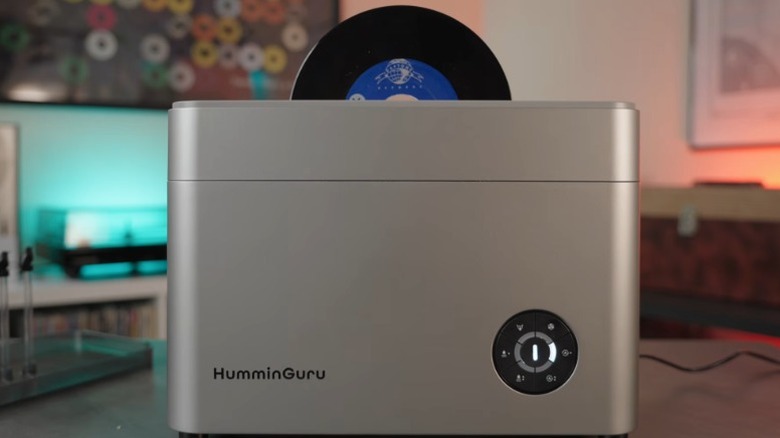
That said, you should also have some way to get into those grooves and dislodge any gunk. Your best choice is some sort of record cleaning machine (RCM). I have a manual cleaner, the HumminGuru EZ, which is a great way to clean records on a budget, but you can also get vacuum cleaners such as Pro-Ject VC-E2 or ultrasonic units like the HumminGuru HG01. Ultrasonic cleaners generally do the best job, but I (and many others) have had success with all three types. If you're not convinced, send a few records to a local cleaning service to see if you'll benefit. In my experience, you almost certainly will.
A new cartridge (or stylus)
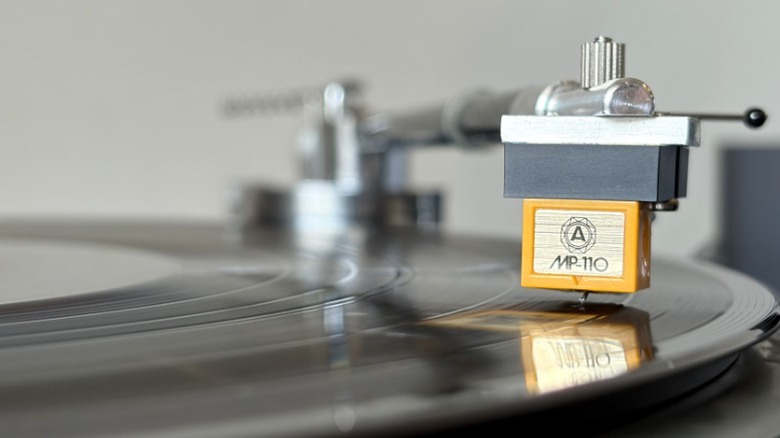
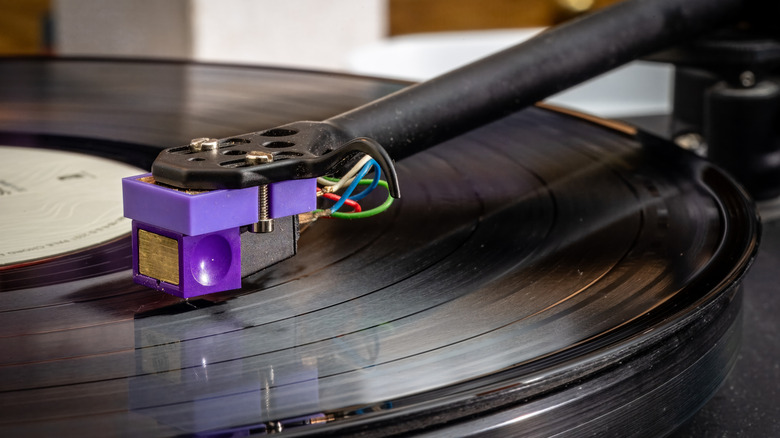
A turntable's cartridge and stylus translate the physical grooves in the vinyl to electrical signals, which then get amplified into music. Unsurprisingly, both play a massive role in the sound of your turntable and the vinyl you're playing, and one of the best ways to get better-sounding vinyl playback is a new cartridge or stylus (more on that later).
Of course, the question of what to buy is a whole other issue, especially given all the variables involved. There's really no easy solution here: you'll want to read reviews and audition cartridges whenever possible, ideally by comparing any potential upgrade to the cartridge you currently own. That said, there are some cartridges that are almost always worth considering. These include the Audio-Technica AT-VM95E ($75), Ortofon 2M Red ($110), Nagaoka MP-110 ($160), and Goldring E3 ($160).
If you don't want to install a new cartridge, you may be able to get away with just a new stylus. Those of you with an AT-VM95E on your turntable, for example, can swap to the AT-VM95ML and get an appreciable upgrade. The same goes for the Nagaoka MP-110, which has a stylus upgrade in the JN-P150. Note that this also applies to turntables with integrated cartridges, as they will often have replaceable styli.
Cartridge setup tools
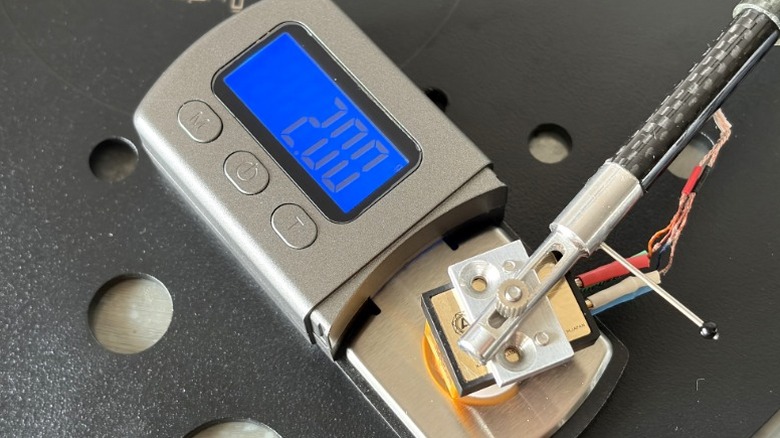
If you've replaced (or plan to replace) your turntable's cartridge, or bought your turntable while hunting for vintage gear at flea markets, then you'll have to set it up properly. This involves setting the tracking force, alignment, and vertical tracking angle (or VTA). All styli have a recommended tracking force range that you want to stick to for optimal performance. Turntable counterweights will often have numbers to guide you, but I recommend buying a gadget like the Neoteck stylus force gauge. Simply place your cart on the scale and see what it reads; if it's off, lift it up, adjust the counterweight, then drop it again. Repeat until you hit the right number.
Cartridge alignment is very fiddly, but mirrored protractors like the Hudson Hi-Fi mirrored protractor can help by giving you a view of the stylus from below. We don't have space to get into details, but the important thing is that you align your cart; A misaligned cart can lead to issues such as increased distortion.
Finally, VTA is the angle at which your stylus touches the record. The simplest way to set it is to level your tonearm with the record when it's playing. If you have a piece of clear plastic with straight lines, you can use that to check the level; if not, something like the Alnicov azimuth ruler will help.
Isolation platforms or pads
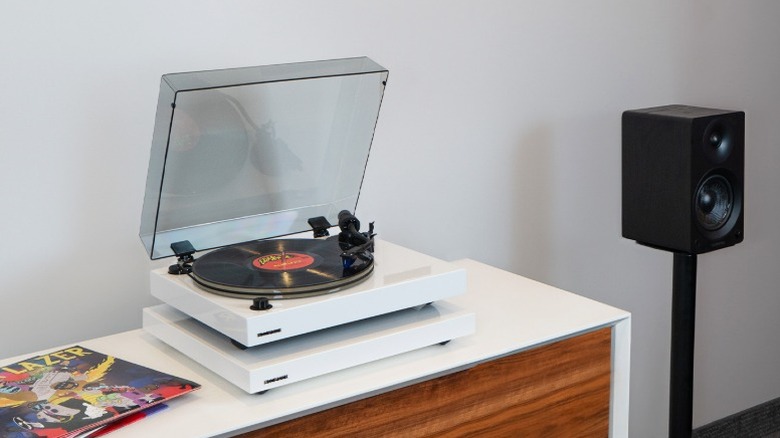
Turntables are very sensitive to vibrations. They can pick up speaker rumble, for example, especially if you have your turntable on the same surface as your speakers. This can harm sound quality or even cause howling feedback. Floors can also be problematic, with footsteps coming through the speakers or, in the worst case, causing your cartridge to skip every time you walk by. Even without these issues, some audiophiles advocate for isolation no matter what; I remain agnostic on the matter, but you're welcome to try and see for yourself.
Either way, there are many solutions out there. Mounting your turntable to a wall is a sure-fire solution, but not everyone has that luxury. Isolation platforms like the $150 Fluance IB40 — or the $230 IsoAcoustics Zazen, if you're feeling flush — should help significantly. There are also affordable isolation feet available on Amazon, like these Tuneful Cables cork pads, although I have little experience with those.
You can also make clever use of an Ikea product, namely the Aptitlig butcher block, to isolate your turntable. It's something of an audiophile favorite thanks to its bamboo construction, which supposedly helps dissipate vibrations — and it works. I have my Lenco L75 on two Aptitligs with ball bearings in between, and it's done wonders in this third-floor apartment. The Lenco will still pick up vibrations if I stomp my feet in front of it, but heavy footsteps no longer travel to the speakers. $50 well spent, if you ask me.
Phono preamplifier
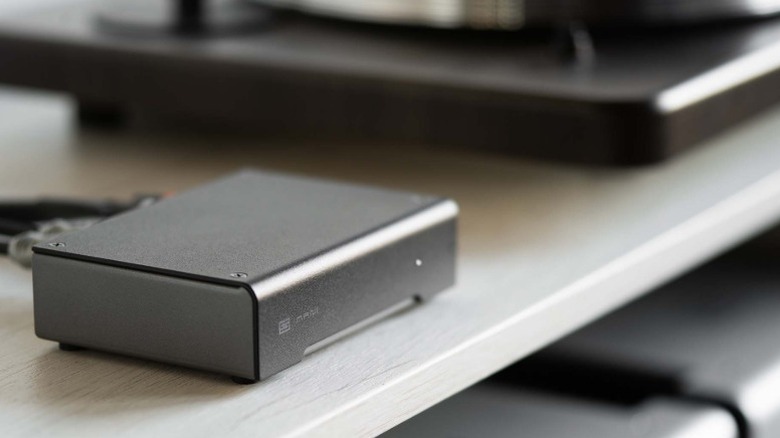
After the cartridge, the most important part of the turntable signal chain is the phono preamplifier, which takes the cart's output and amplifies it to work with a standard line input. Now, if you're listening to records, you already have a phono stage: Many entry-level and mid-range turntables, including high-quality units like the Sony PS-LX310BT, have integrated phono stages.
If you're happy with the sound, then stick with it. But if you're not, and you've aligned your cart, cleaned your records, and done all the basics, it's to get a new phono stage. These come in many shapes and sizes, from the highly-regarded $180 Schiit Mani 2 to high-end units that cost thousands of dollars. In my experience, you get what you pay for with preamps, but it also depends on the rest of your system. You can't shine a turd, as they say, and even the fanciest phono pre won't make up for a bad-sounding turntable or worn-out stylus.
Reading reviews can be very useful, but you will have to demo phono preamps to really get a feel for them; that's not something any guide can help with. Whatever you do, though, avoid ultra-cheap products like the Fosi X1. They're fine in an emergency, but that's about it. I use one of the many excellent EAR 834p clones available from AliExpress, which I highly recommend, if shipping costs and personal ethics don't get in the way.