

3 Of The Biggest Drawbacks Of Using Portable Power Banks
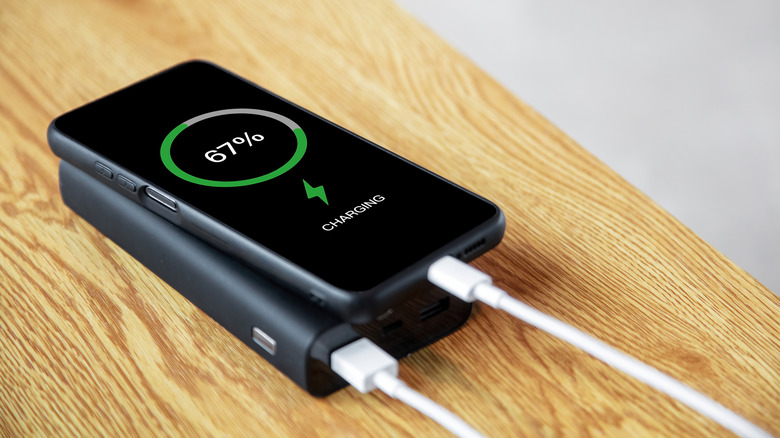
Batteries are fantastic — they let most of your electronics stay untethered from wall outlets while delivering enough power to keep them running all day. In fact, advancements in battery technology have blessed us with smartphones packing silicon-carbon cells, allowing them to last even longer on a full charge. At the same time, software optimization and chip efficiency have improved dramatically. Yet, power banks remain just as relevant as ever.
Popular capacities that power banks offer include 5,000 mAh, 10,000 mAh, and 20,000 mAh. There are options that offer even more, making them ideal for charging larger electronics like laptops. A few offer MagSafe-compatible magnetic charging, making it less of a hassle to charge iPhones and compatible Android devices.
In times of crisis, a fully charged power bank can quickly become one of the most valuable things you have with you, allowing you to charge your phone, laptop, and other essential accessories. In places where wall outlets aren't accessible, there's no denying how useful a portable power bank can be. However, relying on power banks too much, especially when you have easy access to a wall outlet, can shorten their lifespans. As convenient as it may seem, using a power bank as your primary charger can wear it out more quickly and be less efficient than charging directly from a wall outlet.
Slower charging speeds
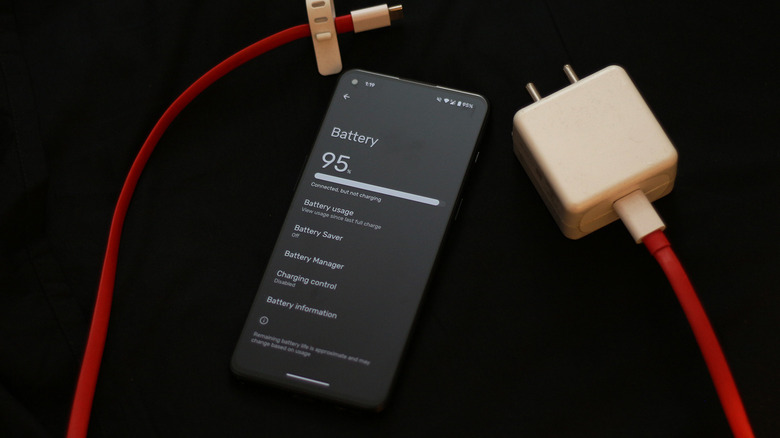
Power banks are ideal if you need some juice for your devices and there's no other way to charge them. If you've gotten used to reaching for one every time you need to charge your phone, however, you are likely missing out on the faster charging speeds that a wall charger can provide. Modern iPhones can charge at up to 40W, and a compatible wall adapter can deliver a 50% charge in just 20 minutes. Many basic power banks offer around 18W or 22.5W charging, which understandably takes much longer to top up your device.
The difference is more noticeable if you own an Android phone that boasts even faster charging speeds. The OnePlus 15 we reviewed, for instance, comes with a 120W charger in some regions. Trying to top up its 7,300 mAh battery with a power bank can take significantly longer. Laptops like the MacBook Air can also be charged with a power bank, but they need much more power than a smartphone, especially if you're actively using the computer.
Granted, there is a growing number of power banks from reputable brands like Anker and Ugreen that support Power Delivery, which can supply much better charging speeds, sometimes even rivaling dedicated wall chargers. However, there are still several power banks on the market that don't support fast charging standards.
Power banks aren't meant to last forever
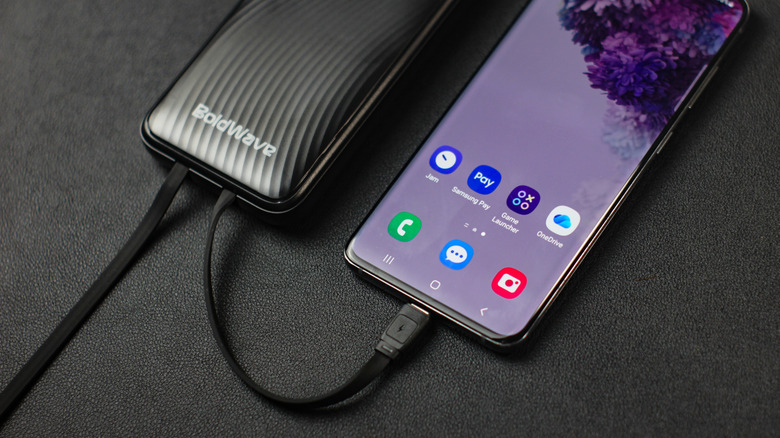
Most power banks use lithium-ion or lithium-polymer cells, much like the batteries powering your smartphone or laptop. They offer the same benefit of being a tried and tested way to store energy, but they also degrade over time. Every time you use 100% of your power bank's battery and recharge it to full again, it completes one charge cycle. Most power banks are designed to last around 300 to 500 charge cycles, according to Anker. While they won't magically stop working after a few years of constant use, you will start to notice worse efficiency and performance.
This happens at the same time your smartphone is also slowly losing battery capacity, so there's no real advantage to using a power bank as your primary charger. If you've bought a power bank as a backup solution during emergencies, it's probably best to treat it as such.
It's also worth noting that there is quite a bit of efficiency loss when using portable battery banks. It may make perfect sense to think that a 10,000 mAh power bank can top up a phone with a 5,000 mAh battery twice, but in practice, you may only get around 1.5 full charges out of it. In other words, you'd be spending more time (and electricity) moving energy between two batteries instead of simply using a wall outlet to charge your devices directly.
Older power banks can be hazardous
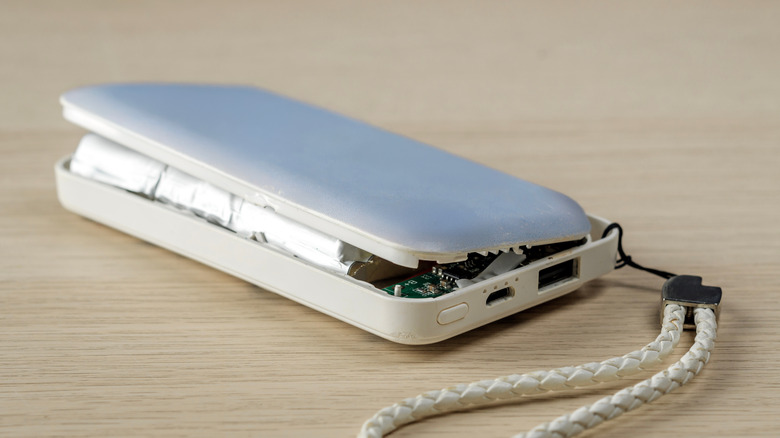
Another reason to be a bit wary of toting around a power bank as part of your everyday carry is that it contains a lithium-ion battery. At the end of the day, that battery can pose a risk if it's damaged. Excessive heat may also contribute to the power bank swelling or degrading more rapidly. The risk goes up as the battery ages.
There's a reason why the FAA has such strict rules around lithium-ion batteries — power banks typically cannot exceed the 100 Wh limit and can only be packed in carry-on bags. Some airlines even prohibit the use of power banks to charge devices during flights. A faulty power bank in a tight space is therefore a fire hazard. Leaving one in a hot car as a designated spare battery can increase the risk of damage or overheating.
Cheaper power banks can damage your phone, too. Those that ship without proper voltage regulation or overheat protection may put unnecessary stress on your device's battery. You don't have to replace your power bank too often — just be sure to keep an eye out for any signs of swelling, overheating, or a strange or sweet chemical smell.