

4 Famous Tech Brands That Started As Completely Different Businesses
As any self-respecting business guru will tell you, working in the tech industry means you have to change with the times. There's no future in stubbornly continuing to manufacture thingamabobs when in a few years, the world is going to be clamoring for doohickeys. Many tech companies have long-forgotten or abandoned products in their back catalogs, while still basically working in the same business. Some companies don't so much pivot as expand. Amazon started as an online bookseller, then became a seller of everything, then branched out into subscription services, televisions, and cloud computing. It also sells books.
Often it's clear why a company evolved. Netflix originally sent out DVDs by mail, which isn't altogether dissimilar from streaming shows; it just delivered them using much older tech. Flickr and Slack both started as side features in computer games that proved to be more successful than the games themselves. The first products Philips made were carbon-filament light bulbs, which were seriously cutting-edge tech in 1891. However, sometimes the path to becoming a famous tech company in the 21st century is not so straightforward. Some big brands didn't start with tech at all, and instead began their businesses selling playing cards, toilet paper, and even noodles.
Nintendo made traditional Japanese playing cards
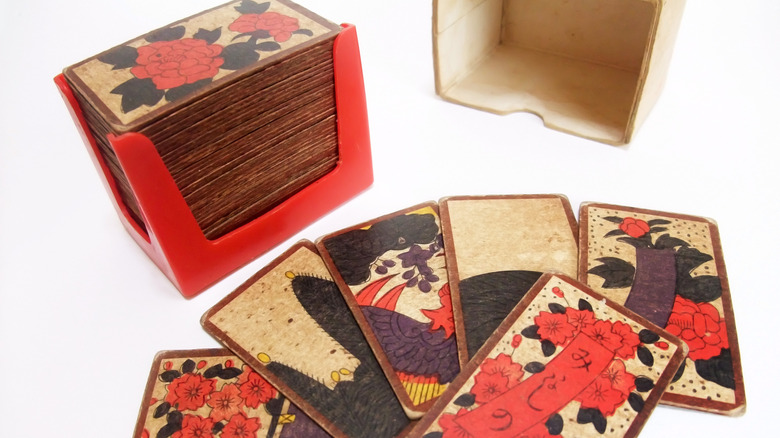
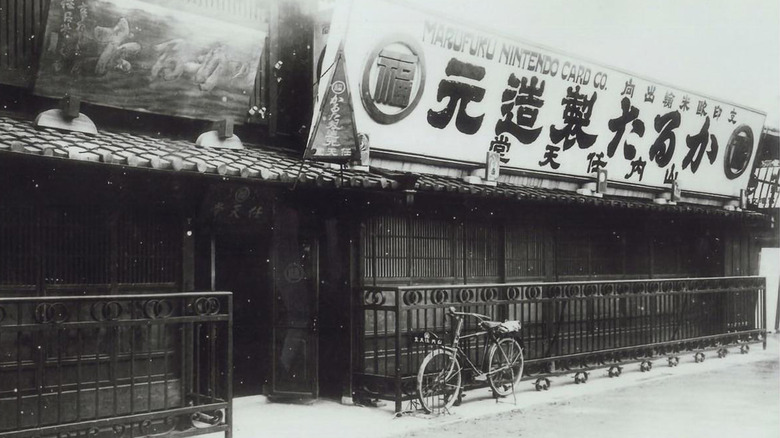
The Nintendo company has been around since 1889 and, unsurprisingly, it hasn't been making Game Boys all that time. Instead, the company's initial focus was on the 19th-century gaming equivalent — playing cards. Fusajiro Yamauchi founded Nintendo Karuta and manufactured a type of card called Hanafuda. Western-style playing cards were made illegal in 1633 to crack down on Japan's growing gambling habit. This ban led to Hanafuda cards, also known as "flower cards," which have no numbers, just pictures of flowers and seasons, and were largely tolerated by the Japanese government. Although the ban on manufacturing playing cards was effectively lifted in 1885, the cards still carried a stigma due to their association with gambling — which remains largely illegal in Japan today.
The Hanafuda business thrived, and by 1902, the company was also making Western-style cards. Yamauchi arranged, with the assistance of tobacco magnate Kichibē Murai, for Nintendo cards to be distributed through a nationwide network of tobacco retailers associated with Murai's business, and by 1926, Nintendo was the biggest manufacturer of playing cards in Japan. The company continued to move with the times, making plastic playing cards in 1953 and ones with Disney characters in 1959. It developed its first video game system in 1975. And although Nintendo still makes Hanafuda cards today, sales are rather eclipsed by those of the Nintendo Switch.
Samsung sold noodles (and wine, and fish, and wool)
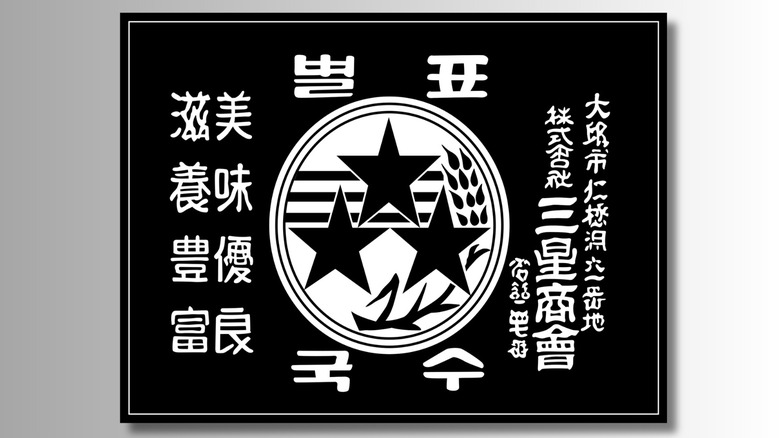
Samsung has probably made the biggest pivot of any tech company. So while the good news is you can now buy a Galaxy smartphone, the bad news is that it's no longer possible to buy Samsung-branded noodles. Samsung started life in 1938 when its founder, Lee Byung-Chull, first began doing business in Seomun Market in Daegu, Korea. Its name means "Three Stars" in Korean.
Samsung Trading Co. shipped fresh produce and dried fish to China. It also sold its own in-house brand of noodles called Star Noodles. The Ho-Am Foundation (a philanthropic organization set up in Lee Byung-Chull's honor) says that Star Noodles were the most popular in the region, outselling the city's four other noodle businesses. According to the foundation's somewhat partisan account, this was because its "taste was far superior to others." Lee exited the noodle business when he moved to Seoul, but the mantle was taken up by the workers in the factory and Star Noodles continued selling until the 1960s.
In Seoul, the company traded as the Samsung Moolsan Trading Company. It sold squid and seaweed, made soju (sometimes called "Korean vodka") and rice wine, operated a sugar refinery, and spun wool into yarn. In 1969, Samsung Electronics was established, and its first product — a black-and-white TV — was launched in 1970. In fact, in Korea, Samsung still has its hand in a variety of industries. The Samsung Global brand includes not just Samsung Electronics but also insurance, construction, biotech, and shipbuilding.
Sharp takes its name from the Ever-Ready Sharp mechanical pencil
Sharp has had a troubled history in the U.S. after effectively exiting the country's TV business in 2015, licensing its Sharp TV brand in the Americas to Hisense, and subsequently suing Hisense for allegedly slapping its name on low-quality TVs. It re-entered the U.S. market in 2019, but it's still not the first brand you think of when you're listing the biggest smart TV brands, although its home appliance business never went away in the U.S. However, globally, it's still a big player, and its TVs are well regarded in its native Japan.
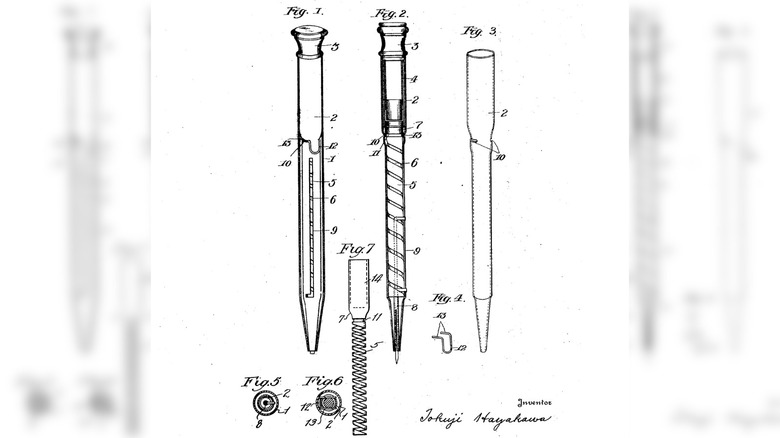
Sharp started life in a small metalworking shop in Tokyo in 1912. The company's founder, Tokuji Hayakawa, had some success patenting an innovative Western-style belt buckle when he was still an apprentice and was ready to go it alone. In 1915, he invented a mechanical pencil that was later renamed the Ever-Ready Sharp, which is where the Sharp Corporation gets its name. The pencil was so good, they named the business after it.
The company's claim that Hayakawa was the "inventor of the world's first mechanical pencil" should be taken with a grain of salt, as there are several other claimants to the title, but it was certainly an innovative bit of tech. It used a compact screw-feed mechanism and had a removable retaining clip that kept everything aligned. You can't buy a mechanical pencil from Sharp anymore. In fact, the pencil factory was destroyed in an earthquake in 1923. Soon afterward, the company switched to making radios, with its first set available for sale in 1925, the year that radio broadcasting started in Japan.
Nokia was a paper mill on the Nokianvirta River
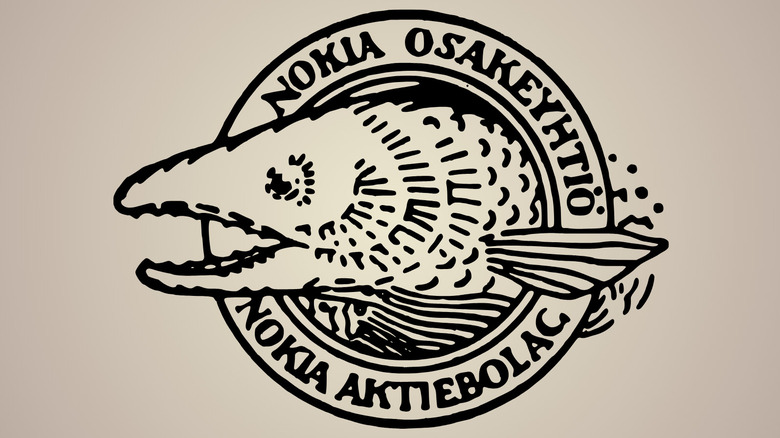
Nokia may no longer be the big name it once was, but back at the turn of the millennium, everybody, it seemed, had one of its phones. The familiar Nokia ringtone and its reputation for near-indestructible handsets have become part of popular culture. From 1998 to 2012, Nokia was the world's largest mobile-phone manufacturer. Microsoft acquired Nokia's Devices & Services business in 2014, after which the Nokia name largely disappeared from the smartphone world. The company is still in business, although it now focuses on the network infrastructure side of things.
That wasn't the company's first reinvention. Nokia used to sell paper products, including toilet paper. Its story starts in 1865, when mining engineer Fredrik Idestam established a wood-pulp mill beside the Tammerkoski rapids in Tampere, Finland. The mill used hydropower to grind timber into pulp, which could then be pressed and dried into paper. In 1868, Idestam opened a second mill near the town of Nokia on the Nokianvirta River, which is where the company gets its name. It started selling electricity generated by the mills in 1902.
Nokia can also include rubber boots in its resume. Finnish Rubber Works, founded in 1898 and famous for its waterproof boots designed for harsh Nordic conditions, became part of the Nokia Corporation in 1967. The company moved into electronics in 1962, and one of its first products was a pulse analyzer for nuclear-power facilities. Nokia no longer makes paper or rubber boots, but it demonstrates that its more recent shift from phones to network infrastructure is just another chapter in its long history of reinventing itself.