

5 Attachments That Could Upgrade Your Towable Backhoe
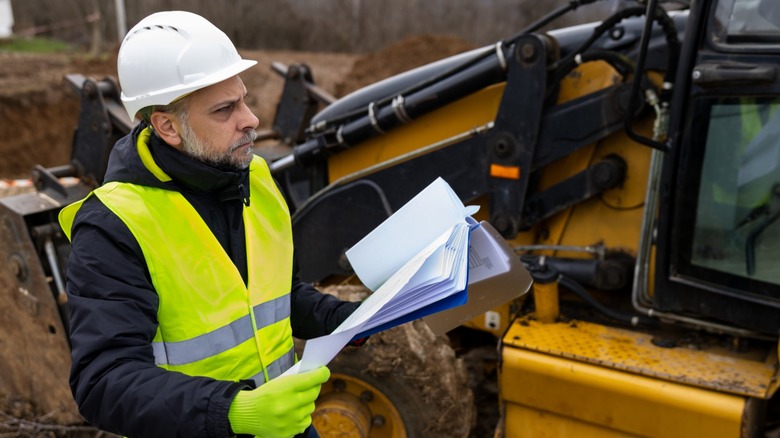
A towable backhoe is one of those relatively compact machines that can do a lot more than its size suggests. Like a full-sized backhoe or excavator, it can help with digging, lifting, and clearing jobs around a site. It is just more portable and affordable. And with the right attachments, it can become even more versatile. So, instead of renting another machine every time a job calls for something different, you can simply swap out what's on the end of your backhoe.
With a standard bucket, for instance, you can dig trenches, move soil, and handle basic cleanup. Swap that out for a hydraulic hammer, and you have a tool that can help with light demolition or breaking up concrete. An auger turns the backhoe into a hole-digging machine for utility lines, fence posts, or planting projects, while a thumb or grapple attachment can make it easier to grab brush, logs, rocks, and other awkward debris.
Of course, the size and rated power of your backhoe play an important role in which attachments you can choose. Not every attachment will work with every towable backhoe, and if it's hydraulically powered, you need to pay attention to flow rates, pressure, fittings, and stability to keep yourself and others around you safe. So before buying or renting any backhoe or its attachments, check the manufacturer's specs and make sure the attachment is actually compatible with your machine. With that in mind, here are some attachments that can help unlock even more utility from your towable backhoe.
Grading bucket
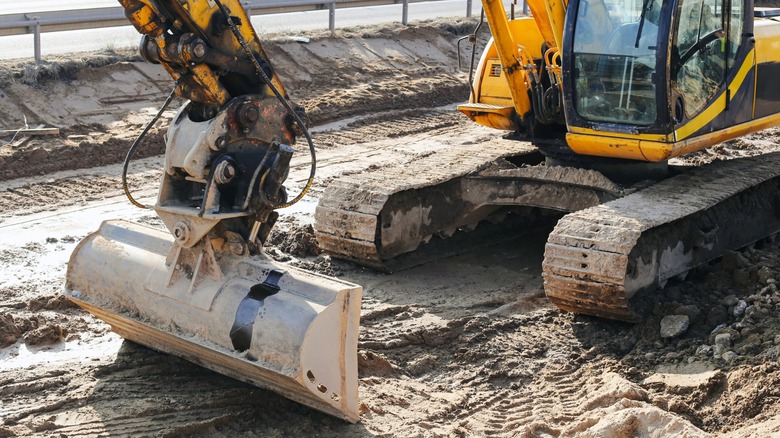
A grading bucket is wider and shallower than a standard bucket. House of Contractors, for instance, sells a 24-inch smooth bucket specifically for its HOCTB360H towable backhoe. So, rather than digging into the ground to scoop up soil, it skims and smooths a surface, which is why it has earned the nickname "finishing bucket." You'll find that landscapers use it to level yards before laying sod, smooth out a new patio or shed pad, and backfill trenches evenly. It also comes in handy on road construction projects, where it is used to spread and level gravel or create precise slopes.
That said, a grading bucket isn't designed to lift heavy loads, so don't let its size fool you. Its width might make it look like it holds a larger volume than a standard bucket, but because it's so shallow, it actually holds less. If you need to move heavier loads, that's better suited to a thumb attachment, which we'll get into in just a bit.
Another thing to bear in mind with grading buckets is that because they're constantly in contact with the ground, the edges wear down pretty quickly. Think of it like how your brake pad works. Friction just grinds it down over time, and a grading bucket's edge takes that same kind of abuse on every pass. To help, manufacturers often outfit these buckets with holes along the lip so you can attach a bolt-on blade. This is essentially a strip of hardened steel that, once bolted on, adds a bit of extra durability. Once that strip wears out, you can swap in a new one, and that costs a whole lot less than replacing the whole grading bucket.
Auger attachment
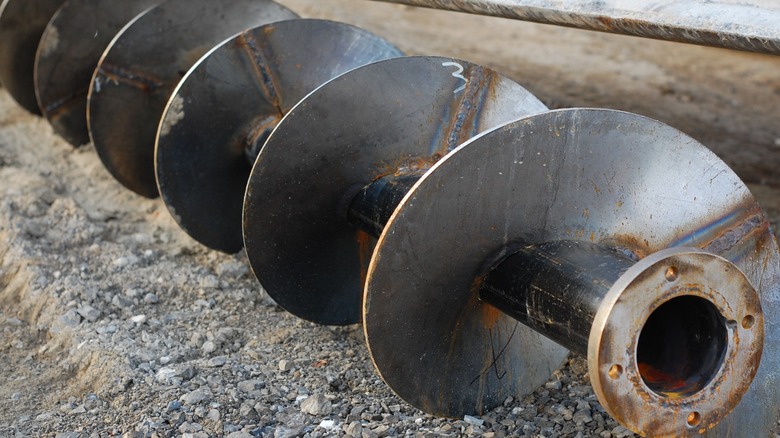
An auger attachment is pretty similar to a corkscrew in terms of design and function. Just like a corkscrew burrows into a cork, an auger drills into the ground. Most professionals use it to drill a specific spot in a relatively clean manner without disturbing the surrounding area, making it a reliable choice for tasks that require depth and precision. In fact, as a result, some simply call this attachment a drill.
One thing to keep in mind, though, is that not all drills, or more precisely, augers, are built the same. The type you choose depends on what you're digging into and what you're digging for. A post-hole digger is the most common of the bunch, sized to match different post and footing depths, and you can find one at Country Home Sales. An earth or rock auger, on the other hand, is engineered specifically to cut through denser, rockier terrain.
Some rock augers let you swap in a fresh drill bit rather than the whole attachment, which comes in handy if the ground quality changes halfway through a job. Then there's the tree auger, which trades depth for width, since tree root balls need a much wider hole than a standard fence post does, and it's shaped specifically to help roots spread. Beyond these more common applications, augers are also useful for soil sampling and drilling holes for decks or other structures that need a solid underground base.
Rippers
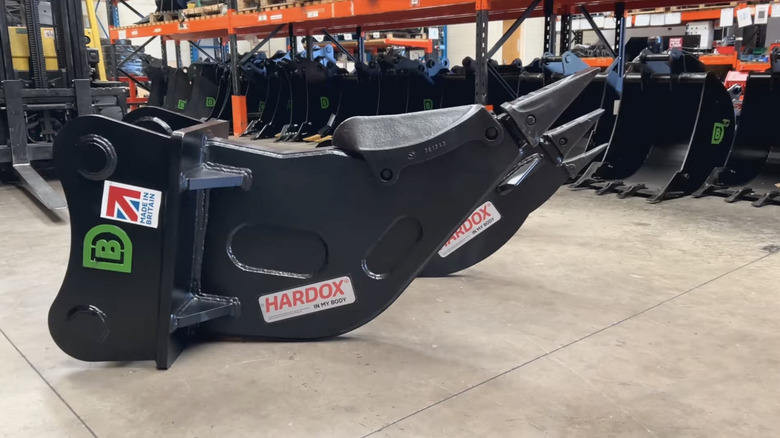
For tough sites where a standard bucket just doesn't have the bite, a ripper attachment comes in clutch. Rather than spreading force across a wide edge the way a bucket does, a ripper channels the full strength of your backhoe down into a single, narrow tooth. And that concentration of force is what lets it punch through frozen ground, compacted clay, or shale that would otherwise chip a bucket's teeth or stall the machine entirely. It's also a more fuel-efficient way to work: forcing a bucket through the same material takes far more brute effort than letting a ripper's narrow point do the work first.
For a towable backhoe, this makes the ripper handy for prepping smaller sites or clearing out stubborn tree roots, all without needing heavier, more specialized equipment. Since these attachments are used to break through tough ground, they need to be very strong. That's why the shank is typically made from high-strength alloy steel.
The tip itself, often called the tooth, takes the brunt of the wear and is usually made from boron steel or tungsten carbide. Because it's replaceable, you can swap in a new tooth when it dulls instead of replacing the entire attachment. Besides breaking hard ground, a ripper can help improve the condition of the soil by loosening compacted layers that prevent water from reaching plant roots. This lets water soak in more easily and gives roots more room to grow. This makes the attachment useful for more than just digging prep. It can also lend a hand with landscaping and farming work. If you own a DR Power backhoe, they offer a proprietary ripper attachment.
Thumbs
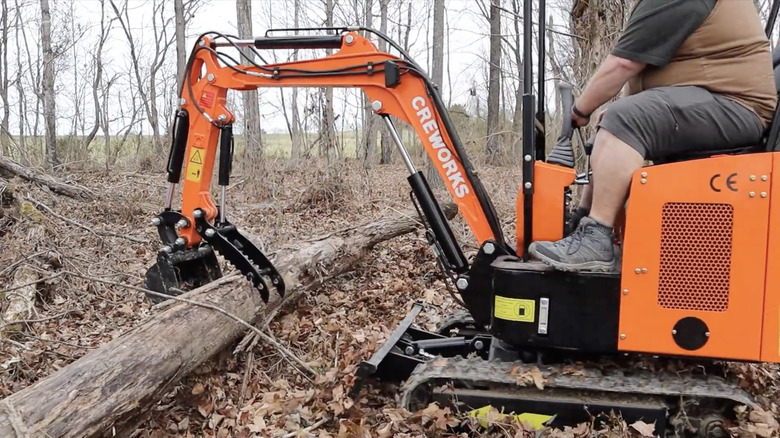
A standard towable backhoe is great at digging holes, but add a thumb and together they can grip, lift, and set down awkward loads, fence posts, boulders, brush, and tree trunks, with a level of control a bucket alone simply can't offer. That kind of precision opens the door to material-handling and cleanup jobs that would otherwise require bringing in a second machine or doing them by hand.
Thumbs come in two types: mechanical and hydraulic, and the right one for you depends on your budget and how often you switch between digging and gripping. A mechanical thumb is the cheaper, simpler route: you set its angle by hand, pinning it into position before you start work, which means climbing out of the cab every time you want to change how it's holding something. A hydraulic thumb solves that by tying directly into your backhoe's hydraulics, so it curls in sync with the bucket, and you can adjust its grip without ever leaving your seat. That convenience comes at a cost, though, both in upfront price and in upkeep, since the extra hoses, cylinders, and pins involved all need to be checked and maintained regularly.
Getting the size right matters just as much as choosing the type. Too short, and the thumb can't reach the bucket's teeth to grip anything properly. Too long, and it risks banging into the arm or fouling the linkage as it moves. The simplest way to check is to swing the bucket to a 90-degree angle and measure from the inside of the arm out to the tips of the teeth. That distance is the shortest thumb your machine can realistically use. If your backhoe is an MB300 model, Jansen USA sells a compatible thumb.
Hydraulic hammer
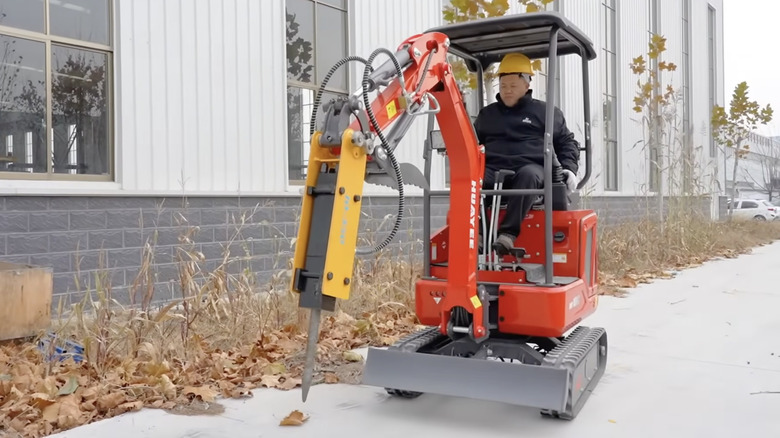
When you need help cutting through concrete, asphalt, or a large section of rock, a hydraulic hammer is something you can reach for. In a way, it's a much larger version of a handheld demolition hammer, only now it can be fitted onto a towable backhoe. That way, the backhoe's arm also carries the hammer's weight and holds it against the material. Once you've been able to use the hydraulic hammer to break the surface into manageable pieces, you can switch back to the bucket or attach a thumb to collect and move the debris.
That said, a hydraulic hammer isn't compatible with every towable backhoe. The machine needs an auxiliary hydraulic circuit that can continuously supply the flow and pressure the hammer requires. The attachment must also fall within the backhoe's weight limits and fit its mounting points. A hammer that's too heavy can make the machine unstable, while one that demands more hydraulic flow than the pump can provide will perform poorly and may overheat the system. Before buying one, compare the hammer's required flow, operating pressure, weight, and mounting dimensions against the backhoe manufacturer's specs. That's usually why retailers like House of Contractors offer a factory-matched hydraulic hammer as an add-on.
With a towable backhoe, the right size will be compact. And despite their smaller size, these hammers aren't lacking in power. Some can still put out up to 1,500 foot-pounds of impact energy. This is a good find you should have for your next demo job. If you're still deciding which towable backhoe to buy before picking out attachments, this comparison between the Harbor Freight and Honda models is a good place to start.