

What Are Amp Ratings And Which Power Tool Types Do They Apply To?
We may receive a commission on purchases made from links.
According to the United States government's National Institute of Standards and Technology (NIST), an amp, short for ampere and often abbreviated further to the letter A, is a "base unit of electrical current." Amp ratings are applied to electrical devices to indicate the amount of current they can safely handle or how much current they use when operating at their highest level.
We typically see amp ratings around our homes in the range of 15A to 20A placed on items like extension cords, circuit breakers, and appliances. While an uninterrupted power supply is one advantage corded power tools have over cordless versions, it's important to stay within the amp rating of the entire circuit.
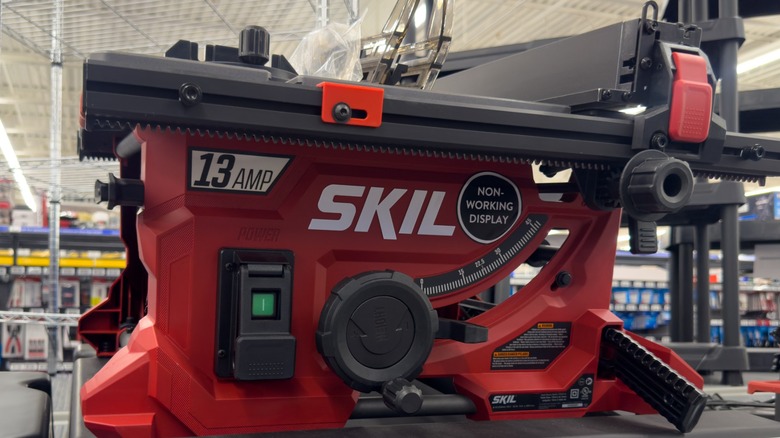
All power tools have an amp rating, typically found printed, along with other information from United Laboratories (UL) on a sticker. Some power tools, like the Ryobi 2.5-amp 9-inch band saw available at Home Depot, draw relatively low amperage. Other corded power tools are worth the electrical connection hassle to feed their high-amp electric motors with amp ratings that exceed 15A, but many common power tools are rated under 10A.
Paying attention to a power tool's amp rating, and the rating of the circuit it's connected to, is important for ensuring its trouble-free use. While circuit breakers are designed to protect the electrical wiring, using extension cords, powering multiple power tools, or tools with higher amp ratings on the same circuit can cause tripped circuit breakers or even bigger problems.
Can I run a 15-amp saw on a 20-amp circuit?
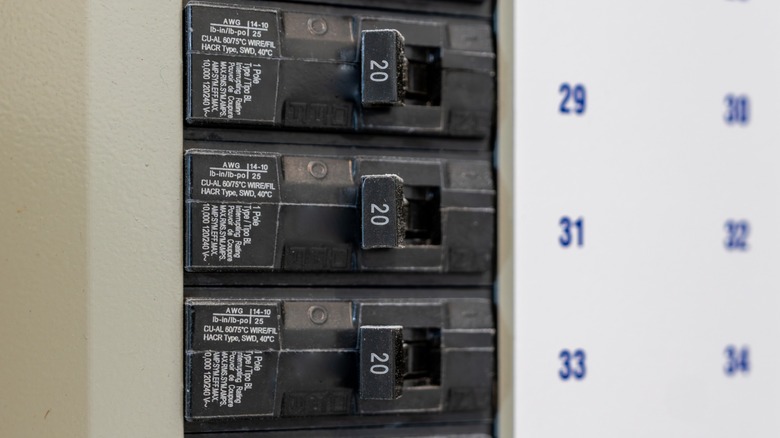
The quick answer to "Can I run a saw with a 15-rating on a 20-amp circuit?" is: Yes, you can. However, to do so safely the circuit should be up to code, in good working order, and not include a long or light-duty extension cord.
When deciding what is safe to run on any given circuit it's important to take the 80% rule for circuit breakers into account. The simple version is that we should only utilize 80% of the circuit breaker's capacity for extended periods. Given that 80% of a 20-amp circuit is 16A, and the assumption that the saw is used intermittently, a 15-amp saw presents no problems for a 20-amp circuit in good working order. However, a loose connection on either side of the breaker, in a junction box, at the 20-amp outlet, or the connection to the saw could cause excessive heat and a potential fire hazard.
If you must use an extension cord there are a number of common extension cord mistakes you should avoid. In addition to using a high-quality outdoor-rated extension cord, it's important to select a cord that is rated to handle the electrical load it'll be subjected to, 20 amps in this case, and one that is no longer than necessary, preferably under 50 feet.
Long or light-duty cords lead to lower voltage at the tool. That's a problem since volts and amps combine to make watts, or the rate at which electricity ultimately does work, like turning a saw blade. A 20A 120V saw works best when supplied with 2,400 watts (20A times 120V equals 2,400 watts) so if the voltage drops, amps increase to compensate for the shortfall. A situation that could also lead to tripped breakers, overheated wiring, or other electrical component damage.
How are amps different from amp-hours?
We've discussed the relationship between amps, volts, and watts, but you've probably noticed the term amp hours when looking at cordless power tools and wondered how they differ. In short, an amp is a unit of measure, while an amp-hour (Ah) is a unit of measure over time.
An amp is a single unit of electrical current that's used by the power tool's electric motor. For example, if the motor is rated for 5 amps, it needs a continuous 5-amp power supply to operate. If that power tool is corded, it could run indefinitely.
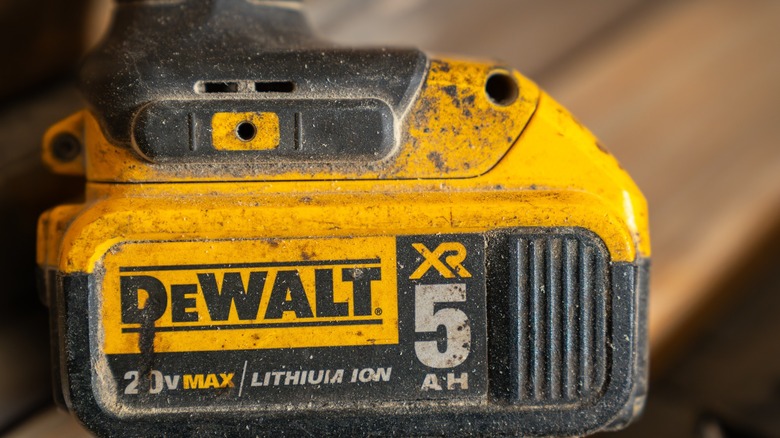
Cordless power tools rely on batteries for power with voltages ranging from 12V to 20V being common, but not interchangeable. A 5 Ah battery, like the 20V Max DeWalt battery above, can run a compatible 5-amp cordless power tool for an hour, a 1-amp tool for 5 hours, or other variations of the same formula provided the tool and battery are operating at peak efficiency.
Opting for a higher Ah power tool battery can actually provide your power tool with longer run times between charging cycles. The downside is that higher Ah batteries are larger and heavier than lower Ah versions. Depending on the task at hand, a fraction of an inch, a few ounces, a tangled power cord, or a dead battery can turn an enjoyable project into a chore.