

What Is The 80% Rule For Circuit Breakers?
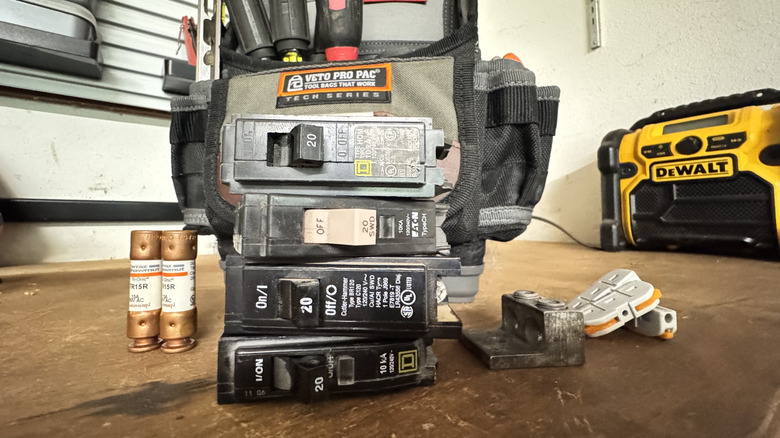
Circuit breakers are critical components of any electrical wiring system. Also known as an Overcurrent Protection Device (OCPD), a circuit breaker can come in a variety of different forms –- ranging from the commodity 15A residential circuit breakers you'd find at a big box DIY store that cost a few dollars, to giant, molded-case industrial breakers that are rated for 1,600 amps and cost thousands of dollars. Circuit breakers can vary wildly in form and features, but they all share a common function: to protect a circuit against overcurrent, overload, and short-circuits. This in turn protects people, property, and equipment.
As circuit breakers have evolved over the years, the National Electrical Code (NEC) standards have constantly evolved to address their role and implementation. One of the longest-standing rules for circuit breakers is the 80% rule, whereby a standard circuit breaker can only be loaded to 80% of its rating for continuous loads. The origin of this rule is often misunderstood, as it is not technically in the NEC; rather, its basis is in certain NEC specifications and UL listings governing breaker ratings and how they are applied.
The 80% rule is a duty limitation placed on the breaker to protect the device itself, similar to how the 80% rule applies to generators. This is because standard breakers use terminals that are not tested to operate at 100% of the breaker's rating forever. There are also thermal limitations in the environments where breakers are installed, such as ventilation, and how much heat adjacent breakers are generating. There are breakers that are specifically tested to operate at 100% duty indefinitely, but they are tested differently, and also require certain installation conditions to be met, meaning they can only be installed in enclosures with specific spacing and ventilation requirements.
Understanding circuits and circuit breakers
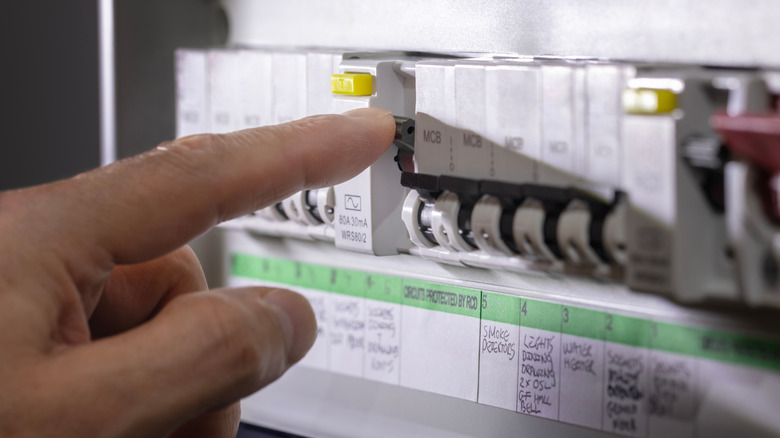
In order to better understand circuit breakers (which are different from fuse boxes), it helps to understand what a circuit is. A circuit is defined as the complete path for which electrical current can travel. This definition can be applied broadly; a standby generator supplying your house with emergency power is a circuit, and the utility line that connects your house to the power grid is a circuit. The transmission line running down the street powering dozens of homes is also a circuit. The conductive pathways on a printed circuit board (PCB) make up an electronic circuit. You get the idea.
Within the context of the NEC, and as it pertains to residential and commercial buildings, a common term you'll see is "branch circuit." Per Article 100 of the NEC 2026, a branch circuit is the conductors between the final OCPD and the outlets it protects. It is also important to understand that outlets are not receptacles –- they are points in the wiring system where power is made available to use, which could be receptacles, lighting, appliance wiring, etc. An OCPD is the circuit breaker that protects the circuit and interrupts the current in the event of an overload, tripping the breaker, and forcing the circuit to open.
There are a few components that every circuit breaker will have: a frame that houses the internal components, copper contacts that allow the flow of current when closed, a mechanism that actuates the contacts open or closed, an arc extinguishing component to control the arc when current is interrupted, and a trip unit to trip the breaker under certain overload or fault conditions. These components and how they are assembled play some part in how breakers are tested, and what conditions they are permitted to operate under.
The 80% rule only applies to continuous loads and is often misunderstood
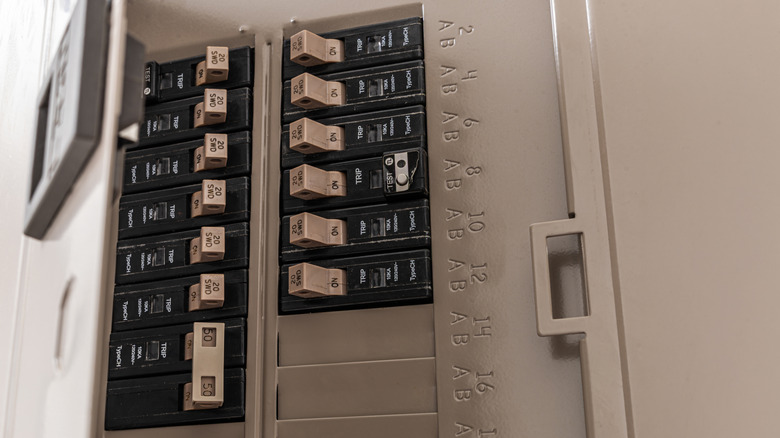
The NEC does not explicitly state the 80% rule –- this is a fact that many people get wrong. Instead, the rule is interpreted from NEC Article 210.20(A), which states that where a branch circuit supplies continuous loads or a combination of continuous and non-continuous loads, the rating of the OCPD shall not be less than the non-continuous load plus 125% of the continuous load. The NEC defines a continuous load as one where the maximum current is expected to continue for 3 hours or more.
The mathematical inverse of 125% is 80% (1÷1.25 = 0.8), hence the 80% rule when dealing with continuous — or a combination of continuous and non-continuous — loads. The 80% rule is also driven by UL 489, which is the standard for how breakers are tested and listed. Any breaker can handle 100% of its rated current, but its thermal components –- namely its lugs where the conductors terminate –- are not intended to carry that rating indefinitely in real world scenarios, where environmental factors like ventilation and ambient air temperature can degrade their ability to dissipate heat.
The NEC allows an exception to this in the form of a breaker specially rated to carry 100% of its current rating continuously. These breakers are identified as such, and may have different internal components like heavier lugs, but more importantly, they come with strict installation requirements in order to maintain that rating. Which is to say, these aren't breakers you'll find at Lowe's or Home Depot if you're looking to install a new circuit breaker.