

4 Pros And Cons That Come With Parking In Your Garage
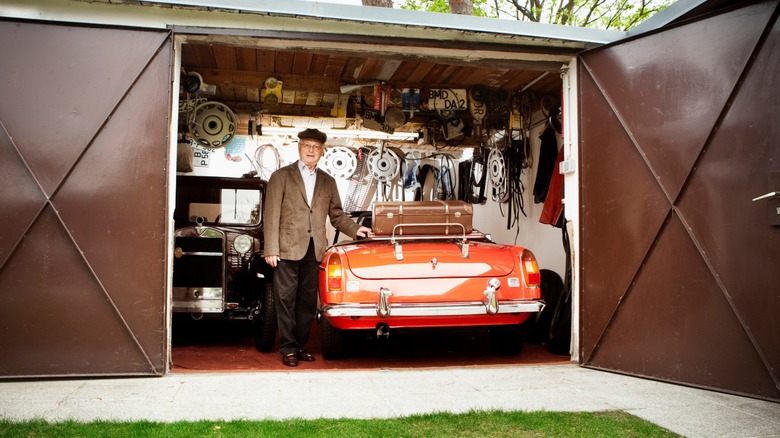
A garage can be a cheat code for so many aspects of your home. It's a place to store all the tools that you only use occasionally, plus it's where all your outdoor equipment can live through the winter. More often than not, it doubles as a workshop for home improvement projects, and with the right garage safety tips, it can really become the most useful room in your house.
Then, of course, there are all the things your garage can do for your car. That's its actual purpose after all. Garage parking is more than just a matter of convenience. It offers real benefits that can ripple into other areas of your life while also extending your vehicle's lifespan. It's not all upside, though. Without the right care, your garage can actually be more detrimental to your car than the wild and untamed outdoors. Here are the benefits and drawbacks of parking in your garage.
Insurance benefits

Insurance is a big expense of car ownership. Whether you're driving a fancy car off the lot or an old beater, you're going to need insurance, and you'll spend thousands on premiums over the lifetime of your vehicle. When it comes to monthly payments, shaving off even a few dollars can make a big difference, and that's where having a garage can really come in handy.
Insurance companies know that a car locked safely away inside a garage is much less likely to be damaged than a car parked on the street. A garage protects your vehicle from weather, potential thieves, and all but the most disastrous neighborhood traffic accidents. Most insurance companies are willing to lower your premiums if you park in a garage. In fact, many companies explicitly offer a garage discount that takes a small percentage off what you owe them for your policy.
Discounts are the main way parking in a garage will save you money, but a garage might also let you adjust the type of policy you purchase for your vehicle. If you know that your car is going to be under a roof for a majority of the time, you might be able to get away with paying for less storm coverage, for example. Those savings will vary wildly from driver to driver, but the bottom line is that parking in a garage will save you money in the long run.
Unexpected wear and tear
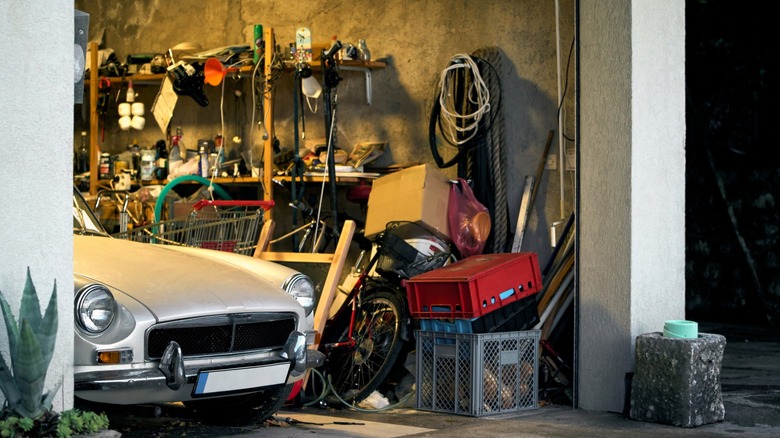
Once your car is parked safely in your garage, it's easy to forget about. The garage protects your car from the elements and passively lowers your insurance costs, so after you're settled in, there's really nothing more to think about, right? Wrong. In general, a garage is a surefire way to protect your vehicle and ensure that it lives a long and happy life, but there are some risks associated with parking in a garage that you need to know about in order to mitigate.
Some garages don't protect your vehicle nearly as much as they should. Leaky roofs, cracked windows, or any other avenue for moisture to sneak into your garage can spell disaster for your car. Moisture inside your car can lead to mold that's quietly dangerous, and likewise, a damp garage can be a great place for unaware vehicle owners to create a rust bucket.
There are also plenty of more mundane ways parking in a garage can be risky for your car. You might need to keep all your best outdoor power tools, lawn care equipment, and a bevy of kids' toys in your garage, and those items provide all sorts of opportunities for dings and scratches that will lower your car's value much faster than parking it on the street for a night. Parking in the garage has plenty of upsides, but only if you make sure to add regular garage cleaning and maintenance to your to-do list.
All that curb appeal

Vanity may be a sin, but we all deserve to indulge in it every once in a while. There are genuine financial benefits to parking your car in a garage, but the aesthetic benefits can be just as important. A garage can help you beautify your life on two fronts.
First, there's the literal curb. If you're the type of person using niche landscaping tools to create a breathing lawn and garden, then a garage is your secret weapon. Even the nicest cars don't exactly mesh with a picture-perfect lawn, so keeping your car in a garage and out of the picture can keep your front lawn photoshoot ready.
On the flip side, a garage will keep your car looking as nice as possible when it is time to show it off. Those insurance discounts don't just come out of the ether. A well-maintained garage can protect your car from hail, falling tree branches, and other outside phenomena that can easily ruin a window or a paint job. A shady garage will also help keep the colors on your car's exterior and interior as vibrant as possible. Beauty isn't quantifiable, so this particular garage-parking benefit is technically priceless.
Ventilation is a real problem
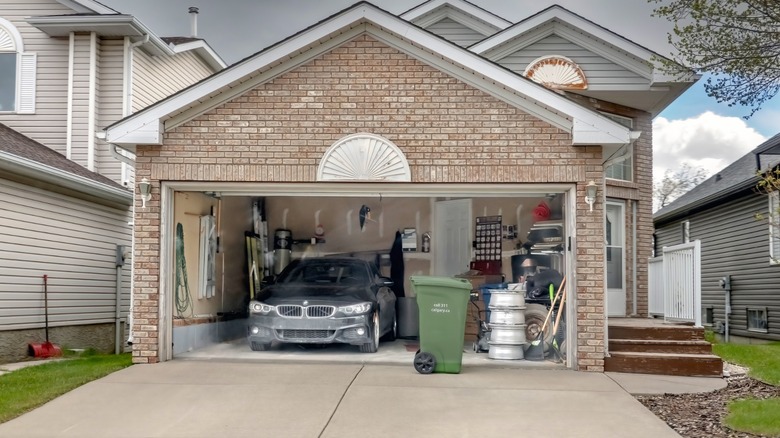
In general, the pros of parking in your garage outweigh the cons, but there's one potential downside to garage parking that can cause problems for your health and your home. Garage ventilation is a serious issue, especially for attached garages. Most people know that car exhaust is dangerous and that running a car in a closed garage can be deadly, but they don't necessarily connect the dots and see the subtler problem with car exhaust. If you're running your car in the garage or backing into it to park, there's a chance CO2 from the exhaust is being drawn into your home. It's a good idea to have a carbon monoxide detector and understand how to use it.
CO2 can cause serious health problems, but there's something else that may be radiating from your car into your home. Some drivers, especially ones who live in warmer climates, notice that heat from their car causes nearby parts of their homes to warm up uncontrollably. That can be a nightmare for your electric bill on top of just being downright uncomfortable. The solution to both these problems is likely better insulation rather than street parking, but you have to be aware of the issues before you can combat them.