

5 Things Robot Mowers Can Do That Riding Mowers Can't
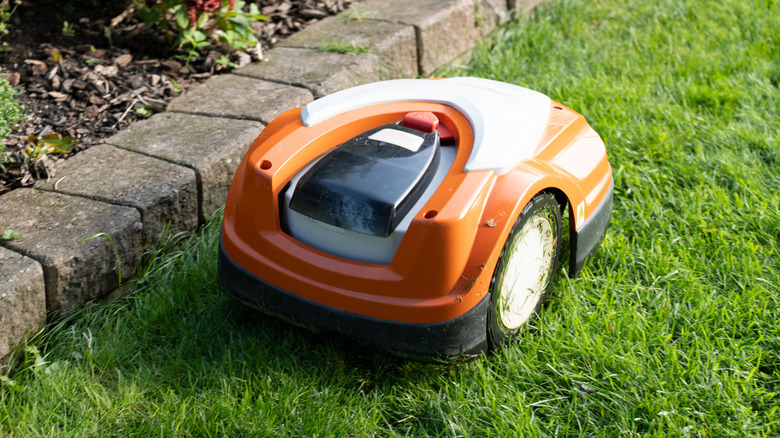
If you have a bigger lawn, you might be exploring ways to maintain the grass. A regular push mower will take far too long to mow anything approaching half an acre or more. After that, you have options. You may be considering one of the most reliable gas riding mowers, but there's an interesting alternative available now for around the same price as well — robot lawn mowers, which took over this past CES 2026.
Robot lawn mowers are the ultimate set-it-and-forget-it yard tool. You set one up, map out your yard, set a schedule, and go. Once that's done, it's remarkably easy, but there are some things you should know before you invest in one, not the least of which is that robot mowers are very good, but they're still evolving. One of the common problems of robot mowers (that is getting better by the year) is their reliance on GPS and Real-Time Kinematic (RTK) beacons. If your yard isn't friendly to GPS signals, you're in for a headache.
But robot mowers have huge advantages as well, especially over their riding mower compatriots. Here are a few things robot mowers can do that riding mowers can't.
1. Scheduled mowing. No person required
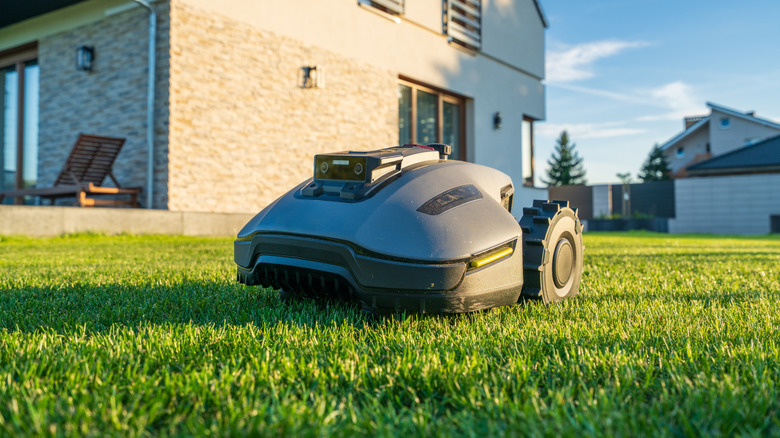
The primary benefit of a robot mower is arguably the fact that you just don't have to be there. Riding mowers require riders — it's in the name; but robot mowers go out all by their lonesome, day or night, rain or shine (more on that later). Once you set up your mower and map your lawn, you can create a schedule and forget it exists.
One important note about robot mowers is that they are not designed to cut your grass; they're designed to maintain it. Traditional mowers run once per week or even less often. Robot mowers are best when they run multiple times per week and trim off millimeters at a time.
Most manufacturers recommend trimming your lawn to no more than 6cm before setting up a mower. Most mowers don't have solid metal blades (though some do). Rather, they employ spinning discs with multiple razor blades attached. Long grass adversely affects the mower's ability to trim, which is why they're designed to run so often.
But the beauty of it is, once you set up the schedule, your lawn stays the same height all summer long. All you have to do is trim the areas the mower can't reach, which, to be fair, is something you'd have to do with a riding mower as well.
2. App connectivity
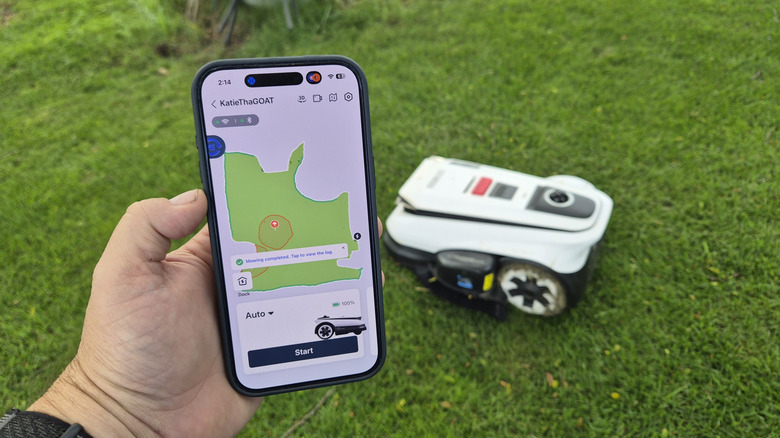
Robot mowers live in your phone. They're physically outside, of course, but everything that controls them lives in their apps. With the apps, you can set up schedules, remotely pilot the mowers, start mowing sessions (even from around the world), and mow specific sections of your lawn right from your phone.
This is handy for times when you need to put off lawn mowing because of rain or just because your lawn care person showed up on a given day. There are other times when you might want to mow a certain section of your lawn; you can do that too.
The app can also tell you what your mower's current status is, like how far into a mow it is or whether it is charging. Some mowers will also tell you when it's time to change blades and notify you when/if they get stuck. In short, your app is one-stop shopping for controlling and maintaining your mower.
3. Most of them can handle rough terrain/hills
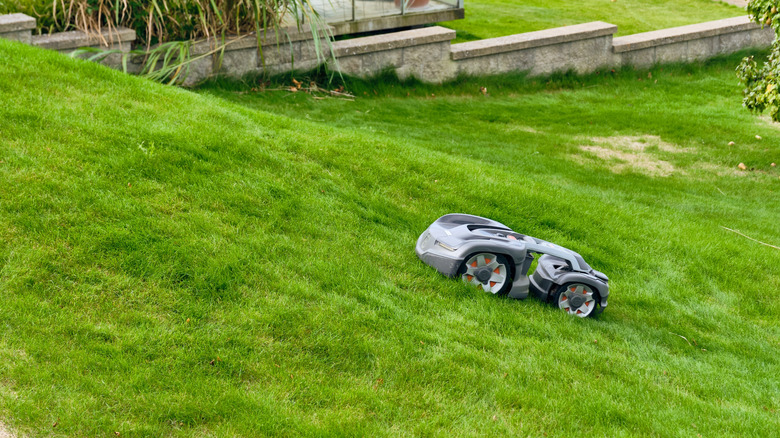
One of the things you absolutely cannot do with a riding mower is navigate rough terrain and steep inclines. The risk of a rollover is too great. Even the slightest miscalculation can turn into a very bad day.
Robot mowers don't have that problem, as most of them can navigate those types of obstacles with aplomb. They employ different ways of negotiating that terrain, from spiked wheels to tank-like treads. Most mowers can handle inclines of up to 20-25 degrees with no issue, which is definitely something you wouldn't want to try while riding on top of a 300-pound machine.
Robot mowers can be prone to getting stuck on obstacles that a riding mower can handle, like holes in the ground or larger downed branches. It's a good idea to check out the shape of your lawn every now and then to make sure there aren't any major obstacles. As long as you do, the robot will take care of itself.
4. Built-in string trimmer
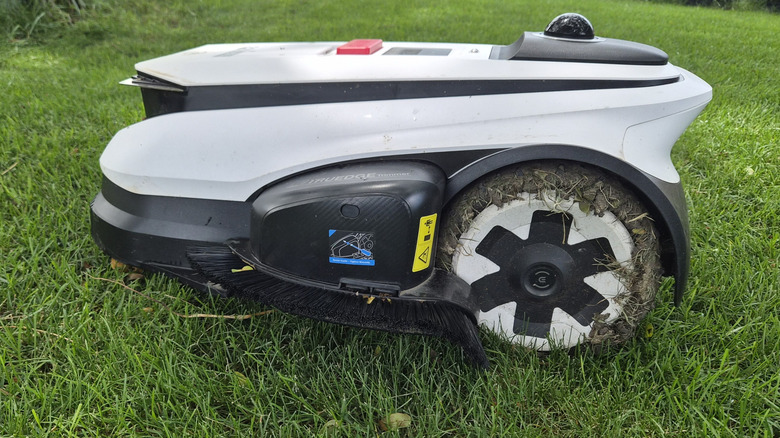
Not every robot mower has one, but there are two currently on the market that have built-in string trimmers. Sometimes called "weed whackers" or "weed eaters", a string trimmer picks up the grass around the edges of your property that a mower — riding, robot, or otherwise — will miss.
The Yarbo (which recently introduced a string trimmer attachment) and the EcoVacs GOAT A3000 LiDAR Pro are two notable examples that can take care of those edges without you having to get out your own manual trimmer. The Ecovacs implementation in particular is very well done, utilizing the onboard LiDAR sensor to detect where your fence is and run right along it.
This is an opportunity that more mowers should take advantage of, but for now, if you can pick up a mower with one, you'll be better off. This is definitely an area where robot mowers have riding mowers at a disadvantage, and will continue to do so for the foreseeable future.
5. Camera monitoring
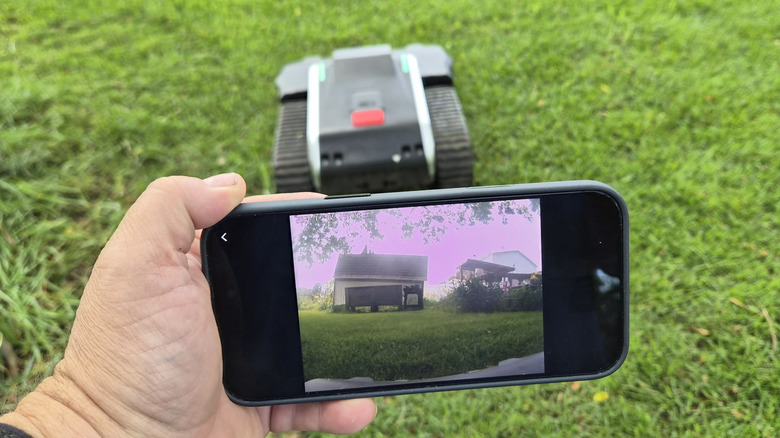
In addition to GPS and LiDAR, robot mowers employ cameras and vision sensors for navigation. Many robot mowers let you view what the camera is seeing through the app. One mower, the Dreame A3 AWD, even takes photos of potential obstacles and sends them to you via the app so you can identify what's blocking it remotely.
You can also use the on-board cameras to remotely view your property, though there's a big caveat there. It should be obvious, but the robot mower will need internet connectivity to send those images to your phone. If you have a larger yard, the mower may occasionally move outside of Wi-Fi range. Some mowers come with 4G connectivity, but that's definitely not the majority.
Our testing & research process
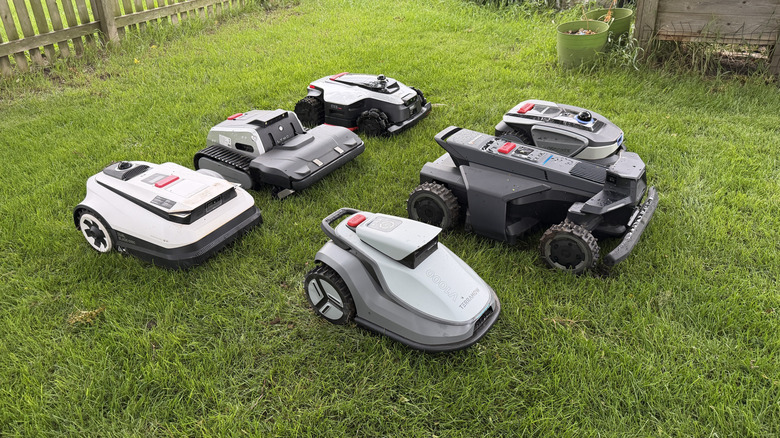
As a product reviewer, I have tested over a dozen robot mowers on my lawn at home. Those mowers come from brands like Segway, Ecovacs, Lymow, Sunseeker, and more. The mowers use all kinds of navigation and functionality, including LiDAR, GPS, RTK beacons, network RTK, and even just vision sensors.
For riding mowers, I researched popular brands like Cub Cadet, Toro, and Troy-Bilt to get a sense of their capabilities as compared to my observations reviewing robot mowers.