

11 Lowe's Finds Every RV Owner Should Check Out
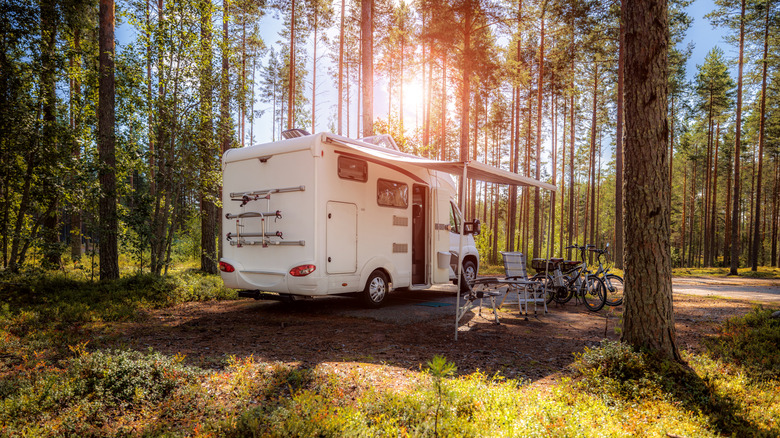
If you're the sort of person who flirts with wanderlust, the type who heads for the mountains every weekend or daydreams about pulling up stakes for parts unknown, you might have considered adding a recreational vehicle to your arsenal. Whether you call them campers or RVs, they can serve as a temporary home away from home when you're off the grid or as a primary residence.
Of course, living in an RV, whether for a weekend or for years, comes with some compromises and a few unique challenges. Unless you're in one of the bigger rigs, you'll probably have less space than you're used to. Unlike more conventional homes, an RV is mobile, which is both an asset and a potential problem. The facilities likely don't work the same way as the toilets and showers you're used to. And how you use your RV will depend on whether you're off the beaten path or connected to the electrical grid and a sewer or septic system.
Whether you're hitting the road in an RV for some summer fun, you're planning to live in an RV for an extended period, or you're looking for a gift for the wanderer in your life, these gadgets and tools from Lowe's are worth considering.
Lukvuzo 12.5-foot telescoping ladder
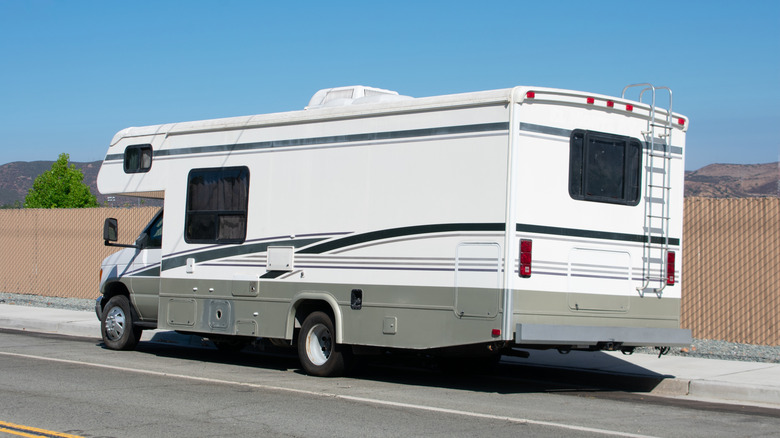
An RV's roof often holds important equipment like wireless RV internet systems and air conditioning units. In addition to servicing those components, the roof typically has vents and membranes that will need occasional maintenance. Long story short, you're going to have to get up there every once in a while if you want to keep your RV in working order.
To that end, many RVs come with a ladder mounted to the back, but not all of them do. If your RV doesn't have a ladder already attached, it's a good idea to get one before you need it. First things first, before you break out your wallet, take a moment to figure out why your RV doesn't have a ladder. Some rigs don't have a ladder because the roof isn't designed to be walkable, while others lack a ladder as a cost-saving measure.
It may be possible to add a mounted ladder. Alternatively, your RV may have ladder prep, a bracket that connects to a compatible RV ladder, in which case you might benefit from a specific product. Assuming neither of those options applies to you, the Lukvuzo 12.5-foot telescoping ladder is worth checking out. It compresses to just 35 inches tall and 19 inches wide (small enough to fit in an RV's exterior storage compartment or some other out-of-the-way place) and extends up to 12.5 feet, with locking mechanisms to keep the ladder at the desired length.
Ottomans with storage
Pretty much everyone likes to put their feet up every now and again, but when you're in an RV, footrests aren't a standard feature. Even in some of the coolest RVs ever made, space inside your RV is limited, so anything that pulls double duty as a storage solution is a welcome addition.
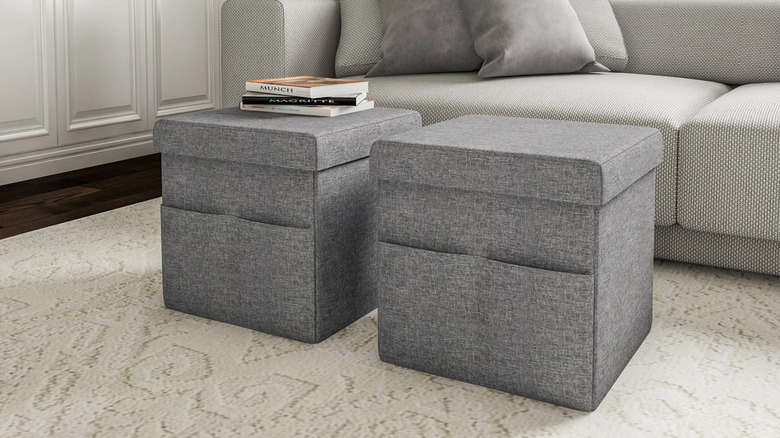
These Hastings Home ottomans available from Lowe's can serve as additional seating or as a footrest while also adding storage capacity to your RV. The ottomans are made of medium-density fiberboard (MDF), foam, and polyester. Each one holds up to 30 pounds of interior cargo, and the padded lid can hold up to 330 pounds when used for seating. They're strong enough to stand up to everyday indoor use and even the occasional outdoor adventure.
A pair of side pockets on each ottoman lets you store things like magazines, books, remote controls, and other small items on the ottomans' exterior. Each one stands about 15 inches tall in its functional form, and can fold down to just 2.6 inches tall to slide into tucked-away spots between uses. These ottomans are compact and multifunctional, which is precisely the needle you want to thread when you're living in what is essentially a tiny home on wheels.
Harfington high-precision horizontal bubble level

Some RVs have an auto-leveling system while others must be leveled manually, if at all. If you're setting up shop at a campsite for a few days, then getting your RV perfectly level might not be your biggest concern. However, if you're going to be living in your RV full time or setting up for an extended stay, leveling your home is pretty important.
Having an unlevel RV isn't the biggest problem in the world, but it will rear its head throughout the day in a bunch of tiny and annoying ways. An unlevel RV is perhaps most apparent and irritating when cooking. Pour some pancake batter, and you might end up with a deep pool of hot cake mixture instead of an even, flat flapjack. Spill something, and you'll end up with water or whatever running the length of your floor until it reaches the low point. You might also have trouble with some of your appliances or slides if your RV isn't level on the ground.
If you're not fortunate enough to have an auto-leveling system, you might need some combination of leveling blocks, ramps, and stabilizing jacks. You're also going to need a way to know whether your RV is level or not. These bubble levels from Harfington work on multiple axes, so you can verify whether your RV is level both forward and back, and side to side, at the same time.
Motorhome windshield cover
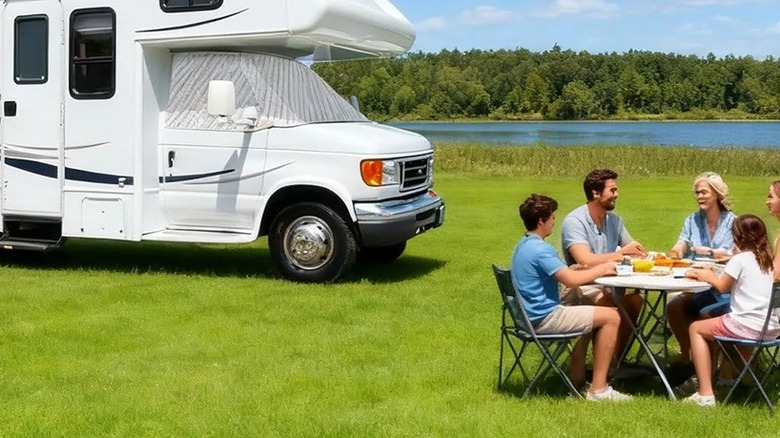
Mobility is a defining characteristic of an RV, but it also means the front of your rig is essentially the cab of a truck, complete with a large windshield and side windows. The same visibility that allows a driver to see the outside world also allows the outside world to see inside. Once you're parked, it's not exactly the best setup for privacy.
Many RVs have some sort of privacy barrier, such as a thin curtain or sliding door, but they can leave a little something to be desired. Even if they do help to protect your privacy, they do next to nothing to prevent heat and light from getting into and baking your interior. An outside windshield cover gives you an extra layer of privacy and can significantly reduce your interior temperature during the summer heat.
This cover from Aoibox is compatible with Class C motorhomes manufactured between 1997 and 2025, but you may need to find a suitable alternative if you're operating a different sort of rig. It features four layers, starting with a wear-resistant lining, followed by a fluffy cotton layer, a spun-lace cotton layer, and a top layer of aluminum foil and PE film to reflect sunlight. In the summer, it reflects light to reduce heat and UV exposure. In the winter, it helps prevent ice and snow. And all year round, it keeps your front windows blocked so the neighbors can't see in through the cab.
Roof vent fan
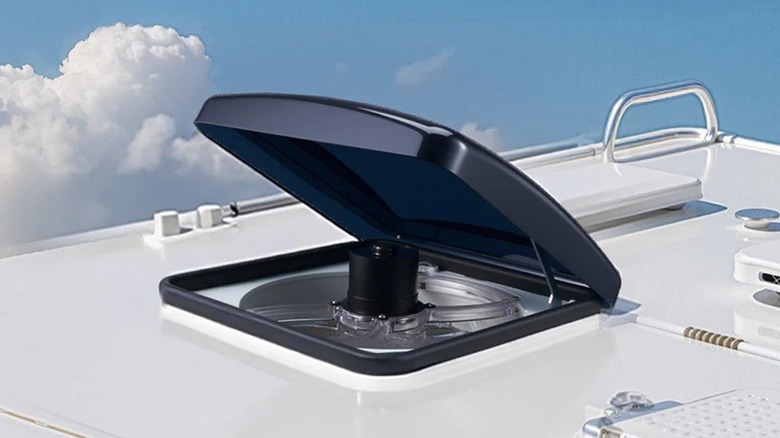
The average RV owner is almost always within sniffing distance of the garbage can, toilet, refrigerator, kitchen scraps, or some other source of smells. When you're all jammed together within four walls and on four wheels, air circulation is more important than ever.
Roof vents are fairly typical features of many RVs, allowing adventurers to maintain some air circulation. They can be used to clear the air in the bathroom or to help maintain your desired temperature, but they don't last forever. In fact, the roof vents on an RV are often made of plastic that degrades over time with exposure to sunlight. One day, a rogue gust of wind might blow the roof vent to smithereens, or the fan motor might burn out. One way or another, entropy will come for your roof vents.
Whether you're looking to replace an aging roof vent fan or you just want to upgrade your setup, the 14-inch RV roof vent fan from Vevor is worth considering. It offers 10 adjustable wind speeds that can flow in or out. It can be used to suck air out of your bathroom, or it can be reversed for use as a ceiling fan. You can control it with a single button or with a remote with a 32-foot range. It even has built-in safety features so that the fan turns off and the lid automatically closes if rain is detected.
Light-up outdoor rug

When you're in an RV, your backyard can be just about anywhere. Sometimes that means you step out into paradise, while other times the landscape is a little less forgiving. An exterior area rug can help you transform gravel, dirt, and other types of untamed terrain into something you can confidently step onto in your morning slippers.
Lowe's offers this rug from Aoibox, which measures five feet by eight feet and is made of woven plastic straws. It might be an unusual material choice for an indoor rug, but it stands up to the elements and helps keep your rug from getting moldy or mossy in the rain. The pattern is reversible, and it features a perimeter of LED lights. When we say it's reversible, we mean it. Flip the rug over and the colors invert: white where the other side is black and black where the other side is white. The pattern is quite literally reversed. As for the lights, they're wrapped in PVC plastic, waterproof, and connected to a nine-foot cable.
In addition to ground coverage, when plugged into your RV's exterior electrical outlet, the rug provides some subtle lighting for early morning or late-night excursions. A set of four stakes helps hold the rug in place, provided you're not parked on hard-packed earth or stone, and when you're finished, it folds up into a PVC carrying bag for storage until your next adventure.
PureDry mini dehumidifier

If moisture in your RV is the result of high humidity, you're going to need to do something about it. The good news is that the smallish square footage of an RV means you don't need the beefiest machine. The relatively small PureDry Mini Dehumidifier is quiet and easy to operate. It's basically plug and play, and it automatically turns off when the water reservoir fills up. Once you empty the tank and slot it back in place, the dehumidifier kicks back into gear automatically.
It measures just 9.5 inches tall, 5.5 inches wide, and 6.3 inches deep, making it small enough to fit on a countertop or bedside table. It has a 24-ounce tank and pulls about 10 ounces of water out of the air every day, depending on the temperature and relative humidity.
There's a port window on the front to show you how full the tank is, but it admittedly leaves something to be desired. At counter level, you have to hunch over to really get a good view. It's easier to turn the machine around and look at the tank directly. Additionally, there's an indicator light that tells you when the tank is full, but it can't be seen from the front. Strangely, it's more practical to turn the machine around, facing the front toward the wall. The intake vent will get plenty of clearance, and you can see at a glance when the tank needs to be emptied.
3-in-1 grill and griddle combo station
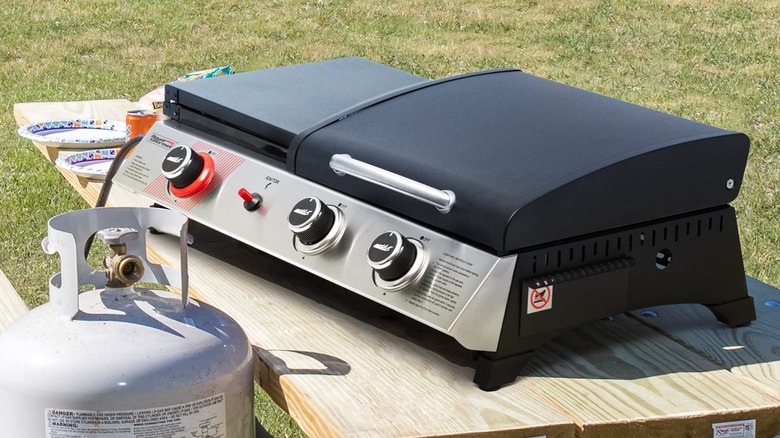
Your RV very likely has a built-in kitchen with a gas-powered oven and stove, where you'll probably do most of your cooking. However, it can get a little cramped in the kitchen, especially if you're sharing space with other people. You don't exactly have a ton of counter space for food preparation or much breathing room.
Whether you're camping or living in your RV full time, you'll probably want to cook outside every now and again. Communing with nature is part of the whole point. Sometimes that means hiking and taking in the beauty of nature in awe-struck silence, and sometimes that means grilling a burger beneath the wide open sky.
This Royal Gourmet 3-in-1 cooking station uses liquid propane (which you probably already have on hand in an RV). It has multiple cooking surfaces and a fold-out lid with a 10-pound load capacity, which doubles as counter space. There's also a collection of burners with a porcelain-enameled griddle for grilling, griddling, boiling, and more. The griddle also features an oil drip hole and a removable grease cup to simplify cleanup.
Power station
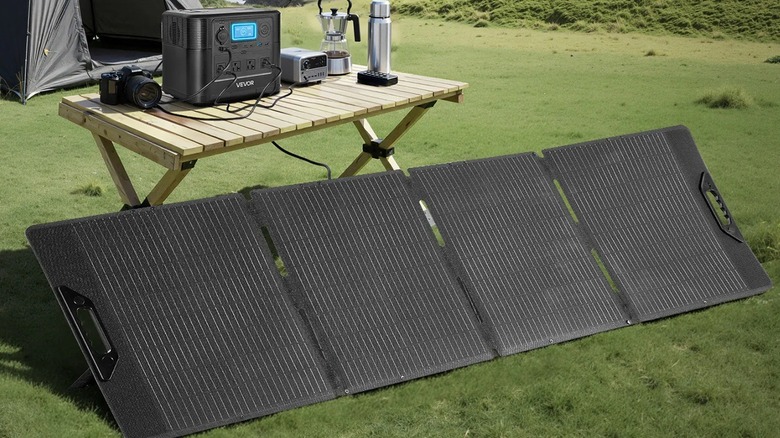
RVs are designed to give you several options for electrical power. If you have access to the grid, you can plug in directly and take advantage of continuous electrical power. Otherwise, RVs typically have a built-in generator that converts liquid fuel into electricity. There are some limitations, though. You need a steady supply of fuel, and generators tend to be noisy. By contrast, a solar-powered electric generator can help supplement your electricity budget. It can refill using sunlight and it's much quieter than a conventional gas generator.
The Vevor Portable Power Station has a capacity of 806Wh and a maximum output of 1,200W. The included 200W solar panel can charge the station in about five hours with good sunlight, or you can charge the power station by plugging into an outlet while you're connected to the grid. Charging it up before you head out for the weekend means you can take a doggy bag of portable power with you on the go.
It also gives you some extra outlets, which is a nice bonus because outlets can be hard to come by in an RV. With four 120V AC outlets, two USB-A ports, two USB-C ports, and a 12V car (cigarette lighter) socket, the station can power up to nine gadgets and appliances simultaneously.
Countertop ice maker

Everything in your average RV is a little smaller. Your living space is smaller, your kitchen is smaller, your freezer is smaller, and your patience is smaller. If you're the sort of person who likes ice in your drinks, do yourself a favor and get yourself an automated ice machine. It's unlikely you're ever going to be able to keep enough ice using trays. Depending on where you're parked, this might not be as much of an issue in the winter, but summers can get hot, and a countertop ice maker is a relatively small investment that will pay off immediately.
Lowe's offers a portable countertop bullet ice maker from Frigidaire, capable of producing up to 26 pounds of ice per day. Here's how it works. You fill a reservoir with water, and a pump pulls that water into an ice production trough. An array of refrigerated probes enters the trough, where ice freezes around them in a characteristic bullet shape. Once finished, the probes warm a little to release the ice into a storage bin.
The ice will start to melt immediately, but the melted water falls back into the reservoir, and if the ice ever falls below a certain level, either because it's melted or because you've used it, the machine kicks back into gear. As long as you keep the reservoir full, you'll have fresh ice waiting for you anytime you open the lid.
Adjustable stackable sewer hose drain support kit
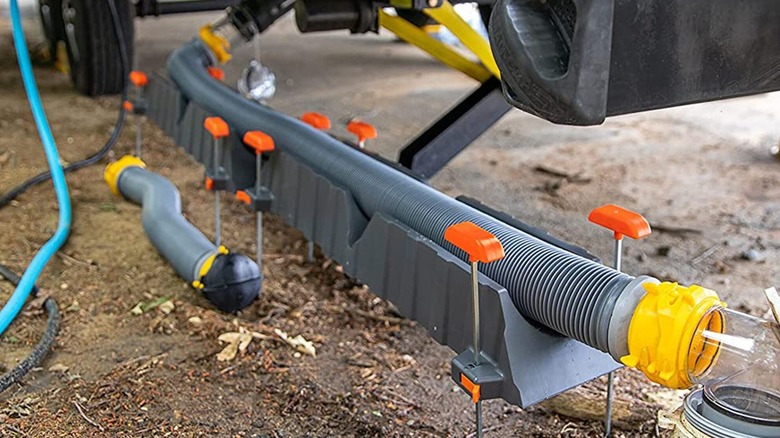
Nobody likes to talk about it, but we have to deal with sewage. Most of the time, if the miracle of indoor plumbing is working as designed, we usually don't have to think about where our waste goes. In an RV, you need to think about it just a little bit more.
You've got a couple of options. If you're totally off the grid, you can collect your waste in the gray and black tanks, then empty them at a designated site when needed. Alternatively, many campgrounds and long-term RV sites provide access to a septic tank or sewer system using an external sewer hose. In the latter case, it's important that your hose avoids kinks and low spots, keeping the flow consistently downward. A sewer hose that isn't laid correctly can create low spots, sags, clogs, leaks, and other problems you'd probably prefer to avoid.
Of course, smoothly laying your external sewer line is easier said than done, especially on uneven terrain, which is where these sewer hose cradles from Camco can save you some serious headaches. They come in a set of six, and once you've secured the stakes, you can adjust the height and angle of each cradle to create a smooth and even path for your RV's waste products without getting your hands too dirty.
Methodology, how we made our choices

I've spent a lot of time in and around RVs and campers, probably a little more than most people. Growing up, I spent weekends and summers traipsing off to parts unknown (usually some piece of forest or riverbank just off the beaten path) with my parents or grandparents. When nothing but wilderness is laid out in front of you from horizon to horizon, the camper becomes your headquarters, a home away from home.
There's always been a certain appeal to packing up the essentials, pulling up stakes, and putting everything familiar in the rearview mirror. For more than a year, I've lived in an RV full time, and I've learned quite a bit about how to do it comfortably, as well as some of the unique challenges that RV living brings.
Most of the products on this list are things I've purchased in the last year to make our lives a little bit easier. The storage ottoman stood up to almost a year of rain and outdoor abuse before giving up the ghost. The ice machine gets daily use, and the roof vent came in handy when a windstorm left only brittle shards of the old one attached to the frame. In the rare instance that I haven't used a product myself, it's been recommended by another trusted RV owner at SlashGear or elsewhere.