

Here's A Simple Way To Test If You Need A Dehumidifier In Your Garage Or Home
We may receive a commission on purchases made from links.
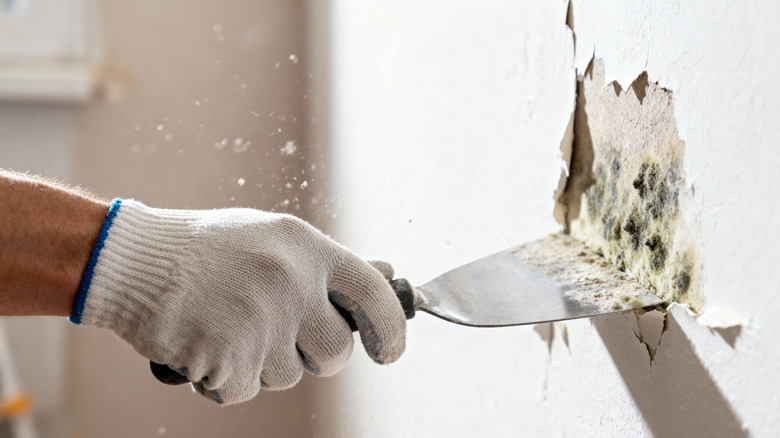
Managing the air quality in our homes can feel like a never-ending problem. On one hand, too dry environments can lead to infections and skin issues, like irritated eyes and throats. On other hand, humid environments can cause a whole other set of problems, creating a breeding ground for all sorts of bacteria and mold, and potentially damaging furniture, paint, and even electronics.
Depending on the season, the best humidity levels will vary. On average, Save on Energy recommends keeping your humidity at around 35% during the winter season and 55% during the summer. These days, many smart thermostats brands are designed to give a holistic view of the air quality in your home, including humidity. But if you don't have the budget for it yet, there are simpler ways to know if it's time to buy a dehumidifier, such as paying attention to the moisture on the walls.
One of the most important steps to managing moisture on the walls is knowing where it's actually coming from. This is to make sure you're aware of the actual problem, so you can take the appropriate steps to solve it, since there can be multiple reasons why a wall is having condensation. In the past, we've talked about how aluminum foil can be a great solution to line your toolbox, but did you know it could also be used to check the humidity source?
How to use aluminum foil to find the moisture source
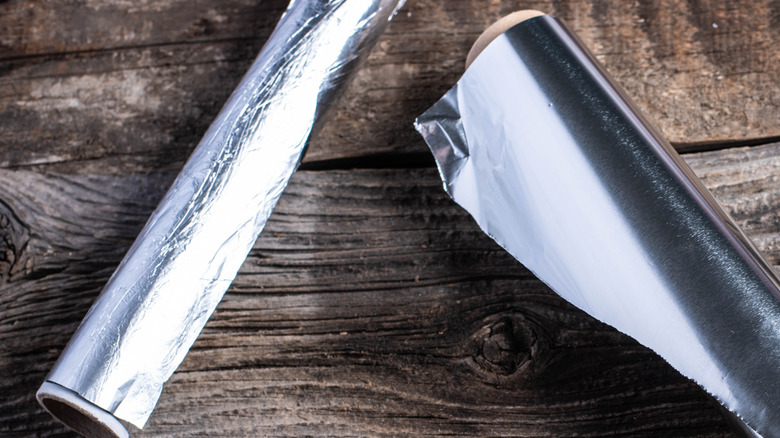
To understand where moisture is coming from, you'll need aluminum foil, tape, scissors, and a rag. Once you get a hold of these, find an area in the room you want to test and dry it completely with a rag or even a hairdryer. Then cut a piece of aluminum foil. It doesn't have to be a huge piece, but large enough that you can comfortably tape the edges to the wall while having space for the middle to be exposed to the air. Firmly tape the sides of the aluminum foil so there are no gaps that air can slip through, and then leave it alone for a few hours. While there's no hard and fast rule for how long you should do this, a good rule of thumb is 24 hours.
Once enough time has passed, you can check both sides of the aluminum foil for clues. Depending on what side the moisture is, you can determine whether you need to address moisture from inside the walls or outside of it. Should the condensation be found with the side facing the wall, it's possible that you need professional help to fix insulation or structural problems. If the moisture is on the side of the aluminum foil facing the open air, you can address it with dehumidifying solutions.
Dehumidifying solutions for your house
Depending on the degree of the humidity problem and the size of the room, you have several possible dehumidifying solutions that you can choose from. For example, in smaller rooms, like closets or laundry rooms, you can use something like the DampRid Hanging Moisture Absorber. For $15.99, you can get a pack of three, with each one lasting up to two months. Alternatively, for mid-sized spaces like bathrooms, there are humidity absorber boxes, such as the 32 ounce Vacplus Portable Absorber Boxes, which retail at $64.99 for a pack of six.
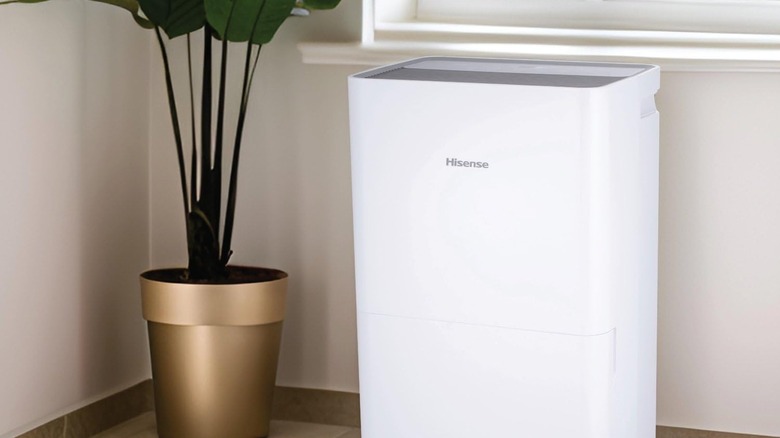
And of course, if you want a more long-lasting solution around the same price point, there are small machines like the $59.99 Tabyik 35-ounce dehumidifier, which can pull moisture from spaces up to 280 square feet. For larger spaces, you can grab a Hisense dehumidifier, made for rooms up to 4,500 square feet, and a highly rated appliance you can get on Lowe's. Just make sure to be mindful about using it, since it could spark a fire if you don't regularly clean it or place it in the wrong location. It's also a good idea to check reviews, since there have been recalls even from reputable brands.
Apart from investing in dehumidifying solutions, you can also practice simple habits to reduce dampness like ventilating the kitchen when cooking, opening bathroom doors after hot showers, not drying your clothes indoors, and regularly opening your windows to let fresh air circulate.