

4 Midsize Pickups With Better Ratings Than The Chevy Colorado
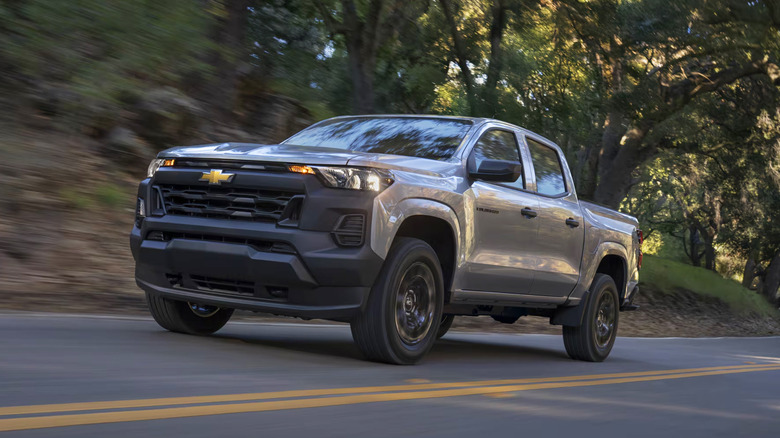
It's definitely safe to say the mid-size pickup segment is one of the most competitive in the industry at the moment. Right in the mix with the best trucks is the Chevrolet Colorado, which has made some serious strides since it entered its third and current generation in 2023. Looking at the spec sheet, the Colorado doesn't really lag behind in any department, producing a solid 310 horsepower and 430 pound-feet of torque from its 2.7L TurboMax inline-four.
The Colorado isn't the most luxurious mid-size truck, but it still covers all bases well and makes sure it performs as a work truck. When it comes to ratings, the main competitors, for the most part, are very close to each other, with outlets such as Car and Driver, Edmunds, and Consumer Reports all giving the Chevrolet competitive scores across the board. The strong powertrain is often highlighted alongside the intuitive cabin technology led by the 11.3-inch touchscreen, as is the standout 7,700-pound maximum towing capacity. However, some other vehicles in the segment still manage to creep ahead overall. Here's a look at four of these mid-size trucks that get better ratings than the Chevrolet Colorado.
2026 Toyota Tacoma
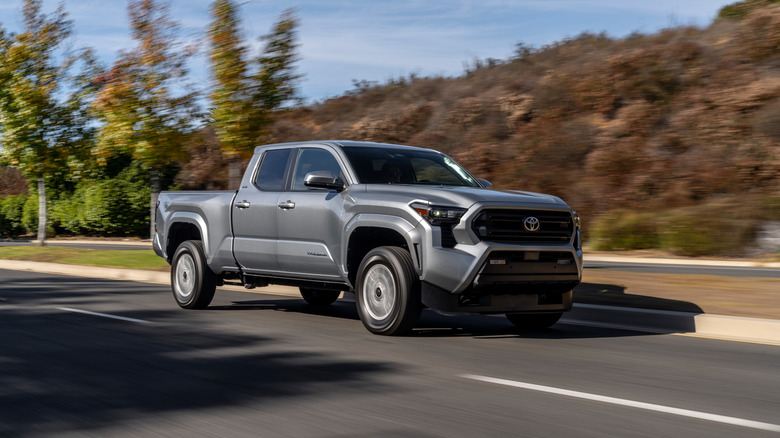
In 2026, as it has for years now, Toyota's mid-size competitor has come with a variety of different trim levels, with the Tacoma offered in 11 different options over the Colorado's six. You get some like the Limited trim that maximize luxury and comfort, with others, such as the various TRD models, being some of the most well-equipped off-roaders you can get in the segment.
Edmunds places it as the second-highest-rated mid-size pickup you can buy today. Car and Driver also rating the truck highly, with only the Ford Ranger receiving higher accolades from the outlet. When it comes to reliability, the Tacoma unsurprisingly helps keep Toyota's reputation rolling in this area, being named the most reliable mid-size truck in J.D. Power's Vehicle Dependability study. The base 2.4L engine only produces 228 horsepower, but higher trims get more at 278 horsepower. Another big bonus with the Tacoma is the hybrid option that delivers 326 horsepower and 465 pound-feet of torque, available with the TRD Sport, TRD Off-Road, and Limited trims.
Looking at pricing, the two are incredibly close in their base guises, with the Tacoma starting at $32,445 with a $1,745 destination charge. You do lose out on the rear seats with the base Tacoma's XtraCab, though, and you'll need to spend at least $37,305 to get the double cab layout. The trade-off is the extra bed space (up to 6 feet), in the two-seat configuration.
2026 Honda Ridgeline
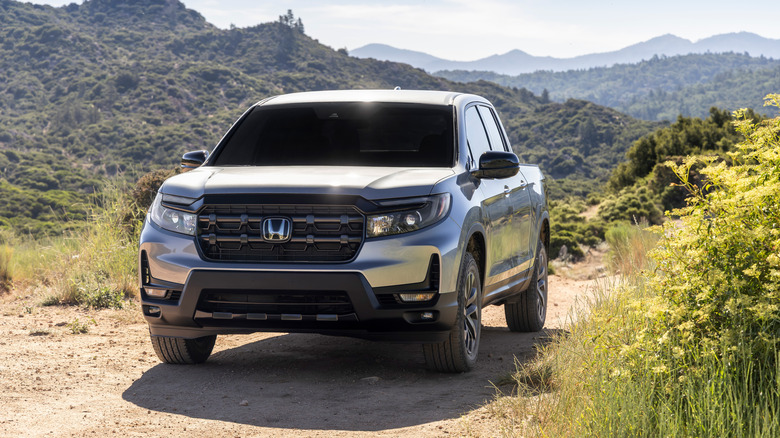
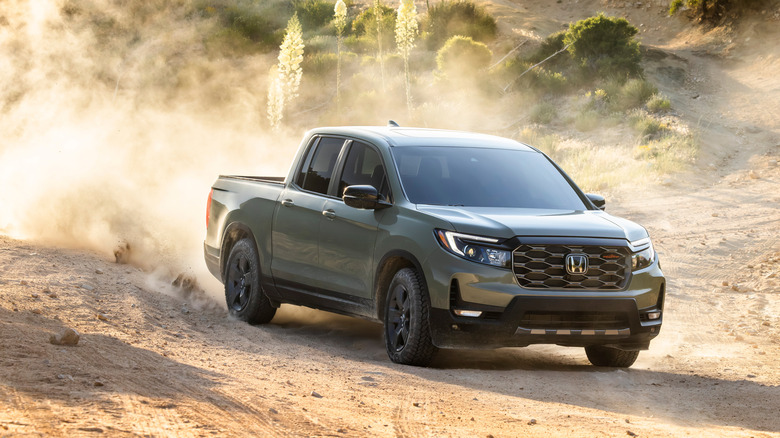
Similar to the Colorado, the Honda Ridgeline is another truck to offer just one configuration: four doors with a 5.3-foot bed. So the two are essentially the same in this area, but instead of using an industry-standard body-on-frame platform for its truck, the Ridgeline uses a unibody construction. While this does hamper it in some areas, it excels in one specific way that earns it consistent, strong ratings.
By practically being an SUV with a truck bed, the Honda Ridgeline's unibody makes for a much more pleasant vehicle to drive. As per Edmunds, this is the truck to buy if a smooth driving feel is paramount, sitting just behind the Tacoma in the outlet's segment rankings in third place. Consumer Reports also gives it the best score for the road test by quite some margin, keeping well in touch across the board. In our review of the 2026 model year Ridgeline, the handling was one of the main selling points for us, as well as the cabin quality.
The trade-off for this truck, though, is that you won't be able to tow as much as most other vehicles it competes with. With the Ridgeline, the standard and maximum towing capacity sits at 5,000 pounds, which isn't terrible, but notably far off from the Colorado's 7,700-pound maximum. However, the 1,500-pound payload capacity is right up there with the leaders, which gave it a few more bonus points when we got to drive the truck.
2026 GMC Canyon
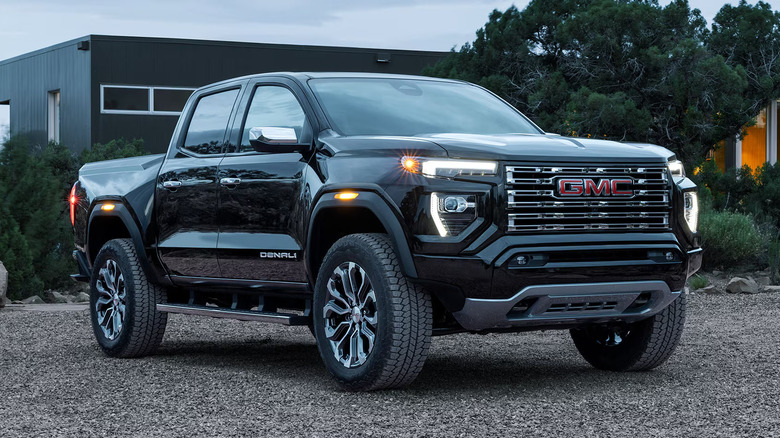
When comparing the ratings for the Colorado with the GMC Canyon, the two are almost neck and neck with each other. This isn't much of a surprise, considering General Motors puts them both on the same platform. They use identical core mechanical components, such as the TurboMax engine producing 310 horsepower and 430 pound-feet of torque, along with the eight-speed automatic transmission as the sole choice. The lack of options does mean the Canyon also falls short behind others in the segment, but it still delivers solid base power to also tow 7,700 pounds and carry up to 1,803 pounds in its five-foot bed.
With outlets such as Consumer Reports and Edmunds, the Canyon gets the same scores as the Colorado, but U.S. News & World Report prefers the GMC, even if it comes out ahead by a hair. Inside, the core technology is also similar between the two, with an 11.3-inch center touchscreen being the main feature. However, for its higher $38,900 starting price, the Canyon gets a few more standard tech features that help earn its slightly higher rating, some of which extend outside the cabin. One of the highlights is the ProGrade Trailering System, which gives you the clearest view and details for what you're towing through the app. As you climb the trims, the increased focus on luxury becomes even more apparent. If you want a ZR2-style Canyon, the AT4X trim is more than capable with sacrificing the cabin quality.
2026 Ford Ranger
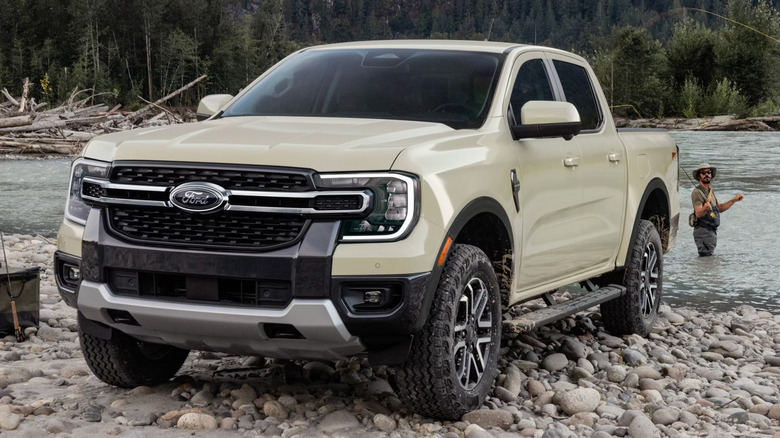
As for the Colorado's American rivals that aren't built under the same conglomerate, the Ford Ranger has been giving the Chevrolet a run for its money since its mid-size return in 2019. While the older, smaller iteration of the Ranger is still a great truck to be considered used, the increase in size and subsequent practicality make for one of the most well-rounded pickups you can buy at the moment.
With Car & Driver and Edmunds, the Ranger comes out as the best mid-size truck. Our review of the 2024 model (which is still pretty much the same truck as the newest one) earned a 10/10 score as well in its XLT guise. In particular, the generous amount of standard features, especially the technology, pushes the truck to reach these scores. Safety tech is a big focus for most Ford nameplates, with the much-loved Co-Pilot360 coming as standard across all trims. The driving comfort is also noted by reviewers, although Consumer Reports' road test score is below the Colorado's.
The standard 2.3L EcoBoost inline-four engine that you get with the lower trims is slightly down on power compared to the Colorado, producing 270 horsepower and 310 pound-feet of torque. As you move up the trim levels, though, more engine options unlock, such as the 2.7L producing 315 horsepower and 400 pound-feet of torque. The top-spec Raptor gets a 3.0L engine boosting the output to 400 horsepower, making it feel like a different truck entirely.
Methodology
To select the trucks used for this list, we looked at a variety of sources that have tried and tested each model, including Consumer Reports, Car & Driver, Edmunds, and in-house reviews by SlashGear. We made sure that each truck comes out ahead of the Colorado based on average scores, taking into account aspects like driving experience and reliability.