

Common Problems With Stihl Weed Eaters That Owners Have Experienced
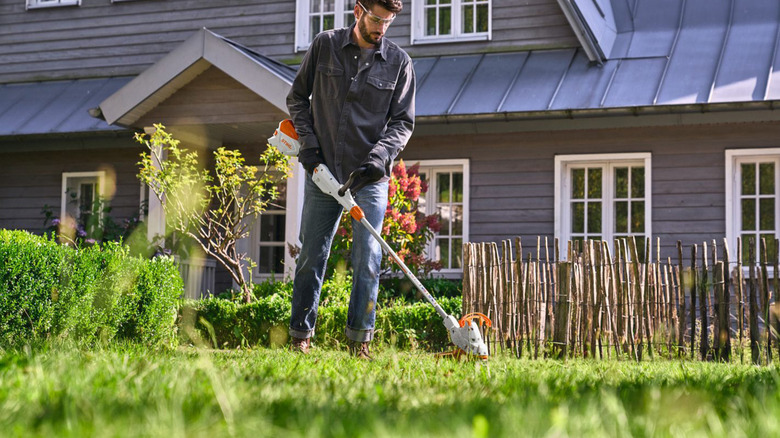
It's no secret that Stihl makes some of the best string trimmers that money can buy, and even its less expensive models are still really good. The brand is known for its reliable yard and outdoor power tools, and its products are generally used by professionals and homeowners alike. It's not uncommon to see Stihl products rank near the top of many tool roundups, including lists of the best chainsaws. With that said, no product is perfect, and from time to time, you may find that your Stihl string trimmer is causing you some trouble. As with most things, some problems are more common than others and are things that owners wrestle with semi-regularly.
Problems can arise for a variety of reasons. Gas-powered string trimmers have a maintenance regimen that has to be followed, or else the trimmer may develop some problems. Stihl's battery-powered string trimmers are also not immune to the occasional hiccup. It should also be said that sometimes issues are caused by the owner, as there are some things that people do with their string trimmers that they shouldn't be doing. Whatever the cause, problems arise, and they can be fixed.
So, if you're having some trouble, or you're wondering what kind of trouble you might run into with a Stihl string trimmer, below is a list of common issues based on what Stihl says on its FAQ page, along with discussions on social media and forums, as well as their most common fixes.
String trimmer doesn't run at full speed
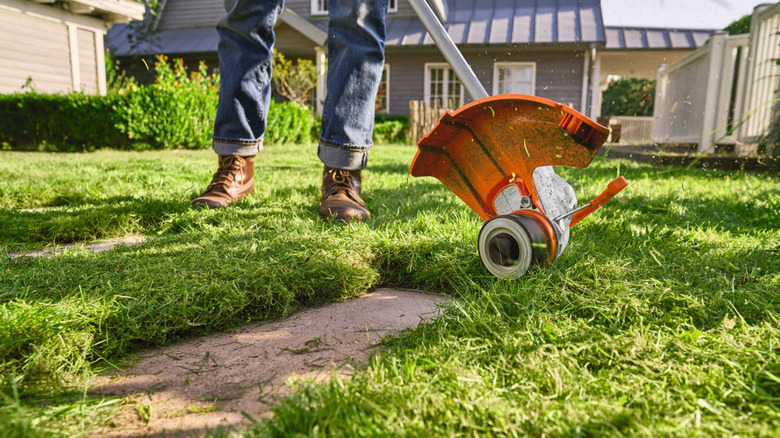
Per Stihl, this is something that can happen often enough that the brand includes this problem toward the top of its FAQ page. The problem is described as being able to start and idle the string trimmer normally, but the trimmer never ramps up to full throttle and therefore does not cut grass or weeds effectively. Conversely, another fairly common problem is that the string trimmer will only remain on and functioning if it's at full throttle.
There are several potential causes for this, and they are all in the fuel system. Stihl says that the first thing you should do is check your fuel mixture. The brand says that you should never store fuel mix for longer than 60 days, so if it's your first string trim of the year, you'll want to drain the old fuel and replace it with fresh fuel. All of Stihl's gas-powered equipment uses a fuel-to-oil ratio of 50:1. Improperly mixing fuel and oil can also cause this problem.
Barring that, the common solutions for almost any problem like this are to check the spark arrester screen in the muffler to see if it's clogged (and clean it if it is), check or replace the fuel filter, and check or replace the air filter. You'll also want to check the spark plug and remove any excess carbon, just in case. If the problem persists, Stihl recommends sending it in for service.
Bumping the trimmer doesn't produce extra string
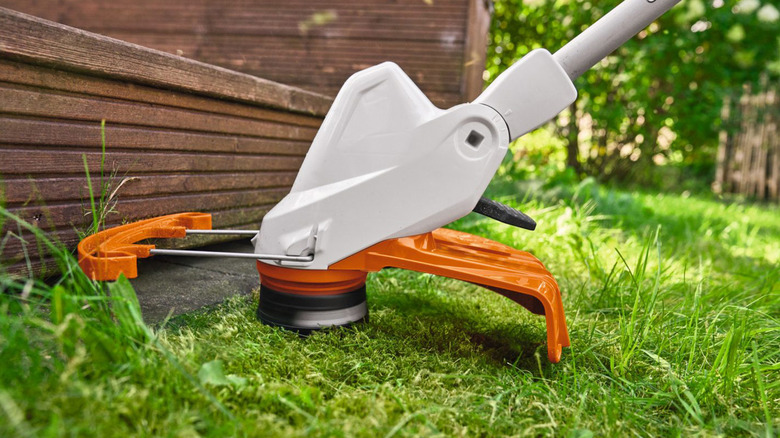
For the uninitiated, bumping is the act of running your string trimmer at full throttle and "bumping" the bottom of it against something hard like a brick wall or a concrete sidewalk. The centrifugal force pulls fresh string out from the head of the string trimmer, allowing you to keep cutting. This is a popular design on many big-name string trimmers. A common issue on Stihl trimmers, and to be fair, on many trimmers, is that you don't get more string when you bump the trimmer.
This can be caused by all sorts of potential problems, but they all revolve around the same part, the head of the string trimmer. You may be out of string, in which case you'll need to load more into your existing head, a process that Stihl outlines here. The head may also be damaged or jammed, which would require you to take it apart to check for jams or broken pieces. This is largely the same process as replacing the string, except this time you're looking for broken parts or a clog that you can clear.
The most expensive, but easiest, way to fix basically any bumping or string trimmer head issue is to simply buy another head. Stihl sells these for nearly all of its trimmers, and they come with string pre-loaded. You should at least try to re-string your own trimmer head first, though, because it is much cheaper.
The string trimmer head is locked up
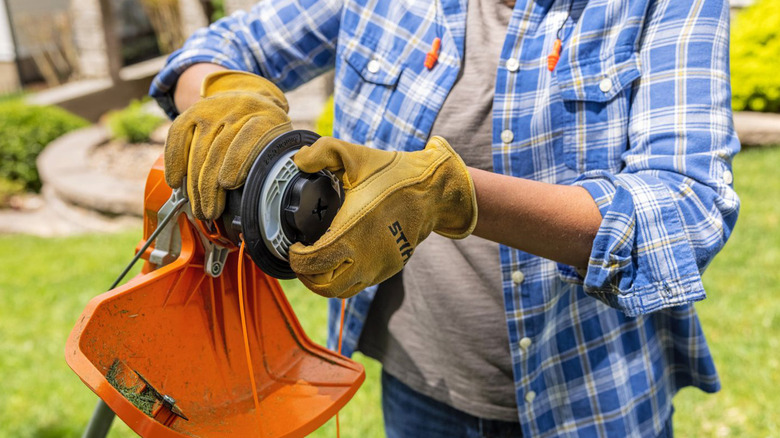
It may seem like this is the same issue as the one above, but it is a different problem. In this case, people sometimes complain of a head that is locked up. That means you hit the throttle and the head doesn't spin. This effectively stops the string trimmer from being able to cut anything since the string remains stationary. People may refer to this problem as the head seizing or locking up, which can be caused by several different potential issues. Replacing the head or replacing the string doesn't fix this one.
The problem tends to come from a couple of different places. First, it's possible that you used straight gasoline instead of a gas and oil mixture (which is necessary for most two-stroke yard tools), which can cause the engine to seize due to a lack of lubrication. The solution here is to take it apart, clean it, use the proper fuel mixture, and then try again. Another common problem is a malfunction of the clutch mechanism, which may cause the head to stop spinning if the clutch can't engage. Again, this includes disassembling the trimmer, cleaning it, repairing any damage (if you can), and then seeing if that worked.
There are some YouTube videos that show how to do this. However, if you're not mechanically inclined, the best option is to send it to Stihl for service.
A battery-powered string trimmer won't run
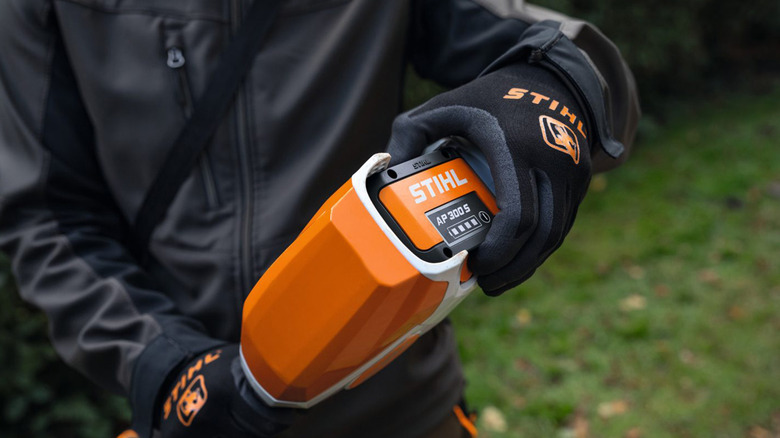
For those who go with a battery-powered Stihl string trimmer, you are not immune to having common issues of your own. A fairly common complaint is that people will insert the battery into their string trimmer, and it'll just flat not work. You'll hit the button to start it, and it simply won't do anything. This can also happen to gas-powered string trimmers, but the reason is usually an incorrect fuel mixture or a flooded engine, which we'll get to shortly.
Battery-powered Stihl string trimmers have a few different things that can cause them not to start. The first, and most obvious, is that the battery might be dead. Take it out of the machine and put it into a charger for a bit to see if that helps. Barring that, there are two other common problems. The first is that Stihl uses a unique two-click battery system. If you don't fully seat the battery with both clicks, it will not run, so give it another push to see if you get that second click. The other is that debris may make its way between the battery and the contacts, so clean out the battery connector area to see if that helps as well.
One less common problem is debris getting inside the machine and getting jammed in a switch that connects the battery power to the rest of the machine. You can disassemble the unit and clean it out to fix that one if it's happening to you.
The string trimmer is flooded
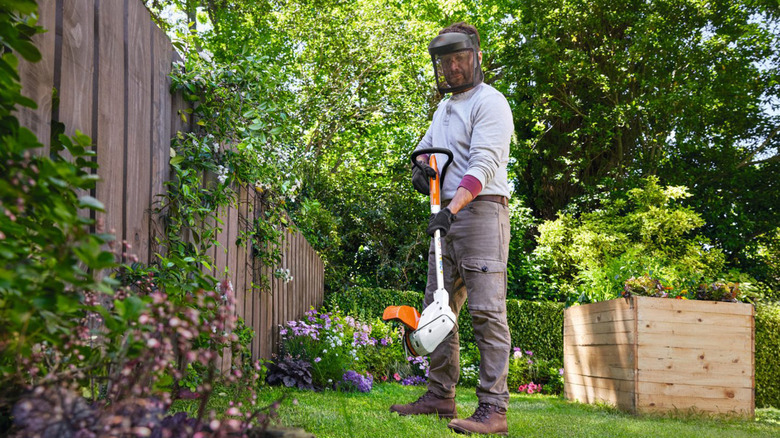
Anything with a gas engine can flood, including cars and other heavier machines. A flooded engine occurs when there is too much fuel in the combustion chambers of the motor. This makes the fuel-air mixture too saturated with gas, preventing combustion and causing your machine to simply not start. This can happen to any engine, but it most commonly occurs in engines that have a carburetor, which gas-powered Stihl string trimmers have. It can be caused by over-priming the engine before starting it, a carburetor malfunction, or even cold weather.
The fix generally requires you to find the cause. In my experience, most flooded engines are caused by over-priming. To fix that, you can simply wait for a little while. The excess fuel will evaporate, and then you can try again. From there, leave your Stihl string trimmer's throttle lock on (this gives the engine more air), and try again without engaging the choke or priming the engine again. You may have to pull the cord repeatedly, but most of the time, this will fix the problem.
If it does not fix the problem, the problem is most likely the carburetor or the motor itself. In that case, your best bet is to fix it or, if you're not mechanically inclined, send it back to Stihl for repair.