

5 Old-School Maintenance Habits That Still Work For Modern Cars
There's no denying that the invention of the automobile forever changed the world. In the days of horse-drawn power, many people stayed within miles of home for most of their lives. Cars led to suburban sprawl, and industry evolved to match the explosion of change. Suddenly, society required gas stations, motels, functional roads, and highway systems. Mass production of automobiles began in the early twentieth century, and soon Americans were learning how to care for their new machines.
Your parents or grandparents may have taught you how to maintain a car when you were learning how to drive. For years, drivers were taught to change the oil every 3,000 miles, replace the spark plugs on a regular schedule, and perform regular tune-ups. But automobile technology has changed drastically over the last 50 years, and we're not just talking about the addition of seat belts and navigation. Modern spark plugs last 100,000 miles or more, fuel injection systems eliminated the need for mechanical carburetors, and sealed, self-adjusting components saw the end of tune-ups for lubrication purposes. But that doesn't mean that all of the advice you received from the older generations is obsolete! Your car is still a hard-working machine that needs regular upkeep to ensure its safe and smooth performance. Here are five old-school maintenance habits that still keep modern cars running.
Rotate tires
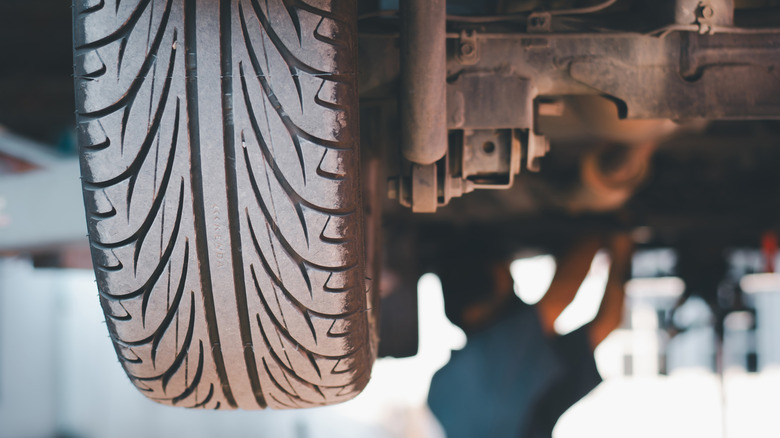
Tires represent one of the most substantial investments in routine vehicle maintenance. The average cost for a single new tire is more than $200, not including installation fees, so many drivers end up paying $1,000 or more for a full set. After spending so much money, you want those new tires to last for as long as possible. One way you can protect your investment is by rotating your tires regularly.
Your dad or eccentric old uncle probably told you that rotating your tires extends their life and helps keep you safe, and they're not wrong. Depending on your vehicle and the type of tires you have, rotating either means moving them from front to back, side to side, or in a diagonal rotation pattern. If you fail to rotate your tires, they may wear unevenly. Your front tires typically handle more braking and, in front-wheel-drive cars, traction, so they tend to lose tread more quickly than your rear tires. If your car isn't perfectly aligned, the tires may also wear unevenly, which can affect both the smoothness of your ride and the life of your tires.
Consumer Reports recommends that you rotate your tires every 5,000 to 7,500 miles. You can often return to the specialty shop or mechanic where you originally had the tires installed, or make an appointment at a national chain like Pep Boys or Meineke.
Follow the 30-60-90 rule
Most modern cars offer a long list of dashboard notifications intended to alert you to problems and required services. Instead of running out of windshield washer fluid at the worst time, your car probably flashes an alert when it's low. If one of your tires is underinflated, you'll see that funny little horseshoe with the exclamation point. Your car will even tell you when manufacturer-recommended maintenance is overdue. Most experts, however, advise drivers not to rely solely on these automated alerts.
Following a regular maintenance schedule can help you avoid problems before they even begin and keep your vehicle running smoothly. The 30-60-90 rule breaks down that schedule into intervals of 30,000 miles, 60,000 miles, and 90,000 miles. Of course, you should always check your owner's manual for the recommended maintenance schedule, but the 30-60-90 guideline is a good frame of reference.
At 30,000 miles, automakers may recommend replacing filters and inspecting the brake system, including pads and rotors. However, you should rotate your tires every 5,000 miles or so. Once you hit 60,000 miles, recommended services may include inspecting the fuel and ignition systems, replacing transmission fluid, inspecting drive belts, and flushing the coolant system. If you still own your vehicle at 90,000 miles, you should expect a mechanic to examine major components such as engine mounts, suspension, and wheel bearings; check spark plugs and the battery; and inspect all fluid systems.
Inspect and replace wiper blades
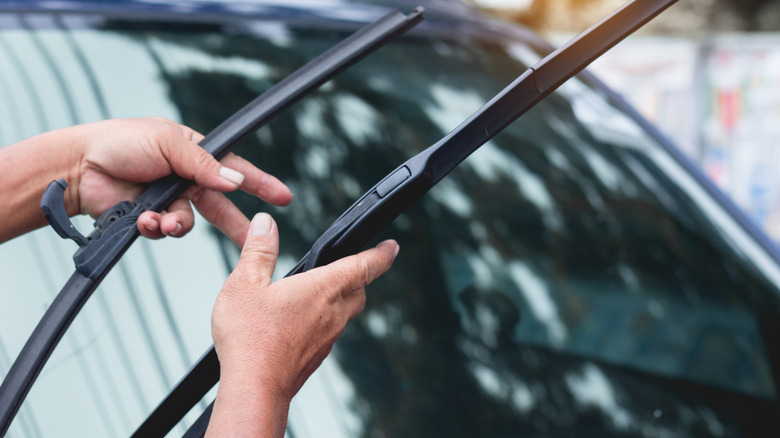
Windshield wiper blades are a vital part of your car's safety system, yet we typically don't think of them that way. Almost everyone knows to change their vehicle's oil regularly and replace the tires when they get too worn, but you may ignore your wiper blades until one day it starts to rain and you realize they don't really work anymore.
Old or damaged wiper blades are more than an annoyance; they are a serious safety hazard that can increase the chances of an accident in wet weather. Functional blades keep your windshield clean and streak-free, improving visibility. If your wipers are leaving behind smears after each wipe or skipping across even a wet windshield, it may be time for a new set. Old wipers may also squeak when in use and work unevenly.
To keep your wipers in good working order, AAA recommends that you inspect them every six to 12 months and examine the rubber for cracks or sections that have hardened. If it's time to replace them, check your manual to see what size you need. Many vehicles use two differently sized blades. You can purchase new wipers from online retailers like Amazon, big-box retailers like Walmart, or visit an auto-supply store like AutoZone or NAPA. If you don't feel comfortable replacing the blades yourself, many auto parts stores offer this service. Your local mechanic may be able to help, or the dealership where you bought the car can often order and install the blades for you.
Washing your car by hand
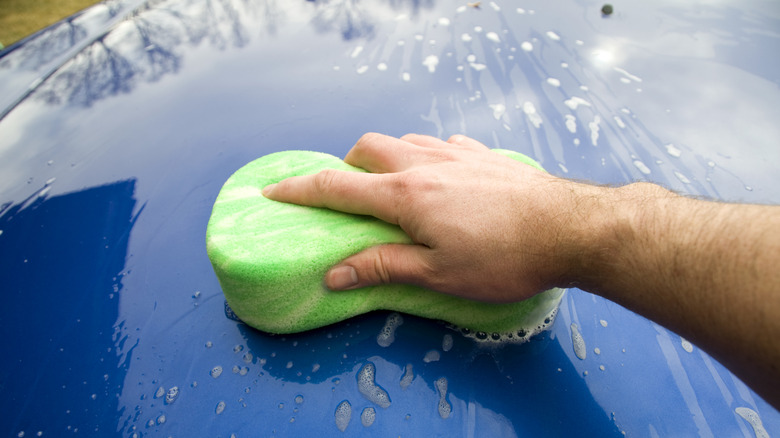
It feels like there's an automatic car wash on every corner these days, and these services do have their perks. It's extremely convenient to pull in, sit back, and let a machine do all the hard work. Your local municipality may have rules and regulations regarding water usage or soap restrictions, but you may still want to consider taking the time to give your car that special at-home treatment — just check the rules first.
Automatic car washes often miss those hard-to-reach spaces or don't sufficiently clean some surfaces, like the inside of the wheel wells or intricate grilles. Handwashing gives your vehicle a deeper, more thorough clean, focusing on the areas that need the most attention. Washing your car by hand also helps protect the paint. While automatic car washes are typically safe, they don't always remove abrasive material like road salt or sand, which can be tough on the finish. Car washes with brushes may also cause tiny scratches that may not be obvious to the naked eye, but have damaged your paint.
Finally, washing your car at home allows you to select your own products and avoid harsh chemicals that may not be the best choice for your car's paint. While an automatic car wash is typically considered more environmentally friendly, you can take steps to make home washing more eco-friendly. Choose a biodegradable soap, use a bucket and a hose with a shut-off spray nozzle, and wash your car on the grass to lessen the runoff into your local waterways.
Regularly inspecting belts and hoses

This old-school habit really does sound antiquated in the era of computerized cars, but no matter how high-tech your ride is, you'll still find a range of belts and hoses under the hood. Components like the air conditioning compressor and alternator may rely on a serpentine belt, and some vehicles also use a belt-driven power steering pump. Depending on the vehicle, your engine may use a timing belt or timing chain, and your vehicle's cooling system needs radiator and coolant hoses. In the winter, your heating system makes use of heater hoses, and of course, your car won't function without brake and fuel hoses!
To help ensure the belts and hoses stay in good working order, you should inspect them regularly, at least the ones you can easily see. You can also use your ears – if you hear a squealing, hissing, or chirping sound, it may indicate a problem. Look for leaking hoses, and check the belts for frayed edges, cracks, or loosen tension. Inspecting under the hood helps you find problems before they become a serious issue that can potentially stop you in your tracks and lead to expensive repairs. Replacing a belt or hose is likely much less expensive than replacing both the part and fixing any damage caused by the failure. A well-maintained vehicle also offers a smoother, more comfortable ride.
How we selected these old-school habits

To select these old-school maintenance habits, we focused on conventional practices that were commonly recommended before the era of modern, computerized vehicles. New technology has allowed some habits to go by the wayside — for example, changing your oil every 3,000 to 5,000 miles or manually lubricating joints and fittings. But many maintenance habits are still required and recommended by mechanics and other experts.
We defined "old-school" as timeless car care that has been passed down for generations. Depending on your age, your parents or grandparents may have given you this advice. These are tried-and-true habits that have kept vehicles running for decades.