

4 Common Problems With V6 Engines
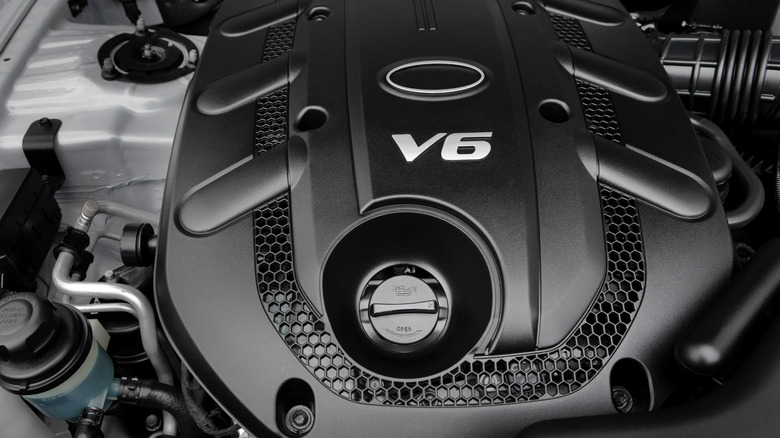
A V6 engine arranges its six cylinders in two separate banks of three, typically angled at 60 degrees relative to each other, with both banks sharing a single crankshaft at the bottom. That two-bank layout is what separates it from an inline-six, which lines all six cylinders in one row. The V configuration exists primarily because of packaging: folding six cylinders into a V shortens the length of the engine nearly in half compared to an inline-six, which is why V6s fit easily in transverse, front-wheel-drive platforms where an inline-six simply won't go.
That compactness helped the V6 dominate the six-cylinder market for decades. As automakers pushed toward front-wheel drive through the 1980s and 1990s, the inline-six's length became a liability and the V6 filled the gap across everything from family sedans to sports cars and trucks. Today, V6 engines still power a wide range of vehicles, from performance coupes to full-size pickups, though turbocharged four-cylinders are eating into the segment from below while inline-sixes are making a comeback at the top end.
Some of the worst V6 engines ever made illustrate just how badly things can go when the layout's inherent weaknesses aren't properly engineered around. Like any engine layout, the V6 carries a specific set of engineering tradeoffs baked into its design, tradeoffs that show up as real-world problems regardless of the manufacturer building it.
Inherent balance problems
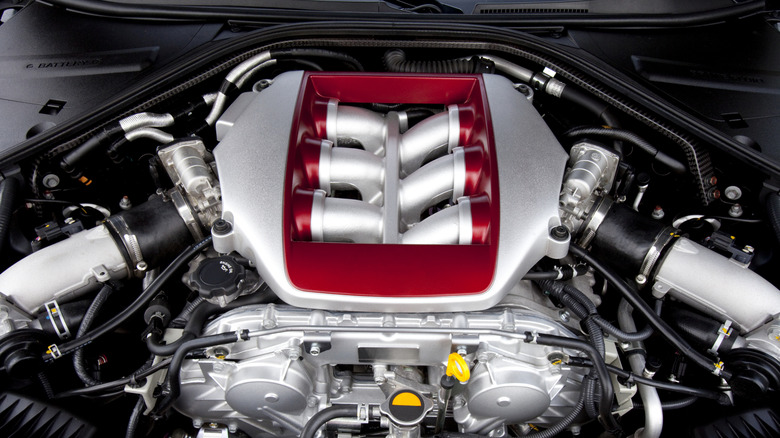
One of the reasons why an inline-six is better than a V6 has to do with how inherently balanced it is. When the pistons move up and down on an inline-six, the forces can be balanced by opposite pistons going up and down at the same time. So, when the furthermost piston fires, the closest one balances out the force. In a V configuration, that is not possible since the pistons are arranged in two rows, and for a V6 to achieve similar levels of smoothness, it requires balancing shafts.
A V6 produces vibrations that travel through the crankshaft. This is why automakers added balance shafts as such vibrations can affect engine efficiency. These add weight onto the engine and require a small amount of engine power to spin and balance. The problem can often be exacerbated as the engine's size increases because more of those balancing components are necessary and because the forces at play are stronger.
The National Academies Press, in its assessment of fuel economy technologies for light-duty vehicles, states that balance shafts "add parasitic losses, weight, and rotational inertia, and therefore have an effect on vehicle fuel efficiency." In other words, the engine has to spend some of its own output spinning components whose only job is to cancel out vibration the layout created in the first place. All in all, this is a problem rooted in the V itself. Even larger V8 engines need balancing to achieve a level of smoothness akin to the inline-six.
Valvetrain complexity and cost
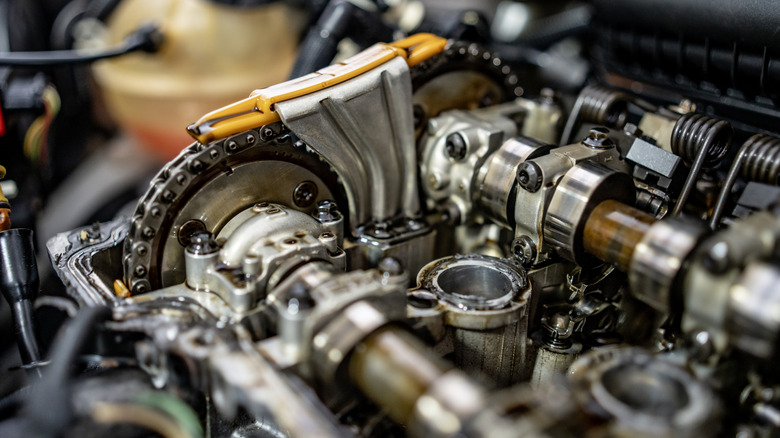
A V6 splits its cylinders across two banks, and that split doubles many associated components that sit on top of the engine. An inline-six needs only one cylinder head to cover all six cylinders, whereas due to the two separate banks, a V6 needs two of each. Something like a DOHC V6 can even run four individual camshafts and up to 24 valves total, versus two camshafts on a DOHC inline-six covering the same six cylinders. That is a fairly big difference in terms of overall complexity.
In other words, that's twice the timing hardware, twice the valve cover gaskets, twice the head gaskets, and twice the camshaft seals, all of which eventually wear and need attention. It is a similar dynamic to how inline engines compare to boxer engines, where the latter also require more components due to how the cylinders are laid out. At rebuild time, that parts count has a direct dollar and complexity consequence.
Because of this, a V6 rebuild runs higher than an inline-six rebuild of equivalent displacement, specifically because of the additional heads and camshafts the layout requires. Two cylinder heads mean the engineering time required to finish a single head is doubled. On top of that, the extra camshafts, timing components, and assembly labor hours significantly increase a V6 rebuild cost.
Turbo packaging difficulty
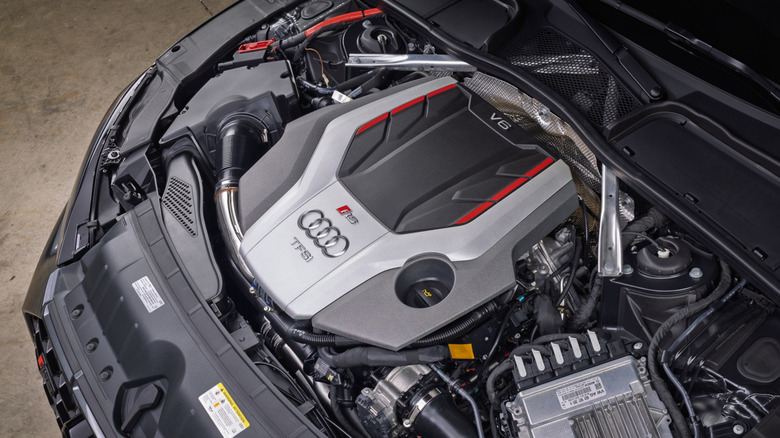
Bolting a turbo onto a V6 or any other V-configuration engine is a more complex engineering task than doing the same to an inline-six, and the core reason is that the V layout creates two competing problems at once — width and heat. In a conventional cold-vee twin-turbo setup, a turbo sits on the outside of each bank. On most V engines, the intake manifold occupies the valley between the two banks, putting it directly above the engine's heat source.
A warmer intake charge is a less dense one, and density is what makes power. In a conventional turbocharged V engine, the intake manifold sits exposed to heat rising off the engine below it, which is exactly the condition that drives intake temps up. The cylinders end up receiving air that is already heat-soaked before combustion even begins. The hot-vee configuration exists as a direct fix for both problems, moving the turbos into the valley between the banks and flipping the gas flow so intake manifolds sit on the colder, outside part of the engine.
There is also a fire risk baked into the conventional V layout that no turbo repositioning solves. With fuel injectors on both sides of the engine, a single failed O-ring can drip fuel directly onto a hot exhaust manifold, creating an ignition risk that an inline-six avoids entirely by keeping intake and exhaust on opposite sides of a single bank.
Bank angle compromises
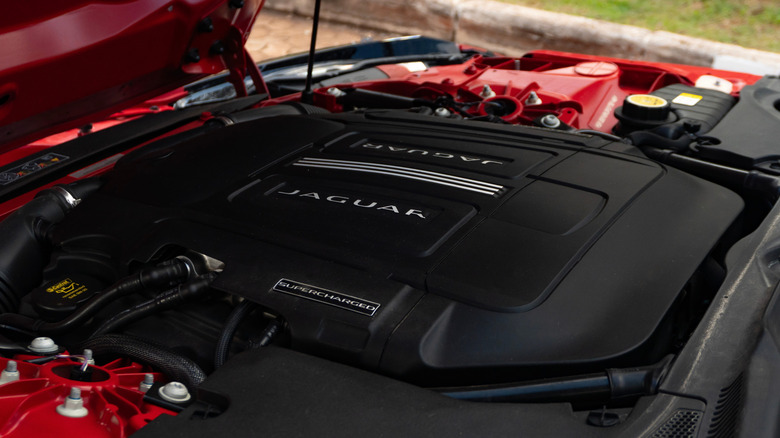
Not all V6 engines are created equal, and one of the most consequential decisions in designing one is the angle between the two cylinder banks. A 60-degree bank angle is a preferred configuration for a V6 because the firing intervals, which occur every 120 degrees of crankshaft rotation, are evenly divisible by 60, keeping firing forces balanced. A 90-degree V6 doesn't have that mathematical advantage, and the result is uneven firing intervals that generate vibration the engine's geometry cannot cancel on its own. The Jaguar V6 built on a V8 block is a real-world illustration of this.
The 90-degree configuration exists primarily for cost reasons, not engineering ones. That is exactly the reason why Daimler replaced inline sixes with V6 units in the 1990s . The idea was to be able to share the same arhitecture from the V8, but that did come at the cost of refinement. A 90-degree V6 needs to be balanced to smooth out the uneven firing intervals that the layout inherently produces.
Mercedes eventually acknowledged the problem directly by redesigning their V6 from scratch. Their M272 engine used a 90-degree bank angle; its M276 replacement switched to 60 degrees. Per MotorReviewer, "the M276 engine block has a 60-degree V-angle that allowed eliminating a balance shaft in the design," with the 90-degree M272 being the explicit point of comparison. That a manufacturer of Mercedes-Benz's caliber spent the resources to redesign a complete engine family around the bank angle says everything about how real the problem is.
Methodology
We focused exclusively on problems that are inherent to the V6 layout itself, meaning issues that stem directly from the two-bank cylinder configuration rather than from any one manufacturer's specific engineering choices. A V6 from Nissan, Mercedes, or Ford will each have their own model-specific reliability quirks, but those aren't what this list covers. What we were after were the structural and mechanical consequences that follow anyone who builds a V6, regardless of badge.
For sourcing, we drew on a mix of peer-reviewed engineering literature, established automotive outlets, and official regulatory assessments. The National Academies Press assessment of fuel economy technologies for light-duty vehicles provided the technical backbone for the balance shaft efficiency argument. Various respected automotive publications provided the journalism and trade perspective across the balance, valvetrain, turbo packaging, and bank angle sections.
For the bank angle problem specifically, MotorReviewer's detailed M276 engine specifications gave us a real-world example of a manufacturer redesigning an entire V6 family to fix the problem. SlashGear's own coverage of the worst V6 engines ever made also informed the overall framing. Problems were only included if they could be supported by at least one credible external source making the same claim independently.