

The 4 Best And 2 Worst Things About OLED TVs
We may receive a commission on purchases made from links.
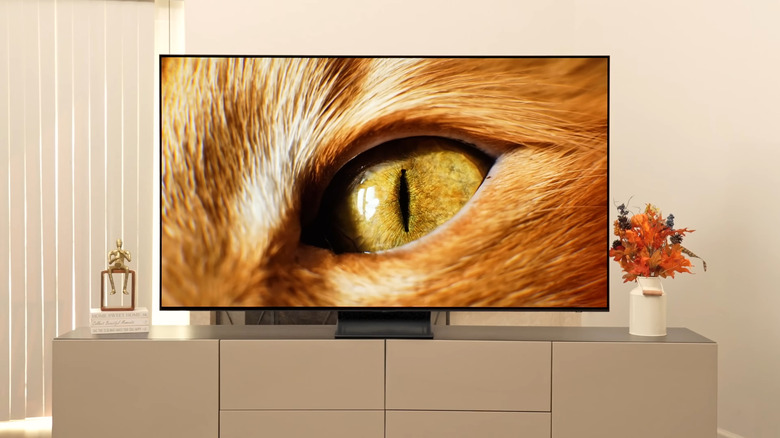
If you want the highest level of picture quality from a TV, OLED models will almost certainly come up during your search. Sony introduced the technology to the TV market in 2004, and the segment has gone through quite a lot of development in the decades since. In 2026, it's one of the most enticing areas in the media tech industry, with the likes of LG and Samsung constantly pushing the limits.
OLED TVs operate differently from the more conventional LED-lit screen. Instead of using a backlight, OLED models use millions of self-emissive pixels that all operate individually and can switch off completely if necessary. The benefits that this technology brings to almost every element of the picture are incredibly tough to match, but there are a couple of key caveats to know about before investing the large sum of money required for one. Here's a look at the benefits and potential drawbacks you may encounter with an OLED TV.
Best: Unmatched true blacks
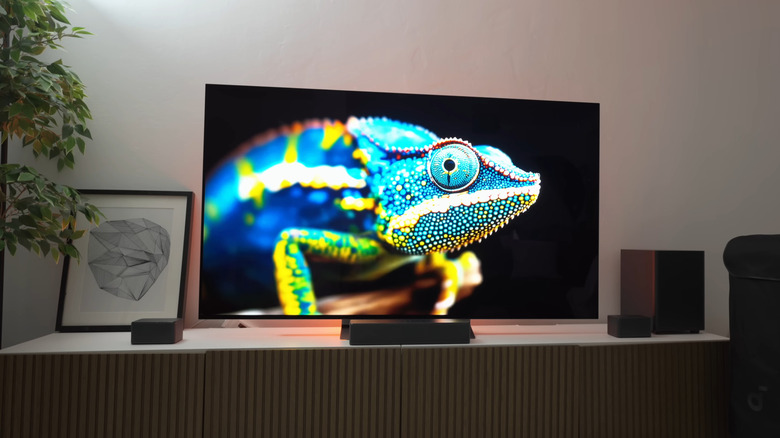
Contrast has always been one of the most important elements of a picture's quality. Without it, the colors on screen won't be able to really do anything. The LCD screens that were on top before OLEDs came around, alongside those made today with mini-LED tech, definitely still offer great levels. However, if you're looking for the strongest, most vivid blacks, OLED will most likely remain undefeated for quite a long time.
While the two biggest manufacturers, Samsung and LG, approach OLED tech slightly differently, the true blacks are commonplace among all OLED TVs, albeit some being better than others. In 2025, despite only returning to the OLED market in 2022, Samsung's S95F screen managed to reach as low as 0.005 nits in low-light environments, earning VDE True Black certification. As you can imagine, the difference this level of contrast can make to anything you watch or play on these screens is massive. Alongside Samsung, LG's models are also frequently noted for their true black performance as well.
Best: Super low input lag and fast response times
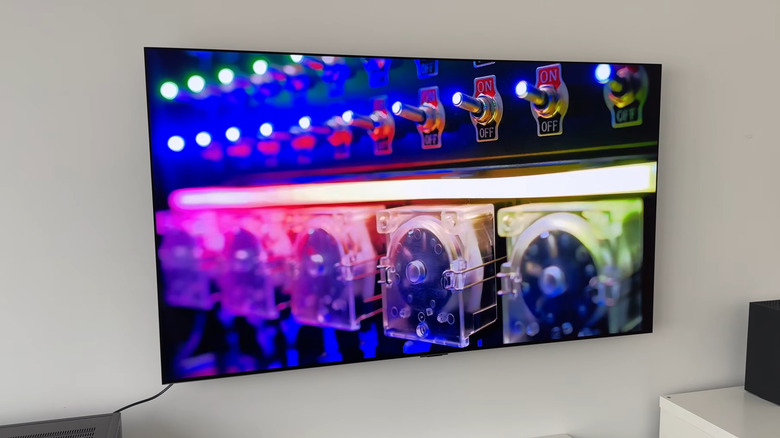
Alongside the visual versatility that OLED TVs offer, how fast they operate makes them one of the best TVs for gaming, in particular. With every pixel working independently, the picture can stay consistent at all times, helping you catch everything on screen, especially when things are fast-paced. The almost instantaneous color change can also make slower, graphics-focused games look even better by effectively removing ghosting and unwanted blur. For example, LG's B5 model offers a 0.1-millisecond response time.
While the response times are head and shoulders above the rest, the input lag isn't something that separates it as much as other types of TVs, but it is still another bonus point for OLEDs. Particularly when it's combined with the unbeatable response time, some OLED models can get under five seconds depending on the resolution and refresh rate. PCMag has tested plenty of OLED TVs, finding models like the Samsung S95H and LG Evo G6 to get under the five-second threshold at 1080p 120Hz. Again, non-OLED TVs that are capable of running 120Hz refresh rates and higher can match OLED here, but the combination of the response time makes for the best package if you want the most accurate picture in motion.
Best: Exceptional color quality
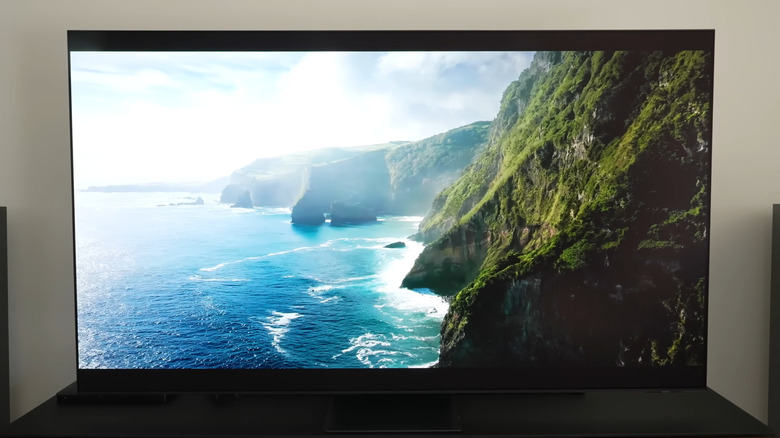
Shifting the focus back to OLED's self-emitting pixels, achieving true blacks isn't the only thing that they excel at. Once again, not relying on any form of backlighting, the pixels can freely generate over a billion different colours without the potential bleeding you get with LEDs. This is another crucial area in achieving the industry-leading levels of contrast, seeing every color exactly as intended.
We've mentioned that Samsung and LG take different routes in achieving their OLED picture results, and that's more noticeable here. The difference in the color panels may help you decide which one would be best for you, so it's a super important element to consider.
LG mainly relies on WOLED technology, which produces white light and then sends it through red, blue, and green color filters. Alongside the three primary colors used for the pixels, unfiltered white light can also come through to boost brightness, making the tech a great choice for brighter rooms. Samsung instead opts for a blue layer, then sends the light through what the brand calls quantum dots to produce the billions of colors across the spectrum. Hence the name QD-OLED, this tech is renowned for achieving stronger, pure colors. HDR helps take it to another level.
Best: The most versatile option for larger rooms
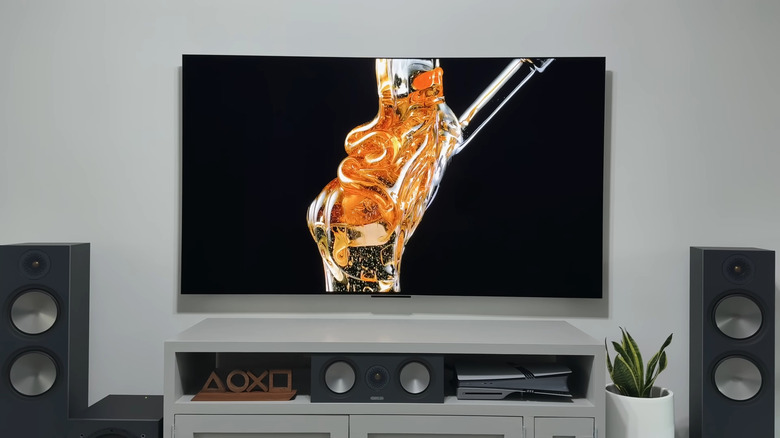
If you're considering an OLED TV, there's a good chance it'll be going in a room where multiple people will be watching. In that situation, not everyone will likely be looking at the screen from the same angle. Wide viewing angles are another area where OLED's excel, once again thanks to the unique self-emitting pixels. With more standard LED TVs, the backlights can almost distort the colors and nullify the already-lower levels of contrast. With OLED screens, though, especially in rooms with consistent light, you shouldn't have problems getting the full effect no matter where you sit.
The screens themselves, being super flat, also help cover entire rooms, and sizes can reach just under 100 inches if necessary. I've had plenty of experience with Samsung's OLED TVs, specifically S95 models. Picture quality and accuracy were never a problem, no matter where you were sitting. While the TVs I've used were QD-OLED, all types of OLED screens stand out for their viewing angles compared to the rest of the market.
Worst: Not the best option for bright spaces
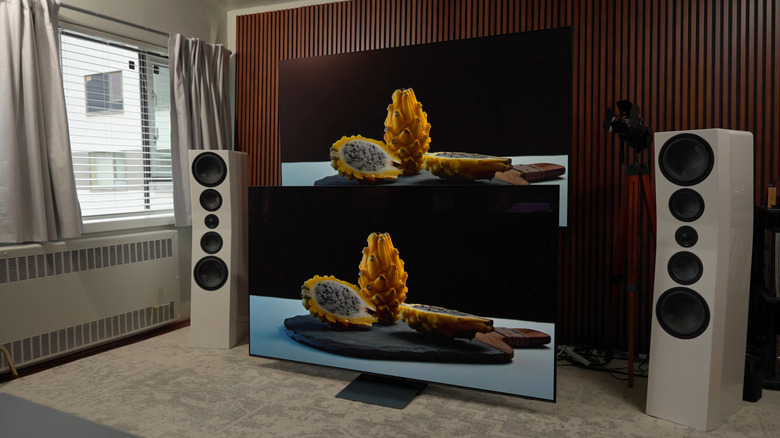
While OLED screens no longer struggle with overall brightness compared to when the tech was relatively new, they still may not be the optimal choice if you're watching TV in a room where plenty of light is constantly coming in. Historically, this has always been one of the strongest selling points for LED TVs, more specifically, mini-LED models. If you're willing to spend the most money on the top-tier screens, you'll be able to get better anti-glare coatings that can be on par with the best LED screens. But for older or cheaper OLED screens, mini-LED screens in particular still come out on top.
As OLED TVs rely on the exceptional contrast from their pixels, enough ambient light can make them pretty pointless in some cases. The backlights that LED screens use fall behind in many areas, but if you won't be locking yourself away to watch films or play games at night, one of these TVs can help you save money while also being the more practical option. QLED TVs are a type of LED screen that further boosts brightness, which is another TV type that's worth looking into.
Worst: The top models can be pretty expensive
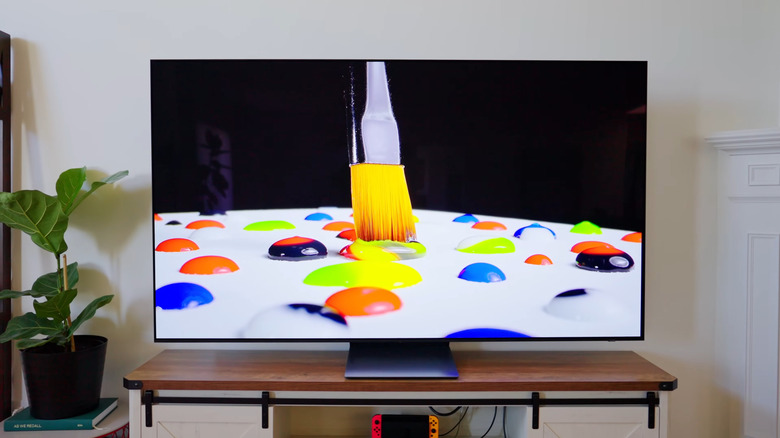
Be prepared to fork out a large some of money for an OLED TV, especially if you want the latest models with all the best features. As you go up in size, the pricing goes up with it, and equally sized OLED TVs can cost a lot more than an LED screen. The benefits that we've covered here help to justify the price points, but if you want to also mitigate some of the disadvantages that the technology has, such as potential screen glare, a four-figure price point is almost guaranteed.
At Walmart, one of the most well-reviewed 42-inch LG C5 models comes in at $899 as standard. This TV comes equipped with the standard 120hz refresh rate and 0.1-millisecond response time, but a 43-inch QLED TV from TCL sits at just $198 on Walmart as well. For new higher-spec models, prices can go above $5,000, but if you have the budget, the brightness-enhancing technology and super fast processing look to make it worth it, judging by the hundreds of five-star reviews submitted by owners.