

Miss Your Old Blackberry? These 4 New Phones Are A Close Alternative
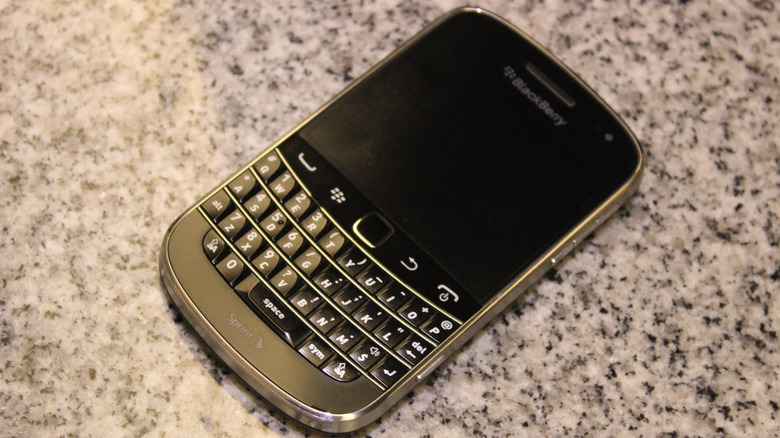
It's difficult to imagine a time when Apple wasn't at the forefront of the smartphone market. Yet, even those who have never owned or used a BlackBerry before are familiar with the influence the brand once had in the tech space. Unfortunately for BlackBerry, the success of the iPhone proved that touchscreens were the way forward, and after years of trying to adapt, the BlackBerry era eventually came to an end.
Though popular for its classic phones featuring full QWERTY keyboards and running a proprietary operating system, BlackBerry did transition to making touchscreen smartphones with Android. The BlackBerry Priv, released in 2015, turned many heads by combining a normal 16:9 touchscreen display with a full physical keyboard you could slide out from underneath whenever needed.
There are both pros and cons of using a tiny QWERTY keyboard with physical keys on a smartphone. While you may not be able to churn out words as quickly as on a software keyboard, typing with real, tactile feedback has its own charm. If you're looking to recreate the good old days, strangely enough, 2026 is a good year to shop for BlackBerry-like smartphones.
Minimal Phone
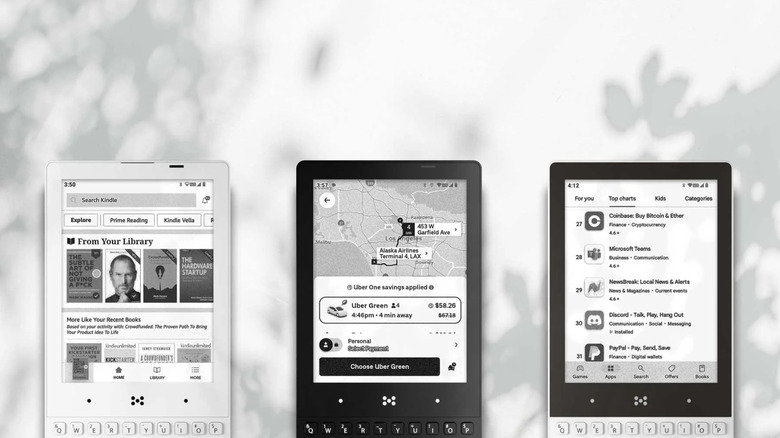
A growing trend in the tech space has been the pursuit of minimalism. While mainstream brands keep shoving AI features in our faces, a few software and hardware companies have made an effort to create products that prevent you from pouring your soul into social media or other digital apps. The Minimal Phone fits the bill, featuring a black-and-white display, a single camera, and a physical keyboard.
Its E-ink display makes it great for productivity while improving the reading experience. However, anything involving videos or social media is likely to feel frustrating. The phone comes with 6GB of RAM and 128GB of storage, both of which should be plenty given its mostly utilitarian focus. PCMag's review mentions how the QWERTY keyboard is clicky and satisfying to type on. Each key has its own backlight, too, which makes visibility in low light a non-issue.
The Minimal Phone runs Android, and although you can install just about any app through the Play Store, it's not designed to accommodate them as well as a regular smartphone would. The user interface is also devoid of flashy animations and app icons, pulling your focus away from the things a traditional smartphone does to keep you glued to the screen. It's one of the more well-rounded minimalist phones on the market, but at $500, you'd really have to want a dumbed-down version of a smartphone to see the value.
Ikko Mind One Pro
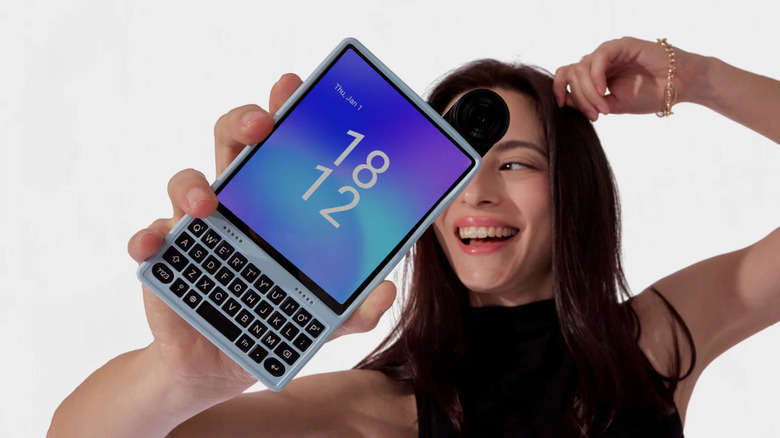
The Rabbit R1 and the Humane AI Pin were some of the worst AI devices ever made, so you can't blame us for being skeptical when Ikko unveiled its Mind One Pro, branded as another AI companion. Fortunately, it's much closer to a smartphone than it is to an accessory that can only spit out generative AI content. Its form factor is quite unusual — some might even say it looks like just the outer screen of a flip phone from Motorola or Samsung. It features a square 4-inch AMOLED display that can hit refresh rates of up to 90Hz.
Though typing using its software keyboard is possible, Ikko really wants you to use the snap-in case, which it sells separately. It slides into the phone's USB-C port and gets you a 3.5mm audio jack with a Hi-Fi DAC built in. More importantly, the case features a full QWERTY-style keyboard with physical buttons. This makes reading and typing out messages on the limited screen real estate comparatively much easier.
The phone features a single 50-megapixel camera that can flip to function as the selfie camera as well. Its "AI OS" is, as expected, filled to the brim with AI tidbits. The phone does come with vSIM support, which theoretically works more seamlessly than a physical or eSIM. The Ikko Mind One Pro is priced decently at $500, and the snap-in case with the keyboard costs an extra $80.
Unihertz Titan 2 Elite
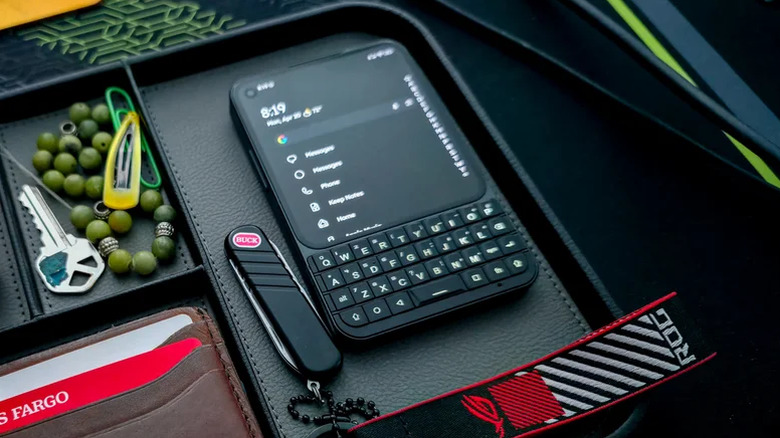
The Unihertz Titan 2 Elite is another BlackBerry-esque phone to keep on your radar. It features a 4-inch display with rounded corners positioned above a physical QWERTY keyboard with a backlight. You also get back, home, and Android's recent apps navigation buttons, so you can truly keep your fingers off the screen if you prefer. The display itself is a 120Hz AMOLED panel with a hole-punch cutout in the corner for the front-facing camera.
Unlike the Minimal Phone, the Unihertz Titan 2 Elite uses an aluminum mid-frame. Surprisingly, it packs in a decently large battery for its size — a 4,050 mAh silicon-carbon cell. Despite its experimental nature, Unihertz is promising up to five years of Android updates. It's powered by the Dimensity 7400 SoC, 12GB of RAM, and comes with 256GB of internal storage. For a list price of $490, these are impressive specifications.
Like the BlackBerry Priv from 2015, the Unihertz Titan 2 Elite features a capacitive keyboard, which can register swipes, taps, and other gestures. In our hands-on with the Unihertz Titan 2 Elite, we went over how the square aspect ratio of the 4-inch display isn't exactly a joy to use for social media apps. As a secondary phone or one meant strictly for business or texting, though, it pairs promising hardware with a physical keyboard that doesn't require a separate purchase.
Clicks Communicator and Power Keyboard
The Clicks Keyboard was first showcased at CES 2024. The idea was simple — you slide your existing smartphone into a case and instantly gain access to a physical QWERTY keyboard. Clicks has since expanded support to more devices with newer versions of its keyboard case. The newest Power Keyboard supports phones with MagSafe or Qi2, but can also be connected to any device over Bluetooth. If you've been looking for a way to enjoy the clicks of a physical keyboard but aren't fond of ditching your entire smartphone in the process, the Power Keyboard could be a great option. It retails at $120 and includes a 2,300 mAh battery that can wirelessly charge compatible phones.
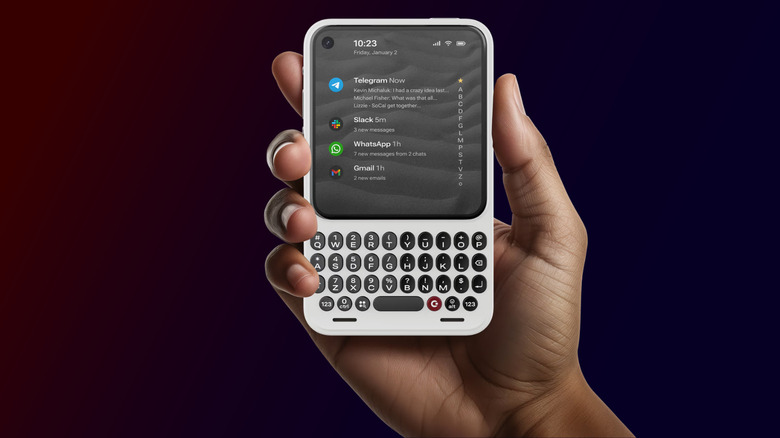
The Clicks Communicator, however, is a fully functioning smartphone with a physical QWERTY keyboard attached. It features a nearly square 4-inch AMOLED display and comes enclosed in a plastic shell. The back panel is swappable, and you can buy one that suits your style. 9to5Google went hands-on with the device and showcased how it brought back some long-lost features like a 3.5mm headphone jack, an SD card slot, and a notification LED.
Part of the reason why Clicks seems to be leading the space in this niche is that it has genuine BlackBerry DNA behind it — Clicks brought on Joseph Hofer, a former lead designer at BlackBerry. The Clicks Communicator isn't out yet — it ships later this year and can be reserved with either a $199 deposit or a $499 paid-in-full reservation.