

4 Common Problems Drivers Have With Ram 2500 Diesel Trucks
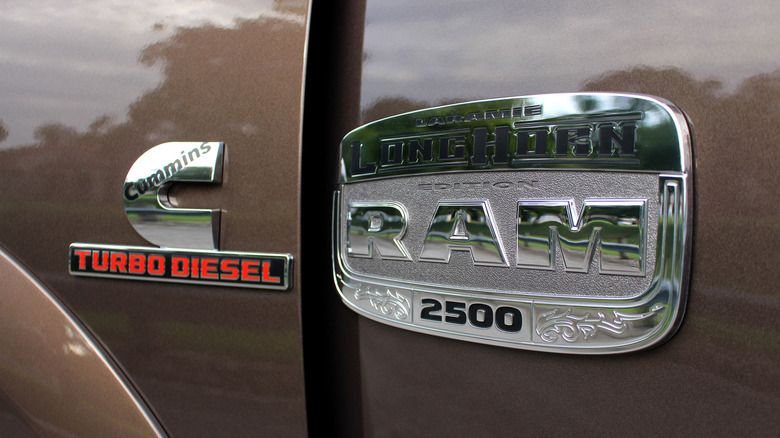
Ram's three-quarter-ton diesel sits on a short list of trucks that can tow like locomotives and rack up odometer numbers some half-tons never get close to. A big part of that reputation comes from the 6.7-liter Cummins itself. Unlike the V8 diesels used by Ford and GM, Ram's heavy-duty diesel is an inline-six — long, iron-blocked, low-revving, and built around pulling huge loads.
But the Cummins name can also hide the bigger truth about modern diesel ownership. A Ram 2500 diesel today is not just an old-school engine and a strong frame anymore; t is a fuel system, turbocharger, transmission, emissions system, and valvetrain all working under huge heat, pressure, and load. When one of those pieces fails, the truck's tough image can unravel fast.
A handful of those components surface again and again in broken-down travel stories — parts that fail early on certain model years, systems that punish short-trip driving, and hardware that works brilliantly right up to the moment it doesn't. For the most part, Ram has issued software flashes, extended warranties, and even full recalls when a problem turned out to be more than isolated bad luck. Still, the cost of learning about them the hard way can feel brutal when the bill runs four or five figures — or when your tow rig is stranded in the middle of nowhere. So, if you're looking at a used Ram 2500 diesel or wondering about making the switch from gasoline, these are the most common problems worth knowing before the Cummins badge makes the whole truck look more reliable than it really is.
CP4 pump failure on 2019-2020 Ram 2500 Diesels
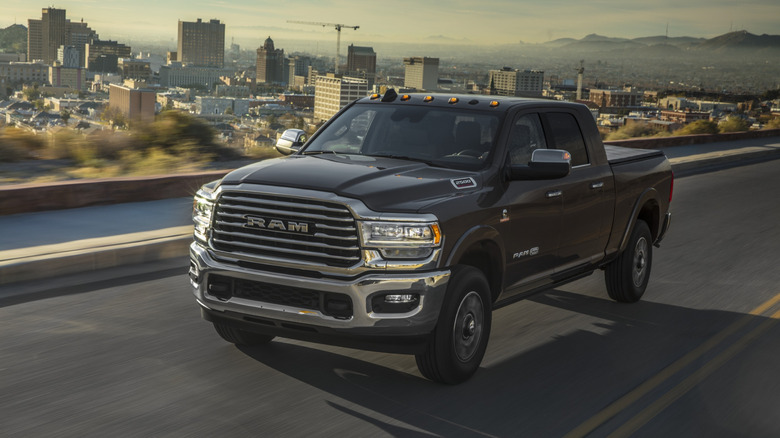
The 2019 and 2020-model-year Ram 2500 diesels — the first two production years of the redesigned current Ram Heavy Duty lineup – swapped their longtime CP3 injection pump for the Bosch CP4.2. Every 6.7-liter Cummins Diesel built from October 11, 2018, to late November 2020 left the factory with a CP4 pump, which makes them vulnerable to the same built-in risk. When the new pump started to fail, owners said it often happened fast and left a trail of expensive repairs.
Drivers described the failure as sudden, with some 2019 and 2020 Ram 2500 diesels sputtering, knocking, losing power, shutting off, or refusing to restart. Several complaints involved trucks dying while towing, blocking traffic, or stalling on the interstate. Some complaints mention warnings tied to low fuel pressure or exhaust-system messages shortly before the engine dies, but others describe almost no useful warning before the truck becomes a no-start. The worst cases involve the pump breaking down internally and sending metal debris through the high-pressure fuel system. Once that happens, the repair can spread beyond the pump to the rails, injectors, lines, filters, and tank, often leaving trucks at dealers for weeks. In the worst cases, metal contamination turned a pump failure into a full fuel-system repair, with owner-reported bills climbing around $10,000.
Stellantis addressed the defect with Safety Recall Y78, instructing dealers to replace the high-pressure pump, update the PCM, and inspect or replace contaminated fuel components as needed. The recall also reimburses previous out-of-pocket repairs. A proposed class-action lawsuit alleging that the CP4 design was incompatible with U.S. diesel was dismissed after the recall was announced.
68RFE transmission problems
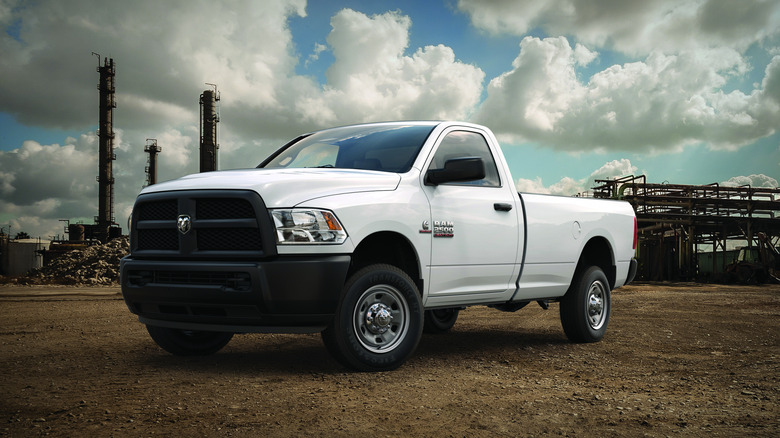
Ram paired its 6.7-liter Cummins with Chrysler's 68RFE six-speed automatic transmission on nearly every Ram 2500 built before the 2025 switch to the TorqueFlite HD eight-speed. That means almost twenty years' worth of Cummins-powered 2500s — from base work trucks to top-trim Mega Cabs — share the same potential transmission problem. Even though the complaints for this transmission span multiple model years, they tell a remarkably consistent story.
The overdrive section is widely regarded as one of the 68RFE's weakest areas, especially when heat, towing, clutch wear, low line pressure, or internal flex make it struggle under load. In driver complaints, the problem often showed up during normal driving or towing rather than as an immediate breakdown. Some trucks began lurching or getting stuck in a lower gear, flaring rpm before grabbing the next gear, or slamming into gear once the transmission got hot. Others lost higher gears altogether, forcing owners into limp mode amidst heavy traffic. In the worst cases, the transmission started shaking, slipping, or losing motive power before the truck was diagnosed with valve-body problems, clutch damage, low line pressure, or broader internal failure.
Ram never issued a sweeping recall or special warranty extension specifically for 68RFE shudder, slipping, or overdrive-clutch burnout. Instead, those complaints were mostly handled through service bulletins or software updates. Ram did issue major 68RFE-related recalls, but those covered separate safety concerns rather than the overdrive-clutch/valve-body failure complaint. The overdrive-clutch side of the 68RFE story was mostly handled the hard way — one repair order at a time.
DPF clogging and exhaust filter full warnings
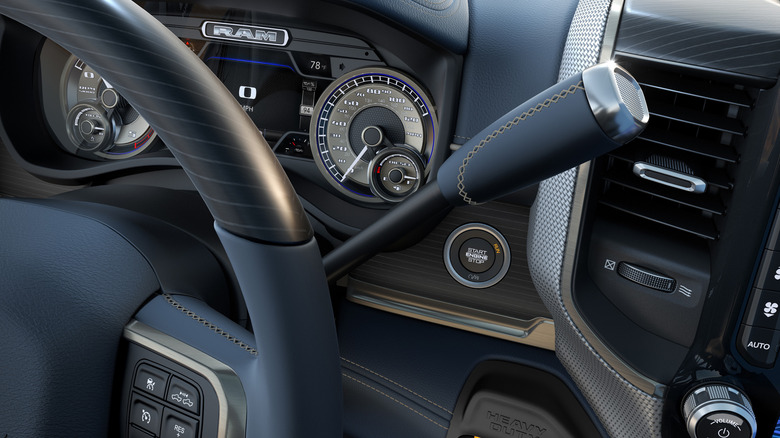
The diesel particulate filter, or DPF, sits in the exhaust system of a diesel engine and traps soot before it can leave the tailpipe. Once enough soot builds up, the truck is supposed to burn it off through a regeneration cycle. These trucks rely on passive and active regeneration to do so, but trucks that spend too much time on short trips, extended idling, or low-speed driving may never get the exhaust system hot enough to clean the DPF properly.
The problem starts when soot loading rises faster than the truck can burn it off. At first, the driver may only see a warning telling them to keep driving at highway speeds so the system can complete a regeneration. If the filter keeps filling, the warning can escalate into "Exhaust Filter Clogged," "See Dealer," check-engine lights, reduced power, or limp-mode behavior. Owner complaints describe trucks that suddenly decelerated even while the accelerator was pressed, failed to exceed around 10 mph, or lost motive power after the exhaust-filter-clogged message appeared. In more severe complaints, some owners reported strong diesel exhaust odor entering the cabin through the vents during regeneration, while others described smoke around the truck, exhaust leaks near DPF-related hardware, or soot/smoke rising near the passenger side after repeated regen problems.
Ram did not issue a broad recall for normal DPF clogging, since the problem can be caused by driving habits. Instead, Stellantis handled related issues through service bulletins and warranty actions, including the X97 DPF warranty extension for select 2021-2022 Ram 2500 trucks. Ram also issued service guidance for DPF codes, soot buildup, exhaust-pressure sensor faults, and PCM updates.
VGT turbo actuator and exhaust brake failures
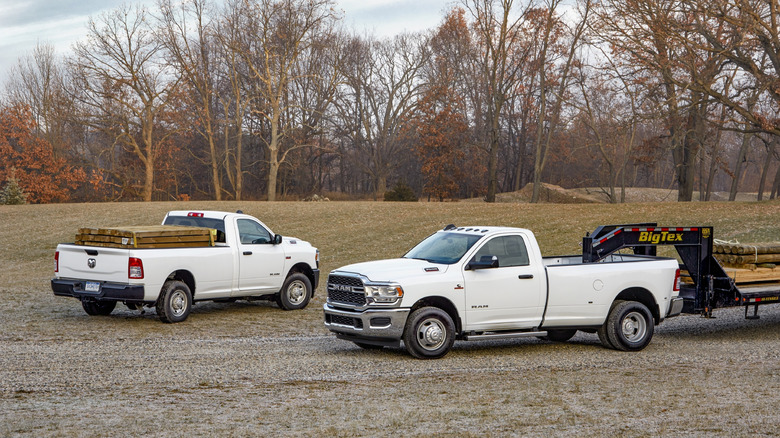
Every Ram 2500 diesel built since the mid-2010s uses a Holset variable-geometry turbocharger (VGT) to sharpen low-rpm boost and power the exhaust brake. That means most 2013-2024 Ram 2500s with the 6.7-liter Cummins are candidates for this same failure — the electric smart-actuator that moves the turbo vanes can overheat, seize, or lose communication with the engine controller.
When the actuator loses communication, malfunctions, or can no longer learn the correct vane position, the truck can suddenly lose boost control, drop into limp mode, or disrupt the exhaust brake that diesel owners depend on while towing. Owner complaints describe trucks losing power at highway speed, slowing to crawl-home speeds, making abnormal turbo noises, or forcing drivers to pull onto the shoulder and restart the engine just to clear the fault temporarily. Others describe the exhaust brake staying engaged when it should release, which makes the truck feel like it is fighting the driver even when the accelerator is pressed. Some complaints mention actuator or turbo repairs around the $3,500 range, while a 2015 Ram 2500 diesel truck owner describes a dealer charging them just over $4,000 after finding the actuator lost communication and exceeded its learning limit.
Ram did not issue a safety recall for the VGT turbo actuator failure, but in 2022 it did extend warranty coverage for certain 2015 Ram 2500 and 3500 diesels. Stellantis' X99 bulletin covered select 6.7-liter Cummins trucks with actuator-related codes including U010C, P003A, P00AF, and P0046, and instructed dealers to replace the turbocharger actuator. Coverage for that repair was extended to 15 years or 150,000 miles from the in-service date.
How we sourced this information
To compile this list, we began with every Ram 2500 diesel complaint logged in CarComplaints, NHTSA filings, and Cummins-focused service bulletins. From that pile, we kept only the issues that surfaced repeatedly across model years, generated technical bulletins or warranty actions, and imposed a clear financial or functional hit on owners.
Next, we filtered out wear-item fixes and one-off anecdotes. A single bad injector or an overdue fuel filter didn't make the cut as a "common problem." Finally, we ranked what remained by real-world impact. Problems that could strand a loaded truck, compromise towing control, or turn a small part failure into an expensive repair repair rose to the top.