

4 Of 2026's Best Big-Screen Phones
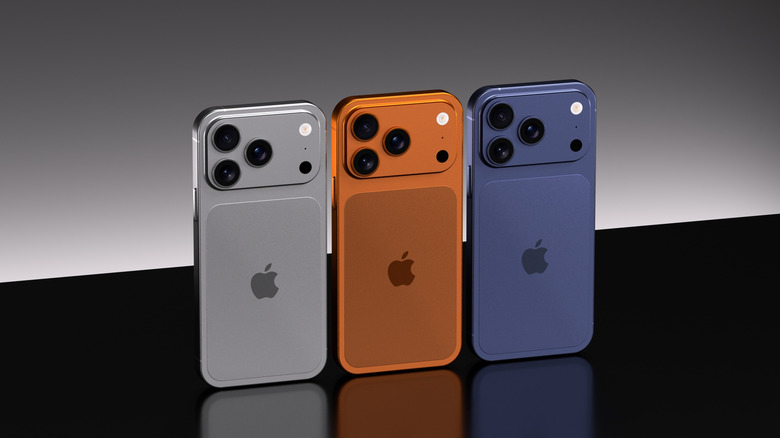
There was a time when smartphones rarely crossed the 5-inch mark. As the years have passed, though, screen sizes on smartphones have grown, with many devices now soaring past 6.5 inches. While there are still a handful of great compact phones, most mainstream devices are now designed around bigger screens that are generally better suited for content consumption and gaming.
Big smartphones also often pack in larger batteries, more powerful internals, and ample space for cooling. If you're in the market for one, the good news is that you won't have to look very hard. We've compiled a list of our favorite giant-screened smartphones you can buy in 2026. Since most devices — across different price points — sport screen sizes of 6.5 inches or more, we're considering premium phones with displays measuring around 6.9 inches to be truly gigantic.
It's worth noting that while foldables like the Galaxy Z Fold 7 technically unfold into tablet-sized displays, we've limited our picks to traditional candybar-style smartphones. This way, you still get to experience the perks of a larger screen without having to deal with the compromises that come with foldable smartphones.
OnePlus 15
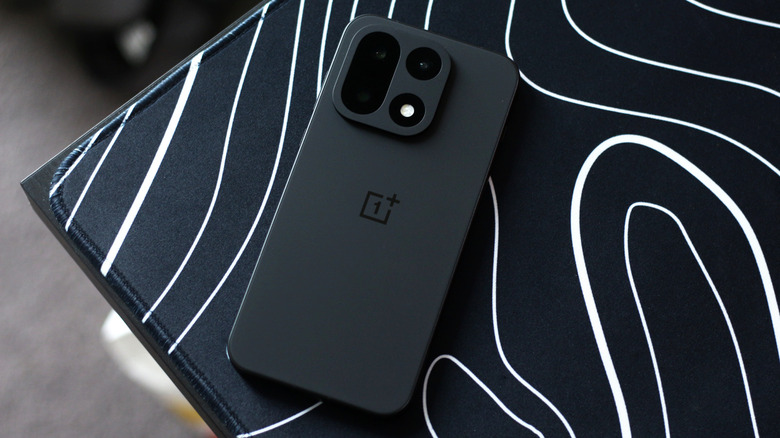
OnePlus might not be a household name in the U.S., but it enjoys a very loyal user base owing to its mantra of producing flagship-level hardware at comparatively affordable price points. The company's flagship for 2026 is the OnePlus 15 — a $900 offering that rivals the likes of the iPhone 17 Pro and Galaxy S26 Ultra in terms of performance. It also happens to sport a generous 6.78-inch LTPO AMOLED display, with thin, uniform bezels all around and a tiny notch to house the front-facing camera.
If you're looking to maximize screen real estate for movies you're watching or games you're playing, the OnePlus 15 provides an excellent experience. The display's hallmark feature this year is its ability to hit 165Hz in supported games. Being backed by the Snapdragon 8 Elite Gen 5 SoC, the OnePlus 15 is probably one of the most powerful smartphones you can buy currently that makes good use of its internals.
The display also supports HDR10+ and Dolby Vision and gets plenty bright outdoors with a peak brightness of 1,800 nits. Furthermore, OxygenOS remains one of the smoothest ways to experience Android. In our review of the OnePlus 15, we were particularly impressed with its 7,300 mAh silicon carbon battery, which lasted much longer than a single day in our test. The bundled 80W (or 120W in certain regions) SuperVOOC fast charger is simply the cherry on top.
Google Pixel 10 Pro XL
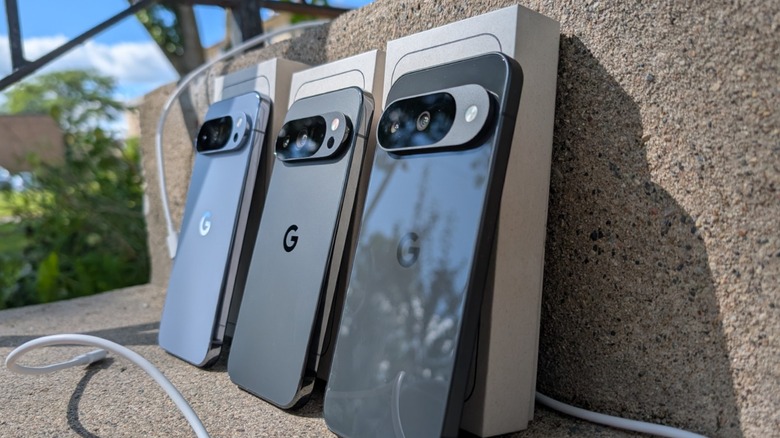
At 6.8 inches, the Pixel 10 Pro XL by Google certainly lives up to its name. While Pixel smartphones aren't necessarily known for their outright performance or endurance, they are a great option for those looking to enjoy Android in its purest form. Priced at $1,200, the Pixel 10 Pro XL features an LTPO OLED display that can hit refresh rates up to 120Hz. Google calls it a Super Actua display, which is just a fancy way of saying it can get really bright outdoors, with the display capable of up to 3,300 nits of peak brightness.
The bezels aren't as slim as other flagships, but they're uniform and are accompanied by a small enough notch for the front-facing camera. If you're eyeing a Pixel, you're likely doing it for the software experience and camera performance, both of which, as we've discussed in our review of the Pixel 10 Pro XL, are still among the best in the industry. Google promises up to seven years of major operating system updates, which include frequent Pixel Drops that introduce exciting new features.
Apple iPhone 17 Pro Max
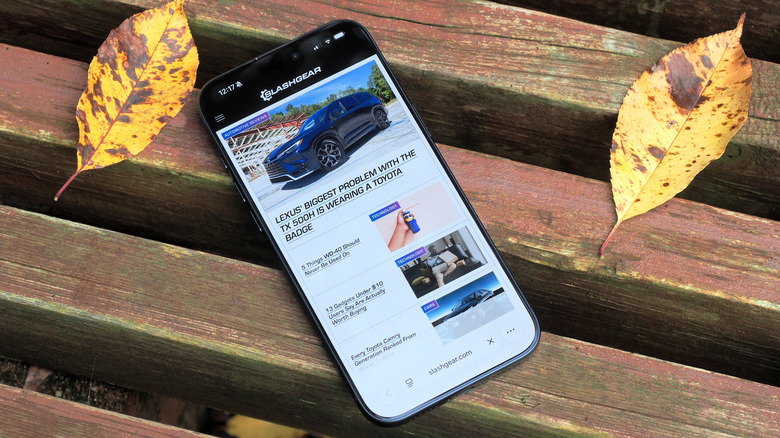
Apple went from releasing one or two smartphones a year to maintaining an entire fleet of iPhones — from the affordable iPhone 17e to the design-focused iPhone Air. The top-of-the-line iPhone 17 Pro Max is the most powerful smartphone the company sells, and it also happens to be the largest. It sports a mammoth 6.9-inch Super Retina XDR OLED display with a peak brightness of 3,000 nits. There's support for HDR10 and Dolby Vision, and since this is a ProMotion panel, you get a 120Hz refresh rate, too.
Surprisingly, even with a much bigger notch that houses the Face ID scanner in addition to the front-facing camera, the iPhone 17 Pro Max boasts a higher screen-to-body ratio compared to the Pixel 10 Pro XL, thanks to its ultra-slim uniform bezels. The notch does get in the way when viewing widescreen movies, but human eyes are remarkably good at tuning it out in a few minutes. Besides, the Dynamic Island housed in that notch offers some genuinely useful ways to interact with Live Activities on the iPhone.
Pricing starts at $1,200, which gets you Apple's most powerful smartphone chip, the A19 Pro. Aside from its screen and performance, our review of the iPhone 17 Pro Max also found that its triple-camera setup is great at capturing natural-looking photos and that the phone's large battery lasts all day. Apple is also great with OS updates, with the iOS 27 update scheduled for fall 2026 promising performance and stability improvements and an updated version of Siri.
Samsung Galaxy S26 Ultra
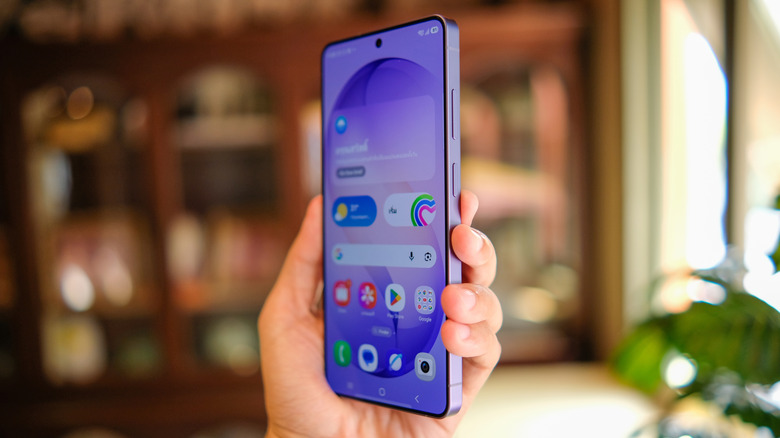
If you're in the market for a high-octane Android phone with reliable cameras, the Galaxy S26 Ultra is difficult to beat. It's powered by the Snapdragon 8 Elite Gen 5 chip and houses a quad-camera setup on the rear, including a 200-megapixel primary lens, two telephoto lenses, and an ultrawide sensor. Also impossible to ignore on every Galaxy S Ultra flagship is the display. This time, you get a giant 6.9-inch 120Hz AMOLED panel with a peak brightness of 2,600 nits. The display has slim bezels and a tiny hole-punch cutout for the front-facing camera.
The Galaxy S26 Ultra also offers an anti-reflective coating, which helps reduce glare when using it under harsh lighting. We've reviewed previous generations of the Galaxy S Ultra before, and although the changes have been pretty incremental since, it continues to offer some of the best multimedia experiences you can get on a smartphone.
Samsung's flagship also has something that every other mainstream smartphone, irrespective of screen size, lacks — a built-in stylus. The S Pen is a great way to make the most of the Galaxy S26 Ultra's massive display for taking notes, doodling, or simply editing images with greater precision. On top of that, Samsung's Galaxy AI features continue to grow, and the manufacturer promises up to seven years of OS updates as well. Pricing starts at $1,300, making it as expensive as it is big.