

4 Samsung Products That Outshine Apple In Price And Value
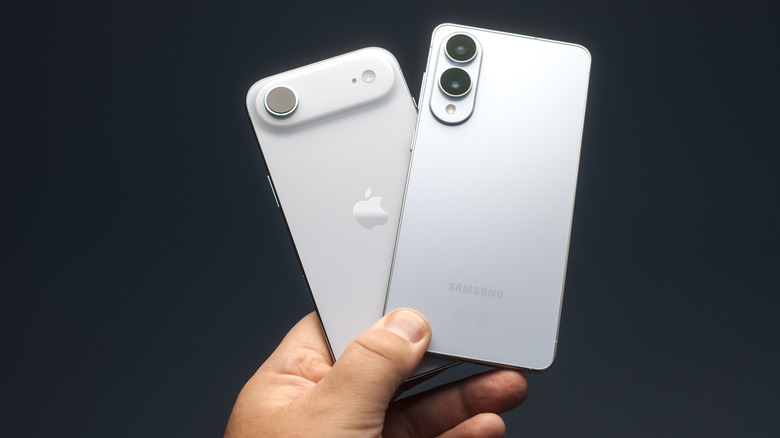
Samsung and Apple are both tech giants that have a lot of overlap in their product lineups. This often makes for interesting comparisons, but ultimately, both brands offer distinctly different software experiences — this is usually enough to sway users toward one ecosystem or another. However, if you're not currently bound by any ecosystem shackles, it's probably a good time to reevaluate which products are going to be the better value.
Despite the premium price tags, certain Apple devices are indeed too good to ignore. For instance, in our review of the iPhone 17, we mention how it is the biggest year-over-year upgrade for the iPhone in a long time. The MacBook Neo, with its $600 price point, is also nearly impossible to beat on all fronts. This is not to say that you should automatically consider all of Apple's offerings. Samsung has an expansive lineup of products, some of which beat Apple's devices in overall value.
There are some current-gen devices from Samsung that you should consider before resorting to an Apple alternative. Though we've considered the price points of these products before making recommendations, note that some of them may cost a touch higher than Apple's devices. The overall value proposition, though, is where you stand to gain the most. Also, unlike Apple, Samsung usually discounts its products, which makes them even easier to recommend.
Galaxy A57
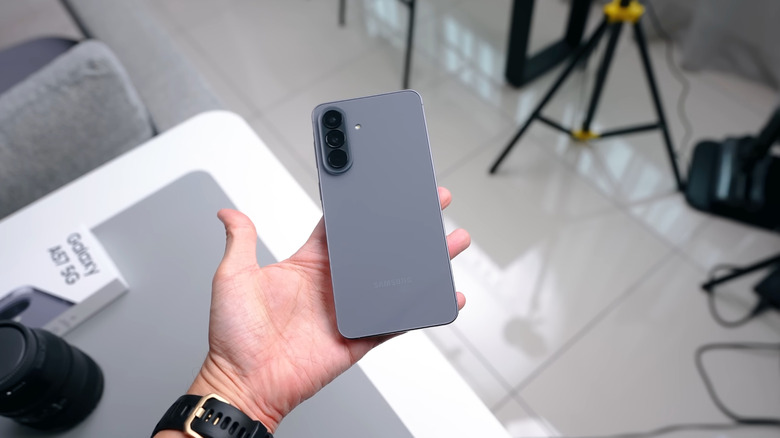
With the launch of the iPhone 16e in 2025, Apple discontinued the iPhone SE series, which was long considered the company's budget-friendly offering. With a higher starting price, though, the 16e did face criticism, especially considering it skipped out on MagSafe entirely. The iPhone 17e starts at the same price point of $600, but brings MagSafe and twice the storage capacity at 256GB. However, you're still being held back by its 60Hz display and a single camera on the rear. With all that, the Samsung Galaxy A57 is a comparable budget-oriented smartphone you might want to consider instead.
It comes with a larger 120Hz 6.7-inch AMOLED display that's also brighter, and there's a much smaller notch for its front-facing camera. You get a triple-camera system on the rear, which includes an ultrawide lens. Though it's tough to match the iPhone's camera experience, you do get more flexibility here. The Galaxy A57 is powered by Samsung's Exynos 1680 chip, and comes with a base storage capacity of 128GB for $550.
The higher 256GB storage model costs $10 more than the iPhone 17e, but you are getting double the refresh rate, a bigger battery, faster 45W wired charging, and a still-excellent software experience with One UI. Samsung promises up to six years of major Android updates, too. If you're looking for better cameras and a more premium feel overall, the Galaxy S25 FE is a good alternative too, but at $750 for the 256GB version, it is considerably costlier than the iPhone 17e.
Galaxy Tab S11 Ultra
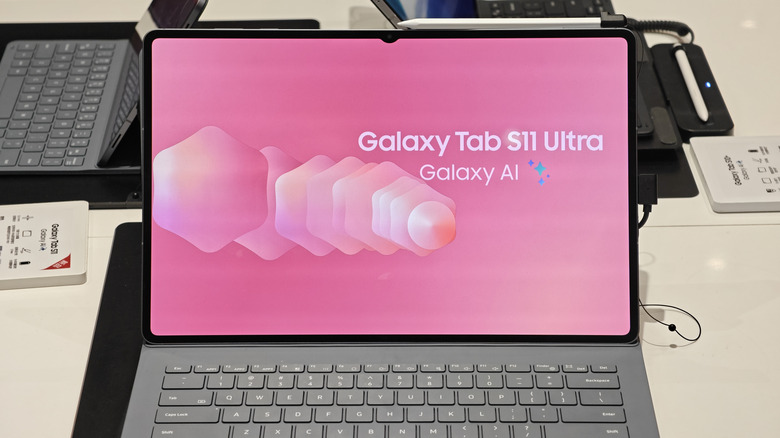
There's no denying that the iPad is one of the best tablets you can buy, regardless of the model. iPadOS continues to be the superior platform when it comes to app compatibility and quality. If you're shopping for a tablet that can get you all the essentials for a reasonable price, SlashGear has already recommended the base model iPad. For content creators and professionals, however, the iPad Pro, with its 120Hz ProMotion display and blazing-fast M5 chip, continues to be one of the most powerful tablets money can buy. Priced the same at $1,300, though, is the Samsung Galaxy Tab S11 Ultra.
On paper, there's really nothing that comes close to delivering the same performance as Apple's M5 chip does, but you also have to consider the fact that the iPad Pro is still bound by what's possible with iPadOS — which, unfortunately, still pales in comparison to the desktop-like experience that Samsung's DeX feature provides. The Galaxy Tab S11 Ultra also ships with an S Pen at no additional cost, and it features a larger 14.6-inch 120Hz AMOLED display.
It matches the iPad Pro's starting storage capacity at 256GB, but you also get a microSD card slot that can bump storage up to 2TB. Where it lacks polish, Android makes it up with inarguably a better suite of AI features compared to the iPad's Apple Intelligence. The S11 Ultra is powered by an 11,600 mAh battery and is capable of 45W wired charging.
Galaxy S25 Edge
The iPhone Air is a beautiful smartphone. Constructed out of glass and titanium, its key selling point is its incredible thinness. At 5.6mm, it is also Apple's thinnest smartphone ever, and one of the thinnest of all time.
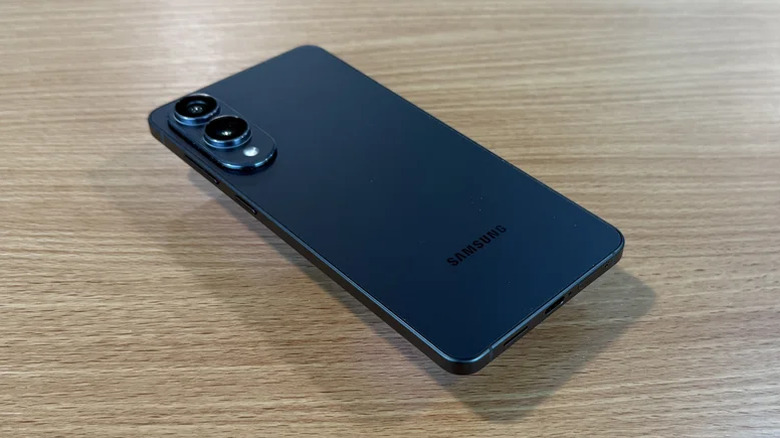
Obviously, to achieve the moniker of being this slim, it does compromise in the battery and camera departments. Though there have been Android phones thinner than the iPhone Air in the past, you're really only down to one direct current-gen competitor — the Samsung Galaxy S25 Edge. It packs in a larger battery, and gets you an additional camera lens on the back.
The Galaxy S25 Edge has a 6.7-inch 120Hz AMOLED display and is also built with a titanium frame going all around its body. It's powered by the Snapdragon 8 Elite chipset, which makes it the slimmest Android flagship you can buy from a mainstream brand. You also get 256GB of storage space with the base model and 12GB of RAM. The dual-camera system consists of a 200-megapixel wide sensor, and another 12-megapixel ultrawide lens — the omission of which on the iPhone Air is noticeable.
Priced at $1,100, the S25 Edge is indeed costlier than the $1,000 iPhone Air. However, if you're looking for a slim smartphone that can last a full day, it's not hard to justify the slightly higher price tag here. In our review of the Galaxy S25 Edge, we were pleasantly surprised by its 3,900 mAh battery. Seven years of Android updates are the cherry on top.
Galaxy Watch Ultra
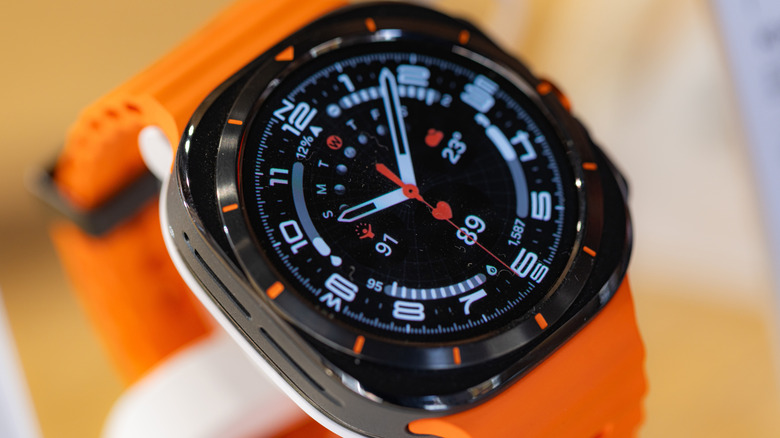
As hefty and rigid as it is, the Apple Watch Ultra 3 is in a class of its own, primarily intended for power users and athletes. It one-ups the regular Apple Watch Series 11 by offering a bigger display, denser battery, and advanced health and fitness tracking features. It retails at $800 and comes in two colorways. Samsung has also been selling smartwatches for a while now, and offers its own alternative in the same premium segment with the Galaxy Watch Ultra.
Although it has a circular display, it houses it in a squircle frame that allows for a more rugged construction. It also helps it look like an Apple Watch Ultra — pretty sure that's by design. Unlike Apple's offering, however, you do not get a digital crown with the Galaxy Watch Ultra. The set of health tracking features between the two is also a bit different.
The Galaxy Watch Ultra does get you a longer-lasting battery, with up to 100 hours in the power saving mode. It's priced considerably lower, at $650, and also comes with both Wi-Fi and cellular connectivity. Of course, you would only want to consider the Apple Watch Ultra if you also have an iPhone. With the Galaxy Watch Ultra, however, compatibility is much wider.