

5 New Car Add-Ons Worth Paying For (And 6 You Can Skip)

When you're buying a new car, there's a tendency to "baby" your new ride, so to speak. All the features you're getting in the trim package from your chosen automaker are neat, but you might have a few ideas about how best to customize your driving experience. That's a valid feeling; factory cars don't necessarily come equipped with everything you might need to make yourself at home in the cabin. Whether it's simply attaching decorations to your dashboard or something more complex, car add-ons are a part of the car ownership process that, although optional, still require you to make a decision.
In fact, car dealerships often do their best to convince you to throw a few extra items or insurance paperwork onto your new purchase. You'll hear all kinds of sales pitches about why you need all the add-on purchases, and it's easy to get confused with all the choices available. The truth is, there are a lot of add-ons out there that are marketed as the best thing since sliced bread, but very few meaningfully impact your car ownership experience.
To make things worse, we all know that buying car add-ons at dealerships can be pretty expensive, so some of these can cost you a lot of money while giving back very little value. We examine five of the best add-ons you can find today, and six you'd be better off skipping when a salesperson pitches them to you.
Worth it: Dashcams
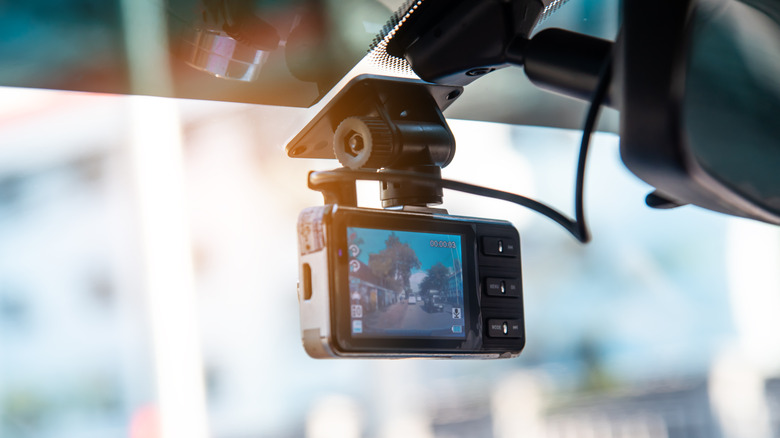
Dashcams might be a surprising item to see on a dealership's option list; not many dealers offer them. It's more conventional to add them on after you've driven your car off the lot, after sifting through multiple options and providers to find the right fit for your needs. However, at the start of the year, Nextbase, a dashcam manufacturer, announced a partnership with Mitsubishi that could make dashcams a staple at dealerships.
As part of Nextbase's Vehicle Accessory as a Service program, Mitsubishi is now charged with finding the right dashcam fit and handling the installation for you. That's a relief: Dashcams aren't the easiest thing in the world to set up, from the complexities of choosing the best one for your needs out of hundreds of options to storing the necessary wires without cluttering your dashboard. It's unclear exactly how much this service would cost prospective car owners, but the potential benefits may justify the costs.
According to numbers from AutoInsurance, about half of car owners who use a dashcam and have recorded an accident on it have used the footage as evidence in car insurance claims. If you've ever dealt with insurance, you know that proof is everything — and dashcams provide peace of mind here. Of course, on the flip side, if you're at fault in an accident, you'll have nowhere to hide. Just be sure to understand the legislation when installing them; some states have specific mounting requirements.
Skip: Paint and fabric protection
It's natural to care about your car's aesthetics — after all, if you're in the market for one now, you're shelling out more money on average for new cars than at any point in American history. With that in mind, you should want to protect your car's value as much as possible, although the depreciation curve for most cars makes this an uphill climb. Your paint job is one of the few areas you can control; a damaged exterior tells tales of wear and can lower your car's resale value.
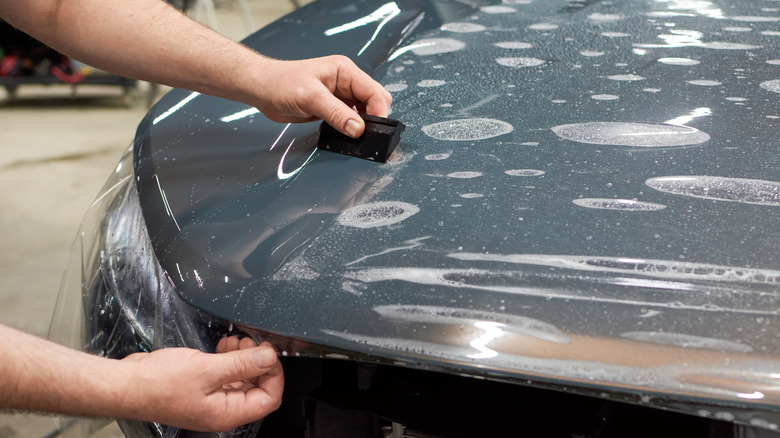
To this end, you'll often find paint protection film (PPF) on car dealerships' add-on lists. The concept is simple: Dealership professionals apply a polyurethane film to the existing paint to help protect against damage from rock chips, surface corrosion, and even scratches from other cars. PPF is especially attractive if you plan on holding on to your car for the long term; it lasts anywhere from seven to 10 years.
So what's the problem? PPF is expensive — almost ridiculously so. If you're getting full-body coverage, it can set you back up to $8,000. That's fine if you're buying a car with an MSRP well into the hundreds of thousands; otherwise, it simply isn't worth the trouble. The same goes for fabric protection; the price tag for dealer-applied protection can run as high as $195, while a bottle of fabric protector spray can do the same job for less than $20.
Worth it: Window tints
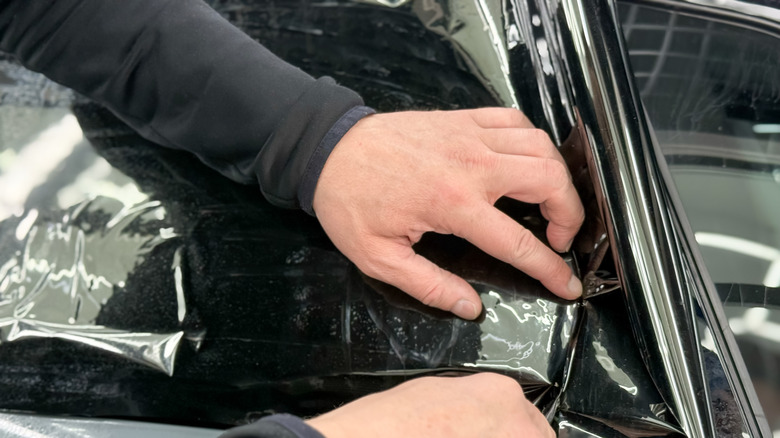
Ever lived or spent the summer in a particularly hot or humid region like Florida? If so, you probably know the importance of staying cool by all means necessary, both for you and your car. Getting window tints is on our list of tasks to tackle before summer rolls around, and there's a good reason for that. Ultraviolet rays can mess up the quality of your upholstery: Your dashboard, seats, and door panels are prime targets for cracking or fading.
As mentioned earlier, to get the maximum bang for your buck on the resale market, you're going to need all your ducks in a row. Window tints help deflect intense sun rays, translating to a much cooler environment inside your car, even when the ambient temperature reaches triple-digit figures. You're going to have to be careful not to run afoul of tint legislation, though; some states, like New York and California, have certain minimum thresholds of light that must pass through your windows.
Despite the legality questions and cost (car tints can set you back anywhere from $150 to $900, and dealerships may apply their own markup), they're worth it in hotter climes. If you don't get much sun where you commute, though, then you might be better off leaving this one on the menu.
Skip: Wheel and tire warranty
Getting protection for any part of your vehicle isn't a bad thing. Accidents and mechanical failures happen, and it's nice to know that if something does go wrong, you're covered by a warranty or insurance, so you don't have to pay top dollar to get your car up and running again. However, pause for a second before you pull the trigger on this item at the dealership.
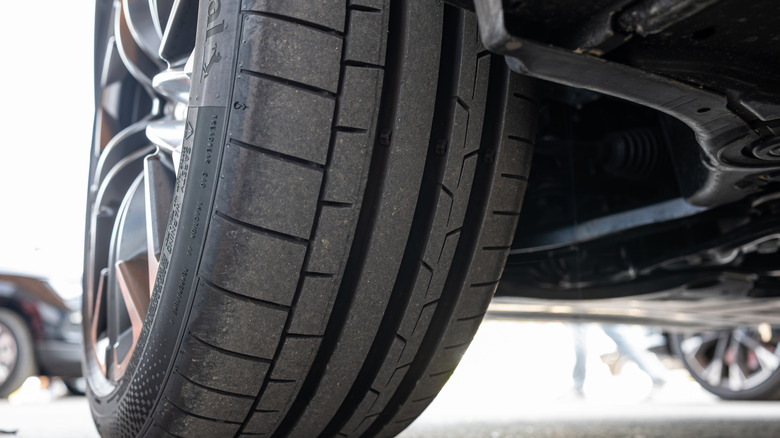
How likely are you to encounter blown tires if you routinely maintain them? What specific damage does the warranty cover? And, most important of all, is the price on offer at the dealership worth the investment? A warranty for your wheels and tires can be a sensible purchase if you're leaving the lot in an expensive sports car or high-end luxury vehicle — the former uses low-profile tires for better performance and handling, while luxury cars tend to feature larger wheels.
Those are especially prone to damage from potholes, curbs, and other road hazards. If you're buying a regular car, though, the chances of needing to replace your wheels or tires specifically because of pothole damage are very slim. Those lean odds, coupled with the high premiums at dealerships (which can run anywhere from $400 to $900), make the warranty another item you can skip.
Worth it: All-weather floor mats
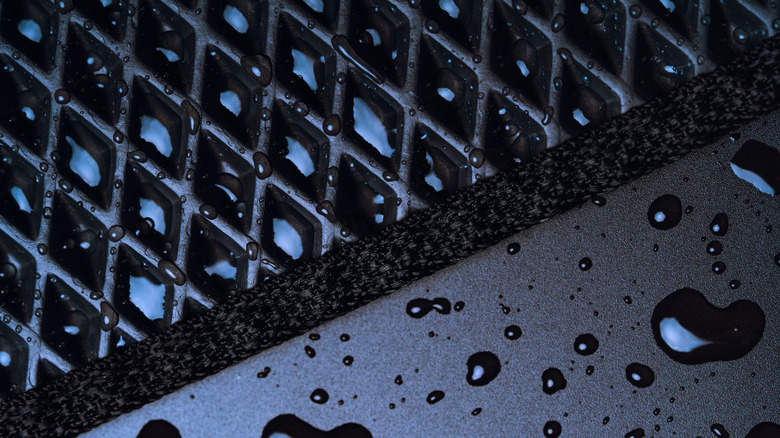
It's easy to overlook floor mats in your accessory shopping; chances are that you don't necessarily give much thought to what you and every other car occupant step on each time they enter your vehicle. However, they're important for keeping your interior clean, even though not all new cars come with floor mats fitted these days. Some automakers prefer to leave that option to you, the buyer, and it's relatively common to see carpet material chosen — 34% of car owners use textile and carpet mats, according to 360ResearchReports.
In the same breath, though, the data from 360ResearchReports shows that over 61% of drivers change their floor mats within four years. Logically, a good chunk of this figure should include carpet mat owners. The fabric in particular struggles with durability; floor mat stains can be difficult to remove, and they get dirty pretty easily, too. That's where all-weather floor mats find their value proposition: They can take more abuse than carpets and handle liquid spillage far better.
They're made of water-repellent rubber with special grooves that are designed to contain spills. If you're in an area that gets a lot of snow during winter, all-weather floor mats are worth the dealership prices. Regular mats might capture some of the water from the crushed snow on your boots, but water can seep underneath your carpet into the concealed wiring — you really don't want that.
Skip: GAP insurance

It's pretty much conventional wisdom not to buy insurance from car dealerships at this point. You're much better served going through the fine print from an established insurance provider you handpicked — chances are you'll get lower premiums and better coverage. The same logic applies to Guaranteed Asset Protection (GAP) insurance.
The rationale behind GAP insurance is pretty straightforward; if your car is totaled or stolen and what you have left to pay on the lease is now worth more than your car, GAP insurance steps in to pay the difference. You really don't want to get stuck paying off a loan for a car you no longer own.
With GAP insurance, everyone goes home happy: The dealership is paid off, and the car is essentially a write-off to you. Although this is a great idea in practice, insurance products offered at dealerships are likely to be heavily marked up. GAP insurance could set you back several hundred dollars in flat fees at a dealership. In comparison, Forbes Advisor estimates that GAP insurance costs roughly $61 a year if you go through a car insurance provider. You could get a better deal if you opt to get it at the lot, though — it's one of the dealer fees we feel you should negotiate.
Worth it: Splash guards
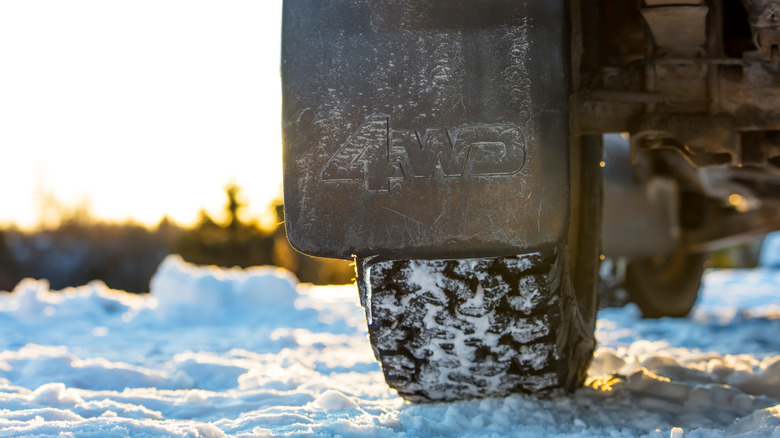
The term "splash guards" may be used interchangeably with "mud flaps," but there are two important distinguishing characteristics between them: their size and flexibility. That flexibility can make a world of difference when driving along rougher terrain — splash guards are less likely to crack since they're usually made of rubber, unlike mud flaps, which are usually made of plastic.
Now, you might be wondering whether splash guards offer you any practical value. After all, you can drive all you want without them and not notice that you're missing anything. They essentially protect the underside of your car from debris, and as the name implies, splashes that can harm your paint job or lodge residue in potentially sensitive areas.
Splash guards are especially important if you go off-roading regularly or drive across dirt, gravel, or even snow-covered roads. You may not notice the damage from driving without them in these conditions at first, but you'll gradually chip away at your undercarriage and find that you're getting maintenance more often than you should. Your dealership might not offer splash guards. In that case, you should take mud flaps — they serve the same purpose with a few stylistic differences. If the dealer offers both, we can help you make a decision.
Skip: Spoilers
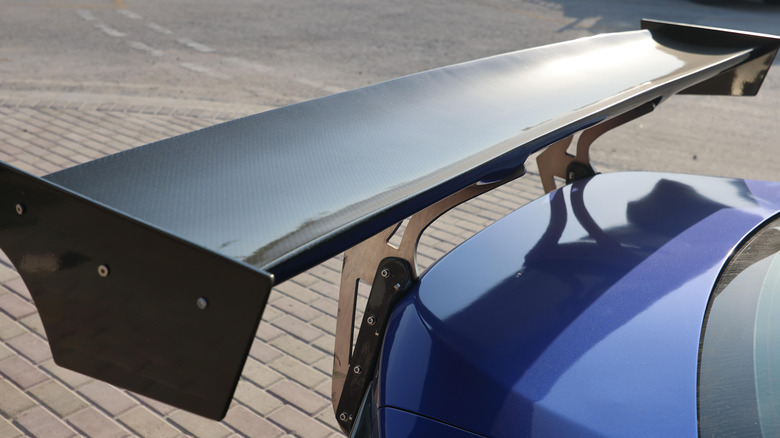
If a sports car is shaping up to be the next addition to your garage, performance likely holds a big sway in your decision-making process. Exhilarating acceleration and handling aside, there's a certain sleek aesthetic that makes up the bodywork of a sports car: arrow-like designs, low-profile tires — stuff that's intended to reduce drag and give you extra juice wherever possible. That's, in theory at least, the idea behind spoilers.
They're not just built to give your car extra cool points (although that's a nice bonus). Spoilers have roots in professional racing like NASCAR. In simple terms, they help keep the car on the ground when you're driving at really high speeds. They also help reduce fuel consumption since they basically sculpt the air to reduce wind resistance.
However, for the average driver who wants to grip the edge of their seats once in a while, they're not necessary. You most likely won't (or, in any event, shouldn't) be zipping along roads at 180 mph like the average race car, so there's no measurable benefit to having a spoiler attached to your car beyond aesthetics. Car dealerships charge anywhere between $350 and $1,000 for them, and that figure doesn't always include the actual installation costs.
Worth it: Towing packages
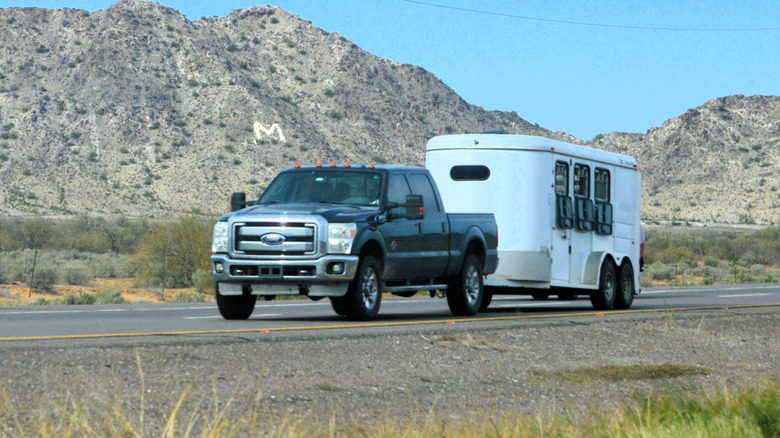
In the summertime, it's a fairly normal sight to see drivers seeking recreation hitch a boat to their pickups or RVs to transport it to the water; roughly 12% of American households own (or co-own) a boat. Now, if you're in the market for a vehicle with a rig and you've done your research, you'll have come across metrics like maximum payload and maximum towing capacity. Chances are, from the numbers you've seen, you think the truck you're eyeing can safely handle whatever you need it to — whether that's a jet ski, camper, or a large boat.
However, the reality can be very different. The units you might come across on display at a dealership don't always have the advertised pulling power, as Consumer Reports illustrates using a 2020 Ford F-150. According to Ford's numbers, depending on your chosen trim, a 2020 model can tow anywhere between 5,000 and 13,200 pounds, but the most common version at dealerships could only manage a maximum of 7,600. That discrepancy makes a world of difference — you could buy a travel trailer only to discover that your truck can't tug it along.
Towing packages from dealerships might not necessarily close that gap, but they'll squeeze extra power from your truck. Components like wiring harnesses, tow hitches, and heavy-duty brakes and suspensions typically come with the deal, as well as upgrades to your battery and rear-end gearing. This way, you'll not only improve towing capacity — you'll lower your odds of experiencing mechanical failure.
Skip: Interior lighting kits
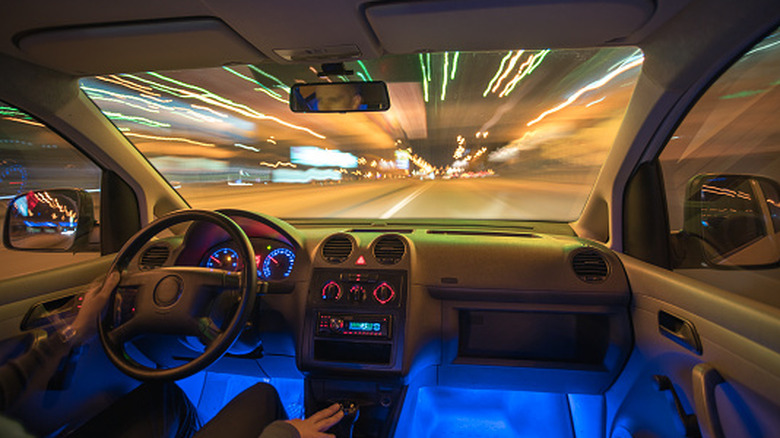
It's normal to want to customize your cabin right after purchasing a new car; you want to impose your personality on the space so you can feel at home. That's essentially the value proposition of interior lighting kits — aesthetics. Granted, they can look really cool and make you feel like you're piloting a spaceship, especially when driving at night.
However, there's a caveat in the form of legislation to consider. LED lights might be legal, but you need to make sure they don't get in the way of your visibility or cause distractions for other road users. Some states, like California, allow interior accent lights only if they're not visible from outside, while others, like Florida, are more lenient but still require them not to be distracting. It's a bit difficult to quantify the exact luminous intensity that constitutes a distraction, and it's that open-endedness of interpretation that can get you pulled over by law enforcement even if you're operating within legal limits.
Skip: Nitrogen tire inflation
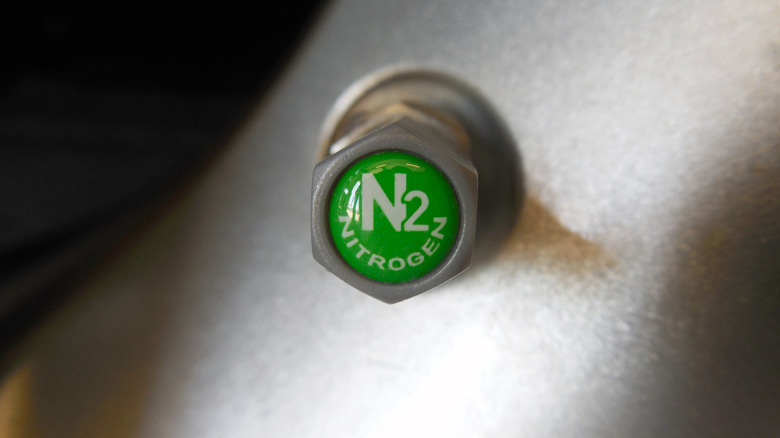
This is one of the greater myths in tire history: the existence of "premium" air. The component of that premium air is nitrogen, and car dealerships will try to get you to inflate your tires with the gas as a much more durable alternative to regular air. Some dealerships might even slap on a green-colored stem cap after the fact to drive home just how special your newly nitrogen-filled tires are.
Unfortunately, these are all just sales tactics designed to get you to spend even more money on top of your down payment. Dry air — the derided option if you take a salesperson's word for it — is actually 78% nitrogen by composition. With such an overwhelming dominance in the chemical compound that is air, the difference between pure nitrogen gas and regular air in terms of maintaining tire pressure is bound to be negligible.
To this effect, Consumer Reports ran a year-long test to compare the air loss of "pure" nitrogen and dry air. The publication found a 1.3-psi difference in the nitrogen-filled tire's favor, which lends scientific credence to dealership claims of its superiority. However, with such a negligible difference, you're better off sticking with regular air, especially when you factor in the $100-or-more price tag that comes with it.
Methodology

In compiling this list of add-ons, we considered a handful of factors: availability at dealerships, value proposition, and overall utility. You may not be able to get every single item on this list at dealerships near you, but in such cases, the add-on is either too useful to be ignored or too problematic to ignore from a legal standpoint. Dashcams, for instance, might not be widely available at dealership lots, but if yours features them as a selection, the protection they offer shouldn't be taken lightly.
For the value proposition and utility, every item has a use case, but we considered the actual utility of the product. That is, how often you'll use it and the impact it'll have on your driving experience. You're already spending thousands of dollars on a vehicle — you don't need to buy an item that barely (if at all) moves the needle on the enjoyment of your car.