

3 Of The Best European Diesel Engines (And 2 Of The Worst)
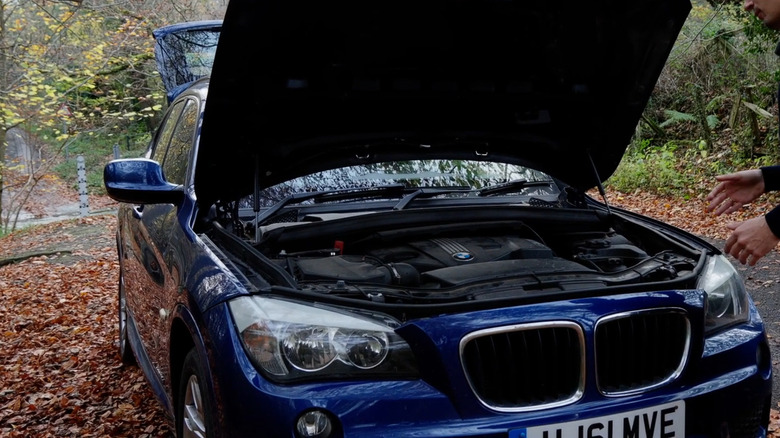
European diesels can be had at both ends of the spectrum; there are magnificent ones like Audi's 12-cylinder, and catastrophic failures like Land Rover's inline-six. Over here in America, we tend to associate diesel engines almost exclusively with trucks and heavy machinery, but Europeans have been doing things a little differently for the past three decades or so. It's not uncommon at all to see a diesel-powered sedan or hatchback on the continent, although newer models in the region are gradually ditching diesels too.
Aside from the cultural acceptance of diesels in Europe, there were also emission laws so strict that CARB — the reason why you can't get the new Hemi V8 in some states — would be put to shame by comparison. As a result, the amount of innovation in European diesel engines was much higher, and that's why we got some truly spectacular engines out of it. And it's not like these were three-cylinder econobox engines either; the Germans were busy stuffing V10 diesels into anything they could get their hands on, from a family SUV to an executive sedan, and pretty much everything in between. But where there's trial and experimentation, there's also error. So it is with Euro diesels, because we also got some real dogs along the way, two of which we'll cover here. One was subjectively the worst engine from a brand already famous for unreliability, and the other treated timing chains like a consumable item.
Best: Audi 5.5 V12 TDI
First up, a V12 from Audi, which is one of the many car brands that Volkswagen owns. The Volkswagen group had made many legendary diesels at the time, including a V10 for the Phaeton and Touareg, and a V12 diesel for the Q7. For the V10 production version, the final unit ended up being a five-liter engine, with the TDI suffix indicating that it used diesel injection. The cars it powered were the Phaeton, where it made 313 hp and 553 lb-ft of torque, and the Touareg, where the final power output stood at 310 hp and the same torque.
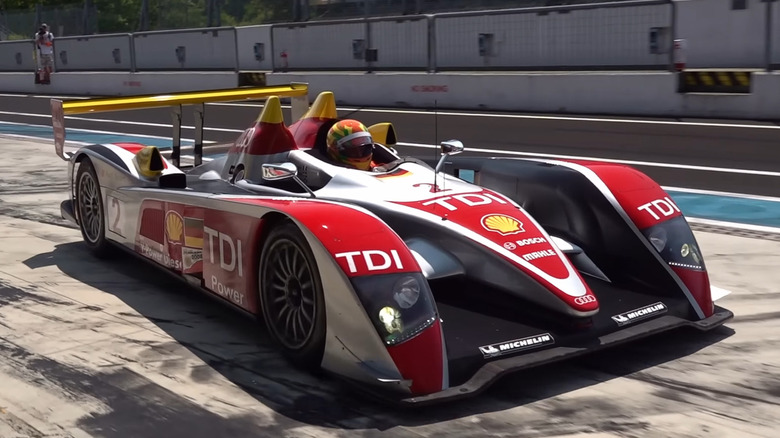
As you can imagine, these cars were blisteringly quick, with the Touareg managing a 0-60 mph time of an estimated 7.5 seconds. Later on, Audi would make their own V12 diesel engine for their Le Mans LMP1 race vehicle. This car, called the Audi R10, got a 5.5-liter version of the engine, but with 12 cylinders making 650 hp and 811 lb-ft of torque, and to say that the Audi dominated the next season would be an understatement.
With its newfound diesel powertrain and 12 cylinders, the electronically limited Audi R10 LMP1 romped home to victory in several races, and even took home overall victories at Le Mans three times. In doing so, the Audi R10 became the first diesel car ever to win Le Mans — and it ran on biodiesel.
Best: BMW M57
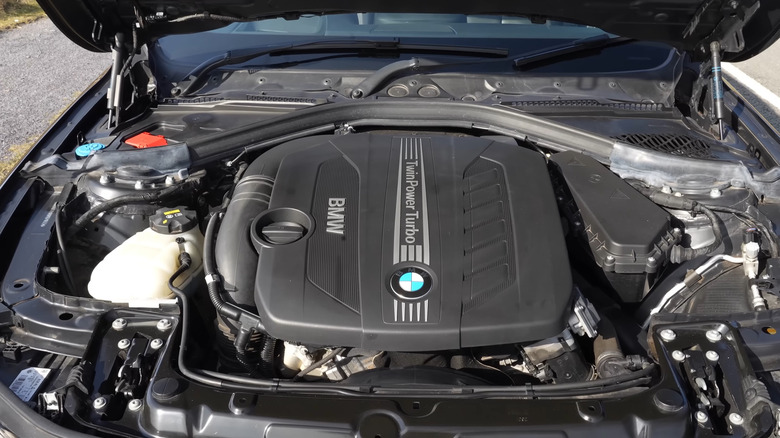
While BMWs don't exactly have the best reputation when it comes to reliability — we've all seen the oil leak and check engine light jokes online — the BMW M57 diesel is an exception. The engine was a three-liter, six-cylinder unit with the cylinders arranged in an inline configuration, and it came with turbochargers as well, of course. BMW has had a long history of making diesel engines even for passenger cars, such as the widely used M47 and B57, though these are not considered as reliable as the M57 that we're looking at.
It was first released in the U.S. for the 2009 model year, though it had been in production since 1998, and the U.S.-spec version made 265 hp and 425 lb-ft of torque. It was offered in many mainstay models from BMW, initially in the 335d sedan and the X5 SUV. In the 335d, which is arguably the most famous of the models we just listed, the M57 could push the car from 0-60 mph in about 5.7 seconds and gave the car the ability to run the standing quarter-mile in 14.2 seconds.
While somewhat average by modern standards, remember, this was back in the late 2000s, when even supercars like the Aston Martin Vantage had 0-60 mph times of around 4.7 seconds. With all that said, there are certain years where the BMW M57 diesel engine should be avoided, but overall, it was a pretty solid option that delivered on all fronts.
Best: Volvo D13
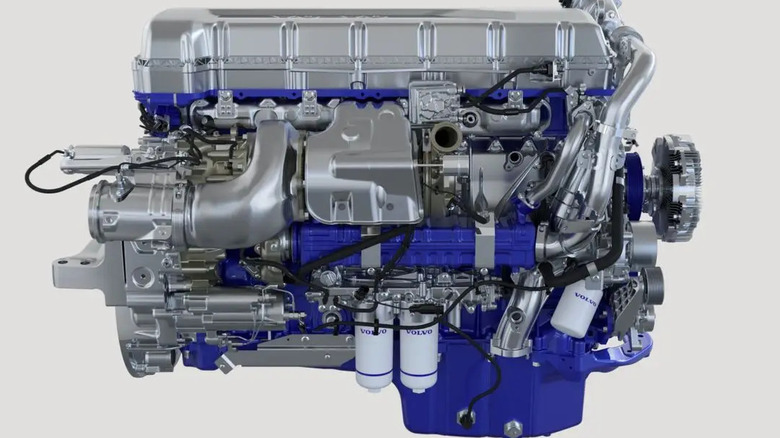
There aren't many people who've heard of the Volvo D13, but if you've ever bought anything from Europe, there's a decent chance part of its journey involved a truck powered by a Volvo D13. Widely considered to be the best truck engine that Volvo has made — though there have been newer versions released at the time of writing — the D13 has powered trucks like the Volvo VNR, VAH, VNL, and VHD, all of which are part of Volvo's North American lineup. Displacing a herculean 12.8 liters across six inline cylinders with a bore of 131 mm and a stroke of 158 mm, this 2,635-lb engine is primarily a diesel variant that makes between 1,450 and 1,900 lb-ft of torque at a relatively low 900 RPM.
This is in addition to a maximum power output of 500 hp, with peak hp available at 1,300 RPM — and while the utility of this power would largely be dependent on the choice of transmission in the truck, it's still impressive nonetheless. As with many truck engines, there are different power ratings available, with the lowest variant of the D13 coming with 405 hp and 1,450 lb-ft of torque, while the top-of-the-line variant makes the aforementioned 500 hp and up to 1,900 lb-ft of torque.
Also, we said "primarily" a diesel variant because there is also a very similar engine from Volvo called the D13-LNG that runs on natural gas, which is generally understood to be a cleaner fuel source than diesel.
Worst: Land Rover 2.0 Ingenium
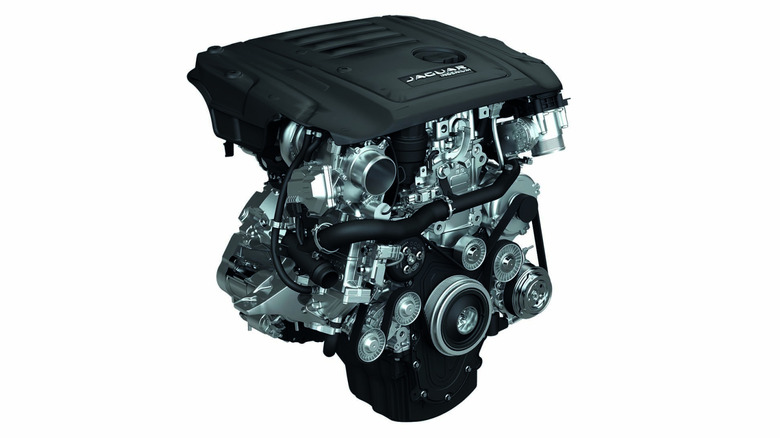
Widely considered to be the worst Land Rover engine ever made by experts and users alike, the 2.0 Ingenium was introduced to the world in 2015. The inaugural version was used to power the Jaguar XE, though it was later also slotted into the Land Rover Discovery Sport and Range Rover Evoque. The displacement is two liters across four cylinders , and is turbocharged. On paper, the 2.0 Ingenium is quite powerful, making at least 197 hp along with 236 lb-ft of torque, though models with higher power outputs are available.
In real life, however, everyone — from end users to industry experts — has a laundry list of woes. First up, there are reliability concerns that are too numerous to name, but the big and unfortunately common ones are oil dilution, timing chain breaks and rattles, and the turbos flat-out failing. However, the silver lining in there's the fuel economy; the Discovery Sport with the 2.0 Ingenium diesel engine netted a 58 mpg figure on launch in 2015, according to Land Rover. Note that the European fuel economy measuring test (NEDC at the time, WLTP today) is different from the EPA system used in the U.S., so the readings aren't exactly the same.
And lastly, mechanics seem to dislike working on the engine too, complaining about things like component placement and the engine generally being troublesome to work on. All of the above, coupled with the frequent breakdowns, make it one of the most horrible things to come out of Land Rover.
Worst: BMW N47
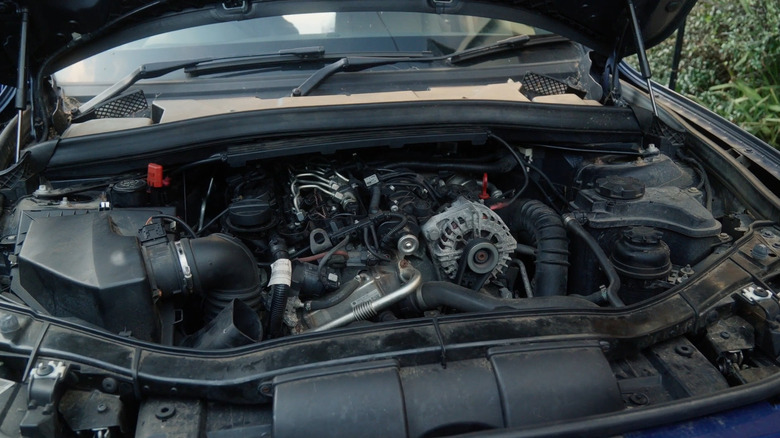
Where the BMW M57 that we looked at above was a star, the four-cylinder N47 that made between 94 and 215 hp was the complete opposite. It first entered BMW's lineup in 2007, where it remained until 2014, marking a production span of about seven years, but it's easy to see why the engine was quickly discontinued. For starters, let's first say that the selling point for the N47 was its efficiency; in the 2009 BMW X1, it was able to net an impressive 48 mpg combined fuel economy figure across city and highway driving. Again, the European testing methods would differ from the EPA's methods, so bear that in mind.
However, this was an engine that treated its timing chains like a consumable item. Furthermore, like many other BMW engines the timing chain is located at the back of the engine bay. As such, when something goes wrong that needs a timing chain replacement, the labor is prohibitively expensive and time-consuming.
Other issues that plague the N47, albeit to a lesser degree than the timing chain woes, include premature turbocharger failure, high oil consumption, and a whole suite of problems with the EGR, or exhaust gas recirculation system. To be clear, we're not saying that it's inevitable that the N47 will be a dog, but it's highly likely that maintenance bills for this engine will be higher than usual. Unless your heart is really set on one, it's probably best to go with another option.