

5 Common Problems With Leatherman Multitools
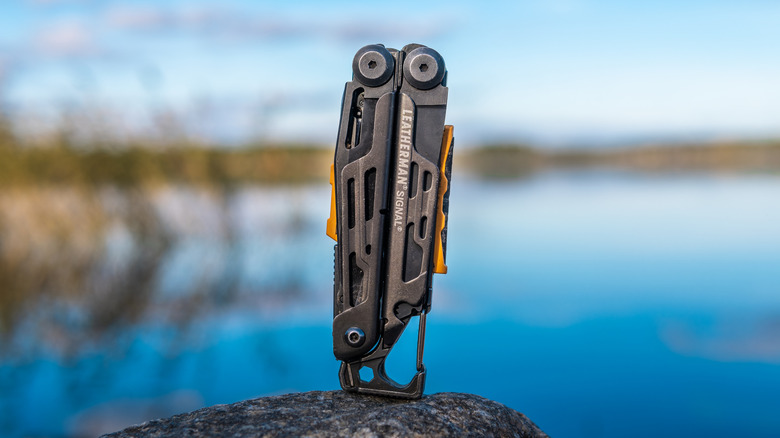
Leatherman multitools are designed to last a long time and handle a ton of different jobs. Leatherman multitools pop up on lists of useful mini-tools for homeowners, and the brand is one of the quintessential household names when it comes to DIY maintenance and repairs.
One argument in favor of Leatherman's longevity is the fact that a Leatherman exchange program exists. If there's a market for used Leatherman tools, it suggests that the company is doing something right. However, that doesn't mean Leatherman multitools always perform flawlessly. No matter how new your Leatherman is, it may eventually need some TLC. Or, according to Leatherman, possibly a lot of TLC.
Based on Leatherman's tool maintenance information, there are at least five common problems that consumers run into while using the tools. Those issues are so common that Leatherman has a customer service page dedicated to tool maintenance. The good news is that there are fixes for each of these issues, with solutions straight from the manufacturer itself.
Wear in pivoting areas
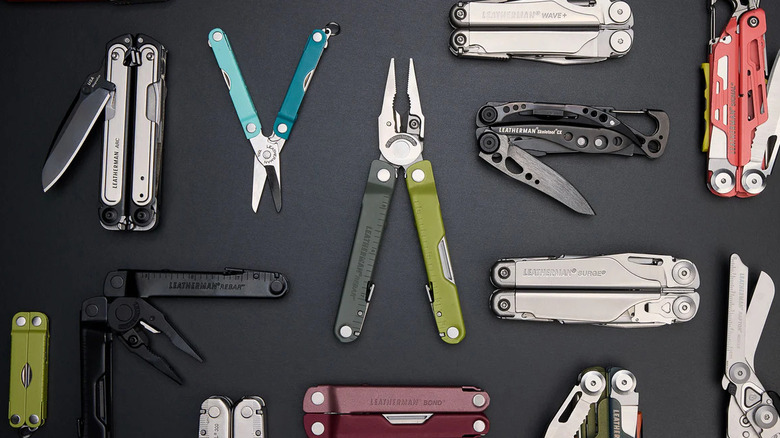
After you've opened and closed your Leatherman multitool hundreds of times, it's probably not surprising if it shows wear or starts to stick. The problem is so common that Leatherman addresses it directly on its maintenance page.
After a lot of wear, it can be tough to open and close a Leatherman, or it might squeak or otherwise protest when being used. Wear and tear is normal, of course. If it's excessive, you might be tempted to buy a whole new tool. There's a fix to try before giving up and tossing your multitool, though.
While debris can be part of the issue, wear in pivoting areas can also develop due to a lack of lubrication, according to Leatherman. To fix issues with your Leatherman tool's pivoting function, try greasing it up. Leatherman notes that consumers should use a Teflon-based (PTFE, polytetrafluoroethylene) lubricant to get things working again.
Debris accumulation
Depending on where and how you use your Leatherman, it might wind up with a bunch of gunk all over it. If that happens, it might be harder to use and clean your tool. Stains can happen, but when they start impacting your ability to use the tool, it's time to address it. Because there are so many uses for your Leatherman multitool file, let alone the other components, you might have all manner of debris all over the tool.
A few cleaning solutions could work to get your Leatherman looking like new again, depending on what kind of work it's been doing. A simple wash with mild detergent and water is a good step for sticky residue, but buffing and polishing are also options. From a bristled brush to a Scotch-Brite pad, most abrasives are fair game.
If the stain is super stuck on, Leatherman suggests using turpentine or "other mineral spirits" to clean your tool. Be sure to check for any contraindications for stainless steel, though. Leatherman points out that it uses stainless steel that's fairly hard and resistant to damage, but it's not indestructible.
Corrosion
Although Leatherman tools are stainless steel, that doesn't mean they can't stain or corrode. In fact, Leatherman points out that "stainless" literally means the material stains less than other comparable materials. It's worth noting that staining is practically expected; Leatherman does not cover rust, oxidation, or other corrosion types in its 25-year warranty.
If your stainless steel tool is exposed to salt or other substances, it can develop corrosion that impacts its function. Some Leatherman accessories are more susceptible than others to corrosion. For example, the Leatherman Tread, an apparently discontinued bracelet-type tool, can develop corrosion from being worn against your skin and thus, your sweat.
Since Leatherman doesn't offer replacement or repair for this problem, you'll want to avoid corrosive substances and take good care of your multitool from day one. Leatherman suggests that you clean salt off your tool (from your skin or whatever salty task your tool takes on) by wiping it or even using a toothbrush for smaller areas. It also advises keeping your tool dry and applying lubricant periodically.
Dull blades
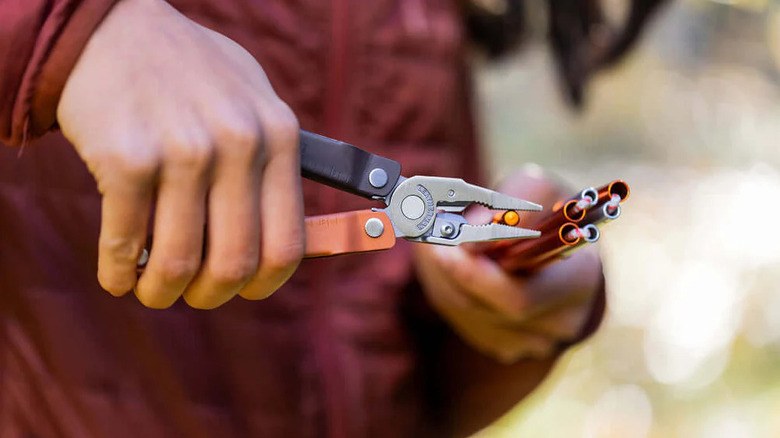
A dull blade might seem like a deal breaker for a tool that's meant to cut as one of its primary functions. Unfortunately, like any other sharp edge, Leatherman tools can dull, especially if you put yours to work cutting a variety of materials. It's not the end of the world, though, because sharpening a multitool is simple enough to do and will prolong the life of your tool.
Leatherman points out that you can sharpen your multitool blade — as long as it's straight-edged — with regular sharpening equipment like whetstones or rods. Serrated blades need special care, or you'll mess up the serrations and render the tool hard to use or entirely useless. The key, Leatherman notes, is to sharpen the blade only on the edged side.
The good news is that some tools (MagnaCut blade-equipped models) come with free sharpening. If your tool doesn't have a MagnaCut blade, you'll have to DIY because Leatherman doesn't typically cover sharpening in its warranty.
Locked blades
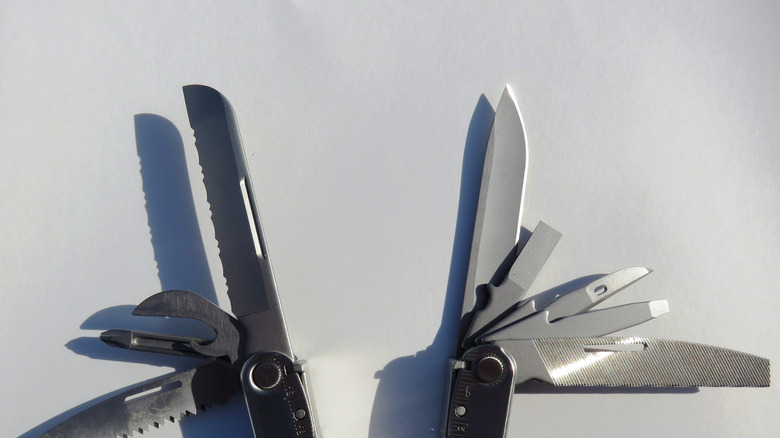
Locked blades may be the most obvious and frustrating problem with Leatherman tools. If the blades are locked, you won't be able to use the tool or put it away. While regular wear could cause sticking (and in that case, cleaning and lubrication are worthwhile attempts to fix the problem), locked blades are a bit of a different story.
As Leatherman explains in its fix for locked multitool blades, the handle spring can cause the blades to lock open. The fix is relatively simple; you'll use a screwdriver to pry up the spring. Then, one of the blades should release and you'll be in working order again.
If it's the scissors that you're struggling with, Leatherman has a fix for that, too. Make sure the spring is locked in place before using the scissors, or they might not open properly. All that said, some parts can feel a bit stiff out of the box, which that Teflon-based lubricant can help with.