

7 Important Car Features Seniors Should Look For When Buying
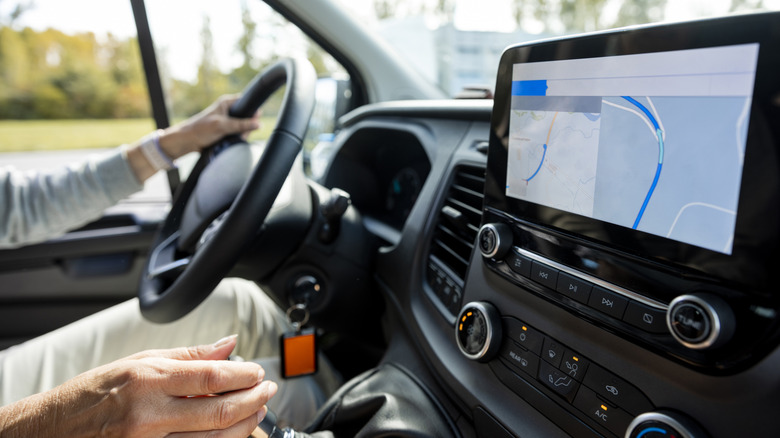
A poll from the University of Michigan showed that 84% of people aged 65 and above drive at least once a week. SeniorLiving backs up that claim with numbers of its own: Drivers over 65 in the United States increased by over 68% to 48 million as of 2020. With such a large market share in driver profiles, there's more incentive than ever for automakers to be inclusive in their car designs, and that's what's happening in the features consumers see on their dashboards today.
As people age, their priorities when buying any consumer item shift. The latest phone is no longer just a cool device packed with the latest technology for doomscrolling social media or playing the most demanding games; it's now a tool for communicating with loved ones. The same outlook applies to cars. While a younger prospective buyer might place variables like performance and trendy design at the top of their checklist, a typical senior is likely as, or more, concerned with practicality, safety, and comfort.
How easy is it to enter the vehicle? Do the seats offer good spinal support? What special driver assistance features are there? These are questions that will be more pertinent to a senior's decision-making. Here, we cover seven features we consider important for your driving experience as an older driver. You'll find more than a handful of these in our list of best cars for seniors in 2026, too.
Adaptive headlights
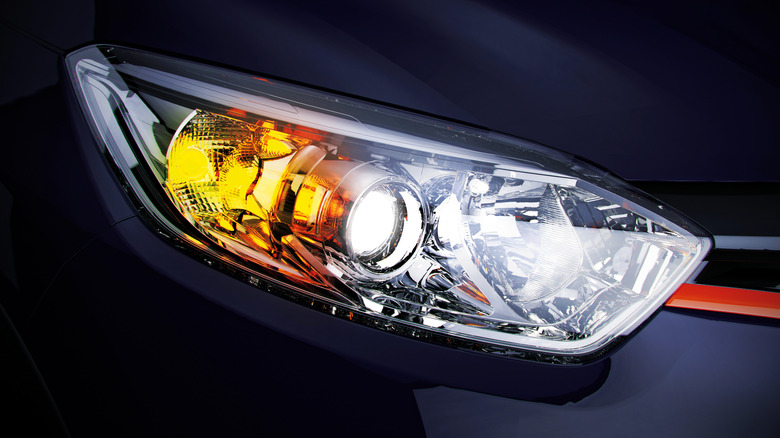
Illuminating the road ahead isn't always as simple as turning on your high beams full blast. For one, some car models struggle to illuminate corners and bends, while others do better but find straight lines challenging. These are weaknesses that might be a mild annoyance to a young driver, but the effect can be magnified for a senior with diminished vision. Adaptive lights help compensate for any blind spots in this regard. They control your beams to suit your driving needs, and depending on your car manufacturer, they can do this in multiple ways.
One of the most common is through automatic high beams. Instead of manually turning your beams on and off as needed, this feature handles it for you. The high beam is chosen by default, but there's a sensor that dims it to a more friendly setting when it detects cars around.
That's especially important for seniors since glare is a growing issue. According to the BBC, a survey by the Department for Transport in the United Kingdom found that 96% of drivers considered headlights too bright, and a 2025 study from the RAC in the United Kingdom showed that bright headlights make driving more difficult for 65% of drivers aged 65 and up. With adaptive beams (did you know they used to be illegal in the United States?), you're less likely to have other drivers flash their lights at you.
Memory Seating
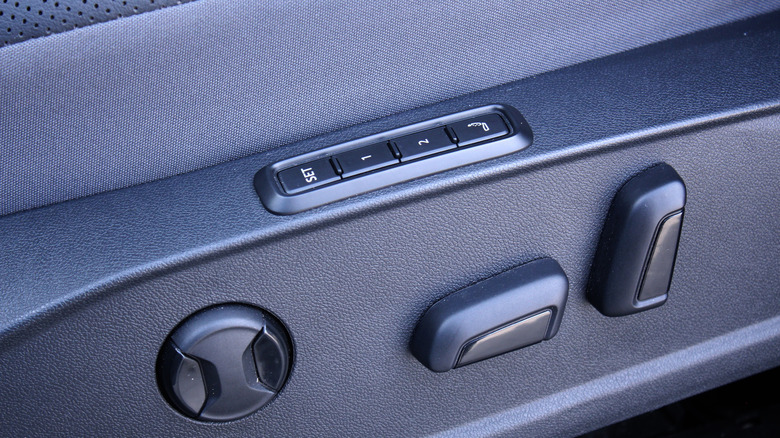
If you're an older driver who shares your car with other people, you're likely to notice subtle differences in your seating, steering, and mirror configurations. For a younger individual, the extra few seconds it takes to adjust these components back to their preferred setting may not be that big of a deal. However, the kind of dexterity some maneuvers require, such as reaching below the seat, pulling a lever, and pushing a seat forward, might become fatiguing (or just downright annoying) for a senior.
Beyond maneuverability restraints, a senior might require certain accommodations to drive safely. You can have a sweet spot, so to speak, that lets you enter and exit the vehicle easily, and then drive without straining your ankles, feet, or eyes. Once someone else changes that carefully curated ecosystem, getting that perfect setup back can be a struggle. That's where the memory seating feature comes into play: You let your car remember the exact positions you prefer to drive in, and at the push of a button, it adjusts itself to your tastes.
When buying a car, another thing older drivers should consider is seat heating. Driving for long periods can impact joint pain (or exacerbate it if it already exists); heated seats can help alleviate discomfort by acting as mobile heating pads, not to mention keeping you extra toasty on those frigid mornings.
360-degree camera systems
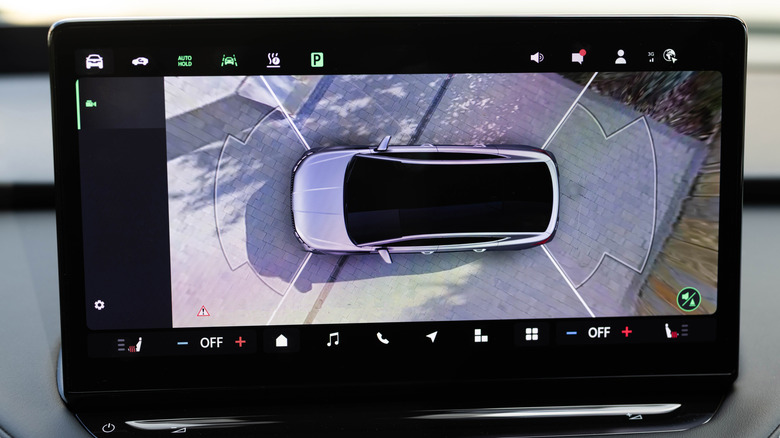
Having access to a wider field of vision is valuable for drivers of any age demographic; it's partly why backup cameras are essentially ubiquitous in today's car market. However, for seniors in particular, a system that lets you see your surroundings when you're behind the wheel without having to crane your neck this way and that can be a blessing. A 360-degree camera, also known as a bird's-eye view, surround-view, and a host of other monikers, does this for you.
The view is provided by a selection of wide-angle cameras placed in strategic locations on the car's body, like under the side mirrors and near the corners of the bumper. Each of these cameras captures images in real time, and software stitches them into a unified top-down view for the driver to see. The perspective is similar to that of a drone hovering above your car. This way, you don't just get blind-spot monitoring; you get a holistic image of what's going on all around.
For seniors, that's especially helpful. While there are minimum vision requirements every driver must meet, certain angles can prove challenging to cover visually without aids. When parking, you could use the 360-degree camera to avoid objects that might otherwise be difficult to see.
Automatic crash notifications
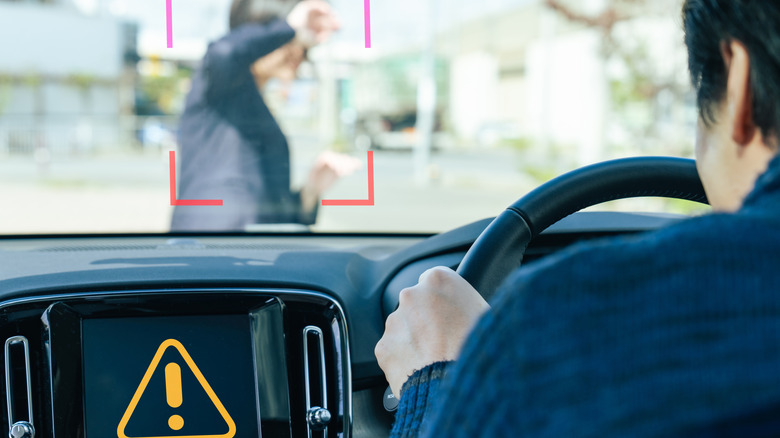
Nobody ever wants to be in a crash, but car crashes happen all the time. It's imperative for drivers of all ages to have notification systems that alert loved ones in the eventuality of an accident, whether that's through Apple's Emergency SOS or an OnStar-type system. However, with seniors, the need for such a mechanism grows exponentially. It's not necessarily that older drivers are more likely to be in accidents than younger drivers, but if they are, the potential for injury and its lasting effects are more severe in seniors.
Chest trauma poses significantly more fatality risk for seniors than younger groups, and pre-existing health conditions may also play a role in car crash fatalities. One can logically conclude that car crashes, while dangerous for everybody, are a greater risk to older drivers. With this in mind, family and close friends of older drivers should be notified instantly if a crash happens.
That's the logic behind automatic crash notifications. The feature uses a car's built-in cellular network or a paired phone to notify first responders and give the vehicle's exact location, even when the driver can't do so themselves. According to Consumer Reports, a 2019 NHTSA study highlighted just how impactful this feature is; estimates showed it could save more than 700 lives a year.
Driver attention alert systems
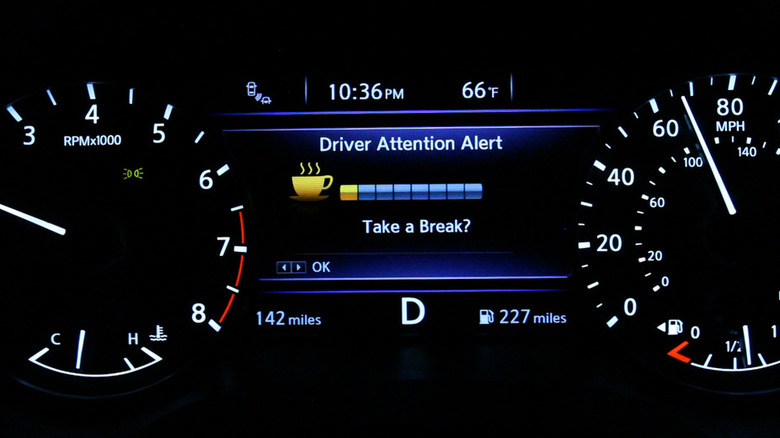
Paying rapt attention to your surroundings when driving is vital to your safety and that of your passengers. It's common knowledge that being distracted for even a split second can have dangerous consequences. Distractions account for up to 20% of crashes, and fatigue is one of the leading causes of distraction. A study from the Virginia Tech Transportation Institute found that driver exhaustion was the culprit in 20% of crashes and 16% of near-crashes.
More pertinent to seniors, research has shown that the elderly drive more slowly when distracted and tend to freeze up, with 39% of drivers over the age of 65 committing more safety errors during distraction. Judging from these statistics, a driver attention warning system could be particularly helpful if you're an older driver. This feature analyzes several factors to assess a driver's level of focus, including steering correction, driving patterns, and time behind the wheel.
When the driver's attention level falls below a certain threshold, the driver attention warning will deploy warning sounds and other means, depending on your automaker, to get you to take a break. For instance, Honda's Driver Attention Monitor sends an advisory message via the multi-information display. If the situation worsens, the warning becomes bolder on the screen, and audio alerts also go off.
Lane-Keeping Assists and Emergency Braking
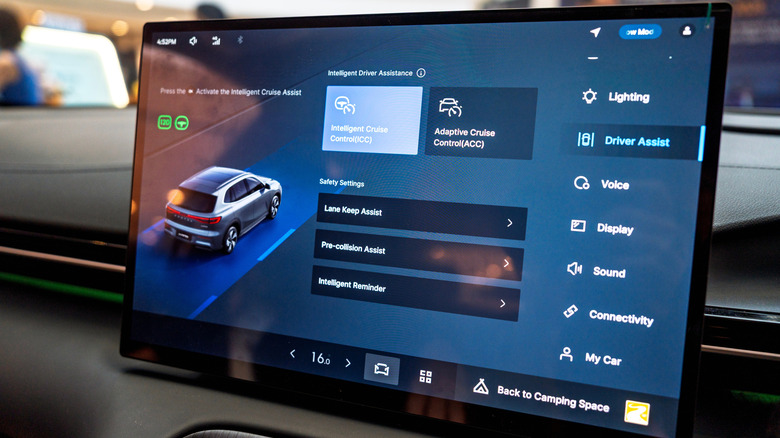
Your level of attention as a driver influences every decision you make behind the wheel. Anything can happen when you're distracted for even a split second. Often, maintaining your lane alignment is the first thing that suffers when you're distracted. Even when you feel like you're paying attention, lane drifting is a real phenomenon, and creeping into another lane could easily cause an accident.
Lane-keeping assists were designed to combat this exact scenario. First, they alert you that your car is about to exit its lane, and if you don't take action, the feature is designed to steer you back into your lane boundary. According to NHTSA estimates, cars equipped with lane-keeping assist are less likely to be involved in single-car road departure crashes than their counterparts. You don't need to worry about intentional lane departures, though; the system disengages when you use your indicator. Still not sure if lane-keeping assists are worth it?
Lane-keeping assist systems are worth it, but they aren't perfected yet. The feature relies on road markings to function properly, so if there are none or they're obscured by weather like snow, you'll need help from something else. Auto emergency braking comes into play in this eventuality; it uses a variety of cameras and sensors to measure collision risk. If it detects an impending collision, like drifting out of your lane into existing traffic, it sounds a warning and automatically brakes if the driver doesn't act immediately.
Keyless Entry/Ignition
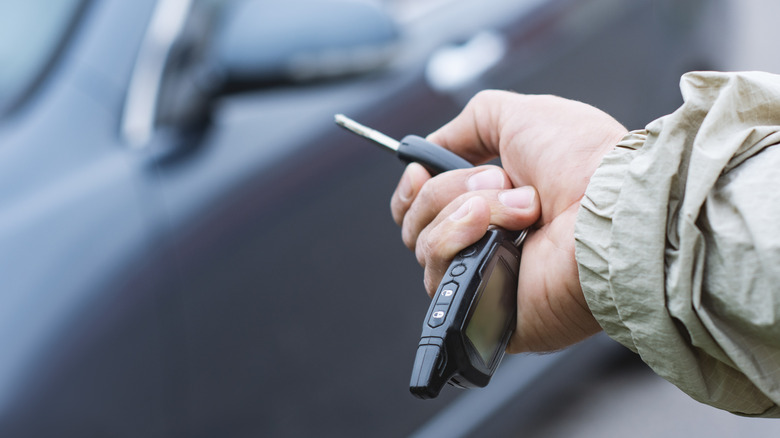
Shoving your keys into a door and turning the ignition to start your engine might have been a routine exercise in your youth. Unfortunately, age has its constraints, and depending on certain physical factors, senior drivers may not find key insertions as easy as they used to. Conditions like hand tremors and weak grip could turn what used to be a simple task into a painful challenge.
That's just slotting the key into the hole; turning the ignition uses hand muscles that can be difficult for the average senior citizen to bend comfortably. So, one way to sidestep all that awkwardness is to look out for cars that come with keyless entry and ignition as part of their trim package. With keyless entry, as the name implies, you don't need to physically unlock your car — press a button on your key fob and let it do the work for you. Nearly all modern cars come with this option, though, so the real selection process lies in the ignition.
Many high-tech key fobs come with useful additional features. BMW, for example, lets you use the key fob to remotely start your engine, so that's killing two birds with one stone. Other automakers can favor the push start button; the bottom line is, you shouldn't let a weakening grip stop you from driving.